David Davin Power: Fragmented voters still looking for change
When we go to the polls today, we will be voting in the third change election in a decade.
The 2011 ballot provided the unforgettable meltdown of Fianna Fáil in the teeth of the worst economic crisis in the history of the State; power fell into the laps of Enda Kenny and Eamon Gilmore after campaigns that scarcely mattered, the only imponderable the likely scale of the Fianna Fáil implosion.
Then 2016 was ‘the election that nobody won’, as it was in the subtitle of Michael Gallagher and Michael Marsh’s book reviewing the outcome.
But if nobody emerged clutching the laurels from that contest, that’s not to say it didn’t see change. Fianna Fáil and Sinn Féin gained 34 seats between them, benefiting from a huge swing against the incumbents.
Gallagher and Marsh describe how a full 14% of Fine Gael’s votes leaked away to Fianna Fáil; but equally as striking, even as the party gained seats, fully a quarter of those who supported Sinn Féin in 2011 went elsewhere four years ago.
Fragmentation, as well as volatility, was evident in the fact that four in 10 TDs were elected without ever reaching a quota.
That pattern now appears to be well established and is explicitly acknowledged in the numbers telling canvassers and pollsters of the need for change.
The figures make it even more puzzling that Fine Gael chose to position itself as the party of continuity — the safe pair of hands argument that so conspicuously failed to resonate in 2016.
Perhaps the most telling statistic from the RTÉ exit poll then was the finding that three quarters of the electorate felt their personal finances were the same or worse over the previous four years, despite the recovery in the economy.
The rising cost of housing and childcare in the intervening period means there’s likely to be little change in those figures if the same question is asked again as voters leave the booths today.
The absence of that feelgood factor spells oblivion for most, if not all, the second seats for Fine Gael, evident in the last-minute breakdown in discipline on tickets across the country.
Leo Varadkar led a professional campaign that was virtually gaffe-free, if you discount the comical blunder by Catherine Noone about her party leader’s personal qualities.
But it failed to engage voters who were focused on their personal circumstances and perceived shortcomings in housing and health.
On the stump with Varadkar and Micheál Martin, I encountered plenty of people who insisted their voting intentions were driven by “the crisis in health” but who had no personal experience of problems in the sector.
Indeed, one woman had nothing but praise for the prompt and effective treatment she had received, but maintained you “only had to read the papers or turn on the television” to see how deep the crisis was.
Martin had a strong campaign, but his prominence only served to highlight the weakness of the Fianna Fáil bench.
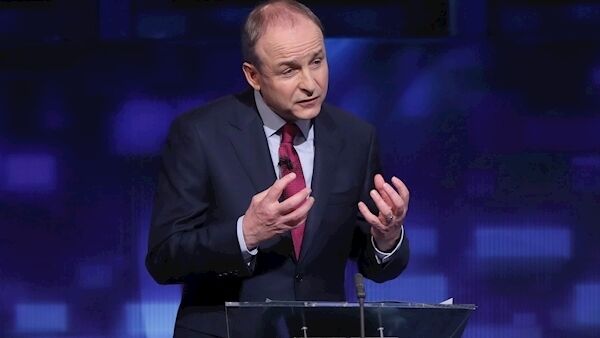
Citing Brendan Smith as a former minister experienced in high-level international negotiations highlighted his problem all too brutally.
The Fianna Fáil leader finished strongly, though, with his focus on Sinn Féin’s evasion over the Paul Quinn murder.
Canvassers in his party and Fine Gael agreed that it contributed to a softening in support for Mary Lou McDonald on the doorsteps in the dying days of the campaign.
How to explain the surge in support for Sinn Féin in successive opinion polls, though? There is evidence to suggest that, historically, the party struggled to pick up the floating voter who decides late in the campaign.
It may be that the desire for change across the electorate evident over the last three weeks, and latent for a year or more, trumps that apparent squeamishness.
The party has clearly struck a chord with the younger voter.
Nearly a quarter of a million teenagers passed the 18 mark since the last election.
Even if only half turn out tomorrow, that is a huge block of votes, and the Green Party felt that climate change and Greta Thunberg would help it to own that cohort.
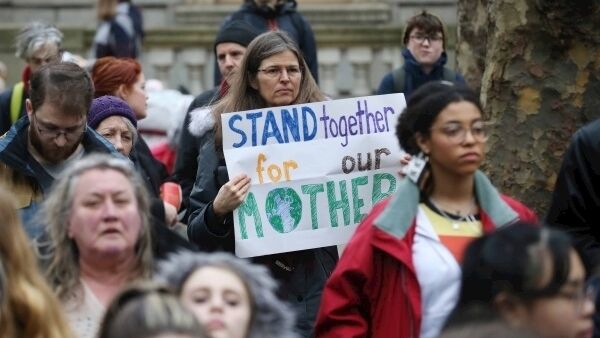
It now concedes that Sinn Féin has eaten that particular lunch and put a cap on extra Green seats.
Could Fine Gael have pivoted mid-campaign to take account of demands for change? Probably not.
The party was too wedded to its own record, and its not unreasonable insistence that Brexit remained a live and potentially toxic issue for all our futures.
But Fine Gael seems temperamentally resistant to recalibrating its appeal.
Four years ago, Enda Kenny cited David Cameron, who had told him that sticking to his guns whatever happens in a campaign is vital.
“Have faith, it will work, it will turn around” the Tory leader is said to have advised Kenny, displaying the kind of insouciance that led to the Brexit disaster months later.
It didn’t work then, and it didn’t work for Kenny in his own campaign.
But when the tide is out, there is little a campaign can do to summon it back in for a party.
Even if polls suggest a less fragmented outcome than 2016, they still point to a result that’s not clear-cut and a period of horse trading before any government emerges.
Let’s hope it can be accomplished more swiftly than four years ago, when it took 70 days, and produced an administration that was spancelled by its reliance on its main rival and achieved very little in its four-year term.
Chief quips
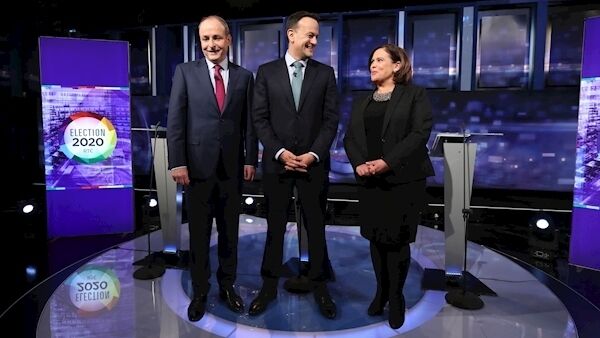
As campaigning for the general election comes to an end, we look at some of the worst and most memorable quotes from the last 25 days.
Leo Varadkar’s attack on his rival during RTÉ’s Prime Time debate caused a few raised eyebrows when he said: “Putting Micheál Martin back in office would be like putting John Delaney back in charge of the FAI in nine years’ time.”
Green Party leader Eamon Ryan critiqued his own proposals to introduce wolves into Ireland: “It was a howler.”
Mr Varadkar during RTÉ’s Prime Time debate: “All change isn’t change for the better — look at Brexit and Trump for example.”
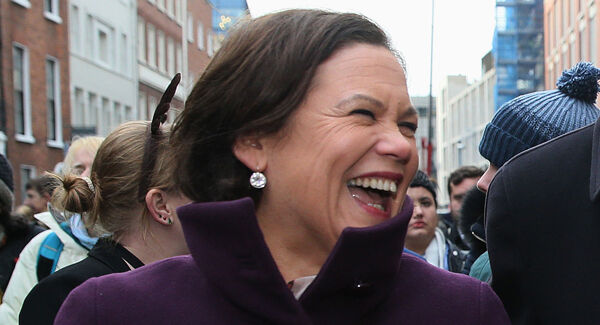
Mary Lou McDonald asked Mr Martin during one debate if he was going to “mansplain” corporation tax to her, after criticising her rivals for their alleged similarities: “Spare us the pretence of a critical tension between Tweedledum and Tweedledee.”
Ms McDonald’s quips on her rivals became more and more common due to their popularity on social media, and at one time during the campaign she labelled Mr Varadkar, Mr Martin, and Brendan Howlin “the three horsemen of failed government”.
During the first seven-way leaders’ debate, Richard Boyd Barrett garnered the first applause of the evening when he took on vulture funds.
He said: “First of all if you want to solve the housing crisis, what you don’t do is do what Fianna Fáil and the Greens and then Fine Gael and Labour did, sell off €40bn or more of public land through Nama to property speculators and vulture funds.”
Catherine Noone’s now infamous comments on her party leader Mr Varadkar’s social skills, for which she apologised.
“He’s autistic like, he’s on the spectrum, there’s no doubt about it,” she said while canvassing in her constituency.
“He’s uncomfortable socially and he doesn’t always get the in-between bits.”
Mr Martin noted: “The old provos hate the Special Criminal [Court]”, in a jibe at Sinn Féin during a televised debate.
And finally, “there are a fair few nutters in every party, including my own”, Mr Varadkar said as he took on John Paul Phelan’s criticism of the Green Party.

CONNECT WITH US TODAY



Be the first to know the latest news and updates