New proposals on flooding - Credibility the issue in debate on quay plans
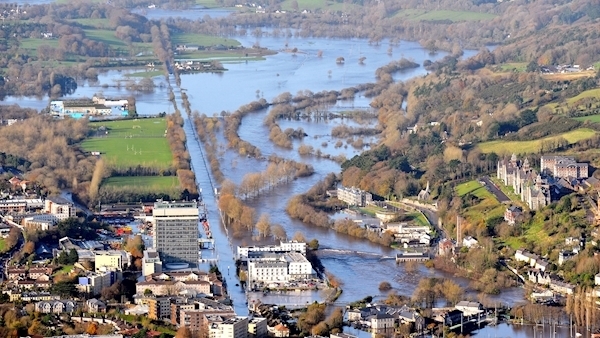
It is not necessary to leave Cork to see examples of flood- protection work undertaken by the Office of Public Works that must colour views of that organisation’s idea of sustainable infrastructure that enhances and protects its setting.
Some river works are characterised by an industrial-grade utilitarianism indifferent to the sensitivities that celebrate beautiful river settings, the pleasures those settings offer humans and the refuge they offer flora and fauna.

They may be satisfactory in engineering terms but then so too is a good railway yard.
Be that as it may, the OPW is a central player in the Lower Lee Flood Relief Scheme which is intended to try to help resolve flooding issues in Cork City. The character of the city and its relationship with the channels of the Lee splitting it is in play. The Lee Fields, an unsung jewel, will be transformed.
In recent days the OPW, along with the city and county councils, have published revised proposals which, they say, will “provide protection to over 900 homes and 1,200 business properties”.
Those proposals come after sustained public pressure which used arguments that the OPW and the councils dismissed as “emotive” and “untrue”.
The authorities have suggested that “there will be no high walls anywhere along the city quays ... the majority of quayside parapets will only be to knee-height. The highest new defence is lower than a number of the existing quays.”
No matter how measures to divert surging waters succeed, no matter how you wish to see this project succeed it is hard to imagine how knee-high defences might make a significant difference as anyone who saw the devastating floods of 2009 and 2014 will attest.
It is hard too, even with the best will in the world, to have confidence in the dismissal of tidal barriers.
Accelerating climate change and rising seas anyone?
Unfortunately, this is not a matter of economics, engineering or even local democracy.
It is a matter of accountability, of credibility in public affairs.
The OPW will deliver something close enough to whatever is agreed with the local authorities but whether that protects or enhances the city is still anyone’s guess.
It is tragic such scepticism is justified but a visit to Skibbereen or Bandon supports criticism. These are legacy issues and there’s far more than the fabric or viability of the city at stake.