Readers blog: NI and Scotland's love affair with Europe born in antipathy
NOW that British Prime Minister May has triggered Article 50, many voters in Northern Ireland and Scotland find themselves peering through Alice’s Looking Glass at a transformed world they did not ask to visit.

Readers blog: NI and Scotland's love affair with Europe born in antipathy

In the 1975 referendum, the majority of voters in these two British regions voted clearly in favour of exiting the then European Economic Community (EEC). Yet, fast forward to 2017, and the irony is inescapable that these very same regions find themselves pitted against the Brexit argument.

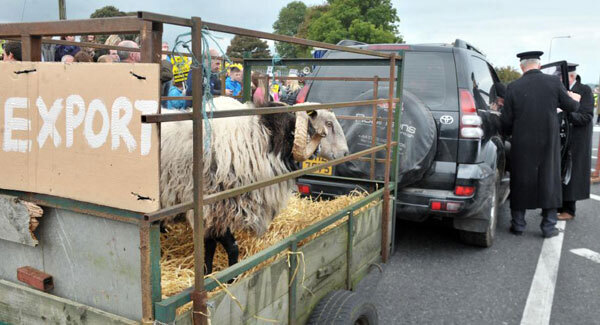
In 1975, nationalist parties in Scotland and Northern Ireland shouted their disapproval from the hilltops, based on three main reasons; the illegitimacy of the London government to act on their behalf, their fear of yet another foreign government controlling their lives and the prospect of heavily-subsidized European farmers undercutting British produce and impoverishing farmers.

In Northern Ireland, opposition to Brussels featured a particularly local flavour. Some Protestants painted the EEC as a ‘Catholic’ conspiracy and many Catholics believed the EEC as a distraction from a united Ireland. In sum, if the UK were to remain in the EEC, it would do so dragging the Celtic periphery along.

However, times have changed and several developments have combined to give the Scots and Irish grounds for a different outlook on membership.

First, in 1975, there was no real European Regional Development Policy to speak of, so the Northern Irish and Scots expected no obvious benefit. Why would any reasonable person choose to vote for a foreign trade bloc with no track record in supporting underdeveloped regions?

Today, the EU operates a broad regional fund with deep pockets, which has invested billions of pounds in its regions.

Indeed, over the next five years, the EU had plans to spend a total of 150 million pounds per year on infrastructure development projects in Scotland and Northern Ireland combined.

This means that Northern Ireland alone would get over twice the per capita funding going to England.

The story gets even better in terms of direct EU compensation for farmers over the same period, when Scottish and Irish farmers were due to receive three times and five times, respectively, the per capita compensation destined for their English counterparts.

After Brexit, this financial vacuum will be London’s responsibility.

Second, since the 1970s, both Scottish and Northern Irish political parties have fought for, and won, limited autonomy, devolution, and their own national parliaments within a more flexible UK structure.

Today, this fundamentally different scenario allows them a more self-confident relationship with London.

Ironically, the EU has actually facilitated this devolution process.

Before membership, regional devolution was unwelcome to the London political elite, afraid of setting in motion an irreversible path towards independence.

However, within the broader EU structure, London felt more comfortable loosening some of the ties of domestic union.

Moreover, as part of its regional development program, the EU’s direct engagement with regional political parties allowed both Scottish and Irish regional parties to gain political legitimacy, boosting their own local profile and respect as serious players.

In the past few weeks, events in both Scotland and Northern Ireland have demonstrated the very real frustrations of the people there over London’s determination to pursue Brexit without meaningful consideration of all citizens’ views.

As a result, London will have to deal with significant threats to its domestic union while negotiating its own national Brexit deal with the EU, the dreaded two-front face-off.

In Scotland, the parliament is already debating a second independence referendum in less than three years. In Northern Ireland, a recent parliamentary election campaign, dominated by the local consequences of Brexit, has elected a clear anti-Brexit majority and radically altered the political order in that region.

In contrast to 1975, the majority of inhabitants of both regions now oppose Brexit.

Not necessarily born of an idealized love for Brussels, they realize that the EU has benefited their regions financially and politically and, in Northern Ireland, it remains a key pillar of the peace process.

The tale of Alice concludes with a jury voting on the Queen of Heart’s order, ‘off with her head’. Many in Scotland and Northern Ireland especially are now left wondering how this Brexit case even got to court.

Peter Moloney, New York 

If you would like to make a blog submission for consideration and possible inclusion in the irishexaminer.com readers' blog submit it HERE

x

More in this section

Revoiced

Newsletter

Had a busy week? Sign up for some of the best reads from the week gone by. Selected just for you.

Cookie Policy Privacy Policy Brand Safety FAQ Help Contact Us Terms and Conditions

© Examiner Echo Group Limited