Behind the fairytale: The years of work that go into preparing a wedding carriage horse
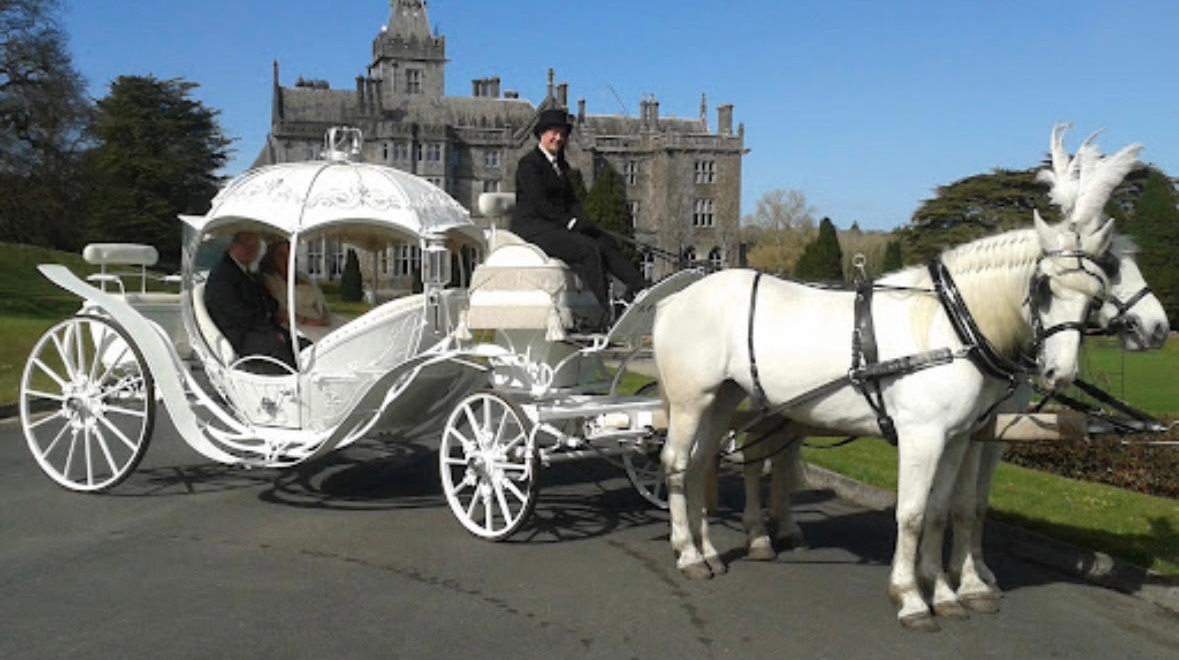
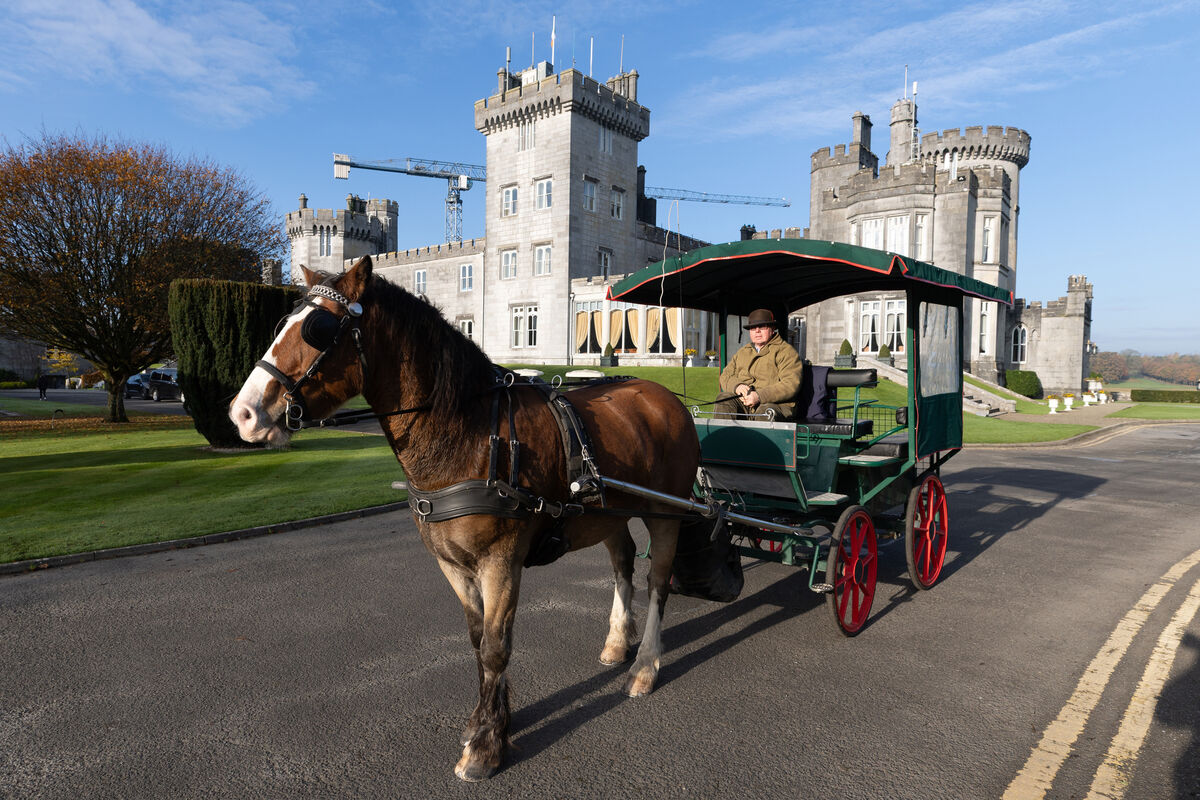
John O’Grady with one of his 14 carriages drawn by some of his 18 horses at Dromoland Castle. He says he caught the horse-and-carriage bug as a child and went on to set up Step in Time Carriages in 2000. Pictures: Eamon Ward
While the horses behind John O’Grady’s Cinderella-style carriages might look straight out of a fairytale, the training to get them roadworthy is anything but.
“Some of them require up to three years of training before they can do a wedding,” he told the .
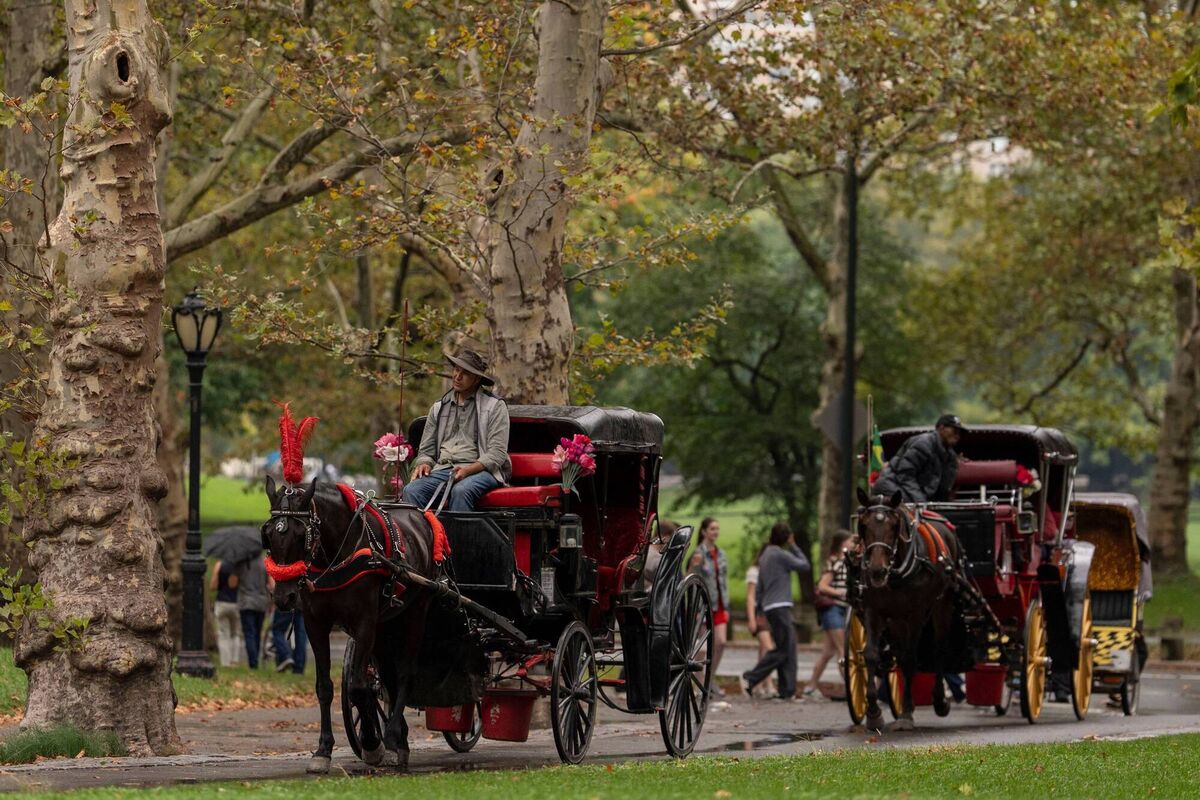
The Clare man, who owns Step in Time Carriages in Sixmilebridge, was speaking after New York City Council passed a new veto-proof bill on October 22. Referred to as Romanch’s Law, it will bring horse-drawn carriage rides in Central Park to an end after 168 years.
What were once considered fixtures in the area will be fully phased out by June 1, 2028. The move follows the death in June of 18-year-old student Romanch Mahajan, who jumped from a carriage led by a runway horse and suffered a head injury.
Mahajan Romanch was later pronounced dead in hospital.
John said he does not believe an outright ban is needed on horse-drawn carriages in Ireland, but stressed he would welcome regulation in the industry here to protect horses on the road.
“New York is certainly getting a lot more publicity but I am all for regulation. You hear of horses being mistreated. Some are not kept in proper yards. I can’t see a ban happening as I don’t think it’s as much of an issue here, but regulation is definitely the way to go.”
The father of three, who has 14 carriages in total for weddings as well well as funerals, spoke about the training undertaken by his Irish Draught and Friesian horses.
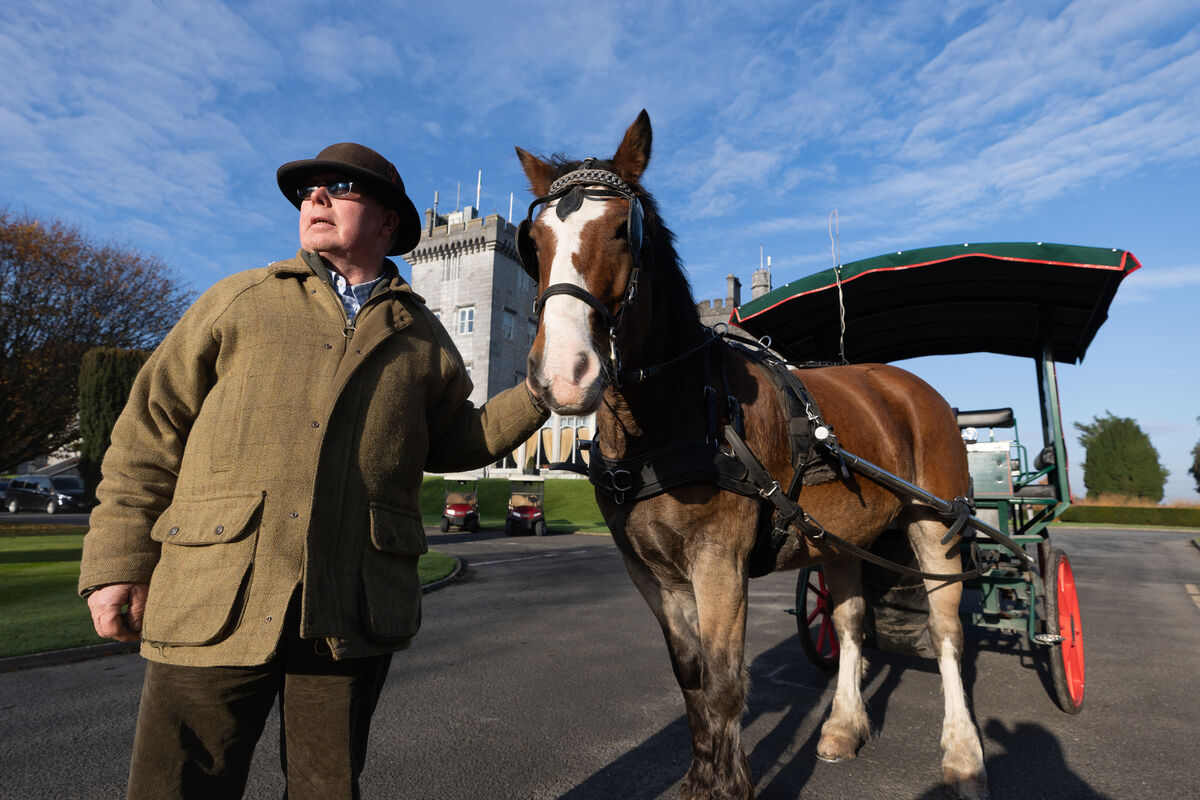
“I’ve been doing this since 2000 but my interest in doing something like this was always there.
“What gave me the idea was being born and reared around horses. My uncle had a working horse he used to transport hay and turf. I was really interested in this type of work and that’s what got me into it.
“My father bought us a pony when we were around six or seven. He them made us a cart for him. I immediately had the bug and was far more interested in driving than riding.”
The Step in Time Carriages business is very much a family affair with John’s daughters Áine, Christina, and Myra all helping with the day-to-day operations.
“Every one of my horses is homebred. I don’t buy anything in. We halter train them from the time they are foals but it’s three years before I can fully trust them at weddings and funerals.
“We are constantly blowing whatever machine we have in the yard so the horse can get used to sirens and loud traffic. We have an American barn which we play loud music from. A lot of the time you have pipers at funerals and you have to make sure that none of the horses are afraid of them. The music from the shed is quite loud which is usually a big help.”
On the preparation that goes into a wedding or funeral, John said: “All the carriages are Polish-built with the exception of two old antique Irish hearses.
“It’s like a bubble because as soon as you have a white carriage people are looking for a black one. When you have a black carriage people are looking for a cream one, which is why we try to offer a bit of variety.
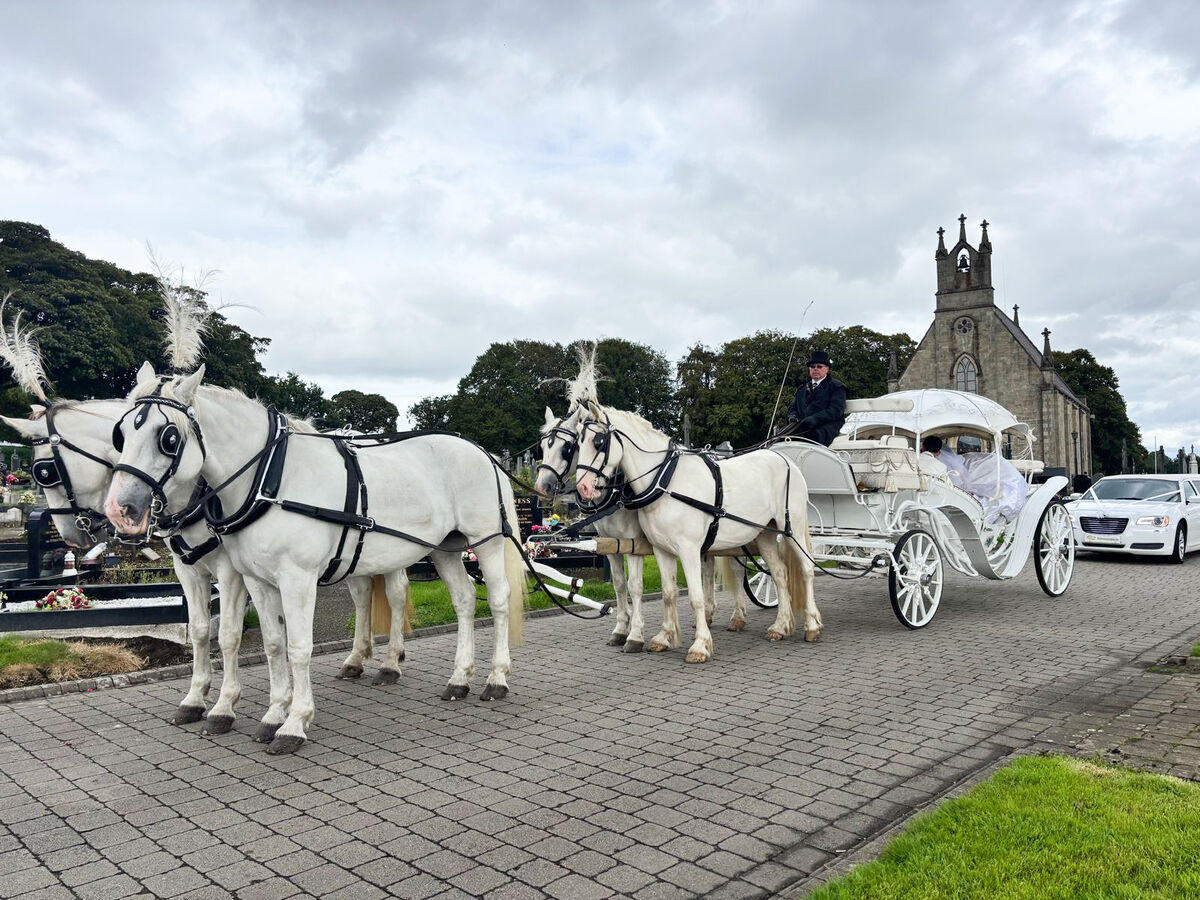
“The white hearse is very popular for funerals. Tradition is always the black horse but the family often add their own colours or maybe bows or matching feathers. People usually request a certain colour for the plumes. They might also ask for a second carriage for the bridesmaids.
“In the case of a funeral, people will sometimes ask for a second carriage for the mourners.
“It takes an hour each to wash the horses the day before. You are also getting the harnesses on so it takes an hour in total to load the carriage.
“On the morning of the wedding itself you are taking a half hour to wash the horse again as he would have been lying down the night before. Roughly about eight hours that goes into each wedding. Black horses can be much more forgiving when it comes to cleaning during the winter.”
Getting the horses used to busy roads is an important part of their training.
“We have our own private farm road that we start driving them on.
“They usually start off with a horse walker. We’ll do about another three months on the private road before introducing them to the public road to ensure they feel safe. We’ll go deeper into the village every day and gradually introduce them to more traffic. A second will then be introduced so they are driving a pair together for six months. After that, we start bringing them to jobs to get them used to being transported in the lorry.
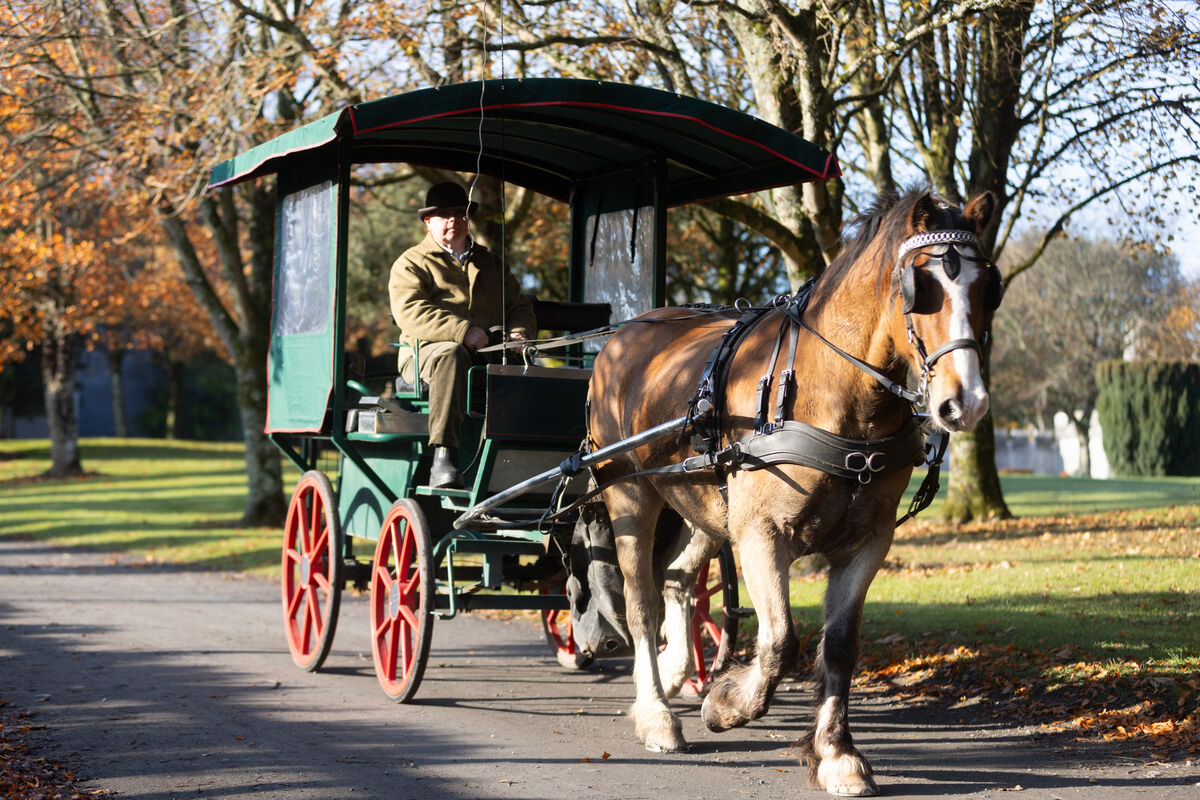
“I also work in Dromoland Castle so I’ll bring them here for carriage rides to get them experienced. Some others might only need 12 months of training, others need two years. However, it can take up to three years to train a horse and know that you can trust them at a wedding or funeral.”
John said that while funerals can take an emotional toll, they rarely affect him. “It’s like being an undertaker — so the job doesn’t affect you.
“We are handling the coffin when it’s closed. When you don’t see the person and you don’t know them, it doesn’t have the same effect. Most of the time the family just want you to carry the remains to the gate but in larger cemeteries you would go in.
“One of the few times I remember being affected was when I saw the coffins of five family members being buried together after a horrific tragedy. When you see them putting in two coffins and two more after that, it can affect you. There were five members of the same family who were buried that day. “
Things rarely go according to plan for John, who owns eight Friesians and 10 Irish Draught horses.
“Before we had the truck we used to transport the carriage on an open trailer. One morning I arrived to collect a bride from a wedding only to find that the front seat had blown off the carriage. I had lost it on the road and never found it. I had no choice but to fold up a coat and sit down on it. It wasn’t the most comfortable of days but I had no choice but to keep going.
“There is more going on behind the scenes than people could ever realise. On one particular day the wind was so strong it bent one of the bars of the carriage. We had to get jacks so it was a bit of a race to get it straightened out in time for the wedding.
“Another big issue is bringing in a horse on the day of a wedding or funeral and finding they are missing a shoe. I get a farrier in to help sometimes when we get really busy but I do most of the shoes myself and that’s the reason why.
“It might be 5am in the morning when you are bringing in these horses to be washed and you realise they lost a shoe overnight. You also need to be able to tell when a horse is not himself. He might be feeling off or sick so it’s important you have a spare in case you need to replace him at the last minute.”

CONNECT WITH US TODAY



Be the first to know the latest news and updates