‘We deserved better’: The families still living with the devastating fallout of one-punch violence
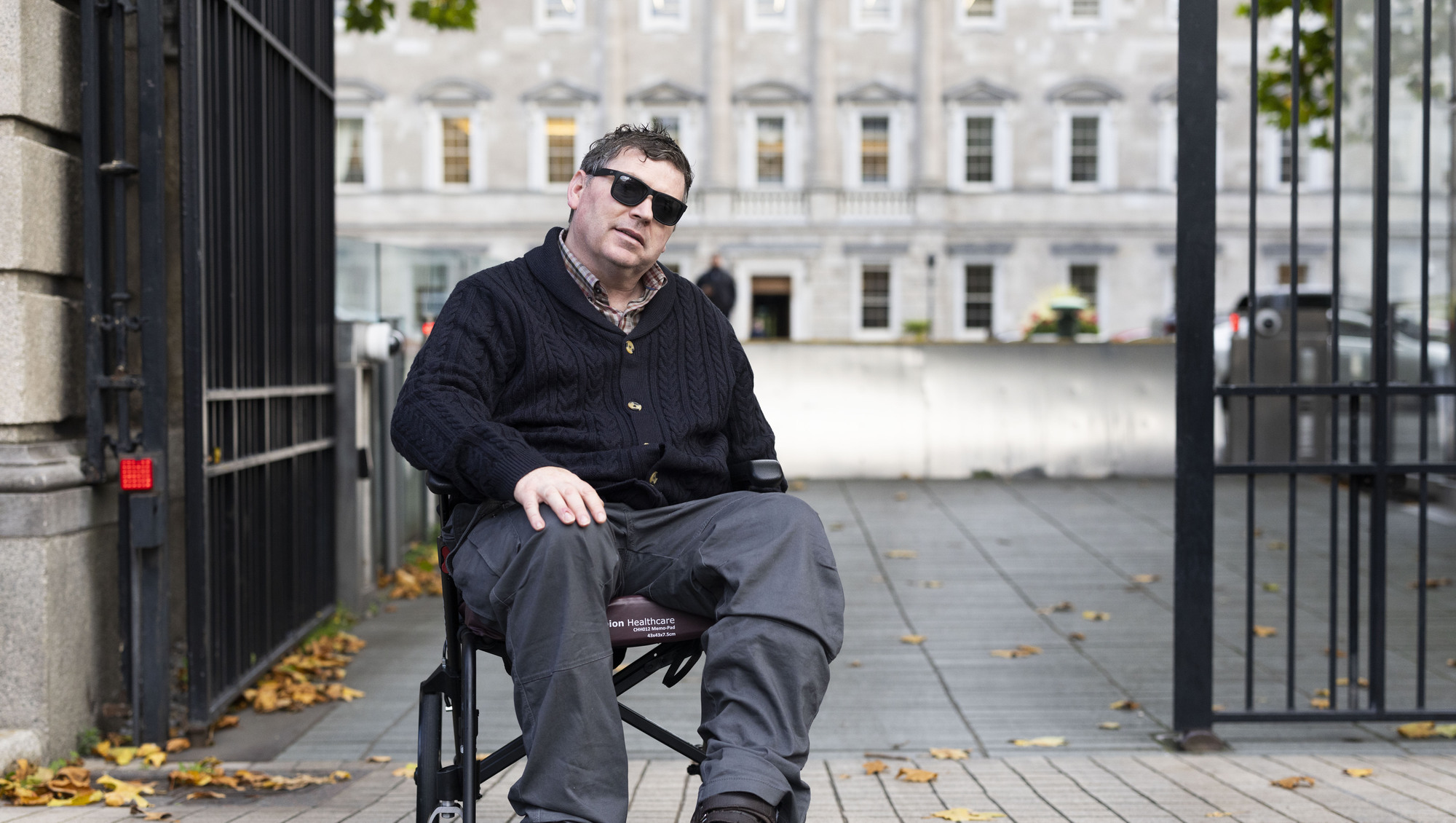
Brian Hogan, a survivor of a life-changing one-punch assault, outside Leinster House before attending the committee on justice, home affairs and migration. Picture: Sam Boal/Collins Photos
When Brian Hogan politely told a stranger on a night out in Nottingham that he couldn’t come back to his home, he didn’t think that it would be the end of life as he knew it.
That split second changed not just the trajectory of the Limerick man’s life but that of his family forever.
On that night in July 2009, Brian was living his dream, working as a senior quantity surveyor in Nottingham.
But 17 years later, he is now blind and wheelchair dependent, living in an assisted living facility in Clarecastle, Co Clare.
The now 49-year-old told members of the Oireachtas committee on justice, migration and home affairs this week: “Seventeen years ago, I was a healthy and fit 32-year-old man, happily living and working as a senior quantity surveyor in Nottingham, when I became the victim of an unprovoked one-punch assault.
"I was on a night out with people who I thought were my friends and invited them back to my house for a drink.
"On the way home, I noticed a man in the group that I didn’t know.
"When I politely told him that he couldn’t come back to my house, he punched me in the face, causing me to fall and strike my head on the kerb.”
Read More
Not knowing the seriousness of what had happened, Brian did not go to hospital in the ambulance that came to the scene, thinking all was okay.
However, as the night turned into the next day, the one-punch attack had led to the beginning of a nightmare for both him and his family.
He told the committee: “The following morning, I was found unconscious and rushed to hospital. I had suffered a massive brain bleed and underwent emergency surgery.
"My parents in Limerick were contacted and told that I had a 10% chance of survival.”
For four months, members of his family sat by his bedside as he lay in a coma, not knowing if he would ever wake up.
When he finally woke, he was shattered to realise he could not see and was left paralysed.
“This hit me, and my family, like a truck," he said. "I was blind, paralysed on my left side, and unable to speak.”
With intense physiotherapy, Brian fought hard and learned how to walk and talk again.
However, the assault had left a huge impact on his future.
“The physical injuries were enormous, but so too was the emotional impact," he said.
"I lost my career, my income, my independence, and the future I had planned. It was devastating to realise the impact my injury was having on my family, particularly my parents.”
Ten months after the assault, Brian was brought back to Ireland, initially to a nursing home, before a place was secured in a facility operated by Acquired Brain Injury Ireland in Clarecastle.
He told the committee members that his attacker was able to walk away from the scene while his life was changed forever.
“I am living with the consequences every single day," he said.
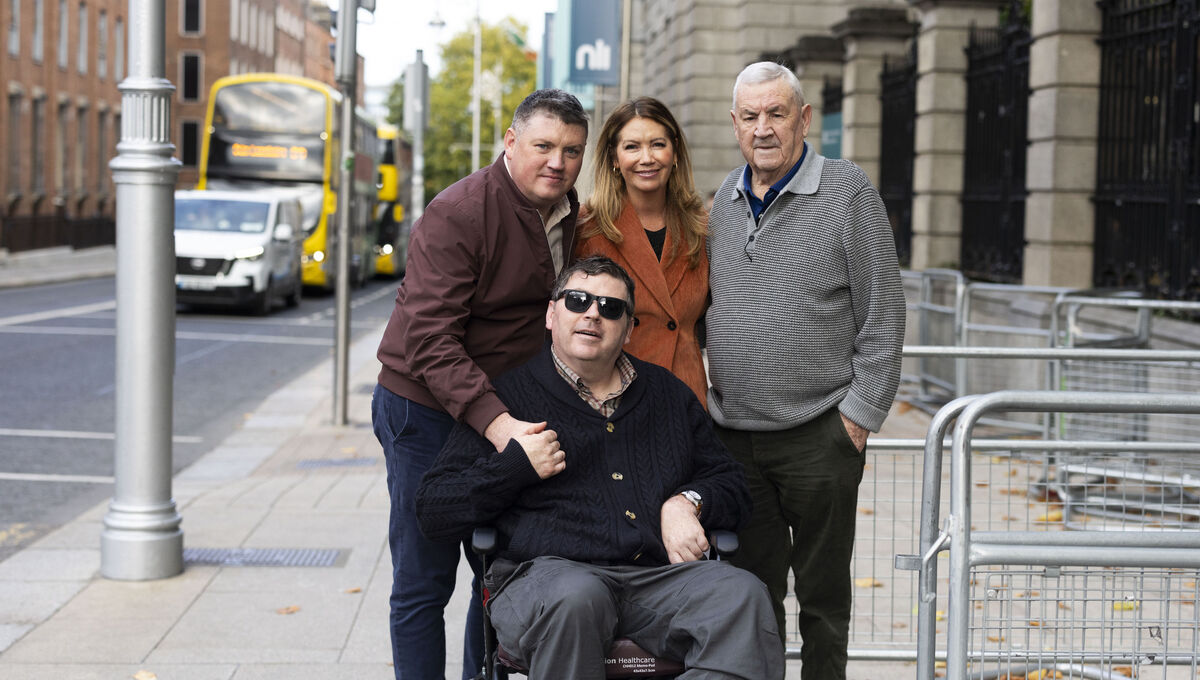
"I lost my sight, much of my mobility, my career, my earning potential, and my independence. These are not temporary consequences. They are lifelong consequences.”
He asked Oireachtas committee members “to remember that a so-called ‘one-punch assault’ is never just one punch".
"For many victims, it is a life sentence," he said. "The assault lasted a matter of seconds. The consequences can last a lifetime.”
Both Brian and his sister Nevis, who also spoke to the members of the committee this week, highlighted how the lives of parents and siblings changed after the incident.
Nevis said: “It broke my parents’ hearts. It broke ours too, as his siblings. We watched our family suffer in ways we could never have imagined.
"The physical injuries were visible, but the emotional pain, fear, grief, and helplessness carried by our family were just as real.
“The assault happened in 2009, but its consequences never ended.
"We continue to live with the reality of what was taken from my brother and what our family has endured.
"No words can adequately describe the pain of seeing someone you love lose their independence, their sight, and so much of the life they should have had.
"My brother deserved to live his life without this happening to him.
"Our parents deserved to enjoy their later years without this heartbreak, and our family deserved better than a lifetime of consequences caused by one unprovoked act of violence.”
The Hogans spoke to the Oireachtas committee alongside other families affected by one-punch assaults.
Among them was Courtney Mullally, whose uncle Patrick died in 2016. Ten years on, Courtney’s pain remained evident.
“The term 'one-punch' can make fatal violence sound less serious than it is," she said.
"If someone chooses to use physical violence, the potential consequences must be clear.
"A defined minimum sentence could help reinforce the gravity of that decision and may act as a deterrent.
"My belief is that sentencing alone cannot prevent all violence. Early intervention and education must also play a role.
"Ultimately, this is about both accountability and the families left behind.
"A person who is convicted should face consequences that reflect the seriousness of the offence and not be left solely to judges' discretion.
"Families should not be left trying to understand an unclear or unexpected outcome at an already devastating time.
"My uncle’s life was taken, and the consequences for my family are permanent.
"No change can undo that, but I hope these recommendations can help ensure greater clarity, consistency, and accountability for any unfortunate future families that go through this experience.”
Sharon Lynn and Bryan Gallagher have come together to push for change because of what happened to their brothers, Martin and Cian, in separate incidents in Dublin and Waterford.
They are now spearheading a campaign called 'Walk Away, Siul Leat', which is pushing for legislative measures, including a mandatory minimum sentence for one-punch attacks.
Martin Lynn was Sharon’s only sibling and died three days after a one-punch attack, seconds after getting out of a taxi near his home in July 2023.
His attacker, Christopher O’Neill from Larkhill Road in Dublin, was sentenced to six years in prison in January.
Martin’s family believes the sentence was too lenient.
Sharon said: “Every one of us, whether you are male or female, has the right to make it home safely. Martin did everything right that night, and he should still be here.”
She said her family faced two and a half years of “confusion, fear, and uncertainty” before O’Neill was sentenced.
“When Martin’s killer was sentenced, my family was devastated to learn that the offender would likely serve just over four years after remission," she said.
She has now developed what is known as the Martin Lynn sentencing framework, which seeks three pillars of reform: Greater consistency in sentencing, improved transparency in sentencing decisions, and stronger recognition of families in the criminal justice system.
“Consistency does not mean identical sentences. Every case is different, and judicial discretion must remain," she said.
"It means applying a structured approach to assessing the circumstances surrounding the offence [both aggravating and mitigating] and clearly explaining how those factors influenced the sentence.”
She called on policymakers to support structured guidelines for fatal assault manslaughter through the sentencing guidelines and information committee.
“That was the route used for the recent Section 40 domestic violence guidelines adopted in March of this year," Sharon said.
"I also ask for a publicly accessible database of manslaughter sentencing outcomes and free access to written sentencing remarks for bereaved families.”
Courtney Mullally agreed that the issue is not about treating every case identically.
She called for a clearer, more consistent, and accountable sentencing framework, which would allow families to understand the outcomes and “have realistic expectations of the process”.
Sharon Lynn and Bryan Gallagher have been looking at the example of Australia, where a campaign called 'Stop the Coward’s Punch' has been established.
According to that campaign, more than 170 people have died in Australia since 2000 because of one-punch assaults.
Bryan, whose brother Cian died after a one-punch attack in Tallow, Co Waterford, in 2022, said: “We do not even know the full extent of the issue in Ireland as there is no data because to date this issue has never been treated as anything more than a headline or tragedy.
"Australia, Scotland, England, and Wales have made that shift to include a zero-tolerance approach and a public health approach towards this issue. It is time for Ireland to do the same.”
The Walk Away, Siul Leat campaign wants:
- A national awareness and prevention campaign with a zero-tolerance approach towards unprovoked violence;
- A cross-government public health strategy, modelled on Scotland's violence reduction unit and Australia’s Cowards Punch campaign;
- Independent research to understand the full scale of this issue;
- Escalation of the Martin Lynn Sentencing Framework;
- Dedicated support for survivors and families.
Niamh Maguire, of the law department in the South East Technical University, said it is time to tackle gaps in legislation.
“Over the last decade, significant progress has been made in improving the structural coherence of sentencing in Ireland," she said.
"The development of guideline judgements by the appellate courts has increased sentencing consistency. However, existing guideline judgments do not cover all offences, and important gaps remain.
"The sentencing of one-punch assaults resulting in death is a good example of such gaps. Existing guidance on manslaughter was not developed with these specific cases in mind and does not fully address the particular circumstances that arise in such offences.
"In my view, there is a strong case for the development of offence-specific sentencing guidelines dealing with one-punch assaults resulting in death.”
It is expected that the members of the justice committee will compile a report on the issue of one-punch assaults before the end of the year.

CONNECT WITH US TODAY



Be the first to know the latest news and updates