25 years on from 9/11: The profound loss suffered by New York’s Irish community
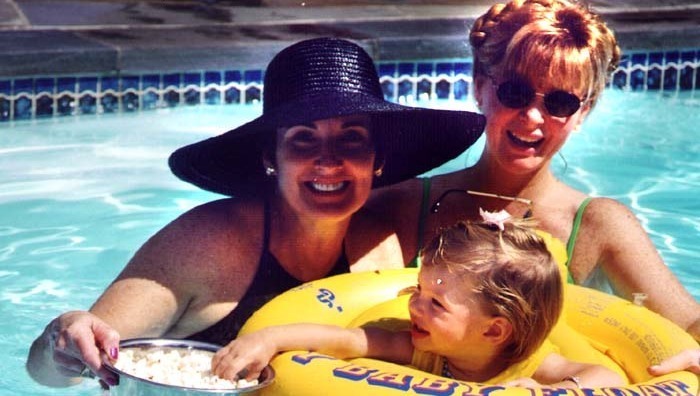
Cork woman Ruth Clifford McCourt, right, with her daughter Juliana and her best friend, Paige Farley Hackel. All three perished on 9/11. Ruth's brother Ronnie Clifford survived, having fled the World Trade Center as the plane with Ms Hackel on board struck the north tower. Minutes later, the second plane, with Ruth and Juliana on board, struck the south tower. Picture: The Echo
Though the attacks of September 11 were very much an attack on America, the Irish and Irish-American community suffered a profound loss on September 11, 2001.
New York’s large Irish community was deeply connected to the World Trade Center, the FDNY, the NYPD, and the emergency services.

At least 18 Irish citizens died in the attacks, including seven people born on the island of Ireland, while hundreds more victims were of Irish descent.
A look at the names on the memorials which adorn fire stations and the memorial to the 343 lost firefighters throws up a slew of undeniably Irish names, but the losses were felt not only at individual firehouses but across communities in the Bronx, Queens, Brooklyn, Manhattan, and Long Island.
While Michael James Stewart from Belfast; Ruth Magdaline Clifford McCourt, from Cork; Kieran Joseph Gorman, from Co Sligo; Jeremy Caz Carrington, from Co Down; Joanne Mary Cregan and Patrick Joseph Currivan, from Dublin; and Martin John Coughlan, from Co Tipperary were listed as the Irish dead on the day, the connection between Ireland and New York meant that up to 1,000 people, a third, killed on the day had some Irish heritage, according to estimates.
Author Brian McDonald says that the incident was “a wound” for the Irish community.
“There’s still a very tight community of Irish Americans that is part of the city, who take credit for building the city, who take credit for keeping the city safe for generations. And those people, we don’t forget. We do not forget this wound.”

Read More
The connection between the city and Ireland was particularly visible in the memorials that followed. Ireland eventually became home to several 9/11 memorials.
At Donadea Forest Park in County Kildare, two stone towers commemorate the victims, inspired partly by firefighter Sean Tallon, whose family had emigrated from the area. In Kinsale, County Cork, the Ringfinnan Garden of Remembrance was established with 343 trees, one for each FDNY firefighter and first responder killed.
The first tree was planted only two months after the attacks.
Kinsale woman Kathleen Murphy, who had been working as a nurse in Manhattan for four decades when the terrorist attack occurred, was so moved by the horror that she decided to establish a garden of remembrance on family land in Kinsale.
The Irish response extended beyond New York in the days that followed. On September 14, Ireland held a national day of mourning. Churches, businesses, and public spaces across the country fell silent, while thousands of people queued outside the US embassy in Dublin to sign books of condolence.
This article is part of Paul Hosford's special report on the 25th anniversary of 9/11 published by the 'Irish Examiner' in print and online on Friday and Saturday, September 11 & 12, 2026
The Irish government also worked through its diplomatic missions to establish the fate of Irish citizens caught up in the attacks.
The story of the Irish on 9/11 goes beyond nationality. It reflects the deep historical relationship between Ireland and New York: generations of immigrants built lives in the city, entered its emergency services and became part of the communities that responded when disaster struck.
A quarter of a century later, the Irish connection remains visible in the names at Ground Zero, the memorials in Ireland and the continuing remembrance of those who went to work that morning and never came home.