Dromcollogher fire: Remembering the 48 people killed in Ireland’s cinema tragedy 100 years on
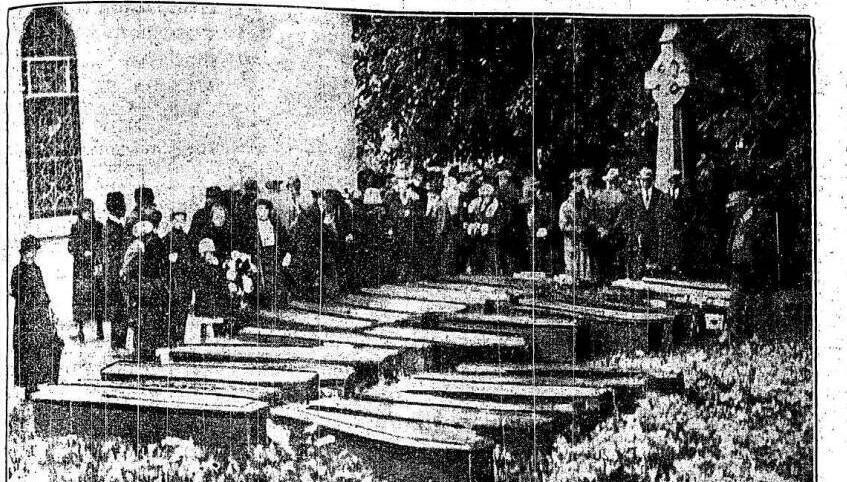
The 'Cork Examiner' reported on the fire in Dromcollogher, Co Limerick, in September 1926 in which 48 people died at a screening of ‘The Ten Commandments’ in a makeshift cinema in a loft above a shop.
For decades afterwards, they just referred to it as “The Burning”.
Forty-eight people lost their lives in the fire in Dromcollogher, representing about one in every 10 inhabitants of the West Limerick village.
The trauma and the lack of tools to cope with it ensured that it was rarely spoken about, never in public.
Next Saturday will be the centenary anniversary of the tragedy, the first major human disaster to befall the Free State.
It began with an entrepreneurial idea. Local hackney cab driver William ‘Babe’ Forde reckoned there was an opportunity to take advantage of a custom in Cork City of closing cinemas on a Sunday.
HISTORY HUB
If you are interested in this article then no doubt you will enjoy exploring the various history collections and content in our history hub. Check it out HERE and happy reading
He knew a projectionist by the name of Patrick Downing who worked in the Assembly Rooms cinema on the South Mall.
He contacted Downing and proposed that they set up a showing of the highly popular Cecil B DeMille production, on a Sunday evening in Dromcollogher.
Downing would travel up with the reels and equipment.
None of this was unusual for the times. Popular films were often shown in small villages and towns, far from cinemas, in an “unofficial” capacity by projectionists making a few extra bob with a nixer.
A deal was struck between the two men. Forde then hired the upstairs of a hardware store in the village. Access to the first floor loft was up a set of wooden steps from the outside.
The only other negotiation to be had was with the Man Above.
Read More
Sunday evenings across the country in 1926, and for many years afterwards, meant benediction, the ritual prayers reserved for the evening as everybody would already have attended mass in the morning.
Benediction in Dromcollogher was scheduled for 9pm.
So it was that at around 9.30pm, the crowds began filing up the steps to the loft above Brennan’s hardware store.
Forde had organised for a generator to provide the electricity required for the projector and to light up the loft. More lighting was needed in the vicinity of the projector and this was provided by candles.
Downing had arrived in town after getting the train from the city to Charleville where Forde had organised for him to be collected.
Crucially, he was travelling without the metal casings in which the film reels were stored. These were usually used because the film reel was nitrate coated and highly flammable.
One estimate had it there were around 150 present in the loft, including a large number of children, when the screening began. The entry price was nine pence.
Shortly before 10pm, the crucial incident occurred. A candle fell and hit one of the unprotected reels. Downing later told the inquest of his immediate reaction.
“I ran over and clapped my hands on them, but unfortunately someone came along and hit the burning films with a cap and the flames went over onto the other films. The crowd stayed for a while, as if expecting the fire would be quenched. Then they ran for the door. I shouted ‘keep cool, keep your seats’. But they rushed down to the door.”
In fact many of the patrons ran in the opposite direction into a small room which had a window.
This escape route was identified by a man in attendance who had been in the IRA and knew that the bars in the room had been bent back in order to facilitate a quick escape during the War of Independence.
Now the patrons entered the room and began squeezing through the window.
One woman was struggling through when her “feet became caught in the bars … and who was burned to death in that position”.
The incident also rendered redundant the escape route, trapping those behind her.
Garda John Davis described to the inquest what he encountered when he entered the loft in a rescue attempt.
“About fifty or sixty people were huddled in a corner. I called on them to follow me. I caught two girls and started to rush them to the entrance door, but had only gone a few yards when they stopped and pulled me back.”
One of the girls ran to the room at the back and tried to get out by the window but he got her back and they moved again to the door.
His eye caught those who were huddled together “in a deathlike grip with horror and fright on their faces”.
“I tried once more to rouse them and shouting for them to follow I started to run, dashed through the flames and flung myself down the burning stairway.”
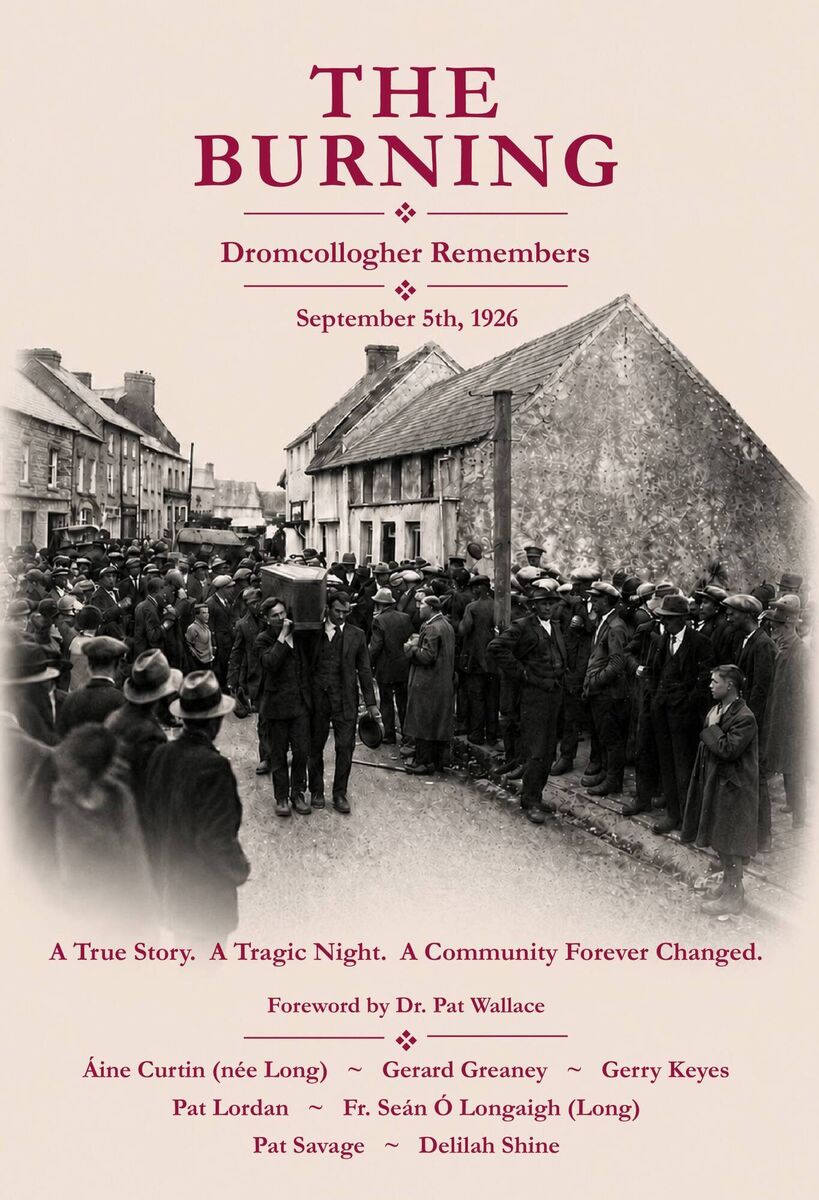
At this point in the hearing, the garda was visibly weeping.
“Unfortunately they did not move and all perished.”
Downing told the inquest that he hadn’t been happy about putting on the film that night.
“I didn’t want to start the thing at all. I didn’t like the place but Forde said he would like to start the first performance that night.”
As the day dawned the following morning, the dead numbered 46. Two others who were badly burned subsequently died of their injuries.
The tragedy was news across the country and beyond, being reported in newspapers in the UK and the USA.
William Cosgrave, the president of the executive (the precursor role to that of Taoiseach) attended the funerals and promised an inquiry. Yet there was no inquiry.
Forty six of the victims were buried in a common grave in the local church graveyard.
Forde and Downing were initially charged with manslaughter but the changes were dropped.
Forde emigrated to Australia and died some years later following an accidental poisoning.
Downing returned to Cork where he lived out his days before dying in the 1950s.
The site of “the burning” lay derelict for over 20 years before a local committee raised funds to build a memorial structure on it.
In 1953, this opened as a memorial library.
Silence around the tragedy persisted for decades, a response that was entirely in keeping with a society and culture in which there was no outlet to publicly express grief.
That changed in recent years and a commemorating organisation, Dromcollogher26, was established.
The locally based group campaigned to have a national commemoration befitting the enormity of what occurred and the effect it had on West Limerick.
“We went about it ourselves,” committee member Gerry Keys says. “We started writing letters to everybody and then we petitioned local TDs and there was a good reception wherever we went.
“Then we made a presentation to the decade of commemorations committee and it was accepted. It was really great to get that over the line, just for the recognition of how serious this had actually been at the time.”
Next Wednesday the centenary events begin with the publication in the GPO of a specially commissioned commemorative stamp.
The main feature of the weekend will be the official State commemoration, which will be attended by An Taoiseach Micheál Martin. The ceremony will be broadcast live on the RTÉ News channel.
On Saturday evening an even more poignant event will take place with Mass in the local church celebrated by Bishop John Fleming, followed by benedictions to echo the ceremony attended by those who went on to the screening on that fateful evening.
Each of the 48 victims will be individually remembered in a candle-lighting ceremony.
After the candles are placed on the communal grave, a procession in the footsteps of the movie goers from a century ago will take place down through the village.
This will include members of An Garda Síochána, the Defence Forces, the Irish Red Cross, and the Fire Service along with local schoolchildren.
A century on from a night that devastated a whole community there will finally be a fitting remembrance for those who died and the bereaved condemned so long to silence.

CONNECT WITH US TODAY



Be the first to know the latest news and updates