Book review: Clifford is unflinching in his takedown of Garda procedure
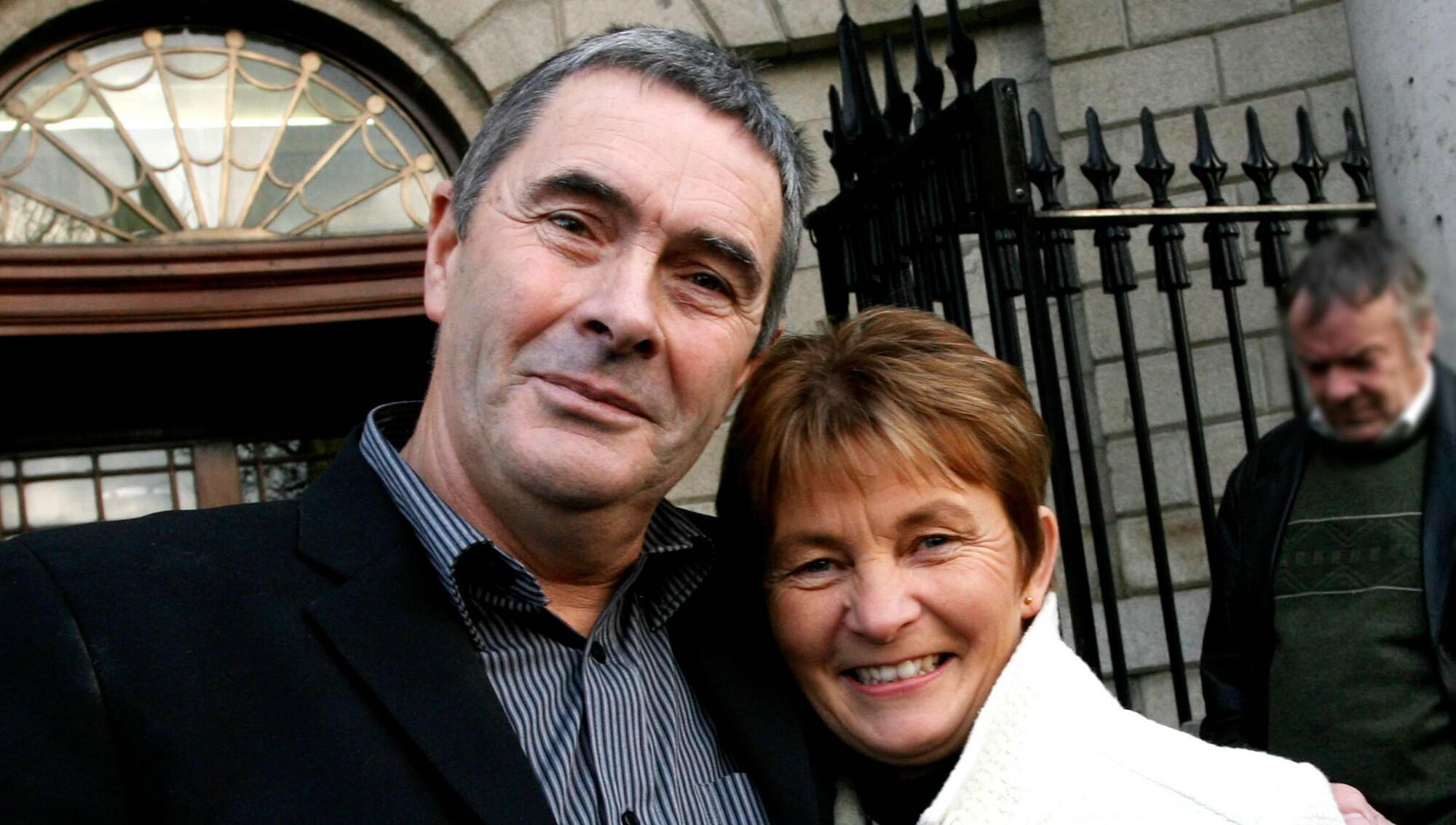
A happy Martin Conmey of Porterstown Lane, Co Meath, with his wife, Ann, in November 2010, after his conviction for the manslaughter of Una Lynskey in 1972 was quashed by the Court of Criminal Appeal. File picture: CourtPix.
- Who Killed Una Lynskey? A True Story of Murder, Vigilante Justice and the Garda ‘Heavy Gang’
- Mick Clifford
- Sandycove, €19.99
For his latest book, Mick Clifford, the award-winning journalist from this parish, takes us back to the Ireland of 1971 and the October killing in Meath of a 19-year-old civil servant, Una Lynskey, and the terrible consequences which derived from that foul deed.
This Ireland is a poor agricultural country on the periphery of Europe, where the people possess a strong deference to authority — particularly in the form of the Catholic Church and An Garda Síochána.
Most of its young people are poorly educated. Many of them don’t finish secondary school.
If they get in trouble with the law, they have no idea of their rights — something individual gardaí are only too willing to take advantage of. It is also a place which has significant migration from west to east.
Those who come from Mayo to Meath, like many of the protagonists in Clifford’s brilliantly told story, might be moving from one rural part of Ireland to another, but they are treated with suspicion by the locals. There are class tensions everywhere, and they are mostly to do with land and status.
This Ireland also has a curious attitude to women.
It has a marriage bar which requires female civil servants to resign from their job when they marry and bans married women from joining the permanent civil service.
However, while it treats them as the bedrock of society, it also regards them as a threat to morality as a line in a Garda report, after the victim in this terrible tale disappears, makes crystal clear.
In it, the Garda scribe writes that from “enquiries made, and facts disclosed, it appears that Una Lynskey was not a girl of loose morals”.
But this Ireland is changing. The sixties of western Europe are finally reaching this benighted land. Some of its more enlightened policy makers seek entry to the EEC (European Economic Community).
Its young people tune their wireless sets to Radio Luxemburg, and the young men drive old chocolate brown coloured Ford Zephyrs which — more often than not — are completely unroadworthy.
Beyond old bangers of cars that should not be on the road, this Ireland is a peaceful place.
The Northern Ireland conflict poses a difficulty for the State but, beyond that, serious crime — especially that of murder — is rare and An Garda Síochána boasts an admirable success rate in solving homicides.
The shining light of An Garda Síochána is the investigation section of its technical bureau, the so-called “Murder Squad”.
Like the Catholic Church, An Garda Síochána is used to having deference bestowed upon it by the population and, like the Catholic Church, members of the Murder Squad feel they could look into their own hearts — a la the founder of this society, Éamon de Valera — and discern who the guilty party is.
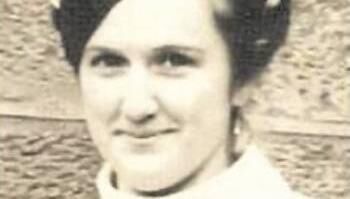
It is within these conflicting and changing Irelands that Mick Clifford situates the brutal murder of Una Lynskey.
Her Ireland is a place of class tensions, parental disapproval of boyfriends, crushed dreams, and modest aspirations of marriage and babies.
However, it also a place where young, uneducated men in their early 20s live uncomplicated lives of girlfriends, Gaelic football, cars, casual labour, and alcohol.
Money comes and goes easily. This is the life of three young local men: Dick Donnelly, Martin Conmey, and Marty Kerrigan.
Two of these men will eventually be charged with Una Lynskey’s murder, and one will tragically lose his life — killed by relatives of Lynskey — as a direct result of coming under Garda suspicion.
From the outset of Una Lynskey’s disappearance the Murder Squad focused on these men and ignored all other avenues of inquiry, particularly the strange sighting of a fancy Ford Zodiac driven by a well-dressed, middle-aged man which was seen by a number of witnesses in the area at the time Lynskey went missing.
Clifford shows that original witness statements, alibi timelines, and the behaviour of the suspected men in the immediate aftermath of the discovery of Lynskey’s disappearance make it virtually impossible for them to have had anything to do with the crime.
Yet the Murder Squad knows better, despite the insistence of its head that “it is dangerous to theorise in a case like this”.
Clifford methodically, and with a rigour not shown by the gardaí, shows how the evidence against one of the suspects was so flimsy that it beggars belief how a case was brought against him at all.
Much of it is based on changing witness statements by a number of people, sometimes up to four times, all of which help the Murder Squad’s theory. These changing statements are not revealed at the subsequent trial.
It is clear that the gardaí in the case settled on three easy suspects instead of doing the hard yards of finding the missing motorist in the flash Ford, even if just to eliminate him from their enquiries.
In making this decision, they perpetrated a cruel wrong — not just on their three suspects, but on Una Lynskey herself.
Clifford is unsparing in his criticism of the gardaí involved, but it is based on his meticulous recreation of the events of that terrible winter for the residents of Porterstown and its environs.
In this era, An Garda Síochána is an organisation which is 10 years behind its European counterparts in the sophistication of its investigative techniques and will be blighted by allegations, including in this case of serious violence by some of its members against suspects and of blatant perjury in the witness box.
These individuals were known as “Heavy Gang”, and principally involved members of the Murder Squad assisted at times by local gardaí.
The techniques used in the Una Lynskey case were replicated with similar results in the Sallins mail train robbery of 1975, along with the murder of a woman named Vera Cooney in Dublin the following year.
The Heavy Gang’s most notorious involvement came in the infamous Kerry Babies case of 1984, and the modus operandus used was the same.
The Murder Squad came up with a theory as to who was responsible for the death of a newborn baby boy in Caherciveen, and all they needed was a confession — which they soon got from a woman named Joanne Hayes, whom they believed to be the mother.
The theory fell apart when blood tests showed the baby could not be Joanne Hayes’ amidst allegations from the Hayes family that confessions had been beaten out of them.
Hayes was innocent, as were the three men fingered by the gardaí in the Lynskey case. The Heavy Gang remains an uncomfortable legacy for today’s Garda Síochána and its members.
There is no happy end to Clifford’s tale. Convictions are quashed, but there is no solace for Una Lynskey — whose killer has never been found — or her family. Equally, there is little solace for those accused of the murder, whose lives were scarred for evermore.
Mick Clifford has produced a marvellous account of narrative political and social history, which tells us much about the crime and its investigation, the Ireland in which it took place, and those who policed it.
It is a book which will stand the test of time, unlike the botched investigation into a murder which scarred so many and reveals what that Ireland was like.
BOOKS & MORE
Check out our Books Hub where you will find the latest news, reviews, features, opinions and analysis on all things books from the Irish Examiner's team of specialist writers, columnists and contributors.