We cannot build an economic model around data centres if we want to reach our climate targets
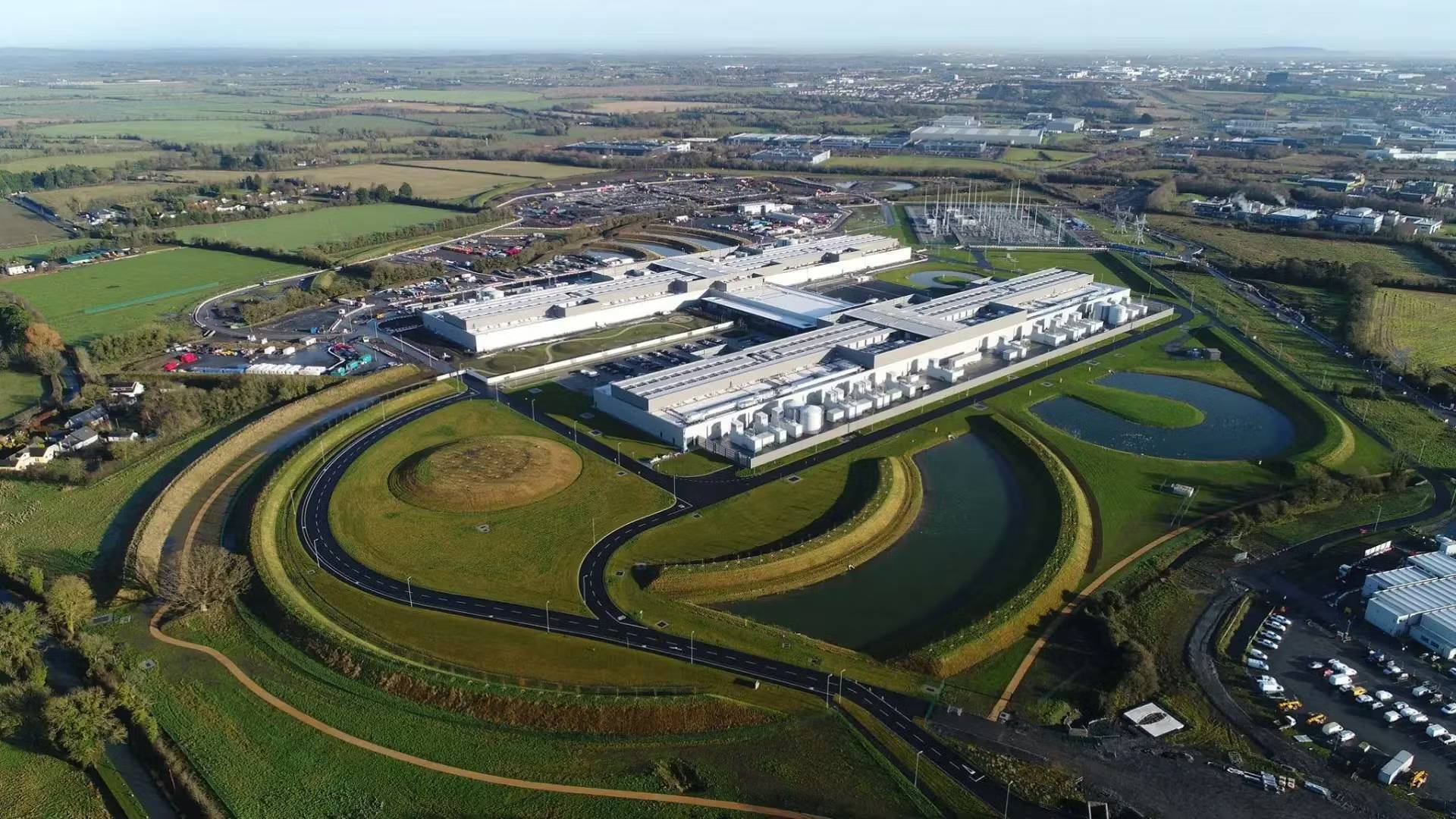
Facebook's Clonee data centre in Meath. Since 2017, additional generation from renewable energy has effectively been overtaken by rising data centre demand. File picture
There is a basic principle at the heart of any democracy that governments, and by association state and public bodies, should be bound by the laws they pass, not simply by the laws they find convenient.
Alarmingly, that principle is now being tested in Ireland’s response to the climate crisis.
Five years ago, the Oireachtas overwhelmingly agreed that tackling climate change could no longer depend on political goodwill or commitments that might quietly disappear when difficult decisions had to be made.
The Climate Act 2021 put Ireland’s climate ambition into law with Section 15 of that legislation requiring public bodies to take the law seriously when exercising their functions, and to make sure climate commitments survive beyond political promises and actually shape what Government and public bodies do.
The democratic mandate could hardly have been clearer with the Climate Act passed by an extraordinary 129 votes to 10. It established legally binding carbon budgets and sectoral ceilings, and laid out a 51% emissions reduction target by 2030.
Read More
Now, as our climate breaks down, and we experience its deadly impacts, this Government, in the face of a unified opposition in the Oireachtas, has moved to disapply climate obligations for infrastructure, Dublin Airport emissions and a new gas (LNG) pipeline. This doesn’t make sense when we need to do the very opposite — strengthen climate commitments to secure our future.
Continuing to build an economic model around data centres does not make sense either. They already consume around 23% of Ireland’s electricity, potentially rising to 30% by 2030. Since 2017, additional generation from renewable energy has effectively been overtaken by rising data centre demand.
The Government commissioned KPMG to examine the economic value of data centres. Records subsequently reported in the media this month show that Department of Enterprise officials had raised concerns about the messaging in a draft, while a section discussing the “opportunity costs” of data centre investment did not appear in the published report.
The department rejects suggestions that the report was rewritten to support a pre-determined policy position and disregard environmental impacts.
This episode should raise the alarm about our democracy being compromised, and illustrates precisely why transparency is so important when Government is making profound choices about our energy future.
There is another side of the data centre balance sheet. Friends of the Earth Ireland-commissioned research estimates that increased data centre demand added around €715m to Irish household electricity bills between 2015 and 2023. These costs need to be part of the national conversation alongside tax revenues.
Most critically any debate should be framed in the context of this year’s UN report which found that the environmental footprint of AI and data centres is a governance and justice challenge, not only a technical problem.
No industry should be treated as inevitable or effectively limitless when the energy it consumes make profits for a few while Ireland has legally binding climate obligations.
Climate and energy policy is extraordinarily complex. But beneath that complexity lies one clear reality from which there is no compromise. We need to move ourselves off fossil fuels as quickly as we can.
We cannot credibly transition away from fossil fuels while simultaneously weakening domestic climate obligations, increasing gas demand from data centre expansion and developing new fossil fuel infrastructure such as the new LNG gas terminal proposed for Co Clare.
We must acknowledge too that we are starting from a profoundly unequal base by putting in place supports for people with the least money, agency and choice.
Research using the Pobal HP Deprivation Index found that people living in the most deprived communities are about five times less likely to use renewable energy in their homes than those in affluent communities. And, as reported last week, a record 328,273 households are now in electricity arrears.
A renter cannot retrofit somebody else’s property. A family already struggling with electricity bills cannot magic up the capital for a heat pump. A rural household cannot abandon its oil dependent heating without an alternative.
The Climate Change Advisory Council has underlined the scale of the challenge. Residential buildings are projected to exceed their 2026–2030 emissions ceiling by 22%, with commercial and public buildings projected to exceed theirs by 62%.
Government has a responsibility to lead Ireland through the energy transition. On profound national issues, people deserve the full truth: who benefits, who pays, what alternatives were considered and how decisions fit with commitments already made in law.
This becomes even more important at a time when authoritarianism is rising internationally and democratic norms are under pressure. Ireland is not an authoritarian state, but healthy democracies guard against habits that weaken accountability.
We cannot ask households struggling with electricity bills to transform how they heat their homes while loosening climate obligations around major infrastructure and facilitating extraordinary growth among the largest corporate energy users.
The government's job is to resolve that contradiction.
That means treating retrofitting as social infrastructure, starting with low-income households, social housing and rural Ireland. It means cheaper clean electricity, community wealth building energy models and ensuring those with the least choice benefit first.
The forthcoming Budget gives the government the opportunity to put in place measures to help us meet our climate targets, including structural changes to make electricity cheaper, such as reforming electricity pricing to ensure data centres pay their fair share for the pressure they place on the grid.
Also barriers must be removed that make it difficult for people to phase out fossil fuels. One way to do this would be to introduce a new dedicated pilot renewable heating scheme for rural households.
Overall, Budget 2027 must be an energy budget clearly ramping up delivery under the Programme for Government. Protecting households facing into a costly winter must be a key short-term measure for households in energy poverty and arrears.
Underpinning everything must involve divesting ourselves of fossil fuels as quickly as we can. Make the transition fair. Tell people the full truth about the choices involved.
Create space for communities to build our future together. And uphold, rather than circumvent, the democratic rules we put in place to get us there.
That is political climate leadership. And that is how a democracy brings people with it.
- Deirdre Duffy is CEO of Friends of the Earth


CLIMATE & SUSTAINABILITY HUB
CONNECT WITH US TODAY



Be the first to know the latest news and updates