Nearly all of Ireland's economic sectors on course to miss emission reduction targets
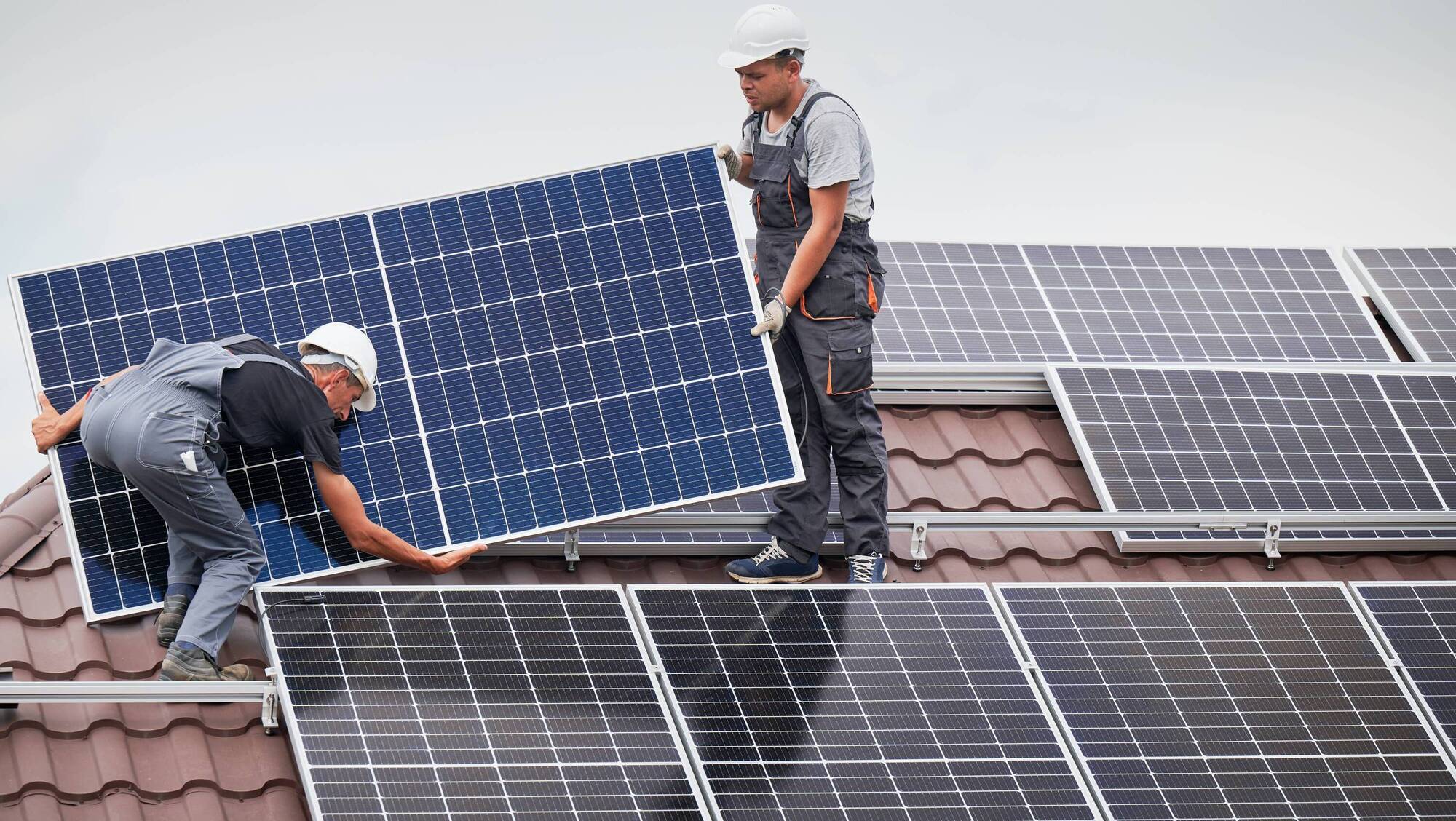
Currently, the electricity sector is on course to reduce its emissions by 55% with existing measures, or by 61% with additional measures. File picture
Not a single sector of the economy is on course to hit its emission reduction targets with less than three-and-a-half-years left to go.
The ambitious targets, which were agreed by the last Fianna Fáil, Fine Gael, and Green Party coalition in 2022, set out “sectoral emission ceilings” for seven sections across the Irish economy.
The figures dictated the percentage change each section needed to achieve to reduce its emissions by 2030. Despite the plan being agreed in 2022, reductions are based on 2018 emission figures.
The overarching target is a 51% reduction of carbon emissions by 2030.
Read More
The construction of the sectoral emission ceilings plan was immersed in controversy, with Fianna Fáil and the Greens sparring over the targets that would be set for emission reductions in the agriculture sector.
Four years into the eight-year plan, most, if not all, sectors are on course to miss the legally binding targets.
According to the Environmental Protection Agency’s (EPA) 2025 report, published in July 2026, emissions from energy industries decreased by 7.1% in 2025. It was the fourth year in a row that emissions fell for the sector.
The EPA says this was because nearly 41% of energy generation came from renewable sources, as well as an increase in the share of imported electricity.
Currently, the electricity sector is on course to reduce its emissions by 55% with existing measures, or by 61% with additional measures.
After electricity, transport has one of the highest emission reduction targets set by the Government.
However, emissions fell by just 1.5% between 2024 and 2025. The EPA measured the combustion of fuel used in road, rail, navigation, domestic aviation, and pipeline gas transport. It said that transport exceeded its emissions ceiling by 8.1% in 2025.
The number of new private electric cars licensed rose to 23,398 in 2025, compared with 17,191 in 2024, an increase of 36%.
However, the EPA has said that freight transport energy demand is strongly influenced by the level of commercial activity in the economy.
With existing measures, the transport sector is on course to reduce its emissions by 28% by 2030 if additional measures are implemented. Based on existing measures, reductions would only reach 15%.
This category examines emissions by commercial and public buildings, including combustion for space and hot water heating.
It is currently the only sector on course to increase its emissions by 2030, as opposed to reducing them.
This assumption is based on statistics which “reflect slower uptake” of heat pumps and district heating, with more buildings remaining on oil and gas.
If additional measures are implemented, emissions will rise by 2.7%. Without additional measures, the increase will be 6.8% by 2030.
Additional measures suggested by the EPA include the extension of energy efficiency grants and heat pump grants.
The reduction of emissions in the residential buildings category is slightly better than for the commercial and public sector.
In the EPA report, reductions in both sectors were combined into one heading, with progress in the residential sector meaning that overall reductions in the buildings sector fell by 4.7%.
With additional measures, emissions for the residential sector will fall by 18%. With existing measures, they will fall by 13.1%.
The EPA advised in its 2026 report that “the majority of this sector’s emissions come from fuel combustion in manufacturing, followed by emissions associated with the mineral industry, mostly from cement production”.
Along with transport, industry was one of two sectors to exceed its emissions ceiling, with it going 9.1% over.
Under the current projections, industry will reduce its emissions by 10.1% under existing measures, and 11.8% with additional measures.
The agriculture emissions targets became a sticking point in 2022, with multiple Government rows. A 25% reduction became a “landing zone”, despite the Green Party pushing for it to be closer to 30%.
In the intervening years, the agriculture sector has had varied but limited success in reducing emissions.
However, the EPA has warned that a “direct comparison of the agriculture sector against its absolute Sectoral Emission Ceiling is no longer possible, given recent scientific updates to baseline historical agriculture emissions”.
Emissions fell by just 0.2% in 2025. This was down from a 1.7% reduction in 2024, and a 4.6% fall in 2023.
If additional measures are introduced, emissions could be cut by 19.1% by 2030, the EPA advised. If no new measures are agreed, however, it will fall far short of its 25% target, with just a 4.2% reduction in emissions.
This lazily named category focuses on F-gases, petroleum refining, and waste.
An “F-gas”, a fluorinated greenhouse gas, is used for cooling, insulation, and electrical work. They are commonly found in fridges, air conditioning, heat pumps, and aerosol sprays.
Emissions from F-gases rose by 5.4% in 2025. Waste emissions fell by 0.4%.
The EPA advised last month that both energy and the buildings industry are “meeting or coming within their ceiling”. Two sectors, transport and industry, exceeded their ceilings by 8.1% and 9.1%, respectively.
If additional measures are implemented, emissions for the “other” sector are expected to fall by 37%.
As it published its latest report in July, the EPA said that overall, emissions had fallen by 14.5% between 2018 and 2025. This is compared to a target of 51%.
With existing measures, it is projected that Ireland will reduce its emissions by 13%. If additional measures are implemented, this rises to 25%. However, this is less than half of what is required to meet targets.
In addition, under European Union legislation, Ireland must reduce greenhouse gases in key sectors, including agriculture, transport, and buildings, by 42% by 2030. This reduction is based on 2005 emissions.
However, as of 2025, a reduction of just 12% has been achieved in the two-decade period. Overall, greenhouse gas emissions dropped by 2.2% in 2025.
However, the EPA warned that if Ireland is to meet its targets, it will need to reduce emissions by 10% a year every year by 2030.
The cost of not meeting these targets would be enormous on several fronts.
Following a scorching summer, Ireland may have to deal with continuously rising temperatures due to climate change.
Due to coastal erosion, houses will continue to be at risk of falling into the sea, requiring added investment in flood defences and other measures.
Climate change is also a global problem, and Ireland could face another wave of migration, as climate migrants are forced to leave their homes and countries as they are displaced.
The World Bank estimates that up to 216 million people could become climate migrants by 2050. In addition, there will be a heavy financial cost associated with missing these targets.
In a report published in September 2025 examining the annual report on the accounts of the public services in 2024, the Comptroller and Auditor General, Seamus McCarthy, dedicated a chapter to “progress towards achieving climate neutrality in Ireland”.
He said he examined the topic because of the “Exchequer’s exposure to substantial compliance costs within as short a period as seven years if mandatory targets are not met”.
“Achieving the climate neutrality targets will inevitably require very substantial public expenditure, and the cost-effectiveness of that expenditure will be critical,” Mr McCarthy wrote.
“Furthermore, any significant shortfall in the achievement of the EU targets, including of the interim (2030) targets, will almost certainly impose a financial burden on the Exchequer.”
Mr McCarthy warned that if Ireland fails to meet its reduction targets, “the consequences will be significant, affecting the State legally, financially, economically, environmentally, and politically”.

He said that by 2030, Ireland will likely need to purchase “substantial emissions allocations from other EU member states which will result in significant financial liabilities and compliance-related costs to the Exchequer”.
Mr McCarthy put the cost of the fines at between €3bn and €26bn, adding that investment in initiatives that offer the highest potential for reducing emissions in future years could mitigate the liabilities.
In July, the Irish Fiscal Advisory Council (IFAC) warned that “stalling” on climate targets “poses a major risk” to the public finances.
“The State faces a direct choice between investing in the domestic economy or risking paying substantial amounts for missing its targets,” it said.
“If Ireland takes action, the Exchequer will incur costs to electrify transport, upgrade buildings, and decarbonise.
“If Ireland chooses inaction, these upfront transition costs would be lower, but the State risks facing massive costs for missing legally binding EU targets.
“Instead of paying to make up for falling behind, that same money could fund measures that support the transition and bring broader benefits to Irish society.”
With the clock ticking towards 2030, Ireland will have to ensure that it makes an increased effort to hit its targets. And, unless the Government pulls its socks up, it is on course to miss them badly and face some terrible consequences.
- Louise Burne, political correspondent


CLIMATE & SUSTAINABILITY HUB
CONNECT WITH US TODAY



Be the first to know the latest news and updates