Hong Kong activist Joshua Wong sentenced to 10 more years in prison
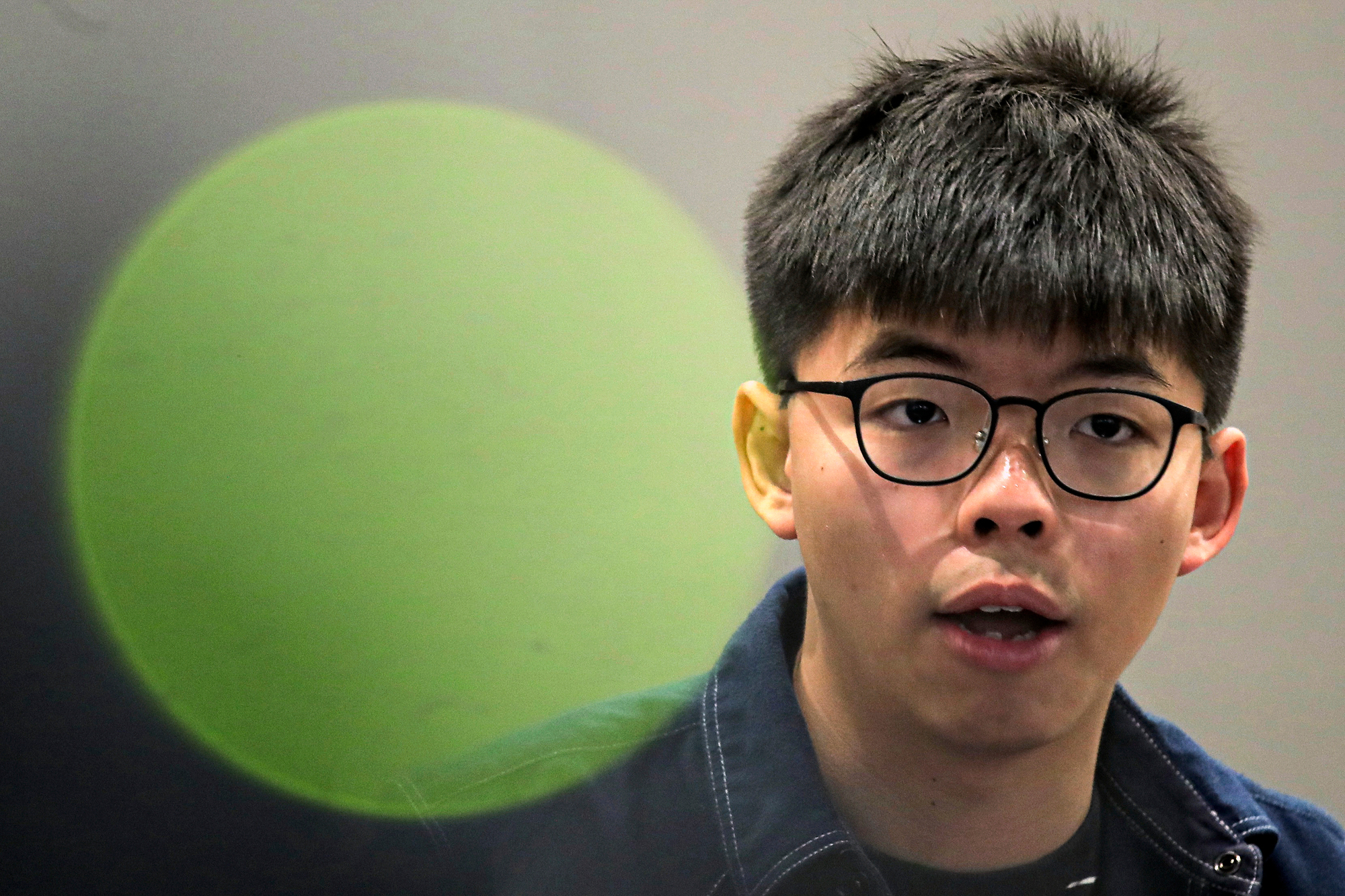
Prominent Hong Kong activist Joshua Wong has been sentenced to 10 more years in prison under a Beijing-imposed national security law, in a case that critics say reflects the crackdown on the city’s once-thriving pro-democracy movement.
Wong was charged in 2025 with conspiracy to collude with foreign forces to endanger national security and he pleaded guilty to the offence earlier this year.
The 30-year-old is already serving a prison term of more than four years for the city’s biggest national security case linked to an unofficial primary. Before being prosecuted in the latest case, Wong had been expected to be freed in January 2027.
Judge William Tam ruled that Wong’s offence was of a grave nature and that he was a mastermind of the conspiracy. Judge Tam said Wong and fellow activist Nathan Law continued to conspire together to have direct contact and collude with senior officials or institutions of foreign governments, or other external elements, and to call for their adverse interference against China and Hong Kong.
The judge pointed to the US revocation of the city’s different treatment as a special administrative region and the sanctions against Chinese and Hong Kong officials, saying these were the kind of sanctions or hostile measures the activists had called for.
“The punishment must fit the gravity of the crime committed,” he wrote. “It is also necessary for this court to express the community’s abhorrence of the defendant’s scheme and acts together with others to collude with foreign forces… and to serve the imperative of general deterrence.”
Judge Tam said he considered a 13-year prison sentence as a starting point but reduced it because of Wong’s guilty plea and mitigation.
He said Wong would serve the remaining two months of the sentence for his first national security conviction concurrently with the new sentence.
Wong looked calm and thanked his supporters before leaving the court. His supporters waved to him, and Tiffany Chin, a former member of the now-disbanded Scholarism, once led by Wong, was in tears.
In a statement obtained by the Associated Press, Wong wrote in prison that his political participation was never driven by hatred and he bears no resentment towards the Chinese or Hong Kong governments, adding that he never advocated Hong Kong independence.
He said he thought he was acting within the law, but only later realised his judgment was wrong.
He said during his nearly six years in prison, he enrolled in university courses and read hundreds of books. He said he devoted himself to becoming a more responsible and compassionate person, and he hoped he would be able to look back on this period as a trial that strengthened him.
Hong Kong once had a freewheeling civil society marked by its vibrant protest and media scenes. But after an anti-government movement rocked the city in 2019, authorities reduced public choice in elections and arrested many leading activists. Some news outlets known for their reports critical of the government shut down, and dozens of civil society groups dissolved.
Observers say Wong’s sentencing shows the authorities’ determination to keep prominent activists in prison for as long as possible, further chilling civic activism.
“NSL charges can be repeatedly weaponised to keep a specific political prisoner in jail, if the government deems necessary,” said Eric Lai, a research fellow at Georgetown Centre for Asian Law, referring to the national security law.
But Beijing views Wong as an anti-China figure supporting Hong Kong independence, a stance that crosses its red line. Hong Kong authorities also said the security law is crucial for the city’s stability following the 2019 protests, maintaining that the city’s law enforcement actions were evidence-based.
After the hearing, Wong’s friend Louis Lee, also a former Scholarism member, told reporters they need time to digest the matter but thanked everyone for their concern and support for Wong.

CONNECT WITH US TODAY



Be the first to know the latest news and updates