Irish influencer promotes unlicensed gambling site months after Central Bank investigation
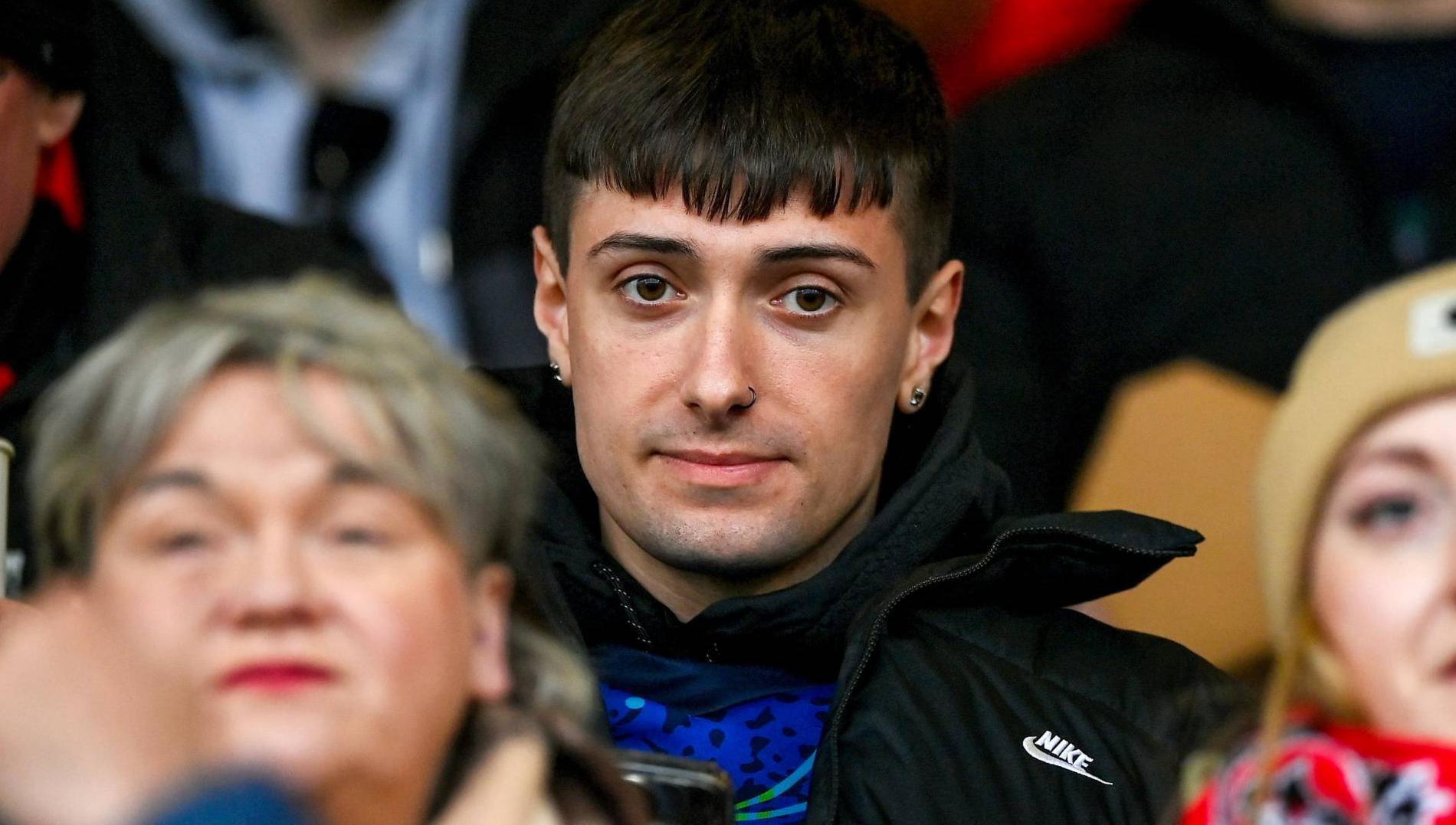
Jonathan Finlay, also known as nasti_2k, during the SSE Airtricity Men's Premier Division match between Bohemians and Dundalk at Dalymount Park in Dublin. Photo by Stephen McCarthy/Sportsfile
Content creator and influencer Jonathan Finlay has transitioned from unregulated financial trading to unregulated sports betting, with the social media personality now promoting an unlicensed gambling company to his thousands of online followers.
Mr Finlay, who has amassed a substantial online following across Instagram, TikTok, and encrypted messaging app Telegram under the username Nasti_2k, is the subject of a Central Bank investigation that started last year after he promoted an unauthorised financial trading platform, T4Trade.

In a notice posted on its own website, T4Trade said it was not targeted at residents of the EU, as it did not have the necessary license to operate in the jurisdiction.
In emails seen by the last year, the Central Bank said neither T4Trade nor Mr Finlay was authorised to provide financial services in Ireland.
The Central Bank added that it cannot comment on investigations it undertakes due to its âstrict statutory obligations of confidentiality.âÂ
Since then, Mr Finlay has abandoned his advertising of the Seychelles-registered T4Trade and now focuses his time on promoting an unlicensed gambling website called Gambana.com.
Gambana does not have a license to operate in Ireland from either the Revenue Commissioners or the newly-established Gambling Regulatory Authority of Ireland (GRAI).
As of today, there are no operators licenced under the GRAI regime, however, operators continue to be licensed under Revenueâs licensing regime until that is taken over by the GRAI later this year.
In a statement to the the GRAI said: âOperating without a betting licence, either issued by Revenue under the old system, or by GRAI under the new system, is unlawful.âÂ
âThe GRAI is also preparing to open for remote gaming licensing,â it added.
âA key provision of the legislation is that providing a betting activity without a licence from the GRAI is a serious offence. It can attract up to eight yearsâ imprisonment on conviction.âÂ
Boasting more than 277,000 followers on Instagram and 669,000 on TikTok, Mr Finlay has made a name for himself in recent years by posting food reviews and luxury lifestyle content.
The creator frequently shares photos and videos of himself on first-class flights, at Premier League matches, and on various holidays.
Last year, Mr Finlay said his primary income came from financial trading, which enabled him to do âall the thingsâ he had not been able to do, such as go on âfirst and business class flights, private jets, going out to Dubai, 11/12 holidays this year.âÂ
âIt is insane, and it is all because of trading,â the influencer told his followers when advertising the unlicensed T4Trade platform.
Following the report that Mr Finlay was the subject of a Central Bank investigation, the Dublin-based influencer transitioned from promoting T4Trade to online gambling and now runs a Telegram group with over 7,000 members where he promotes the Anjouan-registered Gambana.
Mr Finlay frequently tells his followers that the best odds are from Gambana, and that he has been blocked from other licensed betting websites.
âBet365 removed my 2UP you win, all my promotions and my cash out in some cases,â Mr Finlay wrote on Telegram on November 29.
âBoylesports have banned me. Iâve been beating the bookies,â he added.
On December 18, the influencer took to the encrypted messaging app saying: âBeen monitoring it recently and the odds [On Gambana] are way better than Bet365 most of the time. Shop around.âÂ
In a statement to the solicitors Lavelle Partners, acting on behalf of Mr Finlay, confirmed he has a commercial partnership with the betting website.
âOur client makes it clear that he is not a professional gambler or financial advisor, to ensure his audience is not misled about the nature of his content or expertise.âÂ
It added that their client's relationship with Gambana was âclearly disclosed to his audience in line with his obligations under the Consumer Protection Act 2017.âÂ
It added that his Telegram page includes a disclaimer noting that he is a âGambana BA,â adding that all bets shared are for âentertainment purposes only.âÂ
âOur client discloses his affiliate relationship with Gambana to his audience, using labels such as BA,â Mr Finlayâs solicitors added.
The âBAâ label in this case stands for brand ambassador.
âAny posts that are labelled âBAâ thereby make it clear to his audience that they are commercial in nature,â his solicitors said.
In addition to his main TikTok and Instagram accounts, Mr Finlay also operates accounts specifically dedicated to gambling and sports betting.
On these accounts, multiple posts featuring Gambana do not disclose his commercial relationship with the company.

While Mr Finlay uses the tag âBAâ on some of his many posts, the Competition and Consumer Protection Commission (CCPC) says this is not a primary advertisement label.
The consumer watchdog says when labelling commercial content, influencers must use a clear primary advertisement label.
Primary advertisement labels include â#ad,â or a platform-provided label such as âpaid partnershipâ or â#Giftedâ.
The CCPC says that using âBAâ, â#baâ, or â#brandambassadorâ would be considered a âsecondary label.âÂ
According to the CCPC, secondary labels are not mandatory and should only be used in conjunction with a primary advertisement label.
It also notes that â#baadâ or â#ba.adâ would also not be considered a primary label because the advertisement tag is not clearly identifiable.

The CCPC has a range of enforcement powers to secure compliance with and enforce consumer protection law in Ireland. These include undertakings, compliance notices, prohibition orders and prosecution.
In a statement to the Grainne Griffin, Director of Communications at the CCPC, said: âInfluencers must be transparent about their advertising. Our research found that many consumers felt misled after purchasing an item on the advice of an influencer, and that levels of trust in influencers generally are very low. Clear labelling benefits everyone.
âWe released guidance for influencers in 2023 and have taken enforcement action against a number of influencers since then. The guidance is short and simple, and I would recommend that all influencers and ad agencies read it before posting.
âWe continue to monitor the sector, and further enforcement action is expected,â Ms Griffin added.
Similar to when he advertised the unregulated financial trading platform T4Trade, Mr Finlay operates a VIP channel where he shares âexclusive picksâ with his âHigh Rollerâ followers.
To join the High Rollers group, an individual must create a Gambana account, deposit a minimum of âŹ100 and send a screenshot of their account to Mr Finlay.
Mr Finlay also frequently says he will open the group to new people, encouraging followers to join quickly before access to the group closes.
âOur High Rollers group remains heavily in the green, and thereâs another overnight bet cooking⊠I might let a few in if thereâs interest,â Mr Finlay posted to his followers on December 29.
Two days later, on December 31, Mr Finlay wrote: âIn 2026, the High Rollers Group will get my best hired specialists providing tips from Horse Racing, NFL, NBA, Baseball, Casino, Rugby, Tennis and much more.
âIâm letting 50 more people into the High Rollers Group before the clock strikes midnight.âÂ
Gambana.com is owned and operated by JJAM Holdings Ltd, a Central American company registered in Belize.
The website itself is licensed by the Government of Anjouan, a small island nation that forms part of the Union of Comoros, located between the south-east coast of Africa and Madagascar.
Gambana received its license from the Anjouan Offshore Finance Authority in November 2025.
Gambana does not have a license in Ireland, with the GRAI warning that providing a betting activity without a licence is a serious offence and can attract up to eight yearsâ imprisonment on conviction.'
âThe seriousness of that offence reflects the dangers associated with the black market,â the GRAI said.
âIllegal gambling is associated with a number of risks: you risk your personal data and your financial information being compromised, and all of the protections that apply when you gamble in a regulated market are taken away.âÂ
Gambana.com has been contacted for comment.