Sexual abuse survivor Sonya Stokes campaigns for automatic protection orders for victims
Campaigner wants automatic protection orders, stronger safeguards and better support for victims after convictions
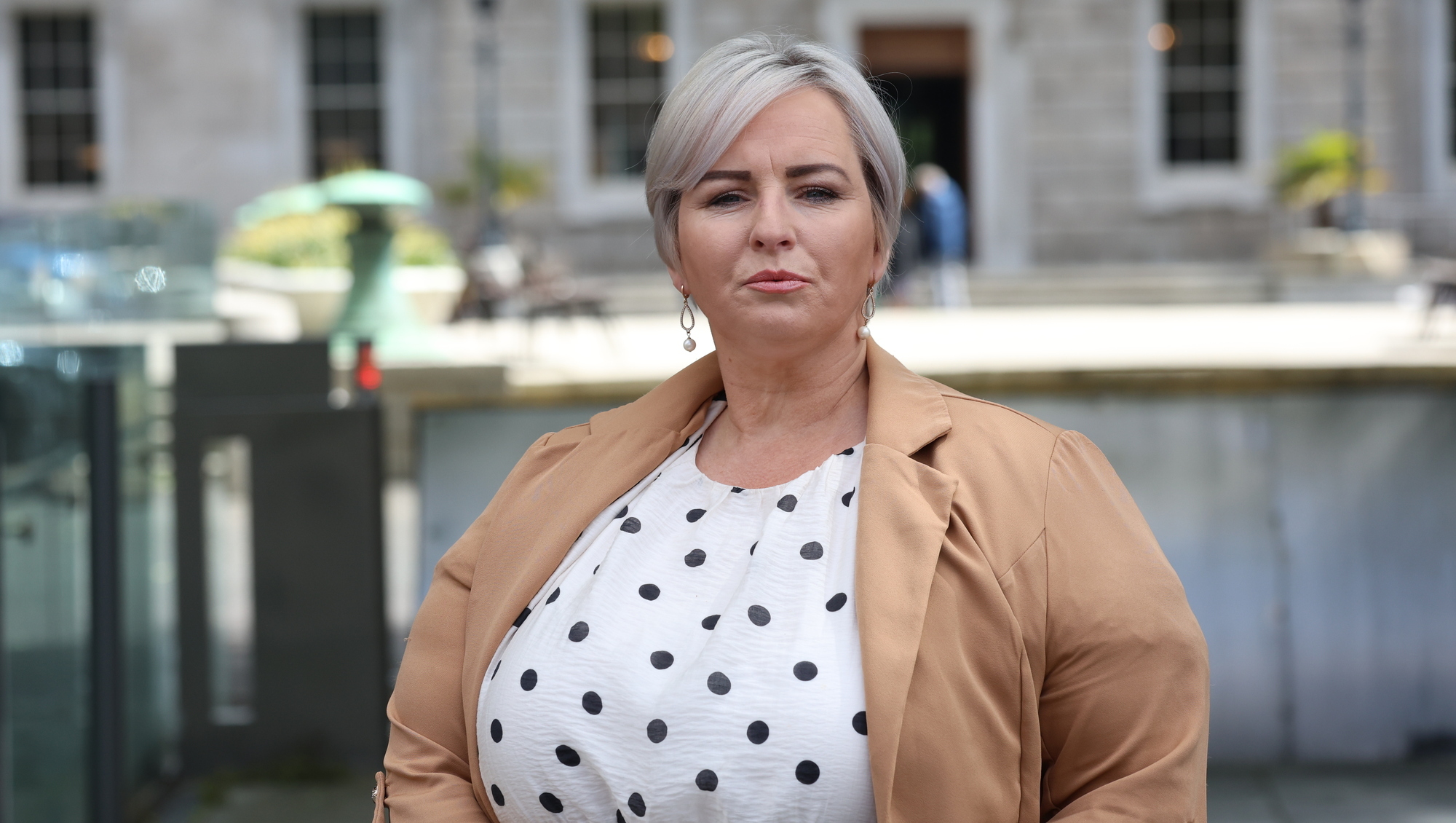
Survivor Sonya Stokes: 'People need help immediately after trauma, not years later.’ Picture: Stephen Collins/Collins

Survivor Sonya Stokes: 'People need help immediately after trauma, not years later.’ Picture: Stephen Collins/Collins

When Sonya Stokes walked into Buswells Hotel after recently addressing the Oireachtas committee on proposed protection order legislation, she carried herself with the calm confidence of someone long used to fighting battles.

Dressed simply, speaking carefully, and never losing focus, the 48-year-old Limerick woman sat down ready to talk not just about her own trauma, but about the thousands of survivors she believes Ireland continues to fail.

There was no self-pity in her voice. Instead, there was purpose.

“I feel very positive that this mandatory special protection order after a conviction for sexual abuse is going to passed by the end of the year” she said.

“We are fighting for victims and survivors to get them what they deserve, we need a protection order against their attacker — it should be automatically given in sentencing.

“It’s not for me, it’s for everyone. We want it granted automatically so we don’t have to go back and ask for it again and again.”

Joined by campaigner and Shannon local Shaneda Daly, the founder of the group Survivors Side by Side, Ms Stokes had spent hours discussing reforms aimed at strengthening protections for victims of sexual violence with politicians and campaigners.

Both women believe the proposed civil bill could become one of the most important changes for survivors in years — if politicians are willing to listen to those who have actually lived through the system.

What stood out immediately about Ms Stokes was her determination.

Despite everything she has endured, she spoke with clarity about what needs to change and why she refuses to stop campaigning.

“This is about protecting children,” she said repeatedly throughout the conversation, a statement echoed by Ms Daly.

“That’s the most important thing.”

‘Sick, twisted mind’

For years now, the mother of five who now lives in Portlaoise has quietly supported other survivors while trying to rebuild her own life after surviving horrific abuse at the hands of a man she says had a long history of offending in both Ireland and Britain.

In 2015, Ms Stokes's uncle and serial rapist Joseph Hogan, from Rose Court, Keys Park, Limerick, was sentenced to 15 years in jail for raping her when she was a child. He had already been jailed in the 1970s for the indecent assault of a young girl.

At his trial, which lasted a month, a jury at the Central Criminal Court convicted him of one count of attempted rape, three counts of rape, and three counts of indecent assault at a house in Limerick between December 1984 and December 1988.

Mr Justice Paul Carney said he could find nothing of substance in favour of the accused and, therefore, nothing was discounted or suspended from the sentence.

Ms Stokes told the court at the time: “His sick, twisted mind stole my innocence forever, my childhood, my teenage years, my dignity, my trust in relationships.”

Ms Stokes's uncle was sentenced to 15 years in jail for raping her when she was a child.

The court heard that, in 1973, the man was jailed in Ireland for six months for an indecent assault of a similar nature.

In 1974, he was convicted in Britain for the indecent assault of a girl aged under 14.

He returned to Ireland from Britain with his wife, and they had a number of children.

In 1995 and 1998, he was convicted of indecent assaults committed after the abuse of his niece.

Additionally, he was jailed for 22 months in March 2013 for breaches of orders under the Sex Offenders Act by living in houses with children in 2007 and 2009.

Hogan first raped his niece in his home sometime in 1984.

“He was a monster, and he’s dead now” she said.

“I am glad he is, but he nearly ruined my life”.

Ms Stokes believes failures in communication between Irish and Britain authorities allowed him to continue offending for decades.

“It could have been avoided, but instead he was over and back abusing again and again, and nobody was talking to anyone or referring or cross checking, that’s how he got to do what he did,” she added.

He was eventually locked up, but the damage was done.

“People think once there’s a conviction, justice is done,” she said. “But survivors still have to live with it every day afterwards.

“The conviction is only the start of where you’re heading. There is so much coming to terms with things and trying to heal, but you never really fully heal”.

‘There was no support’

One of the most painful parts of her experience, she said, was what happened after the court case ended.

Once the media attention faded and the sentencing was complete, she felt abandoned.

“There was no support,” she said. “No one checking in. No one is asking how you are after court. You fight for years for justice, and then suddenly you’re left alone.”

Over time, more and more survivors began reaching out to her privately. Women, men, and young people contacted her, sharing experiences of abuse, addiction, self-harm, and suicidal thoughts.

“People are crying out for help. Some turn to alcohol, some to drugs, some to suicide because they feel they’re not being heard,” she said.

It was those conversations that pushed her deeper into campaigning.

 As an adult, Ms Stokes has dedicated her time to fighting for better supports for victims and survivors of sexual violence. Picture: Gareth Williams
As an adult, Ms Stokes has dedicated her time to fighting for better supports for victims and survivors of sexual violence. Picture: Gareth Williams

Together with Ms Daly, Leona O’Callaghan, and Paula Doyle, Ms Stokes has helped compile a detailed list of reforms they believe could dramatically improve public safety and survivor protections in Ireland.

The proposals include mandatory GPS tagging for repeat sex offenders, stricter post-release supervision, stronger cross-border co-operation between Irish and British authorities, and automatic protection orders preventing offenders from contacting victims.

They also want restrictions introduced preventing high-risk offenders from living near schools, childcare facilities, parks, special needs centres, or vulnerable adults.

Another key demand is that victims be informed immediately when offenders are released or relocated.

For Ms Stokes, that issue became deeply personal when she discovered recently that her abuser had died following his release from prison.

While she is registered with the victim liaison service with the Irish Prison Service, once a prisoner is released, they have no authority to inform her of his death.

However, because he was signing on as a sex offender, Ms Stokes believes there is a gap in the system and that she should have been informed, and this is what she is also raising with the Department of Justice.

“I found out five months later. That should never happen,” she said.

What upset her further was learning details about his accommodation after release. Ms Stokes strongly believes high-risk offenders should never be placed in settings near vulnerable people. He was in a nursing home and had a short overnight stay in a hotel under a different name.

“How can someone like that be put near women and children? Where was the safeguarding?” she asked.

Prison letter

While Hogan was in prison, Ms Stokes wrote directly to him in an effort to express her hurt and pain.

The letter was filled with rage, grief, and questions she had carried since childhood. She wanted him to hear what he had done to her life and to the lives of others.

Entitled Coward of the county, she asked: “Does the sound of my cry haunt you when you sleep at night?

“Do you think about what you did to me and others?

“Do you ever want to apologise, or do you like the fact you took so many lives and their virginity?

“Does that make you happy while you lie in your prison cell?”

She went on say she was not his victim.

“I am a survivor,” she wrote.

She said she was now a strong woman and “no longer a little girl crying”. She described how he had a “filthy mind”, and said she was not afraid of him anymore.

When he was due for release, she waited hoping she might finally confront him face to face.

“I wanted him to see me,” she said. “I wanted him to know I’m not that frightened little girl anymore. I was there at the Midlands Prison waiting, but he got into a taxi, and I didn’t get near him.”

Despite penning letters to him, the confrontation never came.

"I just wanted to tell him everything, but I never got the chance," she said.

After she discovered he died, she investigated further to see what happened with him burial.

An FOI response seen by Ms Stokes confirms that Hogan’s remains were removed from a nursing home in the South on December 5, 2025, before being cremated at Shannon Crematorium eight days later.

Ms Stokes believes his ashes remain unclaimed. She made no attempt to hide her feelings about that.

“He destroyed lives everywhere he went. I don’t care if his ashes are sitting on a shelf somewhere,” she said.

What disturbs her even more is the fact Hogan spent time before his death living in a nursing home alongside elderly and vulnerable residents.

When it was suggested to her that staff may have viewed him simply as a dying elderly man, she rejected the idea immediately.

A paedophile is a paedophile. Evil is evil

“I don’t think many families would be happy knowing somebody with dementia or Alzheimer’s was in the same nursing home as a serial paedophile.”

For her, the issue goes beyond one man. She believes Ireland still has no proper system for safely housing or monitoring high-risk sex offenders after release.

“They protect predators better than victims,” she said.

Yet, despite the anger she carries, there is also exhaustion.

For years, she said, survivors have had to fight not only their abusers but the systems surrounding them — gardaí, courts, social services, and mental health waiting lists.

One issue particularly important to her is how children’s abuse cases are treated by the justice system.

“Children’s voices are ignored too often,” she said.

“Just because there’s no witness or physical evidence, doesn’t mean it didn’t happen.”

Campaigner and Shannon local Shaneda Daly has also spent hours discussing reforms aimed at strengthening protections for victims of sexual violence with politicians and campaigners.

Campaigners argue that many abuse cases involving children never progress because they are considered difficult to prosecute. Survivors say this failure contributes to lifelong trauma, addiction, and mental health struggles.

She is also calling for guaranteed access to counselling and trauma therapy for victims of rape and sexual abuse — particularly children.

“Mental health support shouldn’t depend on where you live or whether you can afford private counselling,” she said.

“People need help immediately after trauma, not years later.”

Friends and fellow campaigners describe Ms Stokes — who runs the group Victim’s Voices — as relentless in her support for other survivors.

She spends hours responding to messages, helping people understand court processes, garda procedures, and victim support.

“She’s always helping someone,” one campaigner said.

That same determination was evident throughout her appearance at Buswells, where discussions around legal reform were grounded not in theory but in lived experience.

Both Ms Stokes and Ms Daly believe the proposed civil bill could become a meaningful step forward if lawmakers genuinely listen to survivors. However, their campaign is about far more than legislation. It is about forcing institutions to acknowledge the lifelong impact of abuse. It is about ensuring vulnerable children are protected. It is about making sure future survivors are not left carrying the same silence, fear, and abandonment she said defined so much of her own experience.

“We’ve suffered long enough. Now we want change,” she added.

Response

The Department of Justice said post-conviction information is managed through separate arrangements within the criminal justice system, including garda victim liaison mechanisms and “relevant operational procedures within the Irish Prison Service and Probation Service, where applicable”.

It said the Irish Prison Service’s victim liaison service provides victims who have opted into the service with general information on the prison system.

“The Probation Service, which is responsible for the supervision of offenders in the community following release, does not operate as a victim notification body under the act.”

It said the monitoring of convicted sex offenders is the responsibility of gardaí.

“The Garda National Protective Services Bureau has a dedicated unit, the Sex Offender Management and Intelligence Unit, which has oversight and monitoring responsibility at national level for the management of registered sex offenders who are subject to notification requirements,” the department said.

“Convicted sex offenders are subject to Part 2 of the Sex Offenders Act 2001, which imposes notification requirements on the offender.

“The offender is obliged to notify An Garda Síochána of their personal details, and of any changes to them, including their name, any other names they use, and address, for a period of time after conviction. Failure to do so is a criminal offence.”

More in this section

Lunchtime News

Newsletter

Get a lunch briefing straight to your inbox at noon daily. Also be the first to know with our occasional Breaking News emails.

Cookie Policy Privacy Policy Brand Safety FAQ Help Contact Us Terms and Conditions

© Examiner Echo Group Limited