Lebanon — where people continue trying to live while war happens around them
In Ireland, many of us know Lebanon through Unifil deployments, airport reunions, faded memories of hostage crises, and civil war. We think of soldiers returning home from peacekeeping tours.  We rarely think about the texture of ordinary life there now.
Lebanon — where people continue trying to live while war happens around them

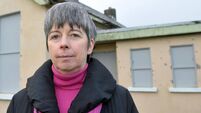
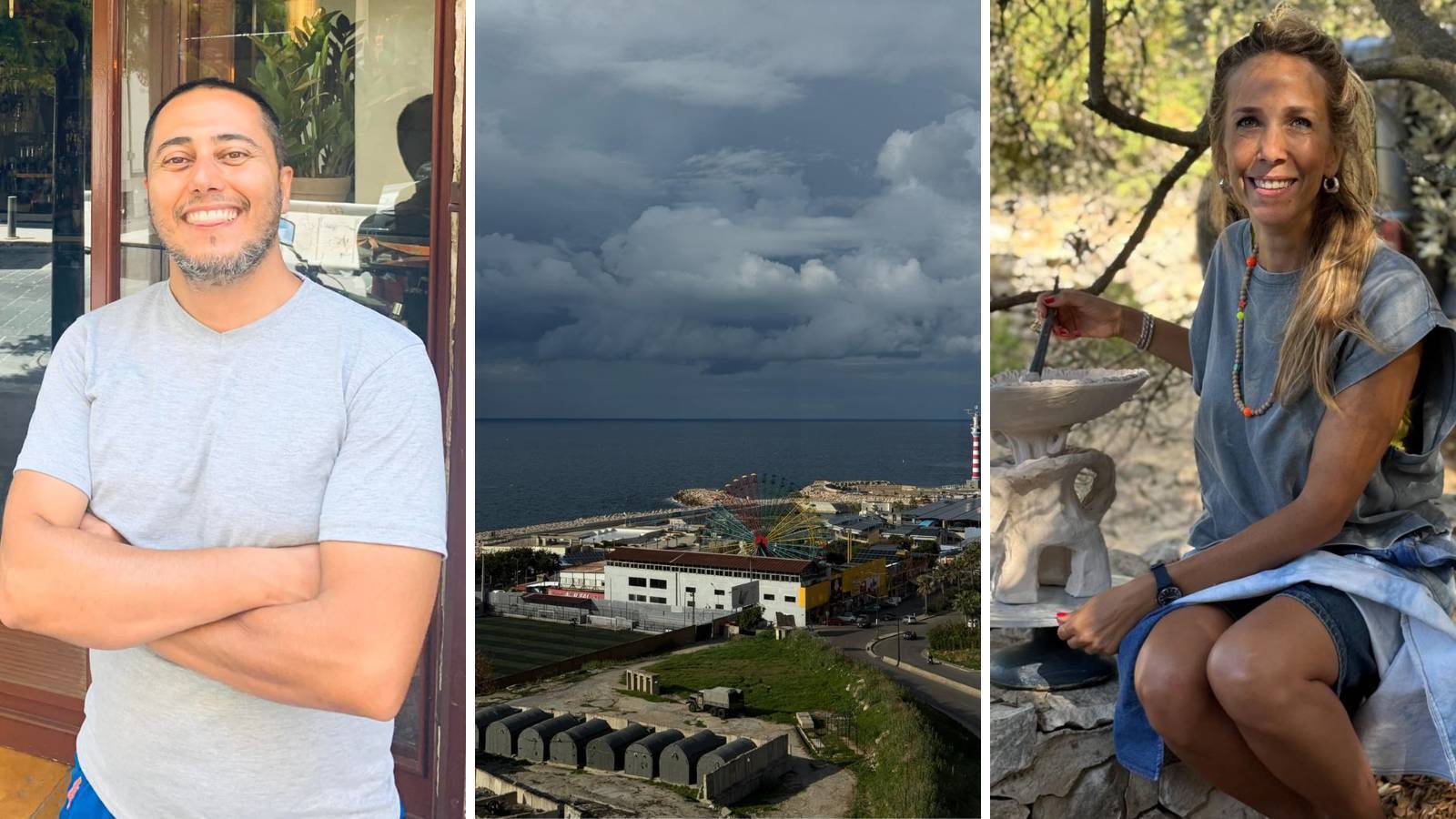
Nino Bek Aramouni, owner of the bar Dragonfly in Lebanon; and right, ceramicist and photographer Tala Hajjar.

“We try to bring the kids for a walk to the beach, but it's always there, buzzing above us. Always reminding us what’s coming next.” 

 This is the noise that has become the soundtrack to another Lebanese summer. Not the music spilling from bars in Gemmayzeh, nor the late traffic crawling along the Corniche, nor the call to prayer folding softly across Beirut at dusk. 

It is the sound of drones. A low mechanical hum that hangs permanently overhead. 

People drink coffee beneath it. Children fall asleep beneath it. Parents pause mid-conversation when it grows louder, all too familiar with the psychological torture it intends to spread.

It has been weeks since the latest “ ceasefire” between Israel and Lebanon supposedly came into effect. Since then, Israeli airstrikes have continued across southern Lebanon and beyond. Entire villages have again emptied.

 The ancient port city of Tyre has faced repeated bombardment and displacement orders. Lebanese civilians continue dying at the hands of Israel long after the language of diplomacy declared calm.

Internationally, Lebanon is often reduced to a subplot in larger geopolitical conversations — Iran, Israel, Hezbollah, Washington, proxy, deterrence, escalation. The country becomes shorthand for instability, a place people discuss strategically rather than humanly.

In Ireland, many of us know Lebanon through Unifil deployments, airport reunions, faded memories of hostage crises, and civil war. We think of soldiers returning home from peacekeeping tours. We remember Brian Keenan somewhere, chained to a radiator in West Beirut. 

We rarely think about the texture of ordinary life there now.

The artists still making art. The bartenders still making Moscow Mules. The taxi drivers driving to survive. 

What gets lost in the reporting is that Lebanon is not simply a place where war happens. It is a place where people continue trying to live while war happens around them. Wars they don’t start, support or have a say in ending.

And in some ways, Lebanon feels strangely familiar to the Irish imagination. A small country burdened by sectarian history and competing loyalties. A place shaped by poetry, emigration, memory, and political interference from more powerful neighbours. A country where history is never fully past.

'We're just trying to live'

The Lebanese themselves are tired of being called resilient.

“We’re not resilient,” says Tala Hajjar. “We’re just trying to live.” 

Hajjar is a ceramicist and photographer living in Beirut. The daughter of a Palestinian mother and the mother of Lebanese children herself, she belongs to two generations shaped by displacement and war.

People look at the damage at the site of an Israeli strike in Tyre, southern Lebanon, on May 28. Picture: Kawnat Haju/Getty Images)

When we speak, she sounds exhausted.

“It’s always been difficult here,” she says. “But this time feels different. Maybe because I have children now. Maybe because two strikes happened next to my house. 

"Honestly, I feel guilty for my privilege of being able to live when so many others across the country have had their lives destroyed.” 

Her nine-year-old son has begun crying before bed, uncertain, but aware of the entropy that dictates his life.

“He tells us he doesn’t want us to die.” 

She and her husband reassure him constantly. They tell little white lies, assuring him the bombings are far away. They try to shield him from the news. When two nearby airstrikes hit while he was away from home, they felt relief.

Her youngest daughter was home during another strike.

“We told her it was a car accident,” Hajjar says quietly.

This is how many Lebanese parents now navigate daily life: managing childhood anxiety while attempting to conceal their own. Schools open sporadically. Activities continue. Children still go to birthday parties and football practice. 

Yet all of it unfolds beneath the permanent possibility of violence.

“You make plans for two days later,” Hajjar says, “while already preparing the other plan in case something happens.” 

The past years in Lebanon have arrived like successive waves of trauma.

The economic collapse destroyed savings and livelihoods. The October 2019 protests briefly ignited hope before disintegrating into paralysis and financial ruin. Covid emptied the city. Then came the Beirut port explosion in August 2020, one of the largest non-nuclear explosions ever recorded, which devastated entire neighbourhoods and killed more than 200 people.

Now war once again shadows the country.

Hajjar remembers growing up through earlier conflicts herself. One of her clearest childhood memories is of a strike hitting her family’s building when she was 11, forcing them to flee temporarily to Egypt. She remembers suffering panic attacks there, separated from family and home.

Now she watches similar fears emerging in her own children.

“Lebanese kids grow up with this notion of war,” she says. “I wonder if it desensitises us to the world.” 

Her mother, who is Palestinian, has lived through 11 wars.

“We’re not OK,” Hajjar says. “And I hate saying that because everyone expects us to keep going.” 

There is a temptation among foreign observers to romanticise Beirut’s refusal to collapse. Journalists arrive searching for rooftop bars beside ruins and dance floors beneath fighter jets. Beirut becomes aestheticised through its contradictions.

Survival is not romance

But survival is not romance when people cannot imagine their future beyond the week ahead.

At night, Gemmayzeh still glows.

Music spills from doorways onto narrow streets lined with Ottoman balconies and shuttered windows. Scooters weave between pedestrians. Smoke hangs above outdoor tables. Beirut, despite everything, still performs itself beautifully after dark, even if it seems perpetually braced for the next impact.

Halfway down one side street sits Dragonfly.

You could walk past it without noticing. A heavy wooden door. Low lighting. A room built from old Beirut stone and shadow. Inside, vintage cinema chairs sit beneath vaulted ceilings while bartenders in pressed white aprons shake cocktails beside bowls of cucumbers and carrots. 

The bar holds perhaps 40 people at most. For years now, Dragonfly has quietly survived everything Lebanon has thrown at it.

The October 2019 protests unfolded only streets away. Late at night, protesters drifted eastward into Gemmayzeh carrying tear gas in their clothes and hope in their voices. Dragonfly filled each evening afterwards.

Then came covid. Then the Beirut port explosion in 2020, which heavily damaged the bar and shattered much of the surrounding district.

“No windows, no fridge, nothing,” recalls the owner, Nino Bek Aramouni. “But people came anyway.” 

A fireball erupting from a building following an Israeli strike in Tyre, southern Lebanon, on May 28. Picture: Kawant Haju/Getty Images

Now another war hangs over the city.

Dragonfly sits close to the old Green Line that once divided Beirut during the civil war. For decades, east Beirut’s traditionally Christian districts were often viewed as relatively insulated from the regional conflicts consuming southern Lebanon. But Israeli bombardments since October 2023 have edged progressively closer to neighbourhoods that once imagined themselves protected.

Nino notices the war less through ideology than economics.

“I wake up every day thinking about money,” he says. “Everything costs more. The generator for the bar. The generator for my apartment. Fuel. Staff. Everything.” 

Lebanon’s economic collapse has already hollowed out ordinary life. State electricity functions intermittently, forcing homes and businesses to rely on expensive private generators. Inflation has transformed planning into financial roulette.

“I can barely pay myself,” he says. “But we keep the bar open.” 

There is no self-pity in his voice. Only fatigue.

Born and raised in nearby Ashrafieh, Nino speaks about Beirut with the familiarity of someone who has watched multiple versions of the city disappear and reappear again. He is not ideological. He runs a cocktail bar. Yet in Beirut, even that becomes political whether you choose it or not.

Every evening before opening, he stands outside in his white apron preparing the room for another night. Friends passing by stop to talk. Taxi drivers beep their horns. Regulars arrive and settle into familiar corners beneath the stone arches.

“We take it seriously,” he says. “Making cocktails. Making people happy.” 

That sentence feels uniquely Beirut.

Not because happiness comes easily here, but because its pursuit has become almost ritual. A form of resistance against despair.

'I know Irish people care about us'

Further south, beyond Beirut’s galleries and bars and sea-facing cafés, the war looks different.

Hamza (not his real name) is from Tyre. Or rather, he says quietly, he was from Tyre.

He does not want his name used. Much of his family remains displaced across Lebanon and he still moves frequently between Sidon and what remains of his home region whenever he can. His brother was killed in an Israeli airstrike during the war last November. His nephew was killed too. He got to bury neither of them.

For more than 30 years, Hamza made a living driving between Naqoura and Beirut. The route is deeply familiar to generations of Irish peacekeepers who served with Unifil in southern Lebanon. 

Naqoura, where the force headquarters is based, once functioned as a strange ecosystem unto itself: Peacekeepers, aid workers, taxi drivers, cafés, routines.

Hamza spent decades transporting UN officers and their families north to Beirut airport and back again.

“Some days I would do the journey three times,” he laughs. “I’d be so tired driving that I had to keep talking just to stay awake.” 

Over the years, he learned about Ireland through the Irish families sitting beside him in the car.

“I know your culture,” he says. “I know Irish people care about us. Do they know what’s happening now?” 

His livelihood, like his home, has been eradicated by the Israeli occupation.

Naqoura itself has been devastated. Entire villages across southern Lebanon have emptied under bombardment and repeated displacement orders. The fragile economic stability created around Unifil’s presence has collapsed alongside it.

“My business, my home is gone and it will never come back,” Hamza says.

His wife and children now stay with relatives in northern Lebanon while he moves between temporary accommodation and surviving family further south. Weeks pass without seeing them.

“I wake up with huge anxiety,” he says. “I don’t know how I’ll make money. I don’t know when I’ll see my family again. I don’t know what’s coming next.” 

Outside Lebanon, discussion of the conflict often centres on strategy and regional escalation. Inside southern Lebanon, the conversation is simpler: Survival.

Hamza pauses when asked what happens if Unifil eventually leaves altogether.

“We are alone,” he says. “And we don’t know what to do.” For decades, southern Lebanon existed in a fragile equilibrium built partly around Unifil’s presence. Not peace exactly, but routine. Familiarity. A system people organised their lives around.

Now even that is being strangled to death.

And so Lebanon continues in the same way it always has: Suspended between endurance and exhaustion, ordinary life and permanent emergency.

Children still go to school beneath drones. Bartenders still polish glasses before airstrikes. Taxi drivers still navigate roads leading through ruins.

The world speaks about Lebanon almost entirely through the language of strategy and resilience. The Lebanese themselves speak mostly about survival.

Lebanon survives now not through that famed resilience — a word many Lebanese have grown to resent — but through ritual. Coffee. Cigarettes. School runs. Weddings. Work. Drinks with friends. The performance of ordinary life against extraordinary pressure.

Tala Hajjar pauses for a long moment when asked what the future looks like.

“I don’t know how we will rebuild again,” she says. “I’m losing hope… a little bit.” 

Then, almost apologetically, she laughs, guilty again, for even thinking such a thing.

More in this section

Lunchtime News

Newsletter

Get a lunch briefing straight to your inbox at noon daily. Also be the first to know with our occasional Breaking News emails.

Cookie Policy Privacy Policy Brand Safety FAQ Help Contact Us Terms and Conditions

© Examiner Echo Group Limited