Gerry 'The Monk' Hutch is no 'Robin Hood of the Oireachtas'
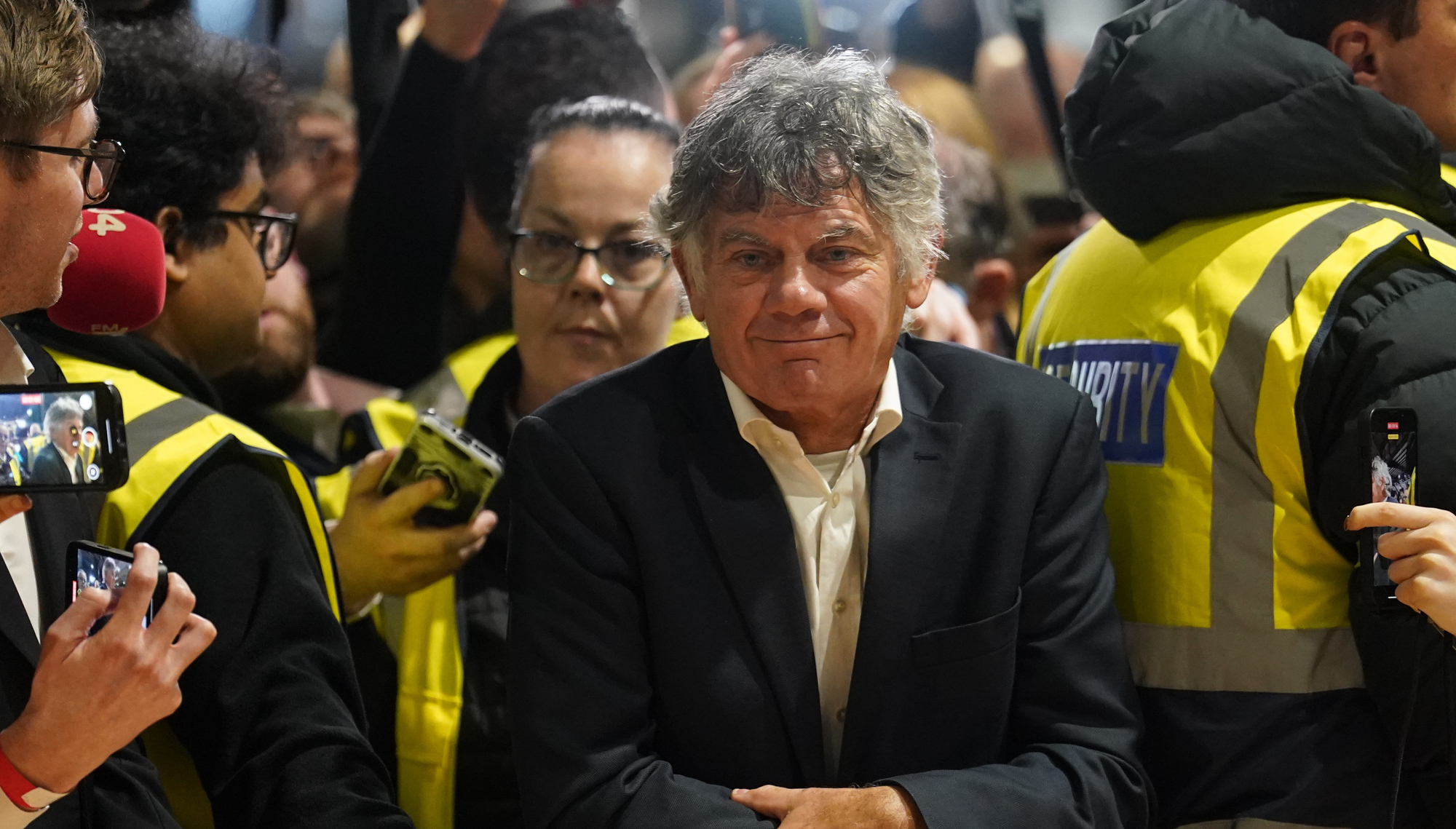
Gerry Hutch at the RDS for the 2024 general election count.
Gerry Hutch the putative politician came into being on April 17, 2024. On that day, he was acquitted in the Special Criminal Court of the charge of murdering David Byrne at the Regency Hotel in 2016.
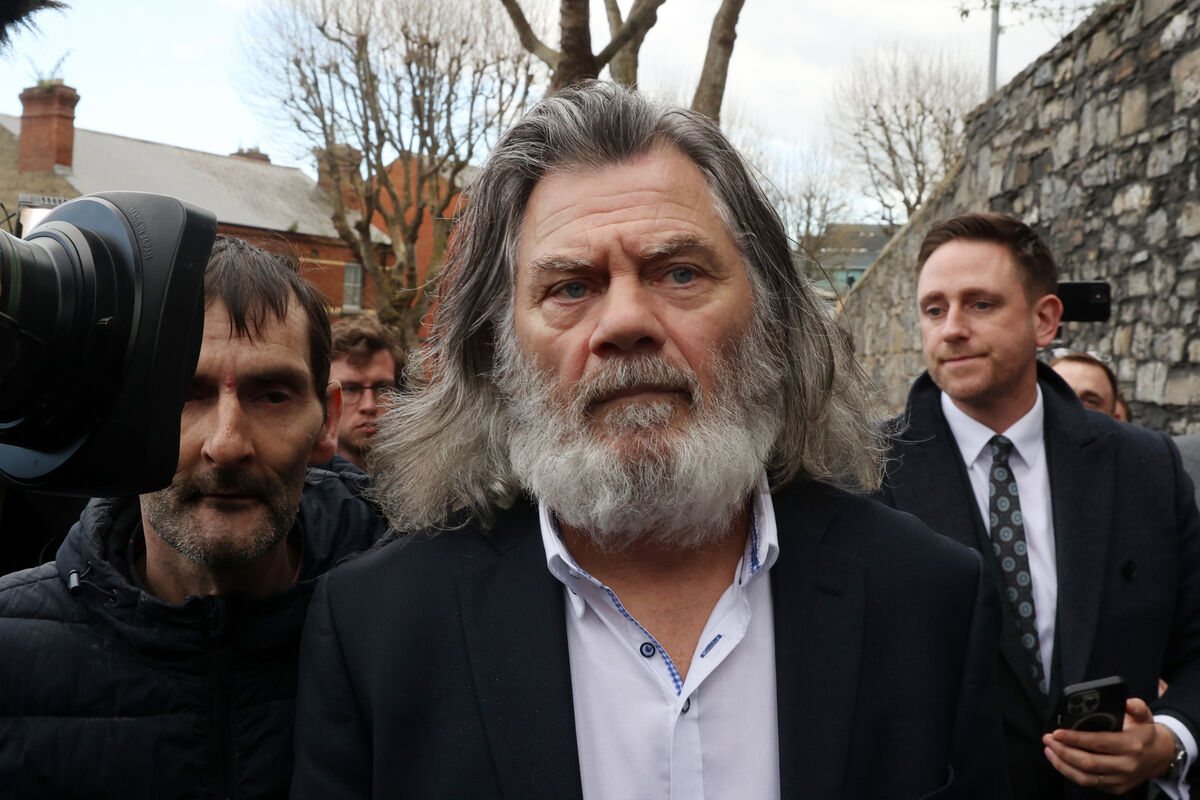
Hutch emerged from the Criminal Courts of Justice building into a scrum of reporters, photographers and the public. He was dressed casually, but presented a striking image with his long flowing hair and unkempt grey beard, like a cross between a well-fed Charlie Manson and an ageing hippie.
If the result had gone the other way, he would most likely have spent the rest of his days behind bars. But he beat the rap, and there was a general consensus that despite his status as a serious organised criminal, justice had been done.
The case against him personally was flimsy, although the court noted it believed members of the Hutch organised crime group, in which he was identified as the leader, was responsible for the murder. Yet on the basis of the evidence, the three judges couldn’t determine beyond a reasonable doubt that he had a role. The court also noted he could have been charged with other offences for which there may well have been sufficient proof of guilt.
Among the general public, there was a strange and fleeting current of uncommon sympathy for a man who had been identified as the head of an organised crime group. He had endured a long trial through evidence that never looked like reaching the required threshold for conviction.
Eight years earlier, well into his alleged retirement from crime, he had been dragged back into it after the murder of his nephew by the Kinehan crime group. There followed an attempt on his life in Spain in Christmas 2015.
Hutch had endured the transglobal wrath of the Kinahan gang following the Regency attack. His brother, other family members, and friends were murdered. An associate, Jonathan Dowdall, had betrayed him and proved to be totally unworthy as a State witness.
And now he had skipped free, hugely inflating the legend of The Monk as a crime boss of a unique hue.
In one sense, particularly when compared to the relentless viciousness of the Kinahans, Hutch presented, briefly at least, a sympathetic figure.
So perhaps it was on the day of his acquittal or those following that he came to the conclusion he could go where no person with a history like his has ever ventured in a developed western democracy. He could transmogrify into a self-styled Robin Hood of the Oireachtas.
Apart from any flight of fancy generated by his repeated ability to skip free, the shift into politics would represent another strategy to escape the clutches of the law, this time in Spain.
In mid-October 2024, Hutch let it be known he was interested in running in the general election. A week later, he was arrested in a dawn raid in Lanzarote as part of an investigation into money laundering.
The Spanish system meant he was likely to be remanded in custody while the investigation progressed. But Hutch successfully appealed the ruling, gaining his freedom by invoking a European law designed to prevent authoritarian leaders from locking up political opponents.
Read More
“One of the main arguments taken into account by both the prosecutor in his favourable report on the conceding of bail and the investigating magistrate when taking the decision is that the person under investigation alleged in his appeal the withdrawal of his passport or other measures limiting his movements would prevent his free access to the elections,” read a statement from the Spanish court.
“He alleged that would cause irreparable damage to his right to passive suffrage [the right to be elected as a parliamentarian], which remains intact.”
So Hutch returned home to contest the election rather than languish in a Spanish jail. Once more, he had skipped free, this time to allegedly serve the democratic process, and save his constituents from conventional and law-abiding regular politicians.
In some respects, you couldn’t make it up.
Of course, the narrative which has been created around him over the decades masks a reality.
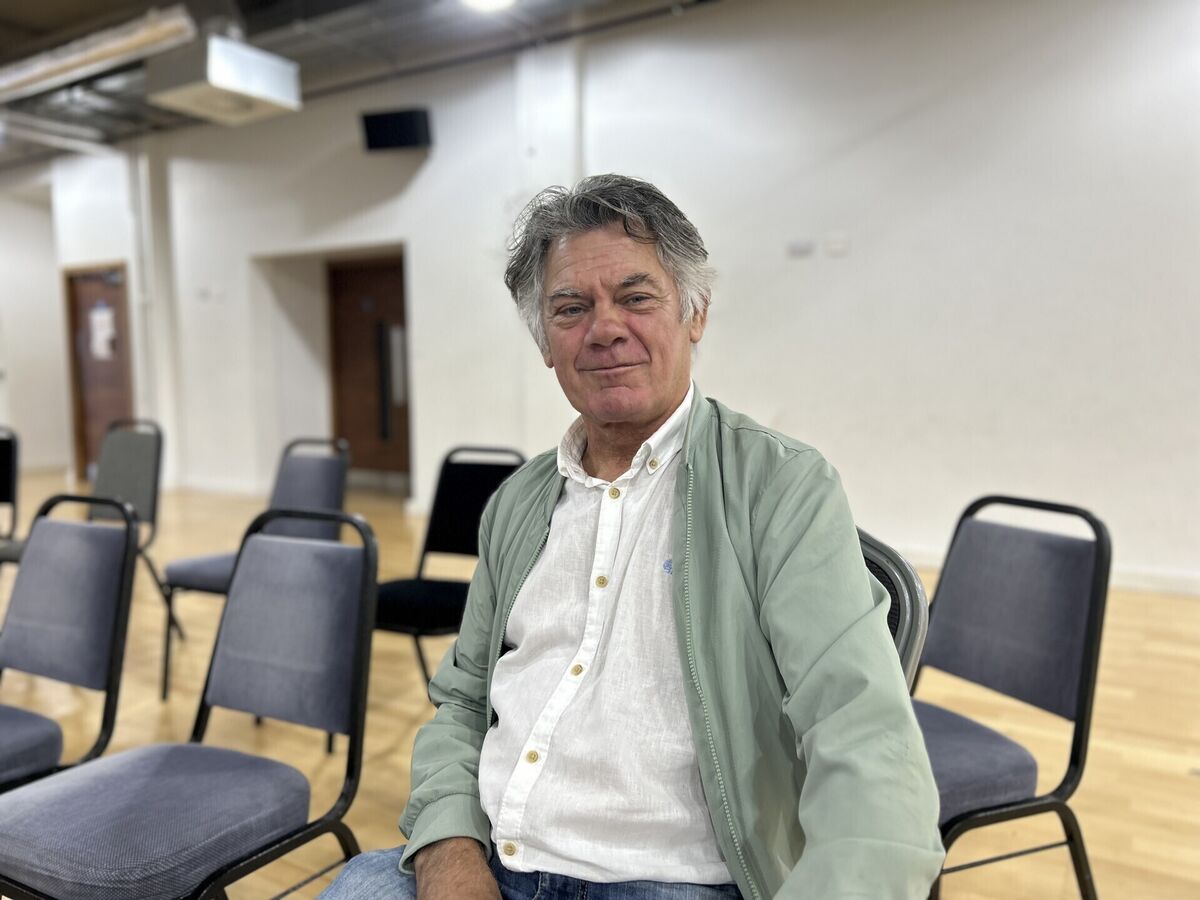
Hutch is no Robin Hood. He is the prime suspect for two of the biggest armed robberies in the State. His acquired wealth attracted the attention of the Criminal Assets Bureau soon after it was set up in the late 1990s. In 2000, he settled with the agency for £1.2m (about €1.5m).
His long avowal to reject anything to do with drugs should be taken with a large helping of scepticism. He has ensured he never got involved directly in the trade that has devastated parts of his native north inner city.
But gardaí have long held the belief the maintenance and inflation of his assets is attributable to investment in drugs in one guise or another. The idea that Hutch is some form of a latter day Don Corleone, imbued with a moralistic objection to making money from drugs, is the stuff of fantasy.
Soon after his return to Dublin, he gave an interview to the podcast which made for fascinating listening. He set out his impoverished background, how he had been persecuted by law-enforcement agencies all his life, and his wish to serve.
He spoke of the day he was found not guilty of murder. “I had me guardian angels over my head,” he said. “I walked out of court and went home. I went down to Sean McDermott Street on the way home and dropped off to a few houses.”
He recalled being alone in his cell on remand and receiving support through the post.
“I’d like to thank the people of Ireland for sending postcards, Padre Pio cards, lighting candles, all that kind of stuff. Very emotional.”
As for the politics, he was simply coming home.
“I’ve always had a bit of a politician in me over the years,” he said. “Meeting people and helping people and stuff like that. For the last 40 years, I’ve been an unofficial politician.”
It was a bravura performance, the persecuted man, wrongly fingered for a vicious crime, who only wanted to help people, being targeted by a vindictive State apparatus.
In the absence of evidence that would pass the threshold for convictions, Hutch was in his element, giving it welly.
What followed was an election campaign conducted largely on social media, carefully avoiding interviews or debates in which his true nature and history might be exposed.
As such, it was highly effective but relied, to the greatest extent, on appealing to those who felt completely excluded by the political process.
In recent years, right-wing populism has, in various countries, won support from the kind of people who feel the system no longer serves them. Dublin’s north inner city is an enclave that has been neglected for decades. Intergenerational poverty, lack of opportunity, and, at various points, ensuing epidemics of drug use have left many locally completely bereft.
There have been frequent efforts from individual politicians and community organisations to fight the myriad disadvantages, but the State has failed to provide proper support.
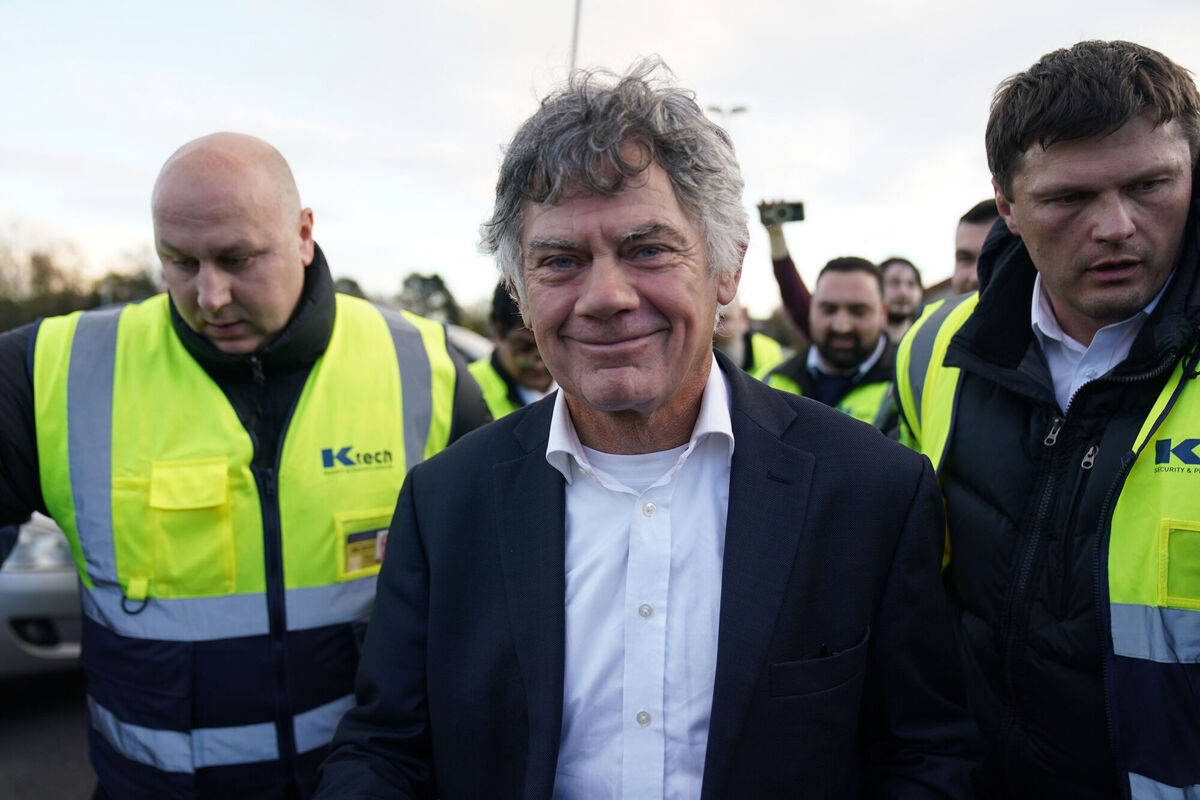
Then along comes a local man brandishing two fingers at the system. Like the trending populists abroad, Hutch has absolutely no viable alternative strategy. All that really matters, for some, is that he has supported the community at various times and his wider family are still in the area.
As a result, and notwithstanding his record, he nearly got elected two years ago. He garnered over 3,000 first-preference votes, mainly in the north inner city, but lost out due to the order in which transfers were counted.
The luck that guided him through assassination attempts and criminal justice processes in two jurisdictions came a cropper with the vagaries of the proportional representation system.
Now he’s back for a second bite, this time in the Dublin Central by-election. Again, his campaign is concentrating on social media, where he excoriates the Government for waste and failures.
He also mined a currently popular seam by having a go at immigrants. Last week, he posted on social media that “illegal immigrants” including Somalis, should be interned in The Curragh.
He apologised later “if I said anything racist”.
In reality, he is likely to say anything that might get him elected, but that is a long shot this time around. The nature of a single-seat election is such that he would require a large helping of transfers, and that does not seem likely.
His second attempt at running occurs while he remains under investigation in Spain. On another front, it comes at a time when his nemesis over the last decade, Daniel Kinahan, is locked up in a notorious Dubai prison awaiting likely extradition to this country.
As of now, the smart money says Hutch has precious little chance of election, but when eliminated, his transfers may play a role in the subsequent counts.
If, as seems likely, he doesn’t make it to the Dáil, the place will be none the poorer for his absence.
He may well, however, reflect on the current contrasting fortunes with Kinahan, who was largely responsible for bringing him back into the public glare a decade ago.
As Hutch canvasses the north inner city, selling his brand of snake oil, Daniel Kinahan is sitting in a prison cell facing the very real prospect he may spend the rest of his life behind bars.
In some ways The Monk has emerged on top again, irrespective of the outcome of his latest electoral frolic.

CONNECT WITH US TODAY



Be the first to know the latest news and updates