Meet the team in Cork helping to make dementia become a more manageable chronic disease
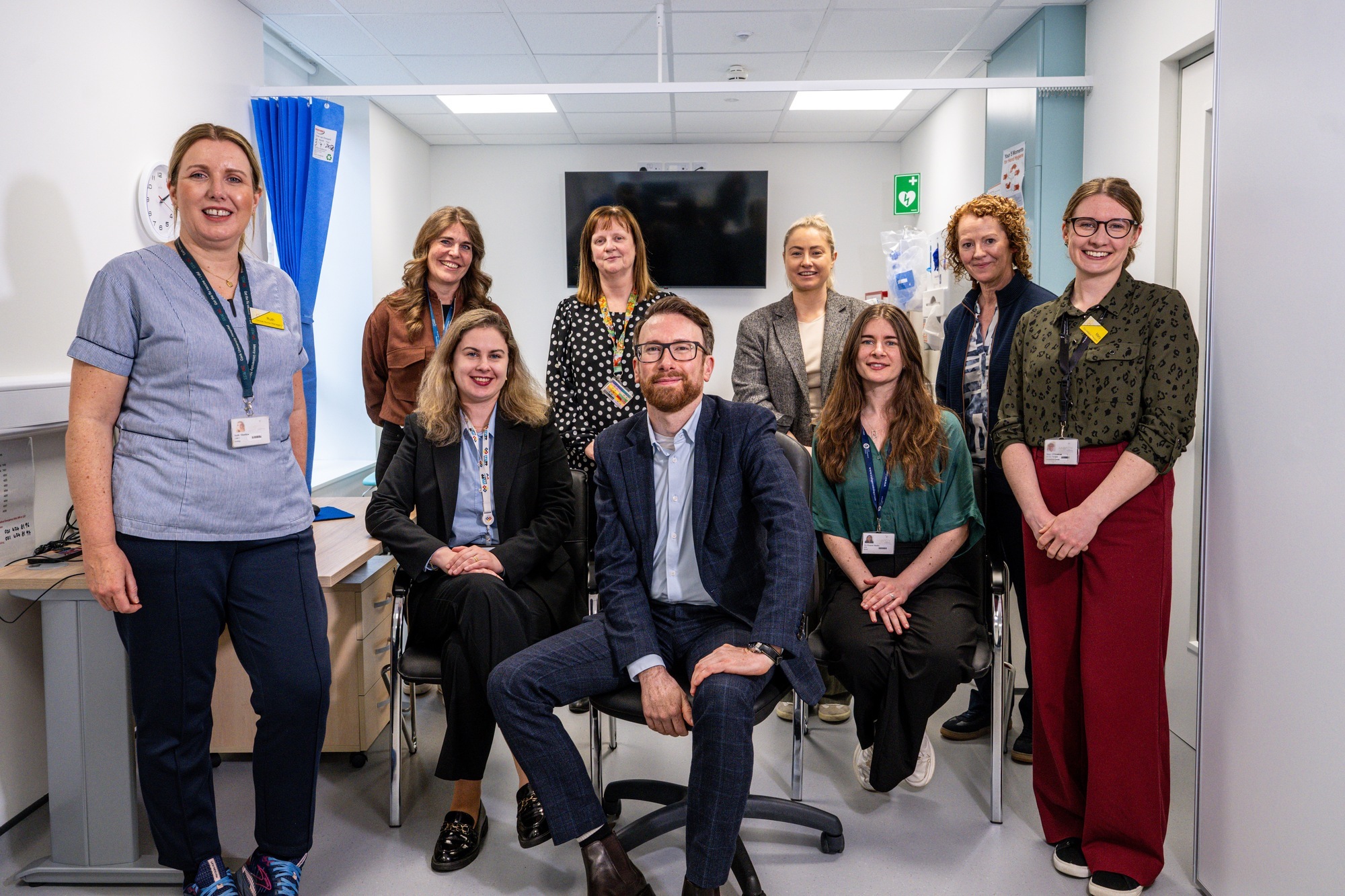
(Left to right) Ruth Sheehan, CNM 2; Jennifer Appadoo, speech and language therapist; Joanne McCarthy, clerical officer; Mary O’Donovan, occupational therapist; Dr Rónán O’Caoimh, consultant geriatrician and clinical lead; Ann Marie O’Neill, social worker; Dr Eleanor Marks; Sharon Maher, ANP (D) and Dr Mihaela Aljboor at the new regional centre. Picture: Chani Anderson
Dementia could become “a more manageable chronic disease” in 15 to 20 years with medicines, treatments, and better understanding expected to make a significant difference, a leading Cork geriatrician has said.
Based at the Mercy University Hospital in Cork City, a regional specialist memory clinic for Munster has already seen 250 patients, one of several changes in dementia care impacting an estimated 64,000 people living with the condition in Ireland.
While there has been extensive publicity around medicines that could slow the disease, clinical lead for the centre and Mercy University Hospital consultant geriatrician Rónán O'Caoimh said these were only part of the picture.
Earlier diagnosis, more use of existing medicines, and improved supports will all play a role, he predicted.
“A combination of all of that at an early stage should slow the progression of this condition,” said Dr O'Caoimh, "and make this into more of a chronic disease to manage".
Read More
He said it was something he could see happening during his working life. “If you project forward to maybe 15 to 20 years in the future, you could see that being the case.
“Early diagnosis will be commonplace, it will be normalised and early intervention will slow the progression of this.
"People’s brain health overall will be much more focused and more likely to be managed. I think we will be talking about this as a more manageable chronic disease rather than something that is a terminal condition with a progressive nature.
“My personal view on this is I don’t see a cure for dementia coming, because, like with cancer, it’s not a single condition. It’s complex, there are factors involved in it and a small proportion of genetic cases.”
There is also a limit to what can be done. “There is a reality to getting older,” said Dr O'Caoimh.
“What we aim to do with healthcare increasingly is to compress that morbidity down, that people retain a really good quality of life up until late in life.
“And that the period of morbidity and frailty is really compressed into the last months of life rather than being something that is prolonged over a decade or so.”
The regional specialist memory clinic for Munster dementia care has been evolving since plans were published by the HSE in 2023.
GPs are still the first level of care. Dr O'Caoimh said this “first point of contact” works well for people with visible dementia symptoms.
Until recently, access to specialist nurses and other supports was patchy. A network of general memory clinics is being rolled out to address this, forming the second tier of planned dementia services.
University Hospital Kerry opened one of these clinics last year and it is set to expand further, said Dr O'Caoimh.
The Cork‑based clinic linked to Mercy University Hospital operates at the third and most specialised level of care.
“We are one of four regional clinics in the country,” he said.
There is one in Galway and two in Dublin. They offer specialist assessment and care to complex cases including people with dementia and other illnesses as well as people under 65.
“People who are younger have more complex needs at that age, they may still be working or have family commitments, have a mortgage,” said Dr O'Caoimh.
The Cork clinic tends to patients from across Munster. “They would stay with us for up to two years after a diagnosis initially. Then patients can be discharged back to GPs if they’re stable or to a Level 2 unit if that’s closer,” he said.
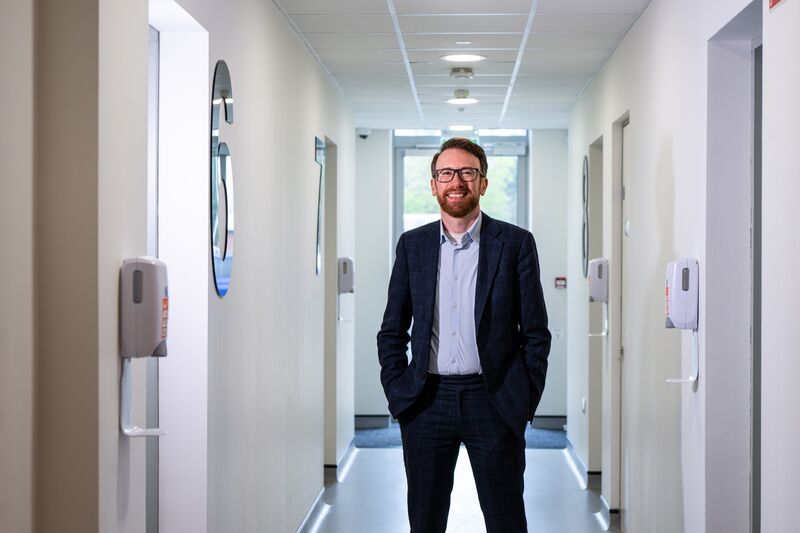
The Cork clinic is located in a purpose-built centre away from the bustling Mercy University Hospital at Lancaster Gate.
Dr O'Caoimh described it as “very quiet and peaceful” with bespoke parking to reduce stresses.
The team includes occupational therapists, speech and language therapists, and social workers. They also get input from neuropsychology specialists.
“The advantage of a bespoke team like we have in St Brendan’s unit is that inter-disciplinary input helps hone the diagnosis further,” he said.
Patient numbers are expected to expand over time. “We want to let people know about it,” he said, referring to GPs and the public.
Short‑term memory loss is the symptom most commonly associated with dementia.
However, a range of other symptoms can appear much earlier, including personality or behavioural changes, language difficulties, vision problems, and issues with co-ordination.
Both traditional and newer assessment methods help doctors to make a diagnosis.
Another approach involves the use of biological markers — measurable indicators of processes in the body or responses to treatment.
In the case of dementia, this can include testing cerebrospinal fluid obtained through a lumbar puncture.
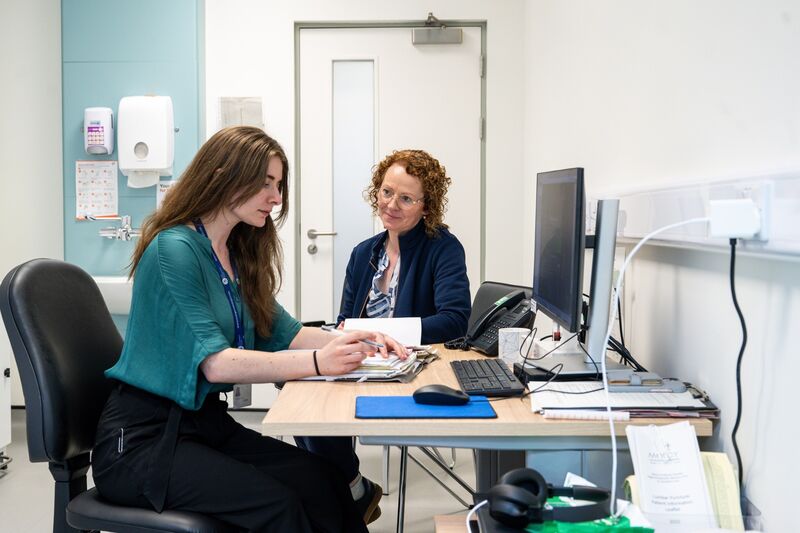
“That gives an indirect measure of what’s happening in the brain,” said Dr O'Caoimh.
“The bio-markers can be tested; they’re essentially proteins in the spinal fluid and the pattern will lend itself to the diagnosis.”
The regional clinic also uses plasma bio-markers and blood-based testing.
“These are very new, cutting edge, and they’re very good negative predictive values. So if they’re negative, they’re very reassuring,” he said.
“If they’re positive, patients need further assessment.”
It is possible GPs could use these tests in future. Dr O'Caoimh said he is aware some states in the US already offer these kits for home testing.
The third option for testing is a new type of brain-imaging. Build-up of a protein called amyloid has a major impact on brain cells leading to damage.
Doctors inject a dye to the patient which identifies proteins associated with dementia. These can be tracked through the brain-imaging scan.
“That is a gold-standard way of diagnosing Alzheimer’s disease because you can physically see on the images the deposition of this amyloid protein,” said Dr O’Caoimh.
All of this means doctors can make a more rounded diagnosis, as well as taking feedback from the patient and their friends or family.
In the last few years new medicines have been discovered which appear to slow the progress of dementia.
“We are looking at an age of new treatments coming on stream in the coming years,” said Dr O'Caoimh.
“None are currently available in Ireland but there’s an expectation in the coming years that these options will be available.”
The HSE’s National Centre for Pharmacoeconomics is assessing Leqembi and Donanemab for State funding.
Leqembi was shown in clinical trials to slow the progression of Alzheimer’s disease by four to six months. Results for Donanemab showed a 35% slowing in the decline of memory and thinking skills compared with people receiving a placebo.
The manufacturers of the drugs said they are effective for people in the early stages of dementia only. Both are given intravenously so the HSE will be looking at significant investment in clinics and staffing if they are approved for use in Ireland.
Dr O’Caoimh cautioned: “These medications are not cures, that’s important to stress for patients.
“There is growing evidence that they do slow the progression of the disease compared to traditional treatments or to no treatment.
“They act on these chemical messengers in the brain that we call neurotransmitters to try to slow the progression of symptoms, but not the underlying biological disease process.”
Dr O’Caoimh acknowledged there were downsides, with concerns around potential side‑effects.
The European Medicines Agency has specified that certain patients are not suitable for the treatment because of underlying health conditions. Ongoing monitoring is required due to a potential risk of brain swelling and brain bleeds in some patients.
Despite these caveats, he said it was an “exciting” time for dementia research.
“There are a lot of studies going on at the moment, these are the vanguard treatments potentially,” he said. “You could imagine in 15 years’ time they will be much more refined.”
Other developments have been less positive.
The global EVOKE study examined whether semaglutide — the key ingredient in popular weight‑loss drugs — had an impact on dementia.
Led by Novo Nordisk, the manufacturer of Ozempic and Wegovy, the study did not find evidence that the drug delayed disease progression.
“We had three patients in Cork who were participating in that study. That unfortunately was negative, the results were only published last month,” said Dr O’Caoimh.
HRT, used in menopause treatment, is also being studied for links to dementia care. He indicated there is not enough evidence yet to comment on this.
Dr O’Caoimh said he expected dementia care to develop in a similar way to cancer treatment.
Patients could ultimately be treated with a combination of medications, including drugs already in use, alongside newer therapies as they emerge.
He said there was likely to be continued emphasis on non‑pharmacological approaches, which have “really shown to be beneficial”, as well as on prevention.
In 2024, the Lancet Commission said evidence was stronger than ever that addressing key risk factors could prevent almost half of all dementia cases worldwide.
It identified 14 modifiable risk factors including lower levels of education, hearing or sight being impaired, high blood pressure, high low-density lipoproteins (also called bad cholesterol), smoking, being obese, being depressed, being inactive, having diabetes, or drinking too much.
The list also included traumatic brain injury, being exposed to air pollution, and living an isolated life.
It could be a far cry from today’s situation where dementia “dramatically limits your quality of life”, said Dr O’Caoimh.
“The goal now is to focus on improving quality of life with this condition, to live well with it would be a realistic hope, and make it much more manageable.”

CONNECT WITH US TODAY



Be the first to know the latest news and updates