How fuel protests exposed Ireland’s fragile energy system and lack of domestic supply resilience
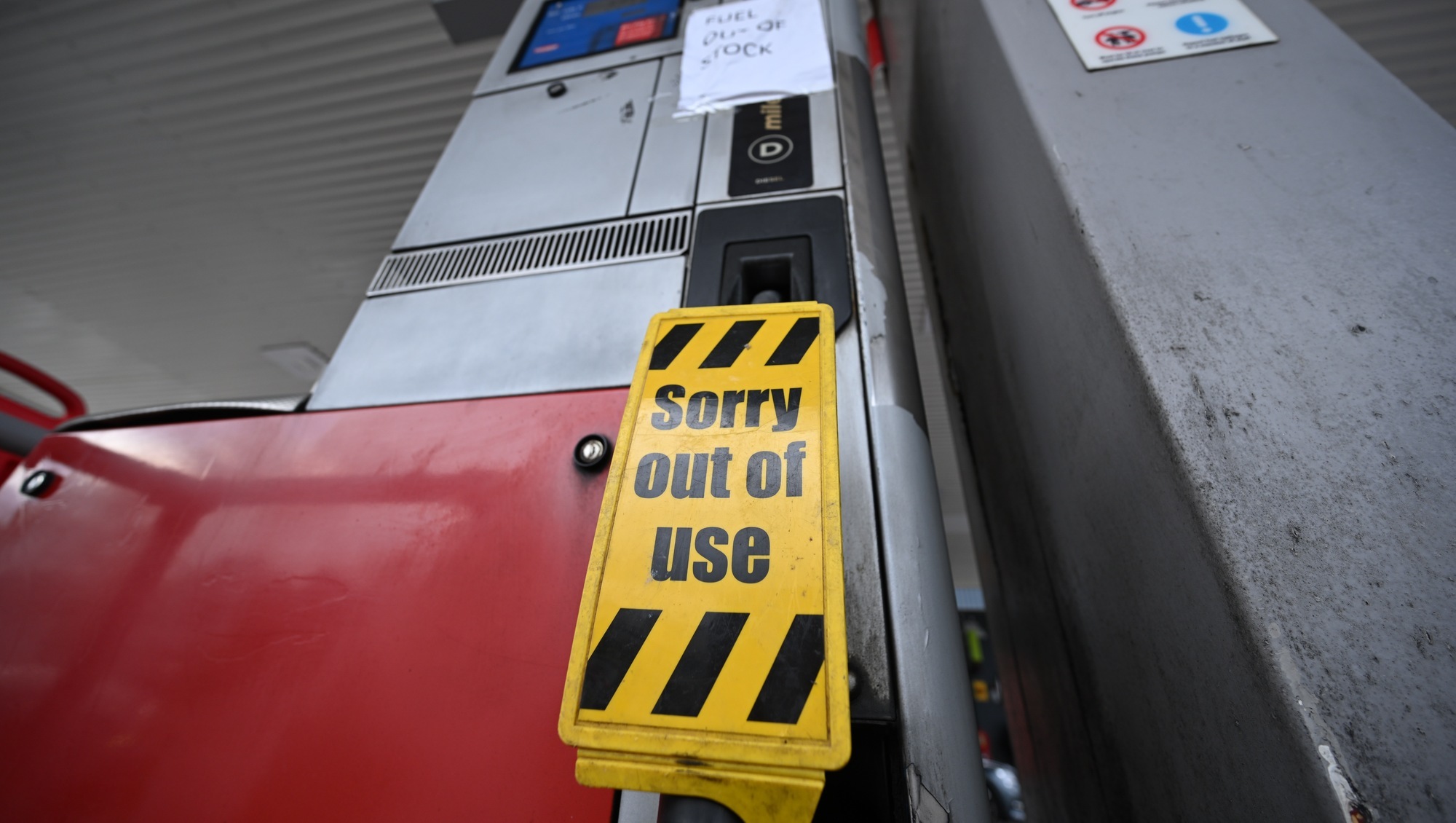
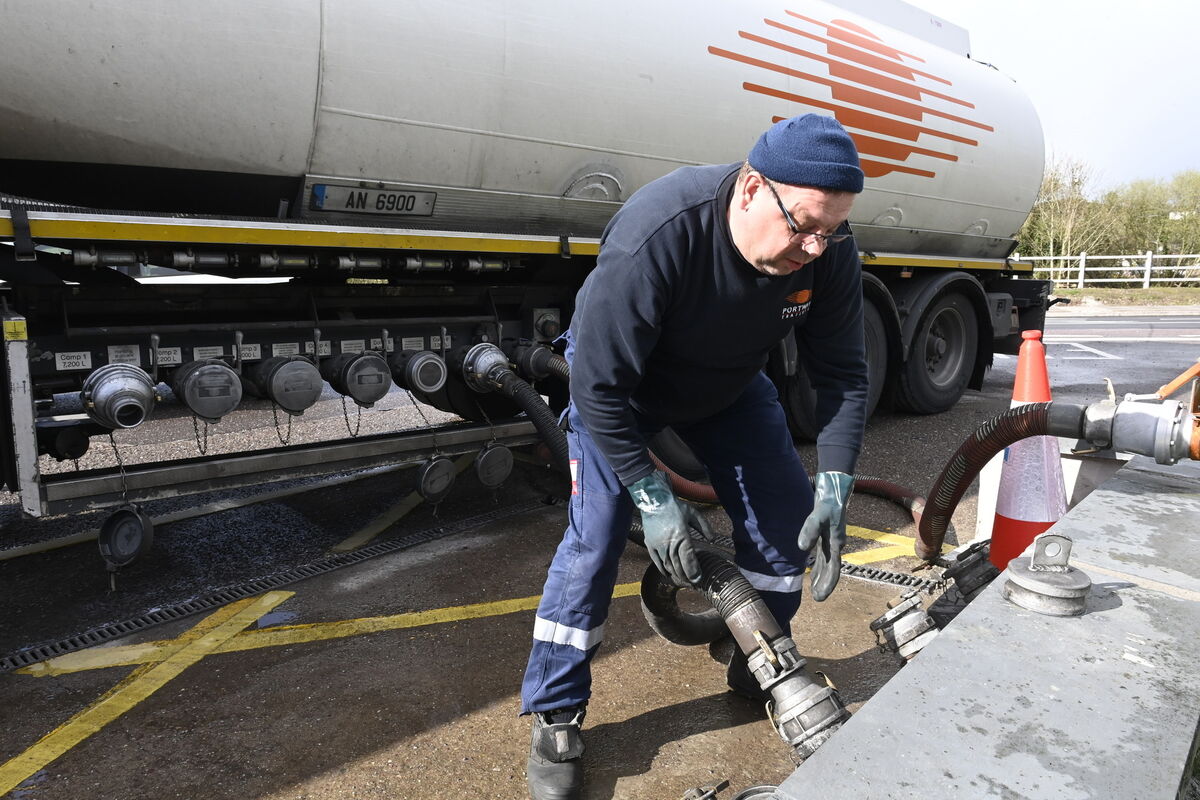
Blockades at key depots and at Whitegate rapidly constricted flows across the country. Within days, forecourts ran dry, supply chains faltered, and emergency services faced disruption. Picture: Chani Anderson
If the recent fuel protests taught the country anything, it is that Ireland does not have an energy system. It has a supply chain — and it is far more fragile than we like to admit.
Before examining how our fuel system faltered so dramatically under duress, it is worth asking a more basic question: where does Ireland’s energy actually come from?
The answer is simple, and uncomfortable. Almost none of it comes from here. Ireland imports virtually all of its oil, with the majority of refined fuel products sourced from the UK and north-west Europe. These, in turn, are produced from crude oil originating in global markets — most commonly the North Sea, particularly Norway and the UK, but also from further afield, including the US, the Middle East, and West Africa.
Even when fuel arrives from a neighbouring port, its origins are often thousands of kilometres away.
Gas follows a similarly exposed route. About three-quarters of Ireland’s natural gas is imported via pipelines from the UK. That gas is itself a blend — drawn from the UK continental shelf, Norwegian fields, and international liquefied natural gas imports landing in British terminals before being piped onwards to Ireland.
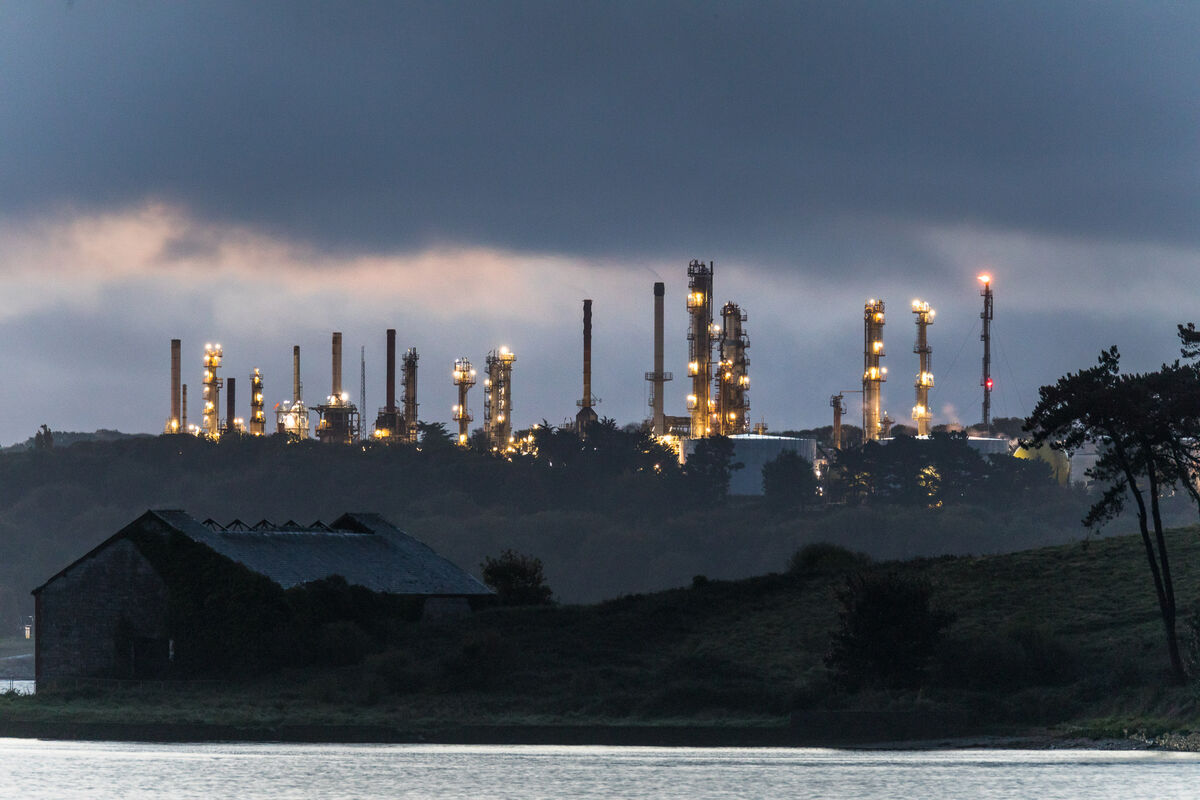
The Corrib gas field off the Mayo coast once provided a meaningful domestic buffer, but its output is now in steady decline.
What this means in practice is that Ireland sits at the very end of a long and complex supply chain — one that begins in offshore rigs in the North Sea or tanker terminals in the Gulf of Mexico, passes through refineries and trading hubs in Britain and Europe, and only then reaches Irish shores.
And when it does arrive, it enters through a strikingly small number of gateways.
Ireland imports almost all of its oil through a handful of ports and facilities. Dublin Port remains the primary distribution hub for the capital and surrounding region, handling the bulk of refined fuel imports.
However, its physical constraints mean it can only accommodate tankers of roughly 50,000 to 55,000 tonnes — far smaller than the “super tankers” that dominate global oil transport.
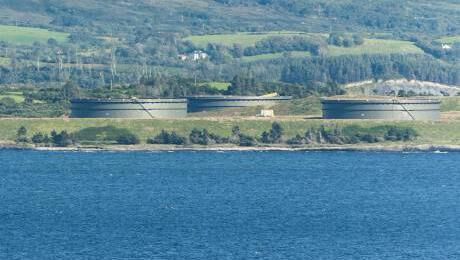
Other facilities exist, but each comes with limitations. The Whitegate refinery in Cork — the only refinery in the State — processes imported crude oil and supplies a substantial portion of national demand, accounting for roughly 40% of petroleum products.
Bantry Bay, also in Cork, is one of the few deep-water ports capable of handling larger vessels, but it is geographically distant from the main centres of consumption. Terminals in Foynes and elsewhere provide additional capacity, but at a much smaller scale.
In short, Ireland’s energy system is heavily import-dependent, tightly concentrated, and thinly buffered.
That such a small number of pressure points could immobilise so much of the system is not simply a consequence of protest action. It is the result of long-term policy choices.
Ireland is, in European terms, unusually exposed. While it meets its obligation to hold 90 days of oil stocks, a significant portion of those reserves is stored overseas. On paper, this satisfies regulatory requirements. In practice, it introduces a stark reality: in a moment of crisis, a substantial share of Ireland’s “strategic reserve” is not physically within its control.
This is not resilience. It is a form of outsourced security.
We were not always quite so exposed. Historically, the State maintained a broader network of fuel storage facilities — including inland depots and coastal tank farms that provided greater geographic spread and redundancy. Over time, however, many of these were decommissioned, consolidated, or allowed to fall out of use.
Some closures were driven by commercial decisions, as fuel companies streamlined their operations in a liberalised market. Others reflected environmental concerns and planning resistance, as large-scale hydrocarbon storage became more politically contentious. In some cases, infrastructure simply aged out without replacement, deemed uneconomical in a system increasingly reliant on just-in-time delivery.
Responsibility for fuel storage has largely been left to market actors, within a regulatory framework focused on compliance rather than resilience. The National Oil Reserves Agency ensures Ireland meets its stockholding obligations, but it does not require that those reserves be held domestically, nor does it direct the development of new physical infrastructure.
The result is a gradual thinning of capacity, largely invisible until tested.
Even where infrastructure exists, its limitations are increasingly apparent. Dublin Port remains the critical hub for fuel distribution into the country’s largest urban area. Yet its inability to handle larger tankers forces reliance on smaller shipments and more frequent deliveries.
This is not simply an efficiency issue; it is a vulnerability. More journeys mean more exposure — to disruption, delay, or blockade.
Alternative entry points offer only partial relief. Bantry Bay’s deep-water capacity is underutilised due to its distance from demand centres and limited onward distribution infrastructure. Foynes and other terminals provide useful supplementary capacity but lack the scale to compensate for a major disruption elsewhere.
The system, in effect, is designed to function smoothly under normal conditions, but not to withstand sustained pressure.
The picture for gas is, if anything, more precarious. Ireland’s dependence on UK interconnectors means its energy security is closely tied to British supply conditions. While this arrangement has historically been reliable, it leaves the State exposed to decisions and dynamics beyond its control.
There is no operational LNG (liquefied natural gas) terminal in Ireland, meaning the country cannot directly import gas by ship or store it in significant volumes. Proposals for such infrastructure have been debated for years, often caught between climate policy and security concerns.
Meanwhile, Corrib — once a significant domestic asset — is declining. As it does, Ireland’s reliance on imports will only deepen.
Overlaying all of this is a broader strategic contradiction. Ireland has committed to a transition toward renewable energy, but progress has been uneven and infrastructure incomplete. At the same time, the State has neither maintained nor meaningfully expanded its fossil fuel storage and import capacity.
The result is a policy gap: not yet green, but no longer secure in the systems it still depends on.
The recent protests have exposed this tension. Ireland has reduced its tolerance for hydrocarbon infrastructure without fully replacing the underlying architecture of energy supply.
This imbalance is perhaps most visible in the State’s broader energy priorities.
In recent years, Ireland has moved quickly to facilitate the expansion of data centres — essential to the digital economy, but highly energy-intensive. Planning pathways have been streamlined, grid access prioritised, and concerns often overridden in favour of economic growth.
By contrast, investment in fuel storage and import infrastructure has been slower, more contested, and frequently deferred. This dichotomy raises an uncomfortable question: why has it been easier to build demand for energy than to secure its supply?
The protests will pass. Supply chains will stabilise. Forecourts will refill, but the underlying vulnerabilities will remain.
Ireland’s energy system is centralised, constrained, and exposed. Strategic reserves exist, but not always where they are needed. Import routes function, but lack redundancy. Infrastructure meets minimum requirements, but not real-world stress.
None of this is accidental. It is the cumulative result of decisions — and indecision — over many years.
Addressing these weaknesses will require more than restoring order. It will mean investing in domestic storage capacity, even where politically difficult. It will require rethinking the balance between environmental ambition and energy security, not as competing priorities but as interdependent ones. It will demand decisions about infrastructure that are strategic, not merely reactive.
Above all, it will require recognising a basic reality: Energy security is national security. For an island nation almost entirely dependent on imported fuel, the current level of exposure is difficult to justify. The protests did not create this reality — they revealed it.
The question now is whether Ireland chooses to act — or once again, to look away.
CONNECT WITH US TODAY



Be the first to know the latest news and updates