Renowned diver involved in Thai cave rescue smashes record for Ireland's deepest dive
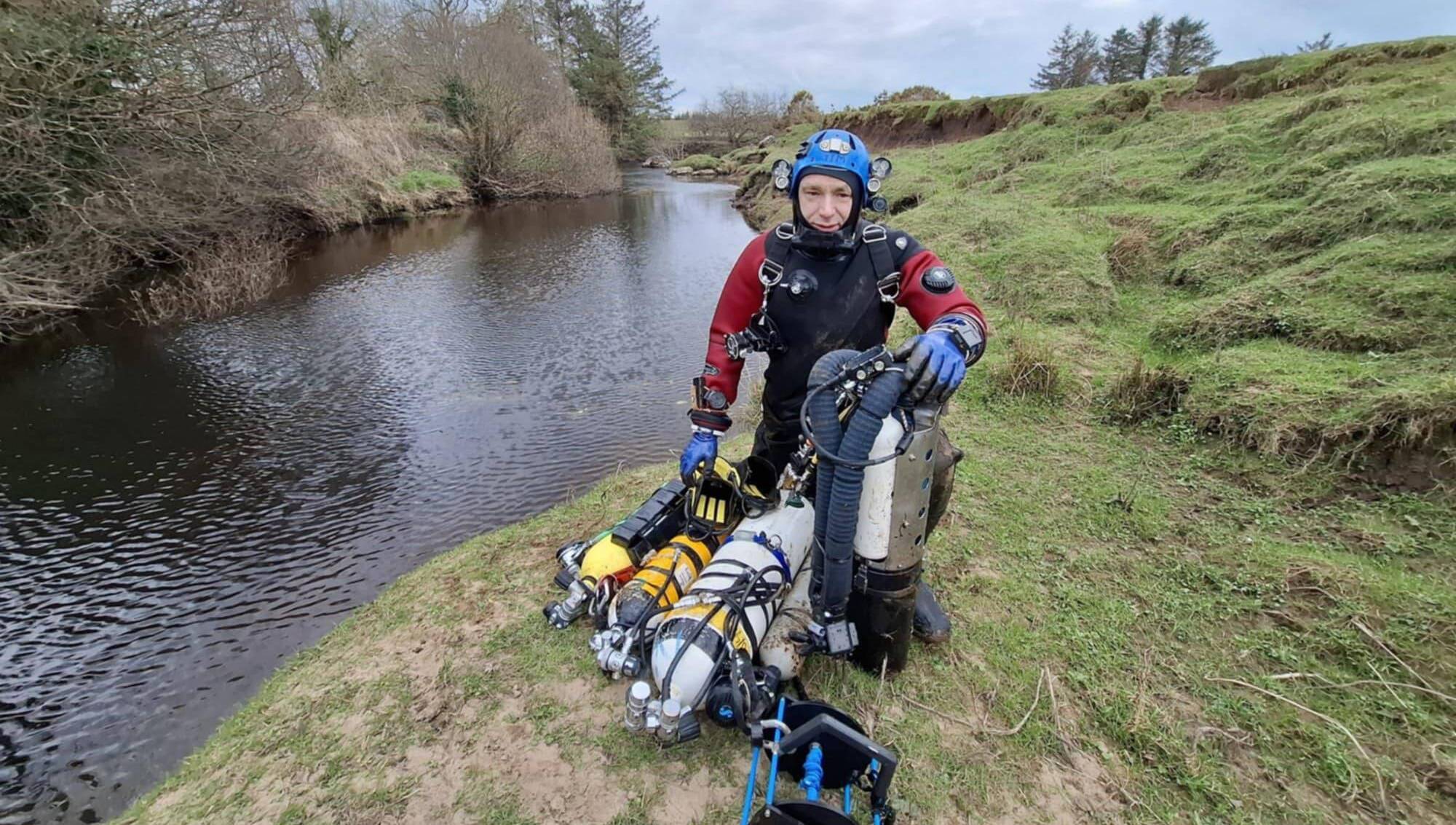
Jim Warny during preparation for a record breaking dive which saw him reach depths of 120m during his cave dive of Pollatoomary, County Mayo.
He was involved in one of the most famous rescue missions the world has ever seen.
Now, almost seven years on, Jim Warny — who formed part of the team that saved the lives of 12 boys and their football coach after they became trapped in a flooded cave in North Thailand — has achieved another incredible feat. The renowned cave diver made history a little closer to home this time after smashing the record for Ireland’s deepest cave dive.
Based in Ennis, Co Clare, Jim went head first into the challenge, completing a number of practice dives before the big event last month. The electrical engineer reached depths of 120m during his cave dive of Pollatoomary, in the Partry Mountains near Killavally, Westport, Co Mayo.
Jim’s wife Ammy was waiting for him after he surfaced from the record-breaking dive. The couple met during a promotional stint in Thailand for the film , in which Jim plays himself. Jim worked with Thai-Irish director Tom Waller on the project as well as others from the mission.
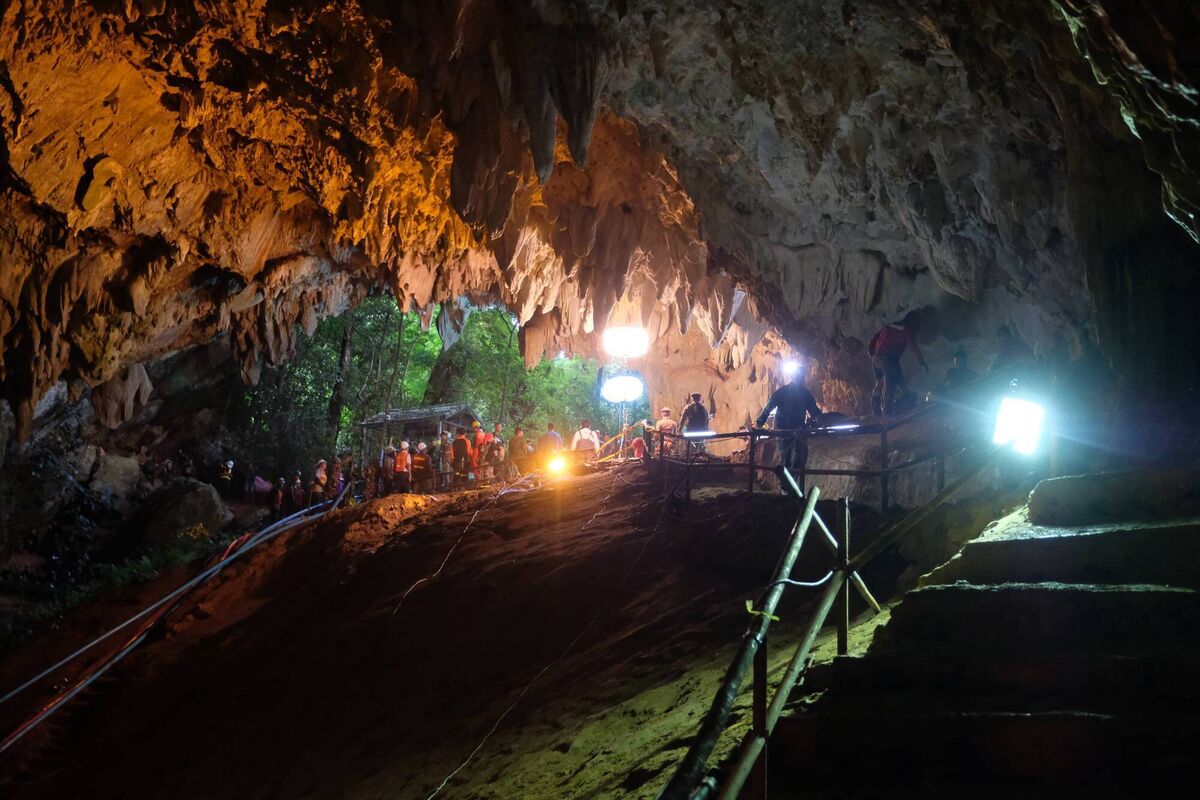
The film depicts the events that unfolded in the summer of 2018 after a junior football team became trapped for 15 days in Tham Luang Nang Non cave system. The boys and their coach were trapped underground after unexpected heavy rainfall blocked their exit. However all were saved when a team of international divers and experts executed a daring rescue mission, though a Thai Navy Seal diver sadly lost his life.
The location of Jim’s most recent dive in Pollatoomary has been close to his heart for a number of years now. In a sense, he was taking care of some unfinished business for his friend Artur Koslowski, who had broken a record there back in 2008 before dying in an unrelated diving accident three years later.
Artur Kozlowski braved depths of 103m in Pollatoomary, making it the record for the deepest cave dive in Ireland at the time.
Sadly, Jim had the heartbreaking task of recovering Artur’s body after he lost his life in a cave dive of the Gort lowlands back in 2011.
“There are a lot of risks involved and sometimes bad things happen,” Jim told the .
“It was good to give the family closure but it was a hard thing to do as well. I do a lot of my diving in Gort because it’s close to Ennis, where I live. The evening Artur went missing I went on a dive to see if I could locate him but I never found him.
"I went again the following morning but I was able to locate him this time. Rick, Jason and John, who are divers from the UK, came over that evening. It took five days — two dives a day — to progressively bring his body closer to the cave entrance. His body was located a kilometre inside the cave system.”
Jim said his pastime, about which he is passionate, has also helped him to save lives.
“Dives like the one in Thailand and finding the body of Artur are memorable. They take a lot of digesting and recovering from mentally but they also affirm your skills, training and ability to cope.
Jim explains the background and preparation involved in his record-breaking dive.
“I didn’t plan on doing it so quickly since it was only the beginning of the season. During the winter, there is no cave diving because the water levels are too high. These are basically underground rivers and the flow would be too strong to swim against.
"You have to wait for three or four weeks of very dry weather to be able to dive in the caves so at the beginning of the season it’s always smaller dives or preparation dives. I did those on St Patrick’s Weekend and managed to progress deeper and deeper for those two weeks.
"I didn’t plan on breaking the record there and then. However, everything was going well and I had the equipment so I decided to go further.
"It's amazing to come back from these dives and feel the accomplishment of exploring such depths. The visual memories aren’t there. It’s not really a scenic thing because you are just surrounded by brown water. However, you always remember the feelings.”
Research is one of the most important motivations behind Jim’s expeditions.
“The exploration is not so much about the record but to find out what’s around the other corner. That, for me, is the main draw. During the Pollatoomary dive, I found the cave doesn’t go any deeper anymore. It continues horizontally, which is a good thing because it means I won’t have to go any deeper if I go back.
"It’s still quite an undertaking to go where I went but even if you dive in a known part you’ll always find something you didn’t see on previous dives.

"One of the most memorable discoveries I made was making the connection between two cave systems near Kinvara in Galway. The most fascinating thing for me is when I go into unknown parts of caves that nobody has seen before. No other people have been in places where I have been able to go and that gives me a special feeling.”
He stressed how important it is to be able to switch off during expeditions.
Jim even underwent a heart operation to improve his diving.
“I had a heart operation to help me continue diving deeper last summer. Human beings have a hole in their hearts between the two cavities because when they are in the womb they don’t need to use their lungs. For the majority of people, this closes as they get older.
"However, for 25% of people it doesn’t fully close. This isn’t a problem in normal everyday life but when you’re diving and gases dissolve into your bloodstream it can be a problem. This is because when you come up to offload these gases, they don’t go through your lungs as efficiently. The doctors went into the main artery with a catheter and deployed an implant to plug this hole. Luckily, they were successful.”
Jim said he believed fear is a necessary component of a successful dive.
"What we do as divers is visualise the dive ahead or the mission and we plan around it. Those fears and concerns all feed into the dive plan. We have a response to every concern and every form of fear. Running out of oxygen is your first concern as a diver. That’s why when you see a diver they will always have two tanks on their back or on their side.
"Life is all about overcoming fears. You don’t need to ignore them. What you can do is channel them into something positive. When you do something without fear you are not as careful as when you are scared.”
He acknowledged the fearlessness of the children he helped saved in Thailand, saying it was their resilience that kept them alive.
“The diving wasn’t threatening or stressful. There was risk involved for us but it was more of a risk for the children, some of whom couldn’t even swim. Those children stuck together for 18 days. All they had was each other so for me they were the true heroes of the story. It’s hard to believe they are all men now, but they will always be an inspiration.”
CONNECT WITH US TODAY



Be the first to know the latest news and updates