Sound of the underground: Curiosity pushes cavers onwards despite risks
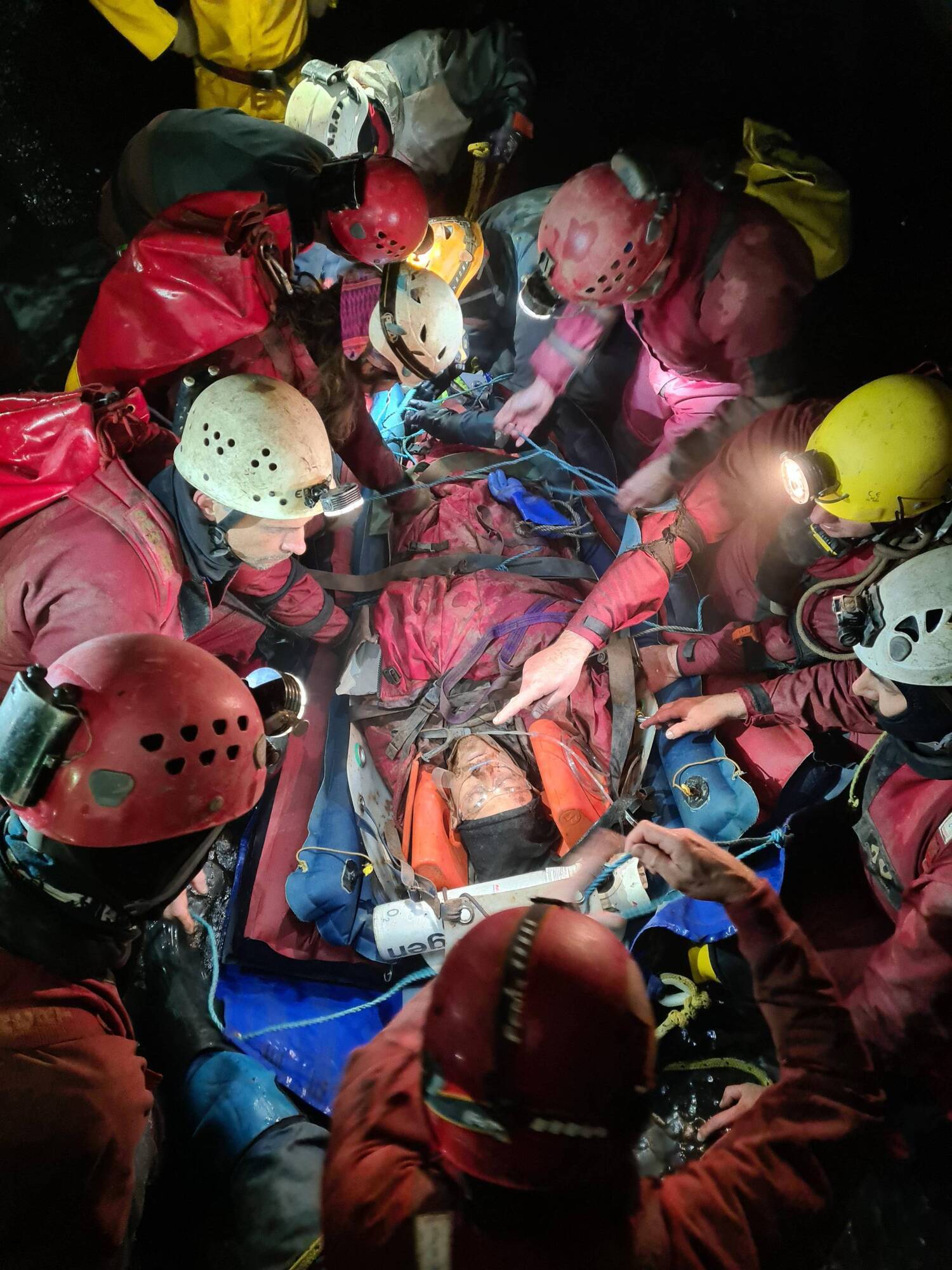
It took 10 rescue teams, about 300 volunteers, and 54 hours to bring George Linnane out of Ogof Ffynnon Ddu caves, Wales, after a fall
No one could save him, the man on the rock. Not the RNLI crew, not the Garda divers, not the hardy local fishermen of Co Mayo, not even the rescue helicopter crew hovering overhead. All were rendered helpless in the face of the seething currents that had sucked him into the back of an Atlantic sea cave. Clinging for his life to a jagged precipice, he was underground and out of reach.
But they were coming, the men and women who would eventually save him. Answering the call that evening on September 17, they drove from all over the country until they reached the north Mayo coast sometime after midnight. Working through the night and into the next day, they inched their way down the cliff face at Downpatrick Head, Spiderman-like, until they reached the man and pulled him to terra firma the following evening.
These are the rescue cavers of the Irish Cave Rescue Organisation (ICRO), a small group of 68 people with a very particular set of skills. Founded in 1961 following an incident in a cave in Fermanagh, ICRO members volunteer their expertise when called upon by the Garda Síochána. It doesn’t happen often, but when it does, it’s a life and death scenario.
“It’s only cavers that can rescue cavers,” explains George Linnane, a Bristol-based caver and member of the South and Mid Wales Cave Rescue Team. “The other emergency services, the fire brigade, the police, the ambulance, even mountain rescue, they don’t have that underground capability because they’re not cavers. It’s as simple as that. It’s a very specialised, niche thing to be good at moving through a cave and certainly to be able to move casualties safely through a cave.”
The rescue at Downpatrick Head on September 20 galvanised an entire community, garnered international media attention, and gripped a public ravenous for a good news story. The rescue team led by John Sweeney included Jim Warny, a specialist cave diver involved in the world-famous rescue of 13 boys from a flooded cave in Thailand in 2018.
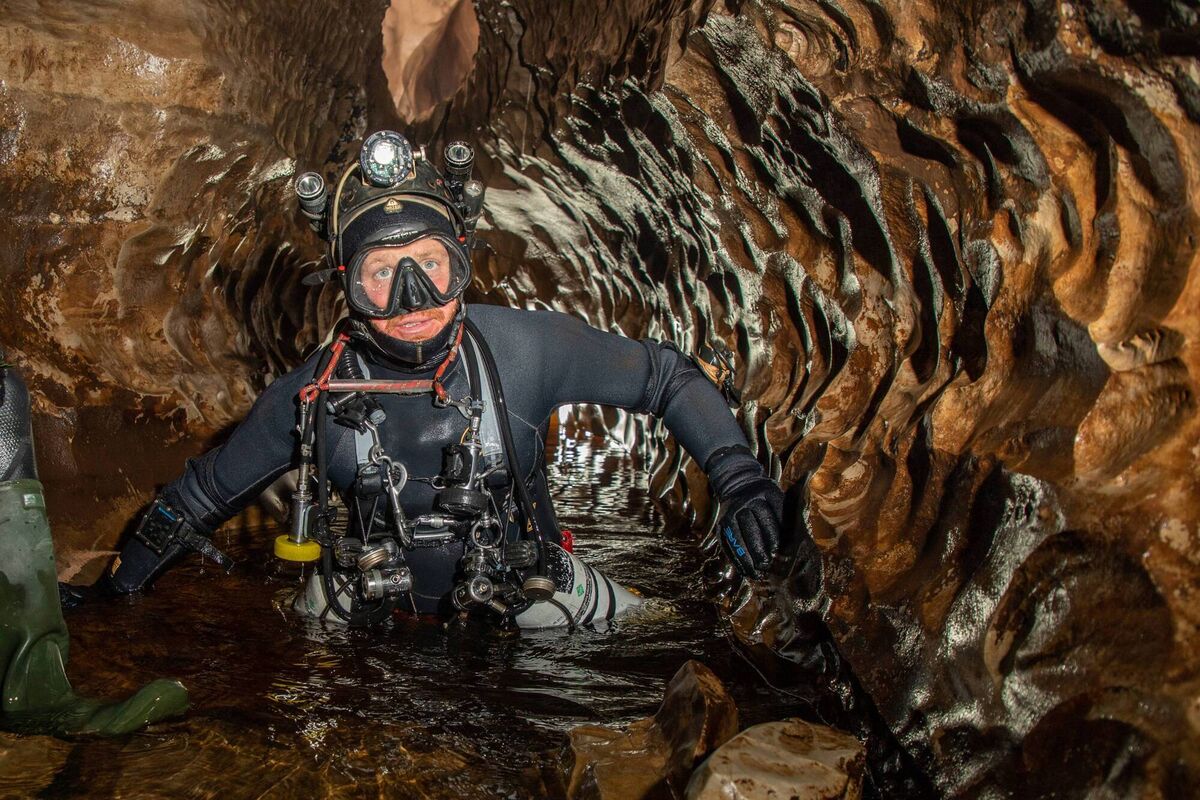
The 40-year-old casualty is said to have recovered well from his 22-hour ordeal but has yet to share his story. His rescuers slipped away as quietly as they came. Who are these people who shun the daylight and the limelight? And what’s it like to realise your survival depends on them? To hope and pray their strength and skills will save you?
“People don’t like to be held up as heroes, it’s a team effort,” says Linnane.
He should know. The 39-year-old engineer was trapped in a Welsh cave for 54 hours almost a year ago. It took 10 cave rescue teams from all over the UK, about 300 volunteers and the longest cave rescue operation in Welsh history to bring Linnane to the surface after a fall at Ogof Ffynnon Ddu cave system, in the Brecon Beacons.
How might the man rescued in Co Mayo be feeling since his rescue six weeks ago?
“I would think a fair amount of gratitude, especially because it’s cavers that rescue cavers. Particularly grateful because you know it’s volunteers giving up their own time, all made possible by donations. It’s not even like it’s anyone’s job to do this. It really is cavers doing it for other cavers out of the goodness of their hearts because if it was them in that situation they’d hope that someone would be coming for them.
Highly experienced himself, Linnane would never have thought he could have survived what eventually happened to him.
“The chances of something going wrong are quite small but when they do it can go very wrong and so I guess I always accepted that risk in going underground and I always knew that something bad could happen,” Linnane told the . "But the reality is, that although we all pay lip service to this residual level of risk, we don’t actually expect it to happen to us. Not really."
An hour into what was meant to be a six-hour excursion into the deep cave system, Linnane fell eight metres through a hole, around lunchtime on Saturday 6, November 2021. He was about 100m below the surface. One of his caving partners, Mark Burkey, ran back out to sound the alarm, while another, Melissa Bell, stayed above him, peering down into the pitch black darkness where Linnane lay screaming in pain.
“I wasn’t sure I was going to make it for the first three hours,” he said. “I was concerned that I might pass out and choke on my own blood from my jaw injury and not make it but once rescue arrived I always thought I was going to make it.”
In his darkest hours, Linnane felt the presence of his late grandmother, Flora Dawson, who was very close to him as a child. Lying there in the dark, with no idea of how long it would be before help arrived, it brought him comfort.
“It occurred to me that she was probably watching over me in some shape or form,” he said. "I did actually feel it at the time. She had passed away just over a year previously so it was still relatively fresh."
Luckily for Linnane, doctors tend to become cavers, and once the first rescue cavers reached him he knew he stood a good chance of survival. “I was probably more optimistic about my chances than the doctors were,” he added. The doctors didn’t tell him at the time but they feared he would have to have his leg amputated and even that he might not live at all, given his internal injuries. “It was only afterwards that I realised just how close I had come to dying or not walking again,” he said.
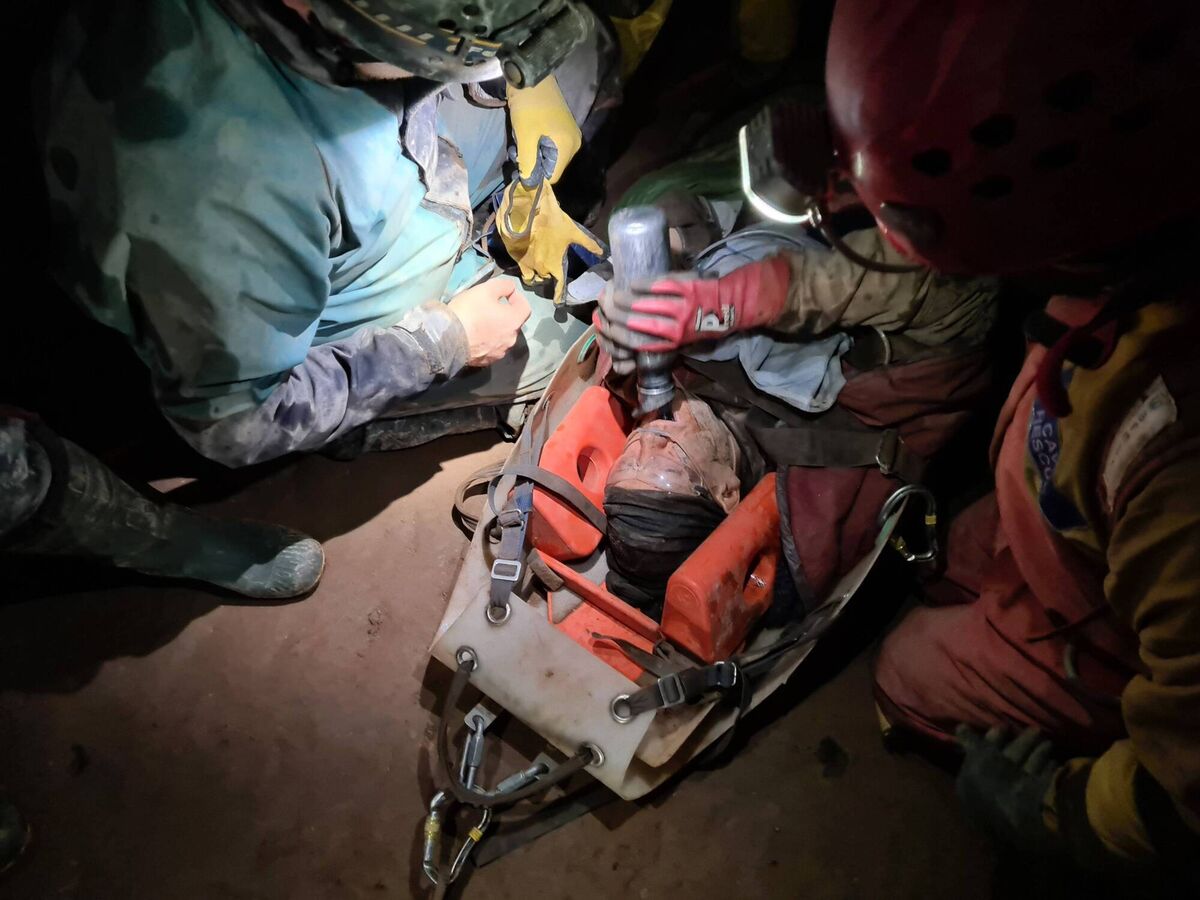
Once the team got to work, Linnane’s body and brain went from survival mode to “shut down.” He lost consciousness as his body temperature dropped. He has no memory of around 18 hours of his ordeal. Once he was stabilised onto a backboard, rescuers hauled him out of the hole but the size of the stretcher meant they could not take him out the way he had come in. They would have to take the long way home, a painfully slow but ultimately safer, circuitous route through larger caverns of the underground cave system that is known by cavers as ‘OFD’.
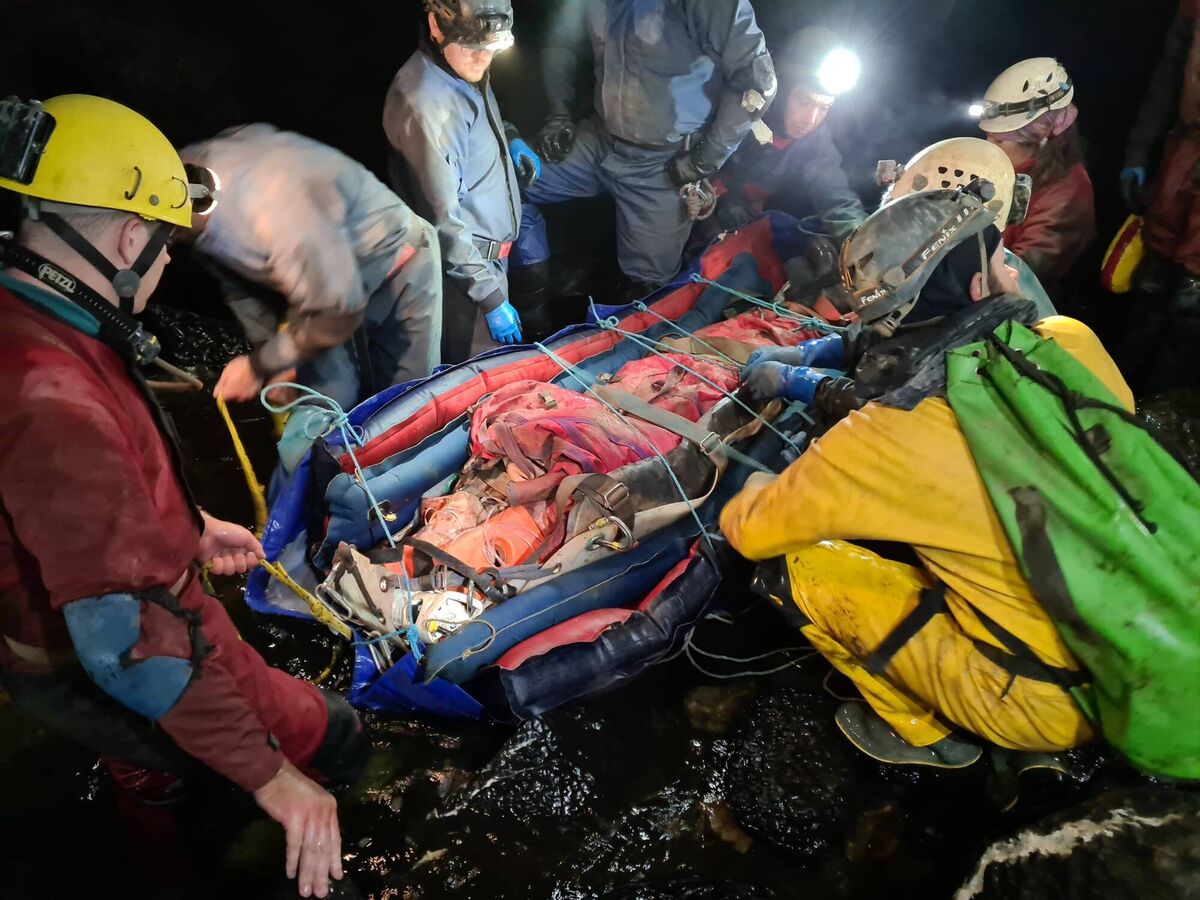
Teams of volunteers kept arriving to keep the operation going overnight – for two days and two nights. Linnane was at one point, floated along part of an underground river.
“I remember the stretcher being converted for use in the stream way. They put floating panels on the sides and end of it, around the stretcher so that it would float on water, which is quite ingenious really. People were kneeling down in the stream way and I was passed along a sea of people’s backs in order to keep me out of the water."
That part of the rescue operation was hugely complicated, with water levels surging to several metres deep in places. Sections had to be rigged with ropes and other equipment so that rescuers and the stretcher could pass across them safely. “It’s not simple, nothing in a cave is simple,” said Linnane.
It took the hundreds of volunteers until the following Monday evening to get Linnane to the mouth of the cave, passing his stretcher along a human chain of hands. When he started regaining consciousness, the first thing he noticed was a friend from a Gloucestershire. Then a caver he knew from Somerset. Then another caving pal from the Peak District, yet another friend from Yorkshire.
“It became obvious that people were coming from all over the country, which I felt a little bit of guilt to start with and then a whole lot of gratitude. I don’t know why. I suppose I felt like a bit of a pain in the arse. I basically ruined everyone’s Bonfire night.”
Finally emerging out into the fresh air of a rainy Welsh sky was “pretty triumphant”.
Linnane had suffered a broken leg, broken ribs, a broken jaw, missing teeth, a dislocated clavicle, lacerated spleen, pneumothorax (air outside his lung, where it shouldn’t be) and a broken scaphoid in his wrist.
A year on, Linnane has almost fully recovered but it was long and slower than a man of his temperament would have liked. He spent November in hospital, December learning to eat whole foods again. He started walking in January. The things that caused him the most problems however were not the big obvious injuries. His body has had to readjust to a dislocated clavicle that “is never going back in.” His broken wrist needed an operation in January which set him back by two months.
“When I had the operation done to screw the bones of my wrist back together, I thought that having had a 11mm titanium rod installed all the way down my lower leg and multiple plates in my jaw, I thought this would be an absolute doddle but it really wasn’t,” he recalled. It was May “at the earliest” before he was able-bodied again. He has spent the summer getting fit but his ‘cave fitness’, he explained, is such that no amount of working out through different sports can train the body as much as caving excursions can. “It’s such a massive variety of movements – you need to be a well-rounded caver. There’s vertical stuff, horizontal stuff, there’s small crawly stuff, there’s big stompy stuff,” said Linnane.
The physical scars are the ones we can see, they say. How about the scars we can’t?
Linnane is “fairly confident” he doesn’t have post-traumatic stress disorder (PTSD) but admits he didn’t escape entirely unscathed. His first night in the poly-trauma hospital ward, when the drugs were wearing off, was a troubled one.
“I didn’t sleep a wink because every time I closed my eyes. I could feel myself falling. I could feel the legs whirling around in mid-air. I could hear rocks moving, all that kind of stuff. I thought ‘here we go, massive PTSD’. But actually, it never happened again. The following night I got some sleep and it never came back.”
Linnane’s theory is that PTSD is “essentially a failure to process” and because he has spoken about it so much with news crews to BBC documentary makers to friends and family, he “couldn’t fail to process it. And that’s a good thing.” He singles out his partner Julie for being “incredibly understanding and incredibly helpful” throughout the past year.
What Linnane loves most about caving, the people and the camaraderie between team members, has brought him back. He’s gone caving again and even joined the first rescue crew that came to his aid, the South and Mid Wales Cave Rescue Team.
“I’ve done a couple of easy cave dives and I’ve also done a couple of easy caving trips. I’m not able to perform at the level I was performing at a year ago which was a reasonably high level but I think I will get there. I think I do bring something to the table, yeah.”
Most of us spend our lives trying to stay above ground. For many of us, going down into a dark hole is the stuff of nightmares. What exactly is the appeal of caving?
For ICRO warden John Sweeney, it’s the exhilaration of going where you’ve never gone before.
“It takes people out of their comfort zone. It’s amazing the conversations you have with people when they’re out of their comfort zone,” he says.
Catherine Ryan tried caving with John and a group in north Clare for the first time a few weeks ago.
Having overcome her initial reservations, Ryan found herself “pleasantly surprised".
“The most amazing thing was at one point we came to an area and sat down and turned off our lights. Just to listen to the bubbling of the waterfall in the pitch black, when you’ve nothing else to distract you. It was very exciting and yet calming. Sure it was beautiful down there.”
Linnane too, is lured by the unknown.
“It’s a human urge to explore and human curiosity to always want to know what’s around the next corner. I get this thing cave diving, where if I’m swimming along a passage, and I haven’t reached the end of it and if I have to turn before I reach the end of it, I really, really want to know what’s around the next corner. It’s that. I will come back with more gas later on so I will do a larger dive in there safely so I can find out what’s around that next corner.
“The same thing that makes people cave is the same thing that makes people want to scuba dive or go to the moon. It’s another planet down there. It’s not like the surface. It’s an urge to go to new places and see new things. I suppose exploring is a different version of that again. It’s curiosity on steroids.” As the first anniversary of his accident approaches, a quiet evening at home with Julie is surely on the cards. “This is going to make you laugh but I’m intending to spend it caving in OFD. It hasn’t put me off, no,” he says, with a mischievous grin.
George Linnane will speak at SUICRO, the annual symposium for cavers in Ireland organised jointly by the Speleological Union of Ireland (SUI) and the Irish Cave Rescue Organisation (ICRO) in the Hylands Burren Hotel, Ballyvaughan this Saturday evening 29 October. For more details see www.caving.ie or https://www.facebook.com/CavingSymposium2022

CONNECT WITH US TODAY



Be the first to know the latest news and updates