Cork City retail fighting for survival amid closures and changing shopping habits

Debenhams was one of Cork’s first 'big name' retailers to close, pulling down the shutters on its St Patrick’s Street shop in April 2020. File Picture: Larry Cummins
Once packed full with shoppers and bursting with life, the former Debenhams building now casts a long shadow over Cork’s city centre.
The building acts a sobering reminder of how St Patrick’s Street — and the city centre as a whole — is having to fight hard to retain its retail crown amid stiff competition from suburban shopping centres and even stiffer competition from online.
Debenhams was one of Cork’s first "big name" retailers to close, pulling down the shutters on its St Patrick’s Street store in April 2020 after its British parent company decided to shut all 11 of its Irish department shops.
That decision not only sparked a long-fought campaign by its mostly female workforce for a just exit package, it also marked the end of more than a century of retail in one of Cork’s most iconic buildings.
The St Patrick Street shop had begun life as furniture store in 1901, opened by William Roche. The offering was quickly expanded, serving generations of Cork families everything from haberdashery to ladies fashion, sticky buns and ice creams in the café.
With the building's elegant arches and glittering glass-domed ceilings, a trip to Roches Stores was almost a "day out" rather than just a place to shop.
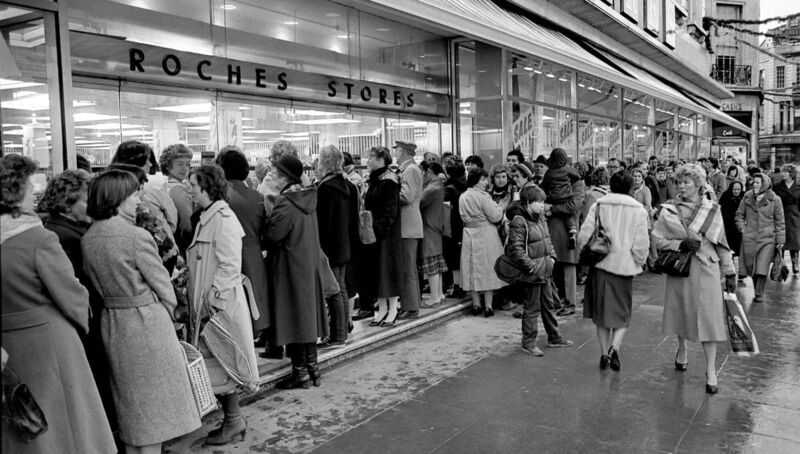
After decades of trading, the arrival of Debenhams and the departure of the Roche family in 2006 was proof to Cork people that their city, and Pana in particular, were moving with the times and would continue to hold their own in the world of retail.
After all, St Patrick Street has retail pedigree. It was where Bernard ‘Ben’ Dunne Sr, who ironically had learned his trade in Roches Stores, opened his first Dunnes Stores shop on March 31, 1944, giving birth to one of the country’s most successful retail dynasties.
However, after a few years of healthy trading for Debenhams, covid hit. Shoppers migrated online and the fashion retailer decided to call it a day, focusing instead on online sales.
The rise in boarded-up windows and "closing down sales" in recent years left many fearing that the city’s heartbeat had been dealt a killer blow, and that rising energy costs, recruitment challenges, and changing shopping habits would kill off whatever was left.
It wasn't just the big-name British shops that closed, Irish-owned family enterprises also had to call it a day. Quills left St Patrick's Street in 2014.
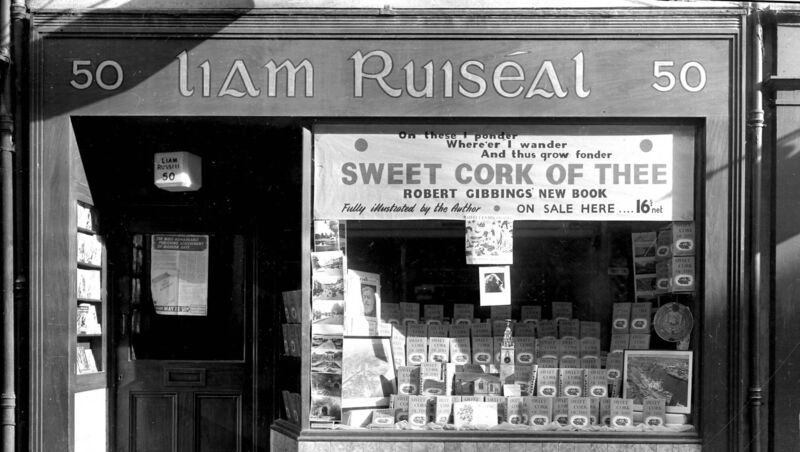
The loss of booksellers Liam Ruiséal —which had originally opened its doors on the Grand Parade in 1916, before relocating to Oliver Plunkett St in 1929 — was particularly keenly felt four years later, given its strong local and Irish history offering and fabulous window displays.
However, it had found it hard to compete with big chains and online sales. Founder Liam Ruiséal's granddaughter, Bríd Hughes, described it as "a very emotional" decision to close the shop after more than a century of trading.
Retirements have also taken their toll when it comes to independent, locally owned retailers.
Simon and Patrick O’Flynn had been locally famed for their quality meat before hanging up their butchers' aprons on Marlboro St in January 2023. Their father, John O’Flynn, had begun the business with his wife Sheila in the English Market during the Second World War.
They relocated after the fire of 1980 to settle at 36 Marlboro St, where Simon and Patrick served their seven-year apprenticeship before eventually taking the helm. The brothers made the tough decision to close the business after reaching retirement age, having no family successor to take it on.
Simon O’Flynn said at the time that he was unsure about advising anyone to take on a business in today’s climate.
"It’s not only that there’s no family successor to take over in Marlboro St,” Simon had told the .
"More recently, retirement also saw the clothing store Mannix & Culhane on Washington St close at the end of March after 95 years of trading in the city centre, and shortly before that the Denim Store called it a day."
First opening its doors in 1990, the Denim Store — located at 35 Cook St — had been the first port of call for so many teens in Cork in the 90s and 2000s, anxious to buy their first pair of Levis and Wranglers.
Owner Tim Heelan said he decided to cease trading while business was still on a high after he reached retirement age and had no family successor to take on the shop. He put the shop's longevity down to a loyal customer base who supported him right till the end.
“My initial plan was to retire at 60, but when you’re in business and doing well it’s hard to close up,” he told the
He said that while his business was thriving, he feels anti-social behaviour, in particular, is negatively impacting Cork's retail community.
“When I opened first, there were probably around six or seven guys who were homeless in Cork City. They were all around 70 years of age plus and down on their luck. However, it’s different now.
In addition to antisocial behaviour, Tim says business owners in Cork are facing a raft of other challenges.
“Retail has changed totally. The online element is a big thing. In addition to this, the city is run down. I know a lot of people don’t like hearing that, but you can see it. Everyone can see it except the powers that be.”
The lack of footfall in the city centre, he says, is also very noticeable. He think the lack of parking is partly to blame.
“When I opened first, you could park anywhere. Oliver Plunkett St was open. You could also park in the Grand Parade. It would have made sense to have such wide footpaths and plazas if the footfall was huge, but that’s not the case.”
The retired business owner said a shift in socialising trends is also contributing to the drop in footfall in the city centre.
“We need to be doing more to attract young people into Cork City. The Marina Market is where it’s all at the moment. It’s where all the young people meet up and go for something to eat.
But all is not lost and, while there are undeniably challenges, there are also signs of a comeback for Cork City. While shops close, and hoardings go up, new enterprises are forever springing up.
The former Debenhams building is now in redevelopment by Intersport Elverys, and includes plans for a hotel and accommodation facilities. Mango took over the former Quills store and there are tentative plans to reopen at least part of the Savoy. The Body Shop went, but Irish-owned bookseller Dubray Books came instead.
Local family-owned Here’s Health shop and café opened in the former Liam Ruiséal premises in 2024.
The Philpott family, who purchased the property for more than €1m, already owns a string of health shops as part of the chain, which are located in Wilton Shopping Centre and Douglas.
Dunnes Stores has had an extensive facelift. Penneys has ambitious expansion plans. There is a steady stream of new arrivals, among them Victoria's Secret.
While not everyone might not welcome a swathe of neon-lit sports shops — and think back wistfully to the days of Cudmore and Woodford Bourne — most agree it is better than derelict buildings.
And in the midst of it all are the independent, family-owned stores, that have proudly served Cork people for years and continue to buck the trend and thrive.
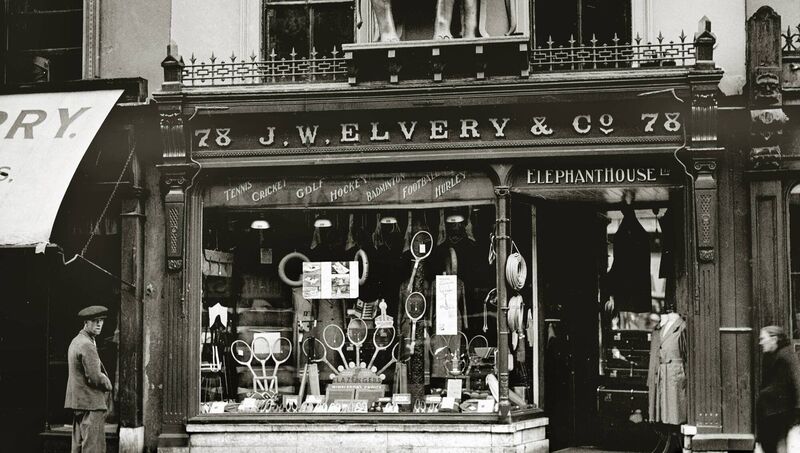
Among them is TW Murray on St Patrick Street — selling everything from fishing reels to tackle, rifles and shotguns, and a lot more in between. One of the few independent family-run stores to weather the storm, TW Murray’s doors are still wide open after almost 200 years trading.
Store owner George O’Connell told the he believes the revival of Cork City as a residential commodity will breathe new life into the retail hub and result in more business.
“It will mean more bodies on the streets. Hopefully, this will come as an injection of life. Having a residential aspect to Cork City again will be very positive for us. The place was in decline for a while, but I feel it’s on the way back up again.
"We have a new shop next door to us now named Sea Salt, which has taken over the French Connection premises. It’s great to see new businesses opening up.”
Vibes and Scribes has been a fixture in Cork City for as long as book and craft lovers can remember.
Owner Joan Lucey opened her first premises in Macroom, Co Cork, back in 1991. Two years later, she opened a store in Bridge St in Cork City, which now specialises in crafting supplies before expanding to a premises in Lavitt’s Quay — which sells new and second-hand books.
The last few decades have not been without their challenges for Joan. However, her business has prevailed through it all. Joan emphasised that none of it would have been possible without her team.
“If you have staff that are working in areas that they like, then they’re going to be able to relate to the customer that they are meeting," she said.
"We're not necessarily selling useful things like food or clothing. We're selling hobbies and interests and dreams. I wouldn't say we are recession-proof, but when people can't afford expensive things like new cars or holidays and houses, they’ll always be able to afford a specially priced book."
For Joan, the key is hiring staff who are passionate about what.
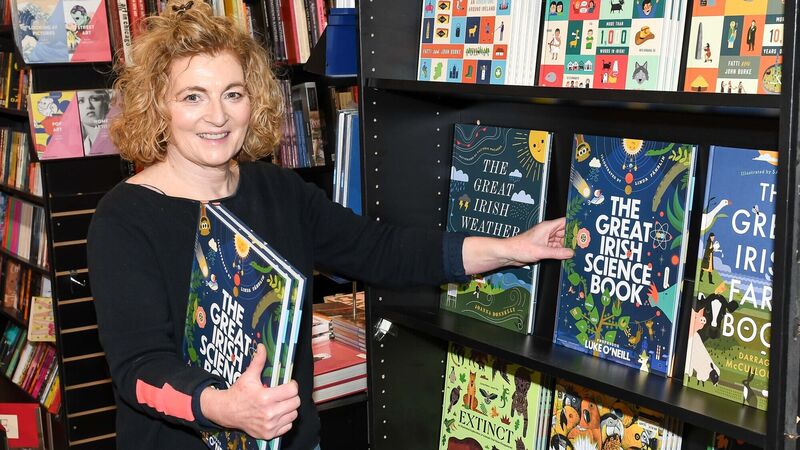
"You need people who are really keen readers or are really interested in literature and academia. You need sewers, you need knitters and quilters.”
While retail is undoubtedly challenging, she shared her secrets to running a successful business.
"I started with the bookstore, and while we diversified several times over the years the aim stayed the same.
"The main aim is to look after your customers as best as you possibly can, and give them the service and the quality and value of the product. If you do all these things, then you have a very good chance of surviving.
"It’s a matter of knowing what your customers want and need and being willing to go that extra mile for them over the years.”
Staying positive has always been hugely important to Joan.
“Recently, I have been looking a little more inward,” she said.
“Sometimes you have to do that. If you take on all the troubles of the world and see all the challenges, then you might get overwhelmed. Sometimes you just have to stick to what you know.”
Like any other customer-facing business in Cork, issues such as theft and anti-social behaviour are problematic — but Joan said she is fortunate in that her business is not as big a target as other stores.
“We don’t have products that are of a high resale value. If we have people coming in stealing here, they are stealing for something they want. It’s different to stock like alcohol or cigarettes. In that respect, we don’t have as many challenges in comparison to other businesses.
"I feel very strongly about having a safe and pleasant environment for staff to work in and for customers to visit. At the end of the day, this is really important because you’re only important as the people you work with.”
Since its establishment in 1828, TW Murray and Co has survived everything from recessions to an IRA raid.
Almost 200 years on, the store — which once stocked explosives as well as children’s toys — now faces very different challenges.
The St Patrick’s Street fixture continues to appeal to a variety of tastes, with stock including, binoculars, fishing and shooting products, among other quirky items. Of course, a considerable shift in consumer trends has forced owner George O’Connell to make some changes to the business.
In recent years, he has strengthened its online presence to expand their customer base.
At a time when many family-run outlets are succumbing to a lack of footfall in Cork City, George is determined to weather the storm. He even expressed confidence in a comeback for Cork City, saying the return of residential units on St Patrick Street may be what is needed to rejuvenate the area.
His hopeful words come more than a year after his father John died. The business has been in the family since 1928 and George, who was named after his grandfather, is determined to avoid the fate of neighbouring shops that have shut in recent years.
He says the generational element of his business — among other factors — has contributed to their longevity.
“We are not just a third-generation business,” George said. “We also have third and fourth-generation customers.
Nonetheless, George feels that more could be done to improve footfall on St Patrick’s Street.
“Unless there's a sustainable option like a light railway system that people can avail of to get to the city then I don’t think people will get out of their cars,” he said.
“The people who come into our shop are always pretty quick. Most of them know what they are coming in for and want to be straight back out again.
"Not everyone wants to be hanging around for three or four hours, so maybe some kind of a short-term parking option would offer another way around it.”
George also referred to the so-called “Pana ban” which introduced daily restrictions for motorists from 3pm to 6.30pm on the city's main shopping thoroughfare. The measure prioritises public transport as well as taxis and cyclists during these hours.
“You can definitely see it’s quieter on the streets during those times,” he told the
"I’m still between two minds about whether the Pana ban was a good thing or a bad thing. I’m sure if it was fully pedestrianised, and you could introduce a mode of transport like the Luas, then this system would work.
"I can understand Cork City Council’s vision for it, but I think on this occasion the cart may have been put before the horse.”
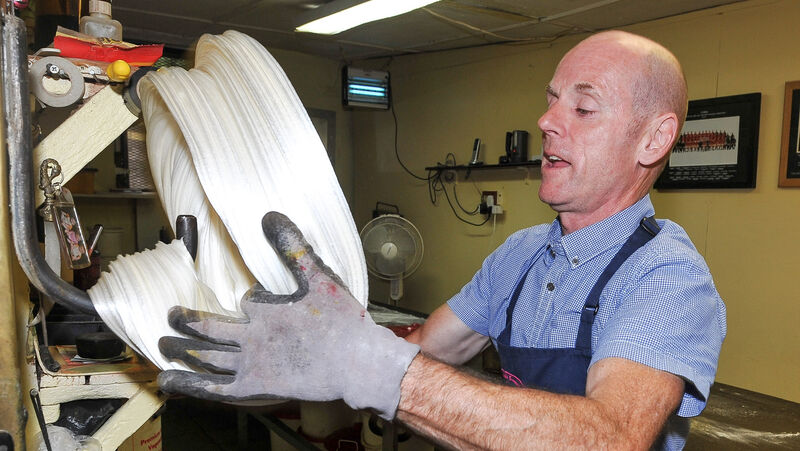
He might be behind Cork’s most iconic and historic sweetshop, but Shandon Sweets' Tony Linehan isn’t prepared to sugarcoat the tumultuous climate facing retailers in Cork City.
Tucked away under the gaze of Shandon’s steeple, his humble sweet factory radiates an old-world charm. Tony’s grandfather Jimmy opened the business in the early 1920s. His father Danny took a job there during his youth, before going on to run the business.
Methods used by the family incorporating huge copper pans, moulding machines still apply today. Even the recipe remains unchanged.
“I’ve had a lot of friends over the years whose restaurants and shops have all closed down, one after the other," he said.
"I know that day will probably come for us too but hopefully not too soon. You can't keep the wolf from the door forever. The rising costs are ridiculous so you have to keep juggling, year in and year out.
"We just basically have to keep it on an even keel and not get too greedy with it. There are only four years left until we make it to the 100 years. Who knows what the future will hold after that.”
He opened up about why he feels the family business has stood the test of time.
“It's kind of an old-fashioned place, but it's modernised to suit today’s standards. We kept the authentic look, while also modernising it in all the necessary ways.
"What they are really buying into is the place and its history. I only see it as a place of work from nine to five, but other people view it as a connection to their childhood and their history. Their mothers and grandmothers used to come in so that’s all part of it too.”
Like the other retailers the spoke to, Tony said there are steep challenges facing businesses in Cork.
“I won't sugar coat it,” he said. “It’s tough running a business in today's climate, especially with everything that's going on.
"Raw materials are going up. Energy costs are also increasing. We are seeing the prices fluctuating left, right, and centre.
"It’s very hard to keep everything on an even keel. We have managed to keep things very small. We had opportunities over the years to go bigger, but thank God we didn’t avail of them. If we had, the business would have gone belly up years ago.
"The secret for us has been keeping the business small. Obviously, we are not making as much money as we did 20 years ago, or even 10 years ago, but we are still making enough money to keep people employed here.
He remarked that other local businesses have experienced greater challenges.
“There's not a lot of people out there who actually own their premises. That's the killer for people. I knew people who got a bit of a reprieve during the pandemic. However, after a couple of months, the guys who own the buildings and the restaurants still had to pay a mortgage on them. They were still looking for €3,000 or €4,000 a month and didn’t know where it was going to come from.
"We were able to turn the key and lock up during the pandemic and return when we needed. Unfortunately, not everyone is that lucky. We would have definitely gone under otherwise.”

A collection of the latest business articles and business analysis from Cork.
CONNECT WITH US TODAY



Be the first to know the latest news and updates