'The priest called me a tramp, looked up my skirt to check if I had knickers on, then banished me'
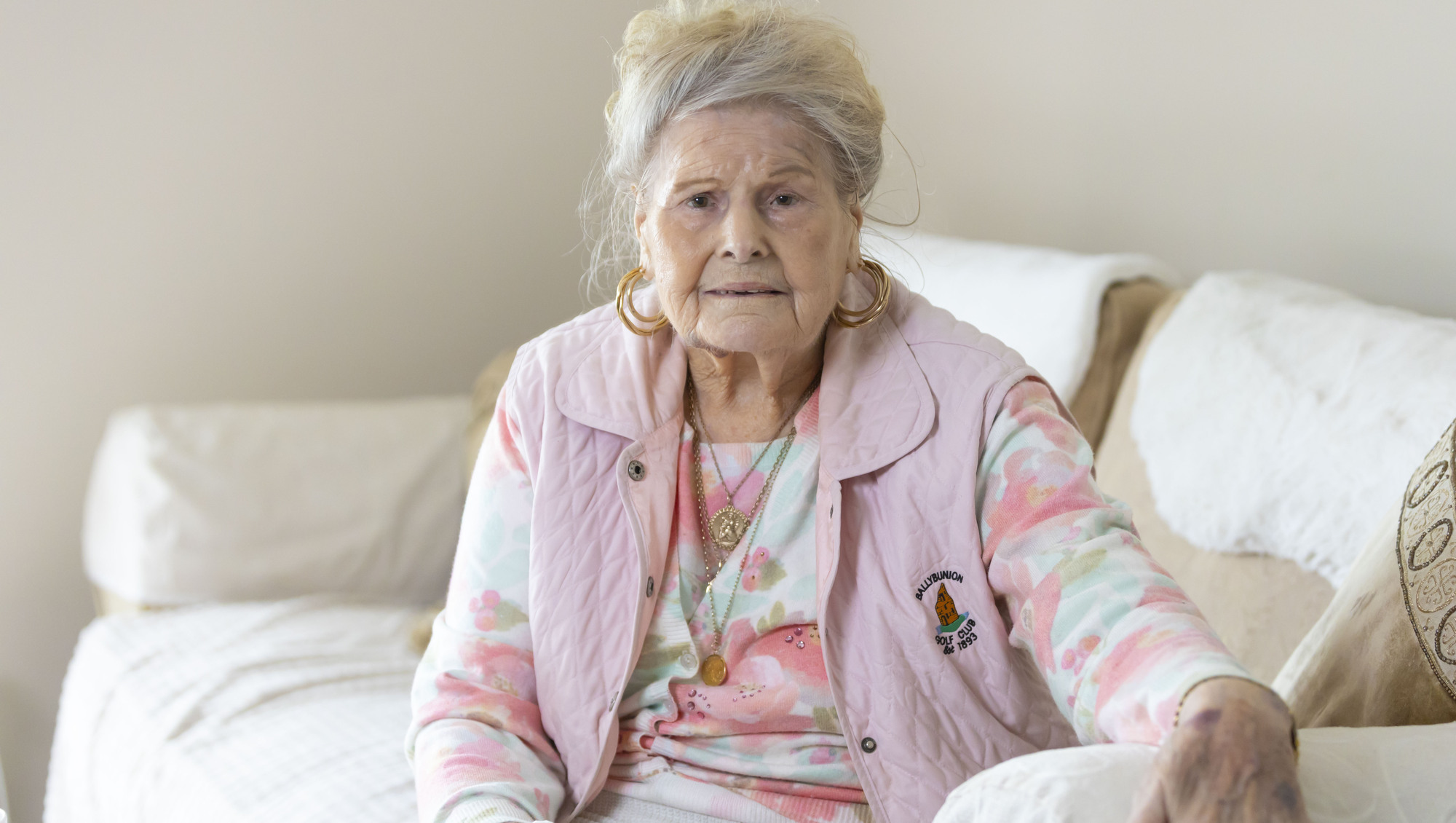
Helen Culpan was banished from her home in Castledermot, Co Kildare, to Dublin by her local priest when she became pregnant at the age of 17 after being raped by a neighbouring farmer. Photo: Patrick Browne
- This article is part of our Best of 2024 collection. It was originally published in August. Find more stories like this here.

A 90-year-old woman, who as a pregnant teenager had a priest look up her skirt to check if she was wearing underwear before sending her to a mother and baby home, said it is "humiliating" that she is still waiting for redress.
Helen Culpan from Co Carlow is one of 34,000 survivors who are entitled to a redress payment for the time they spent in one of the country's many mother and baby homes. The âŹ800m scheme finally opened for applications on March 20 this year â three years after it was first promised by the State.Â
Priority is to be given to elderly applicants, according to the Department of Children and Integration which is responsible for the scheme, many of whom are in their 80s and 90s. However, Helen Culpan is still awaiting her payment, and fears she may pass away before it is paid.

Helen's story is typical of so many young girls who ended up in these religious-run institutions, and which were documented in harrowing detail by the Commission of Investigation into Mother and Baby Homes.
Helen became pregnant at the age of 17 after being raped by a neighbouring farmer. She was later banished from her home in Castledermot, Co Kildare, to Dublin by her local priest who sent her, on on her own, to St Patrickâs Mother and Baby home. She gave birth to her only child, a son, who was later adopted.
âThe priest called me a tramp," she said, "He roared at my mother âget her out of hereâ and before I left, he pulled up my skirt to see if I had any knickers on, the rotten man he was."
Helen applied for payment from the mother and baby home redress scheme after it opened for applications. According to the Government, the redress is intended as "acknowledgement of suffering experienced while residentâ in a mother and baby institution or county institution.
However, despite Helen's age, she is still waiting for payment, and the promised enhanced medical supports. Helen Culpan told the she believes survivors were deliberately humiliated by the Church, and that the State is repeating that behaviour by âignoringâ her.
âIt is humiliating to have to ask for the money and it is humiliating to have to wait,â she said. She has chosen to tell her story now because she âdoes not want to die and take it to the graveâ.
âThe priest that put me in the home was a bastard. God forgive me, but he was.
âI was 17 years old, and I was being raped from the age of 10 by a dirty old farmer up the road who was around 60 years of age. He had loads of land, he was a bachelor a horrible man, he gave us milk for free. We were so poor, and my mother would send me up there.
âMy mother took me to the doctor; he said go to the gardaĂ and the gardaĂ said go to the church.
âThe priest abused my mother he shouted âget her out of here, and then he pulled up my skirt. I could not afford any knickers so no I did not have any on, if Iâm being honest but most young girls in poverty didnât have them.
âHe shouted, âGet her out of here, get her out of the townâ and then I heard after I left that he stood on the altar and told a packed Sunday mass âthereâs too many bastards being born in this townâ.
The priest gave her mother the name of a home in Dublin and told her to send her daughter there.
She said:
âI did find it and I was pregnant, and I remember my heart rate was sky high when I arrived. There were around 40 girls there waiting to have babies.Â
"The woman who ran the home told me one day to go to St. Jamesâ Hospital because she said the baby was due. I went and was admitted, and my son was born in 1952.âÂ
Like many women who gave birth in mother and baby homes at that time, Helen was given no pain relief.
âThey cut me open, I didnât know how babies were born,â she said. âThey cut me up during the delivery, I had so much painâ.
Grasping her side as she spoke, she said: âTo this day I still have a pain in the area of where my womb was. I had stitches and sutures.
âA few years later, I had to have a hysterectomy, and the doctors told me the nuns in the hospital had made bits of my insides.
âAfter that, I had no more children. I got married and my husband was very angry over that, my mother had 15 children so I should have had a big family, but it didnât happenâ.
After the birth of her only child, a boy, she stayed for two years at St Patrickâs Mother and Baby home with her son on the Navan Road in north Dublin.Â
She then placed him for adoption because she had âno money, no roof over my head, I had nothing, there was no choiceâ.
The nuns later transferred her to Donnybrook Magdalene Laundry in south Dublin where she âscrubbed floors, windows and folded laundryâ for eight months.
âMy son did not come with me, he stayed behind and was adopted,â she said.
Helen is entitled to redress for the time she spent in St Patrick's Mother and Baby Home on the Navan Road, and also for her unpaid labour in Donnybrook Magdalene Laundry. She estimates that she is entitled to between âŹ25,000 and âŹ30,000.
In a statement, the Department of Children said: âWhilst we cannot comment on individual cases for obvious reasons, we can confirm that we are prioritising by age. However, some cases are more complex than others and this will impact on the timeline for processing."
The Department of Children said as of August 5, a Notice of Determination, which is a decision on an application has issued in 1,956 cases and more than 80% of these included an offer under the Payment Scheme.
To date, 1,065 offers have been accepted and 859 applicants have received their award, with an average payment of approximately âŹ15,000. Overall, 4,769 applications have been received to date of which 3,856 are completed applications and are progressing or determined.
While Helen continues to wait for her payment, she is keen to record her story, so that it doesn't die with her.Â
Born in February 1934, she grew up in Castledermot in Co Kildare to her parents Paddy and Bridget Core who had 15 children â Helen was the eighth child.
âThe war had broken out and my father left my mother with all of those children, and she was pregnant with another. He went to England and didnât come back,â she said.
âWe had no money and mother went to the sergeant in Castledermot, and he brought my father home, and he promised he would send money and then he went back and sent money once or twice and then stopped.
âHe was brought to court in England, and he turned around and told the judge, they are not my children they are my brother's, his brother was living at home. The judge could do nothing. From that day he never came home, he died in 1983, good riddance to him.
A local farmer, who owned acres of land, and cattle offered Bridget Core free milk.
âI was sent up to get the milk, I was around 10,â Helen explains. âHe would lift me up on the shelf, I didnât know what he was doing to me.
âI just thought this was what men did to women. He wasnât married, he was on his own in a big home, a big plantation, with plenty of money.
âWhen I was 14, I got a chance to go to Manchester, my sister was there. But she lost her job, and I had to come home. I was 17 then and thatâs when the farmer raped me again and I got pregnant.
âI couldnât even read or write, I knew nothing, we hadnât a clue about the birds and the bees.â
She said the farmer knew about her pregnancy but never owned up and nobody in authority took any action.

After her son was adopted friends of Helen decided to go to Wales to look for work and she joined then. She secured a job as a barmaid.
âI enjoyed the work,â she said. âIt was a great life over there. I met my husband Edward Culpan, he died 26 years ago; we got married in 1957."
Years later, she managed to trace her birth son, but the relationship did not work out. âIt was very upsetting, but what can I do?â
She made friends when she moved to Carlow, including well-known former Magdelene survivor Maureen Sullivan.
âI kept it a secret but started telling Maureen a while back and then I thought well nobody helped me back then, and I had to keep all this a secret all of my life.
âI remember absolutely everything. I was deprived of more children over whatever they did after my son was born. That farmer got away with raping me and all that land and home and property could have gone to my son, except nobody would let me put his name as the father on the birth cert.
âThere was no help for women like me or my poor mother who was abandoned by my father. Sex was ignored, sexual abuse was ignored, they all got away with it."