'I think it’s going to be a night for a lifeboat call' — RNLI crewman recalls Fastnet tragedy
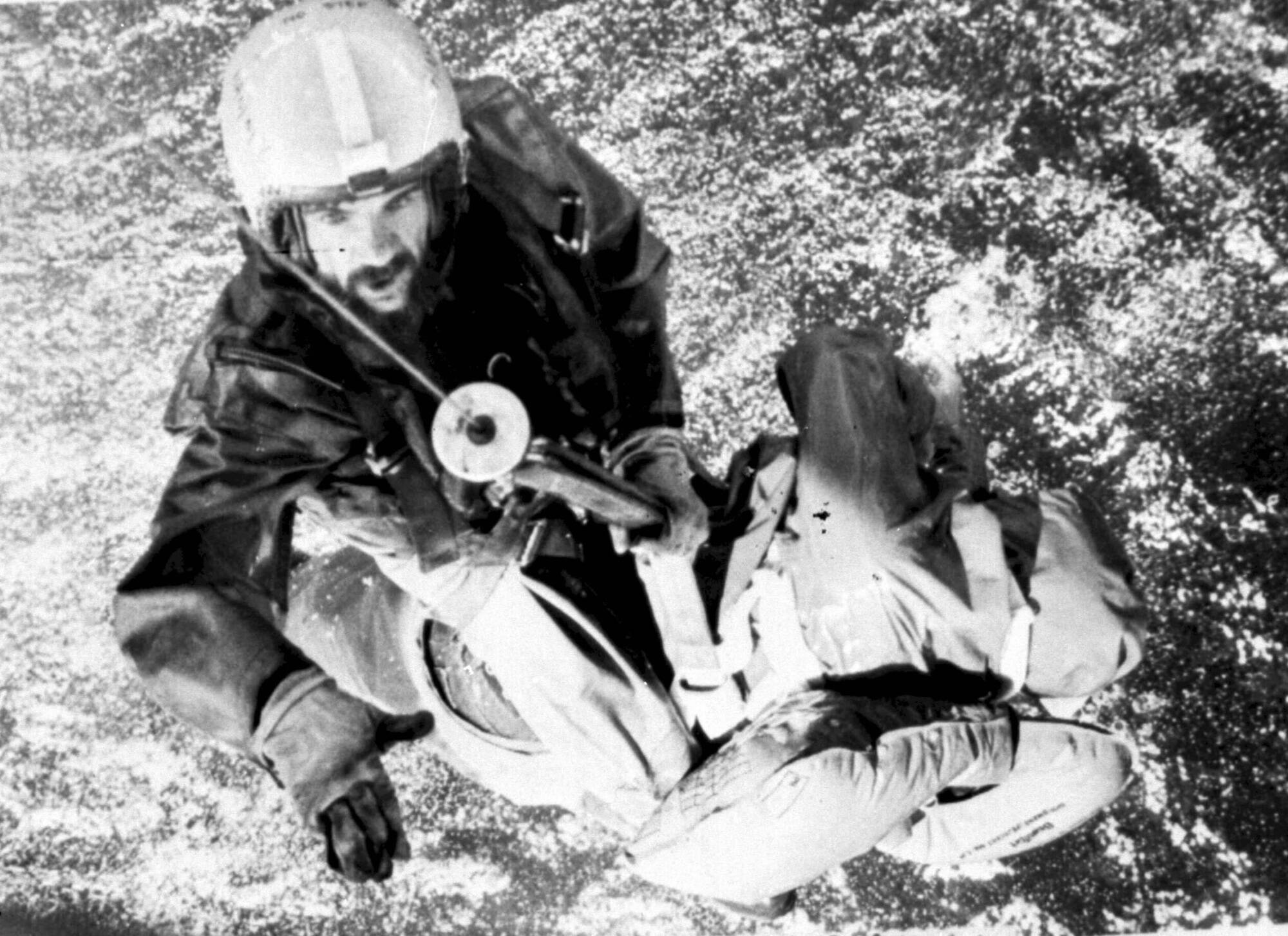
A helicopter crewman winches up the last of eight crew members rescued amid ferocious gales during the Fastnet tragedy. While the lives of the sailors on board the Regardless and the Marionette were saved, others were not so lucky. File photo: PA
“I think it’s going to be a night for a lifeboat call.”
Kieran Cotter never realised just how prophetic this casual remark would become among the coastal community of Baltimore, Co Cork. More than 40 years on from the Fastnet tragedy, the words still linger in the air like cigarette smoke. The role the former RNLI man played in that rescue — the largest operation of its kind during peacetime — has cemented his place in maritime history.
The year was 1979. Crews and West Cork locals were gearing up in anticipation for the 28th Royal Ocean Racing Club’s Fastnet Race. The Fastnet Race covered a 605-mile course from Cowes, in the Isle of White off the south coast of England to Fastnet Rock and on to Plymouth via south of the Isles of Scilly. A total of 303 yachts were taking part in 1979.
However, a large depression known as “low Y” was casting its sinister shadow over the Atlantic. On day three of the race, August 13, the storm intensified with force 6 winds.
“Forecasting wasn't as good at the time and a severe storm was developing in the Atlantic that they didn’t know about,” Kieran recalls. “On Monday evening you could see that the storm was coming in here. I was 24 and had been on the crew for four-and-a-half years when I got the call. We didn't have pagers or a call-out system back then so contact was made through a maroon or telephone call. Some people didn’t even have landlines at the time so contact was very limited.
HISTORY HUB
If you are interested in this article then no doubt you will enjoy exploring the various history collections and content in our history hub. Check it out HERE and happy reading
As the storm and sea conditions worsened, emergency services, naval forces, the RNLI and civilian vessels from around the west side of the English Channel were all mobilised. In Force 9 winds and merciless conditions, the Baltimore RNLI crew — made up of Kieran and fellow crew members, Christy Collins, coxswain; Mick O’Connell, mechanic; Paul O’Regan, Peter O’Regan, Kieran Cotter, Noel Cottrell, Pat Harrington, Con Cahalane and Peter O’Regan — took to the seas. They had little knowledge of what lay ahead
First up was a boat with Cork Examiner photographers on board, out to capture the race, and who got into difficulty as sea conditions worsened. That vessel managed to make its own way back safely to Schull, but the drama was only beginning for Kieran and the crew. Back at the mainland, they were quickly summoned to assist a boat named Regardless. As the strong winds whipped up the seas, they had to reconnect the tow-line on five separate occasions, before towing Regardless to safety.
Next up was the British Yacht the Marionette. The vessel was 25 miles south of the Galley and 50 miles from the Baltimore station.
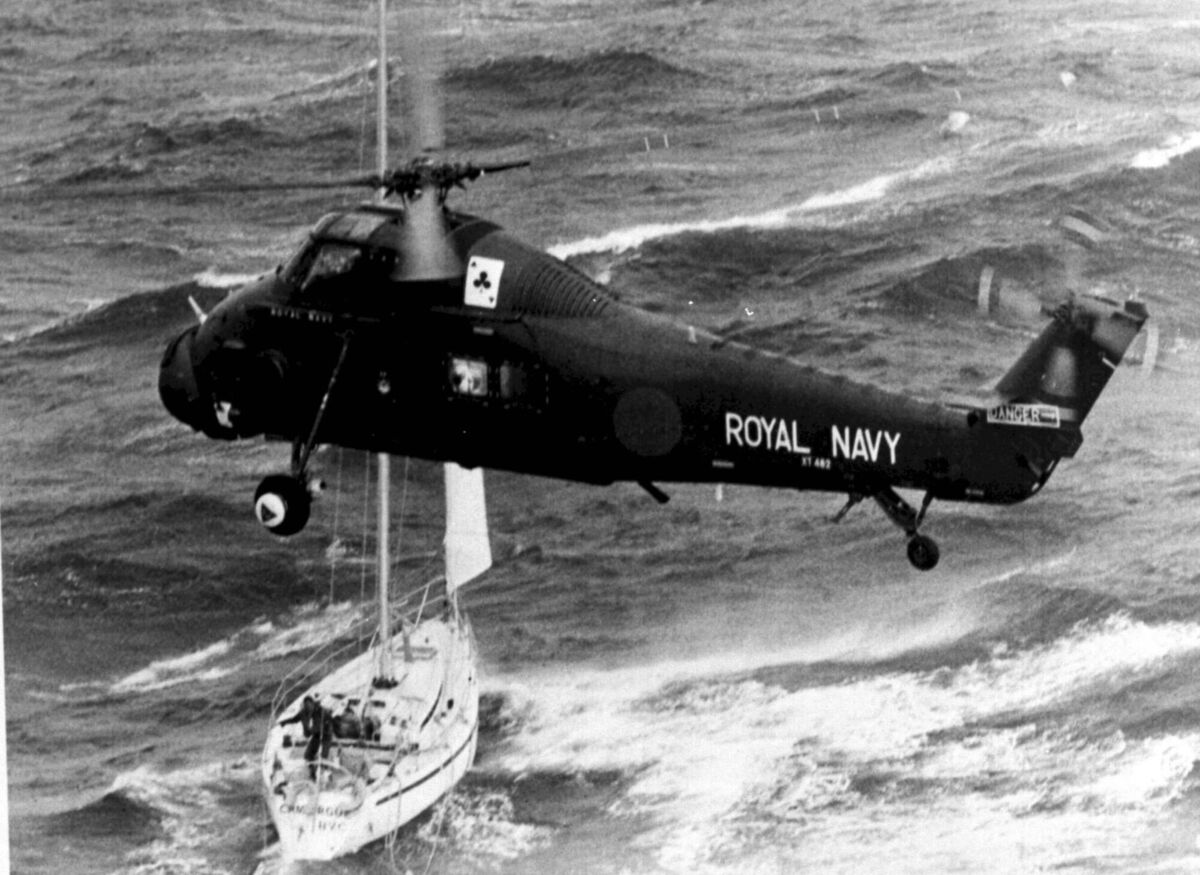
“We were in Baltimore for about an hour until we were called out again to a boat called the Marionette. It took us quite a while to actually find her. She had the same problem [as the Regardless]. Her rudder had failed so she was not able to steer herself. Crew members stayed on their own boat so we were able to tow them back to Baltimore. The biggest problem is that she didn't have her rudder and she was going all over the place behind us and almost passing us out.”
While the lives of the sailors on board the Regardless and the Marionette were saved, others were not so lucky. A total of 19 people lost their lives in the treacherous conditions, including some 15 yachtsmen and four spectators. At least 75 boats in total capsized and five sank in the disaster.
Kieran acknowledges the cruel irony surrounding the deaths.
“There would have been a balance of experienced and less experienced members of the crew. My understanding is that most of the people who lost their lives did so while getting onto life rafts. Nearly all the boats survived the very rough conditions. By staying in the boat you are in the safest place you could be until help arrives. Even if the vessel is in severe difficulty you still have more of a chance of surviving than if you abandoned it.”
He said it was a few days before the true extent of the tragedy became clear.
“We didn't realise how serious things were initially. I can remember meeting a gentleman after coming ashore the next day. He had two sons in the race and was asking if I had heard anything about their boat. At that stage, he didn’t know where his sons were but it turned out they were safe. About two or three days went by before people realised the seriousness of it and that people had lost their lives.”
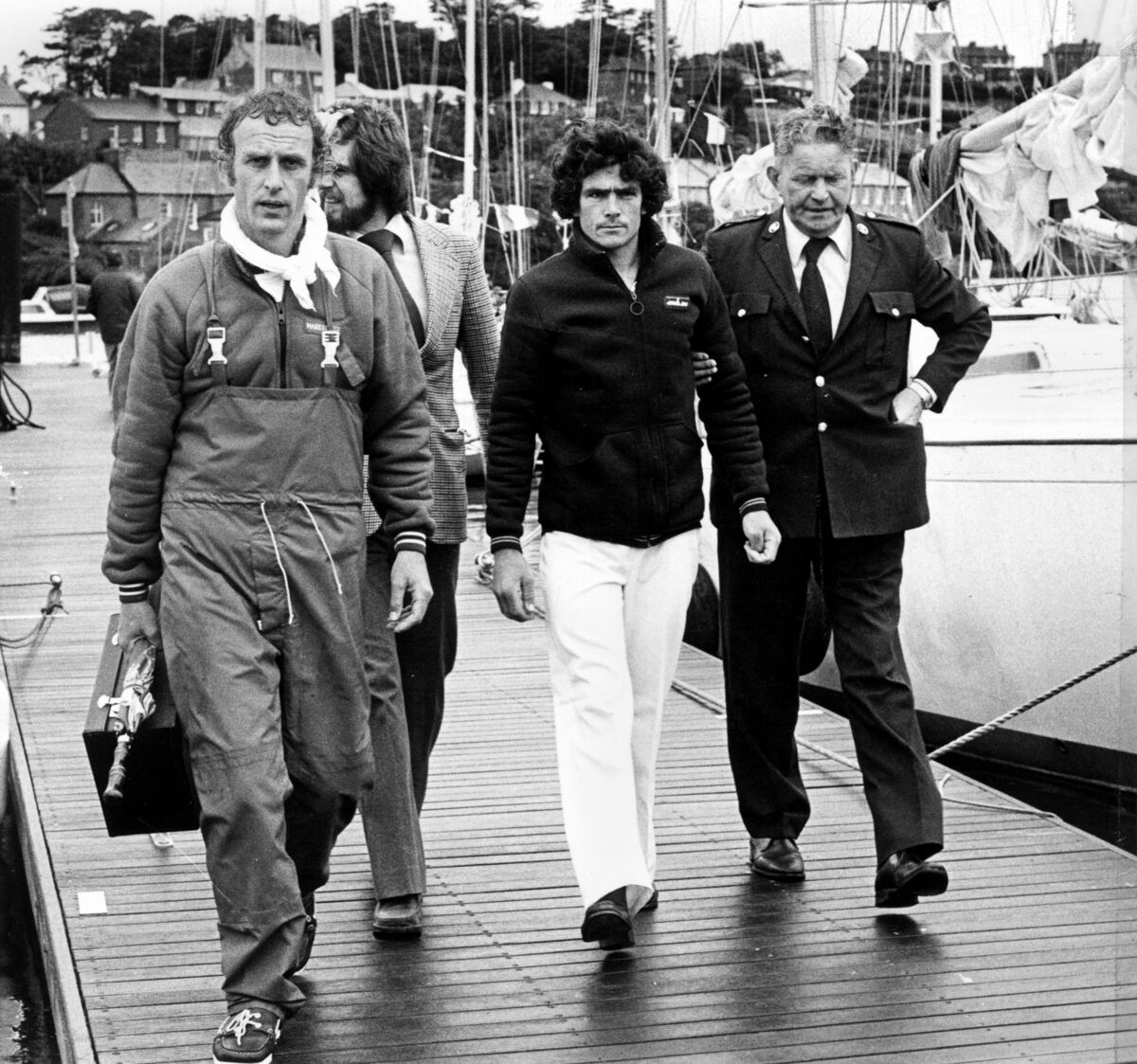
Stricter regulations were introduced for race entrants in the years that followed. “You have to have so many merits before you can even become a crew member on a boat in the Fastnet race now. A lot of these regulations came about as a result of the loss of life and were put in place to protect people.”
Looking back on his long career with the RNLI, Kieran says: “People ask me on a regular basis but I can’t say I was ever scared. I spent the first 15 years of my life on Cape Clear and my father was back and forth with me to Baltimore all the time. I grew up on boats and joined the Merchant Navy after my Leaving Cert where we travelled to places like the States and Japan. I have been on everything from small fishing boats to big ships up to 38,000 tonnes.”
The father-of-two has never shied away from danger.
“When you are part of the lifeboat crew you are expected to go out. You are expected to encounter people in danger. People get into difficulty all the time and we try to give them help. That’s what the lifeboats are for.”
Read More
CONNECT WITH US TODAY



Be the first to know the latest news and updates