Cork woman wants to know why nursing home residents 'were left to die' during covid
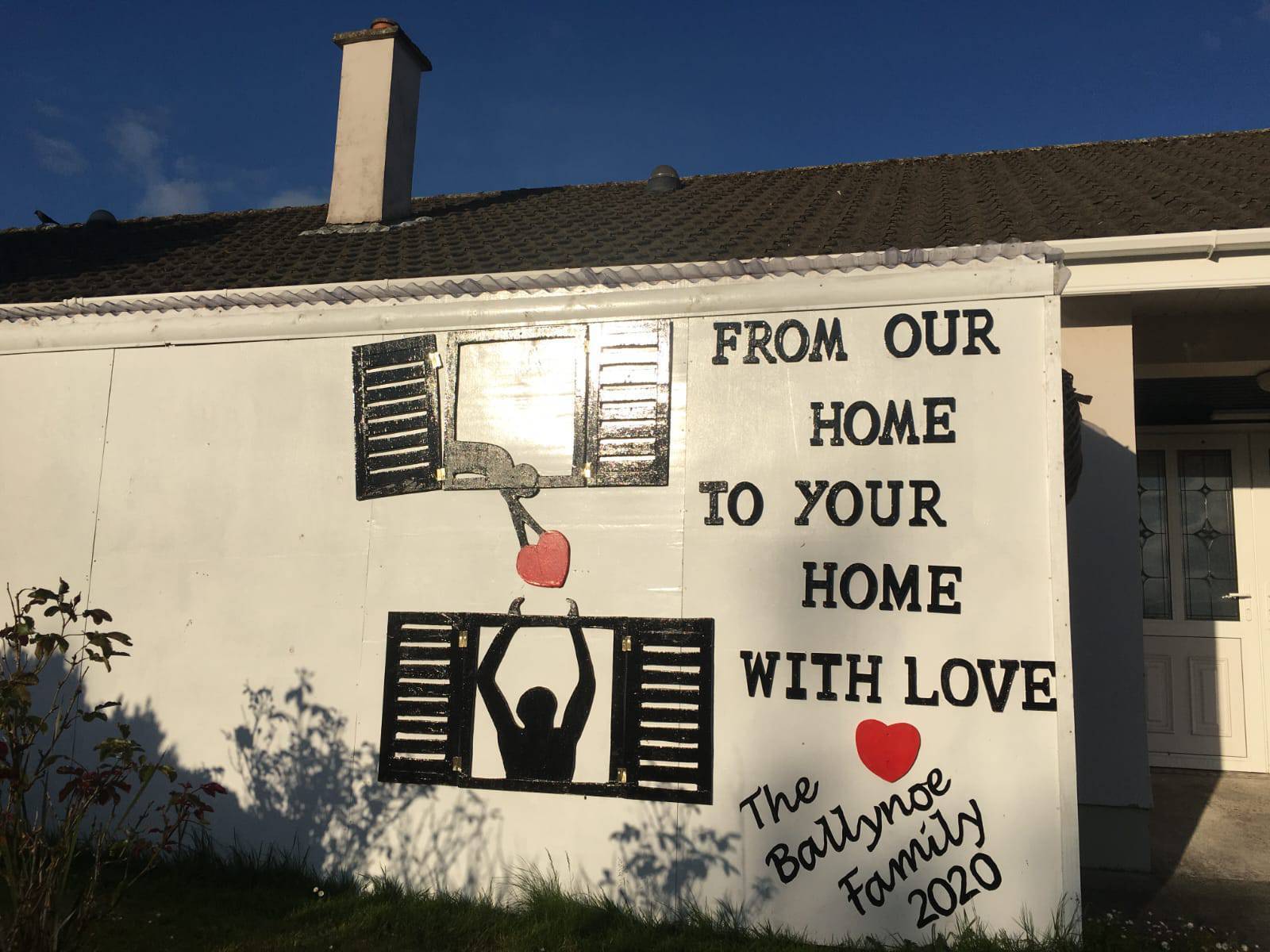
A spokeswoman for CareChoice Ballynoe said: 'The third wave of covid-19 which swept through Ireland and Cork in January and February 2021 tragically led to a number of deaths in Ballynoe.' Picture: Sadie Allen
The daughter of a nursing home resident who died during the covid-19 pandemic has said she wants accountability after an outbreak that left 24 residents dead.
Susan Cummins from Grenagh in Cork said residents âwere left to dieâ at the CareChoice nursing home in Ballynoe, Co Cork. âThis could have been prevented, but nothing was done. The staff knew they were in trouble and didnât get help,â she said.
Her mother, Madonna Manley, received a vaccination on January 22, 2021, despite awaiting test results for covid. She subsequently tested positive for the virus two days later, with Ms Cummins left questioning why staff did not await the results before administering the vaccine.
On January 25, Ms Cummins rang to check on her mother and was told: âSheâs fine, sheâs just after passing me there, sheâs in great form,â despite being covid positive.
Ms Cummins runs three scenarios through her head following this call: that the staff were unaware of her motherâs whereabouts; or the staff were unaware her mother had covid-19 and was mixing with other residents; or they were unaware Ms Cummins knew her motherâs positive test result, and kept it from her.
Days later, Ms Cummins said communications began to break down with âno one answering the phonesâ. Other families began to express concern that they could not make contact with Ballynoe.Â

Ms Cumminsâ brother then rang the family doctor and was told there was âan outbreakâ.Â
âThen it started hitting the news, but we got no calls or anything ,and on the 31st we heard of a death,â she said.
On February 2, her brother received a call from a doctor to say their mother was âweak but comfortableâ.
âThere was no indication that she was going to die. They said they would ring that night to update us on her condition,â she said.
Ms Cummins received a call from her brother that night to say that their mother had died.Â
âIâm still looking for answers, who identified her, who went in and pronounced her dead,â she said.
Ms Manleyâs family could not go to see their mother after her death due to covid restrictions.
Her body was not released for over two days.
âWe had no removal, we couldnât go into the funeral home. We just accepted the rules and the regulations, thinking it was the same for everybody, but it wasnât the same for everybody,â she said.
Ms Cummins spoke with other families who were notified that their loved ones did not have much time left and were allowed to go into Ballynoe and sit with them before they passed. Others were allowed to go to windows to say final goodbyes.
âThank god for them because the last three years have been horrendous.
âWe should have been notified that she was in danger and from what I can see, two days previous, there were concerns that she was not going to make it so we werenât being told the whole truth,â she said.
Ms Cummins believes her mother, who was among the first few residents to die, may have been one of the unreported deaths from CareChoice Ballynoe.
A spokeswoman for CareChoice Ballynoe said: âThe third wave of covid-19 which swept through Ireland and Cork in January and February 2021 tragically led to a number of deaths in Ballynoe.
âWe acknowledge the deep loss of those who lost relatives in the outbreak in Ballynoe. We do not comment on any individual resident or their families.â
Sadie Allen worked in CareChoice Ballynoe Nursing Home for two years before quitting the profession in May 2021.
âThe staff on the ground did everything they could. They did the best that they could but we didnât have that management support to coordinate or advise or give guidance,â she said.
Once covid-19 broke out and spread within the home, staff levels decreased. Ms Allen was asked by management to work in a non-covid ward after working within the positive ward where two patients were ill.
Following more and more residents becoming positive, agency staff were brought in who Ms Allen said had no access to care plans which meant they were unaware of residentsâ specific needs.
âThey couldnât do what they should be doing,â she said.
Ms Allen said agency staff were not included in screen tests, an issue she raised with management.
Positive residents were left in rooms with negative patients âfor daysâ, she said.
Towards the end of January 2021, Ms Allen was working within the negative ward when a member of management approached her at 11am and asked her if she knew where certain staff were. Ms Allen replied that she didnât know the staff named on the list.
He told her there was no staff members in another ward which had six residents.
âThe last person finished at 8am that morning, and these were sick people in the covid positive ward,â she said.
âUp to that, they had no breakfast, they had no safety checks done from 8am until 11am and no medication.
Ms Allen said one of the residents told her she was âso afraidâ because she had been âcalling for hoursâ.
âThey were really distraught, they knew they had been left alone,â she said.
One womanâs incontinence wear had not been changed âin a while".
âShe was covered in sores from the middle of her back down to the tops of her knees, oozing, raw,â she said.
Upon bringing management down to see the resident, he told her: âThereâs nothing we can do about it, just put some epidermal cream on it.âÂ
It was through Care Champions that Ms Allen was able to tell the womanâs family about her care and her condition. âThey were told that she was great all along,â she said.
With no nurse at the time, medication was locked away without access. The unit had to be broken into using a crowbar.
Management then did a medication round but with residents moved to different rooms, they were unaware of who needed what and had to be accompanied by Ms Allen who said it was âextremely riskyâ.
Ms Allen wrote to the Minister for Health, Hiqa, and the local Covid Response Team (CRT) explaining what was happening in Ballynoe and questioned why they were not sending in HSE staff or PPE.
Following this, she wrote to the head of the local CRT, raising concerns that families were not getting information, and that there were serious breaches in infection prevention control.
Ms Allen said she was âbeggingâ the response team to âsave livesâ and received a response the following day that her concerns were raised with management at Ballynoe, and was reassured that the issues raised would be rectified.
However, despite this, Ms Allen said there were still a lot of deaths and families remained âlocked outâ.
In response to Ms Allenâs comments, a spokeswoman for CareChoice Ballynoe said they had more staff on duty than usual throughout the outbreak.
âThe home was fully staffed, resources from other CareChoice homes and agencies were made available to support the home during the outbreak and three senior clinical managers were on site to oversee the care delivery.
âOur residents continued to receive person-centred care throughout the outbreak with all daily personal hygiene needs met,â they said, before adding that the home was supported by local GPs and a consultant geriatrician throughout the outbreak.
âThe home had a number of calls with the local HSE infection, prevention, and control team throughout the outbreak including calls on January 18, 25, and 31, 2021.
"The staff in Ballynoe had access to an Employee Assistance Programme. A number of support meetings were held with staff from the February 24 onwards, with group and individual counselling available,â they said.
The spokeswoman said covid-19 testing and swabbing were conducted and overseen by HSE Public Health.
âWe had no governance over the personnel carrying out swabbing. These were trained and qualified HSE public health staff allocated to testing and swabbing in nursing homes. To the best of our knowledge the procedures were in line with public health guidelines,â she said.
The spokeswoman also said there was âno PPE shortageâ.
âThe home had significant stocks of PPE, which was provided by the HSE on a weekly basis. The visors were for single use only and then disposed of safely,â she said.
A HIQA spokesperson said inspectors were in regular contact with the centre from the onset of the outbreak.
âDespite this regular contact, CareChoice Ballynoe Ltd failed to notify the chief inspector of the deaths of a number of residents in the centre in line with their regulatory obligations.
âThe outbreak of covid-19 significantly challenged the registered provider to maintain effective governance and management arrangements in this centre,â they said.
The spokesperson said while CareChoice had implemented measures to support the care of residents and to fill vacant positions, they underestimated the contingency planning required to include effective communication arrangements with the residents' loved ones, appropriate staff training and supervision, safe medication management, and effective covid-19 infection prevention and control practices.
The HSE, which does not have a role in regulating private nursing homes, nor does it have the legal authority to direct action, said the basis for the response through the CRT to the private and voluntary sector âwas on the premise that the information received from providers was accurateâ.
âIn many cases, we provided a very high level of support to centres in crisis, including redeploying staff to ensure care could continue to be provided to residents.
âSupport was available and offered to CareChoice in relation to the outbreak at Ballynoe, in response to the information made available to us. Our understanding from CareChoice was that the company had access to its own Infection Prevention Control (IPC) expertise.
âOnce CareChoice, as the legally registered provider of the Ballynoe nursing home, told us about the severity of the situation and the actual resources available to them, HSE staff responded accordingly,â they said.
Correspondence from the local CRT obtained under the Freedom of Information Act and seen by the states that CareChoice confirmed on the first meeting with the Outbreak Control Team that they had access to IPC nurses.
However, it subsequently arose that the IPC nurses had recently or were in the process of completing an IPC qualification and had not previously worked in an IPC role.
The correspondence also shows the CRT highlighting âconcernâ at the number of deaths while also noting that no communication was received in relation to a âsignificant number of additional deathsâ.
The team was informed of the additional deaths by a geriatrician.