A life sentence is a long time to think for convicted murderer Nicholescu
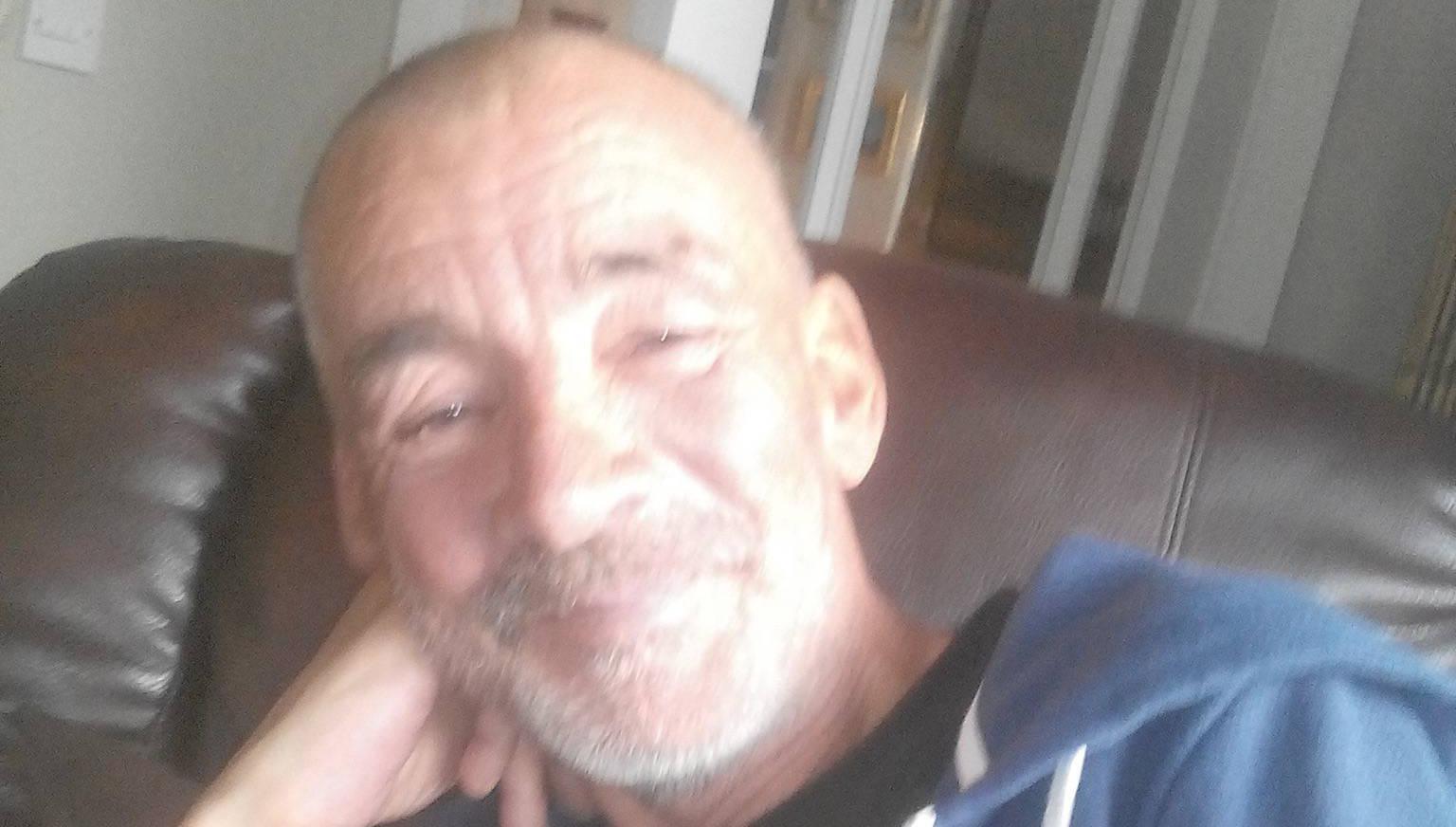
The family and friends of Frankie Dunne were dignified and made a heroic attempt to have him remembered in loving terms.
An unusual phrase — constructed in English by the Romanian accused of murdering a Cork man — proved more telling than he probably intended. The particular phrase was used in a phone call from Bucharest to Cork on a day soon after Frankie Dunne’s gruesome killing.
Ionut Cosmin Nichoclescu was under pressure and left Cork in a hurry three days after the murder. He jumped on a bus to Belfast, flew to Edinburgh, and on to Bucharest. Vincent O’Sullivan — then detective inspector — managed to have several phone conversations with him over those days. The detective told him up front that the conversations were being recorded. And those recordings were played in court — the only time we got to hear Nicholescu, as he never got into the witness box in his trial.
A trial he never wanted to end up in. When the detective told him everything could be brought before a court and dealt with there, he sounded frazzled on the phone and said: “Fuck that, I’m not going to court.” But it was in court we heard the telling phrase. The detective told him he should have a think about things. And Nicholescu’s revealing reply: “I am having a really thinkful think about this.” A thinkful think.
This wasn’t just awkward syntax. It illuminated the attitude of this young man who would be accused of murder. Thinkful doesn’t pass spellcheck but it speaks volumes about where he was at in his head. As is clear from the jury verdict, he was entering deep into the realms of fantasy and the creation of something that happened only in a parallel universe of his own concoction.
Out of several thousand hours of CCTV — boiled down to several hundred relevant to the timeline under investigation — which studied the movements of people before and after eight o’clock on Friday night December 27, 2019, there would be a fruitless search for Nicholescu’s phantoms. Detective Garda Pat Russell had the unenviable task of closely scrutinising every frame of CCTV to find the two men who never were. Except those that existed in Nicholescu’s thinkful thinking.
The huge number of pieces of CCTV — like an immense digital jigsaw — told the story of Frankie Dunne’s last known movements.
At 7.13pm, he leaves Clanmornin House, the supported accommodation where he had been living. Twenty minutes later he is at The Offie off-licence on Douglas Street. That is where he seems to be a bit down and says to the man working there: ‘Santa never came to me.’
More video images at this time captured Ionat Nicholescu entering Aldi at The Elysian at 7.43pm. Another camera clocked Frankie Dunne at exactly this time passing Sexton’s Daybreak shop on Old Blackrock Road. Ten minutes later, Nicholescu leaves Aldi.
Drink is not allowed in Clanmornin House so Frankie Dunne used the garden of the abandoned Castlegreine House — nicknamed by some locals as The Castle because of its turreted top — to have a few cans before crossing the road home. Detectives believe that he got to the garden that night before Nicholescu arrived ‘home’ to his squat on the first floor.
At 8.02pm, Nicholescu is back from Aldi and walks in the gate of The Castle with his water, milk, bread, and Tiramisu. Then 27 years old, the Romanian had been living in Cork for the previous four, working as a chef at The Silver Key, and broken up from his boyfriend about a month before.
Defence lawyer Philipp Rahn said: “Some of the other kitchen staff were making fun of him for being gay, for example.” Tanja Bosnjak, who worked with him, said she did not know about that but remembered “them making fun of him, saying in a derogatory way that he was from Romania and that he was a gypsy".
So here he is walking into the property he regards as his squat. Moments later, Frankie Dunne arrives. A man who could be cantankerous in drink, according to some who knew him, is walking into the place he sees as his quiet spot for a drink before going home.
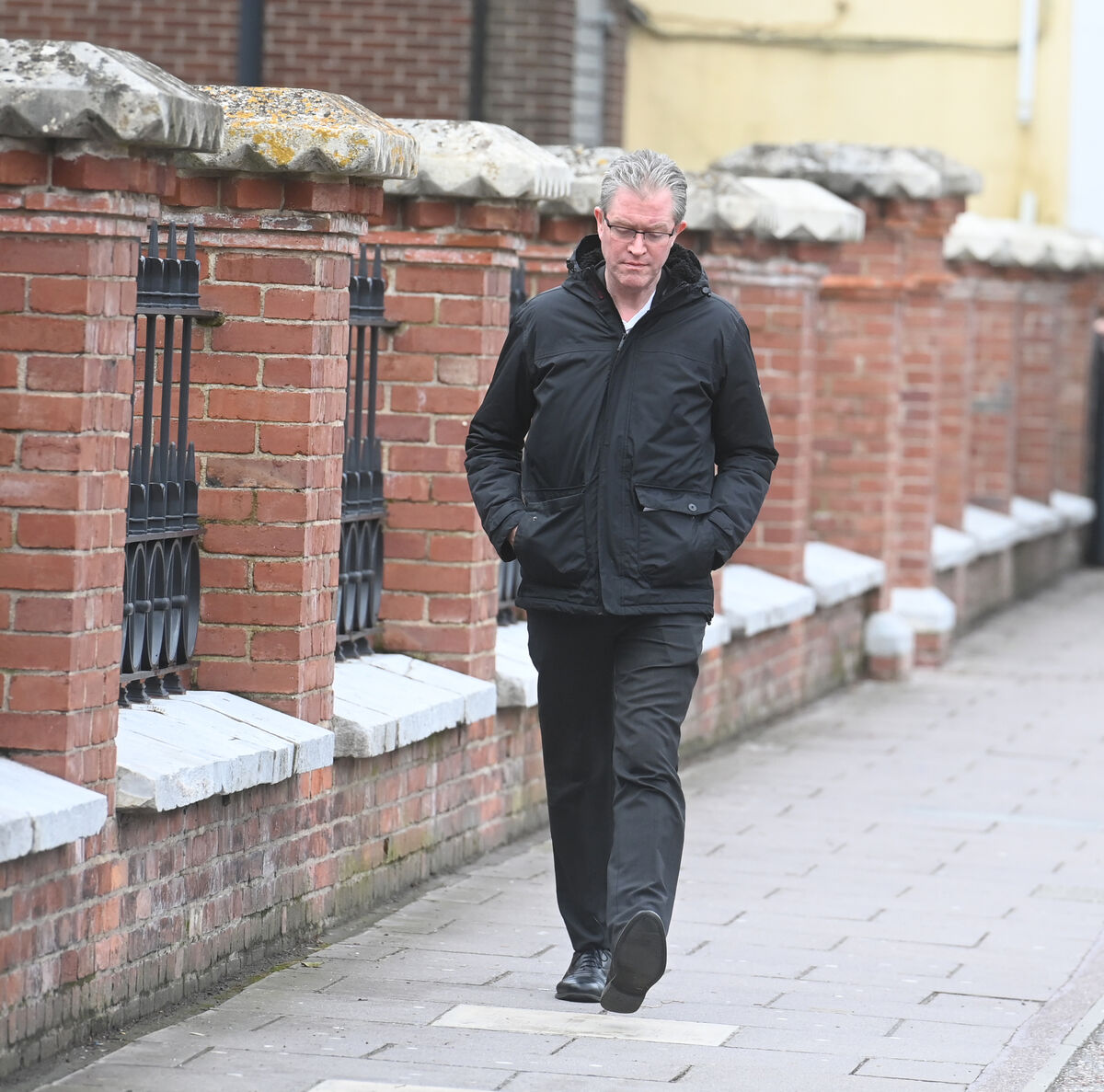
In the absence of an eyewitness, two men walking past the house at around 8.20pm heard voices in the garden. They then heard a loud crack — one thought it was like a firecracker, the other man thought it was like glass hitting concrete — and then silence.
The prosecution believed the beheading of the deceased and the amputation of his arms was a work in progress for the removal of the dead man’s remains to a place only Ionat Nicholescu knew where.
But the Romanian chef didn’t bargain on a cat called Mouse. Nobody bargained on the cat.
Joseph Pierce was working that Saturday when he got a phone call from his partner to come home. Their elderly cat was missing and possibly dying. Mr Pierce searched to no avail in his own and some neighbours’ gardens. Twenty years in the area, Mr Pierce had never stepped inside the garden of the abandoned Castlegreine House on Boreenmanna Road. But less than 24 hours after the murder of Frankie Dunne, Mr Pierce was looking for the beloved pet in the fading light.
“I shone a torch on the phone — I shone it under the bush. The first thing I saw was a set of feet. I followed that up with the torch wondering what I was seeing. It was obviously the shape of a body. At that point, I was disbelieving what I saw. I was rationalising it — thinking it was a mannequin or something like that. I could see male genitalia,” he said.
This was in stark contrast to the Friday night into Saturday morning after the murder. Whatever happened around 8.20pm on Friday night, what unfolded made for a chilling Christmas scene. Frankie Dunne’s head was in a black plastic bin-liner sack. His clothes were in another sack. His amputated arms were draped over the low branch of a tree. His body — naked but for a pair of socks — was stuffed under the bushy tree.
Ionat Nicholescu was in the first-floor bedroom of The Castle. No running water. No electricity. Blankets nailed inside the windows of the bedroom to keep out the morning sunlight. Even on that night, the young man bedded down to sleep.
“I went through my routine. I prayed. I went through my phone for a while. I tried to read my book. I didn’t talk to anyone. I had no idea what to tell the police.”
But he did come up with something. Two phantoms. As Mr Boland put it: “Two baddies out of central casting, they are comically evil, both bearded, one carrying a machete, one carrying a knife.”
But try as he did, Detective Garda Pat Russell could find nobody — out of hundreds if not thousands of hours of CCTV — fitting the description of these two figures anywhere near Castlegreine House at times relevant to the investigation.
Undaunted, the Nicholescu defence, led by senior counsel Philipp Rahn, told the jury that the absence of evidence was not evidence of absence. A good line, in fairness. But the eight women and four men of the jury didn’t buy it.
From the moment of Frankie Dunne’s death, the young Romanian, standing over the remains, began toying with the distance he could put between himself and the deceased.
Depending on who he was talking to later, there were outright denials or heavy flirtation with risk when he said he killed him and cut off his hands, only to say later that he was joking.
When work colleagues were talking about the awful, breaking news he was chipping in with black humour and callous detachment.
“Imagine if kitty was playing with the head or if the cat ripped off the head.”
He fled in the early hours of the following morning.
Detectives found receipts, bank payments, a gift voucher from his employer at The Silver Key, and a previous address — all inside the bedroom at Castlegreine House where he had been squatting. Officers called to the address and discovered it was an ex-boyfriend who told them Johnny was working at The Silver Key.
Then there were the recorded phone calls with the lead investigator, Vincent O’Sullivan. The first call consisted of denials. He didn’t know anything about Frankie Dunne. He didn’t know anything about the abandoned house on Boreenmanna Road.
But in the days that followed there were recorded phone calls where he was putting himself — innocently by his account — in the middle of the murder scene. In effect, he was saying he was there but also that two bearded strangers with a machete and a knife were cutting up the body and making him dispose of it.
But there was something else in those recorded conversations. He appeared to be embracing the macabre detail of the story he was telling.
But for the family and friends of Frankie Dunne who gave evidence, there was something else going on in the trial that could have been lost in the murkiness and horror.
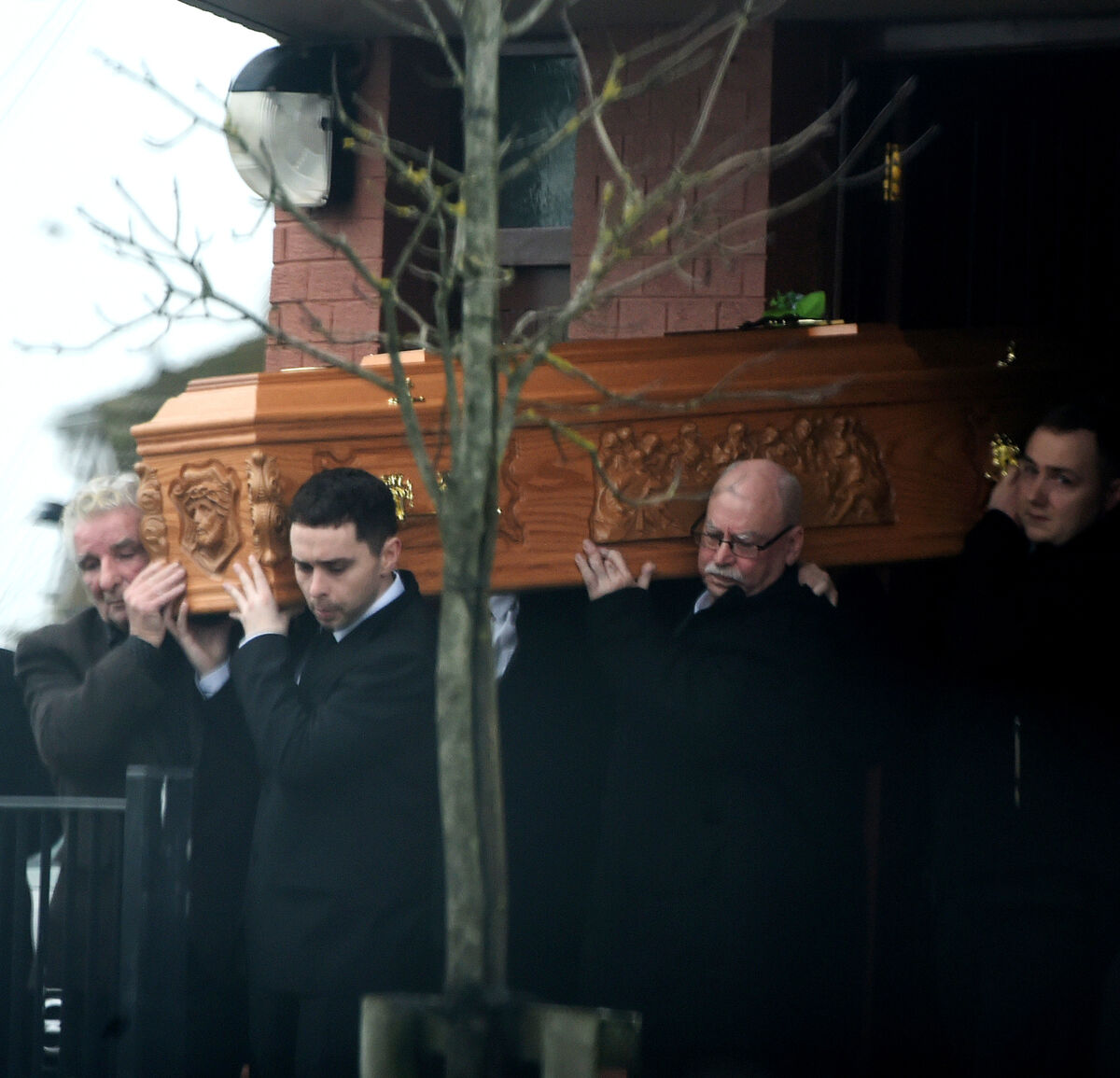
There was a dignified and quietly heroic attempt to see the victim of this terrible death and desecration in more human and loving terms.
Key worker Mary O’Driscoll said: “He loved music. His family was very important to him. They were very much in contact with him. He would visit them about once a week. Traditional music was his life.”
Social worker Michelle Quinn said: “He was a big talker. He could talk for Ireland. He was good craic. He was funny … a good soul, a jolly man.”
Care worker at Clanmornin, Don Bulman put it like this: “One of the better ones.”
Nephew John Martin gave us an image that in time might rise above the barbarity of Frankie Dunne’s final hour. John would drive to collect Frankie every Tuesday and he’d stay the night with John’s family. And on those Tuesday nights, they’d stroll down to John’s shed in the evening and play a few tunes. “He used to love that,” John said.
Maybe none of these living images of the late Francis (Frankie) Dunne will ever impress themselves on the mind of Ionut (Johnny) Nicholescu. But who knows? A life sentence is a long time for thinking.
CONNECT WITH US TODAY



Be the first to know the latest news and updates