Celibacy was often the only option: Women's battle to secure contraception in Ireland
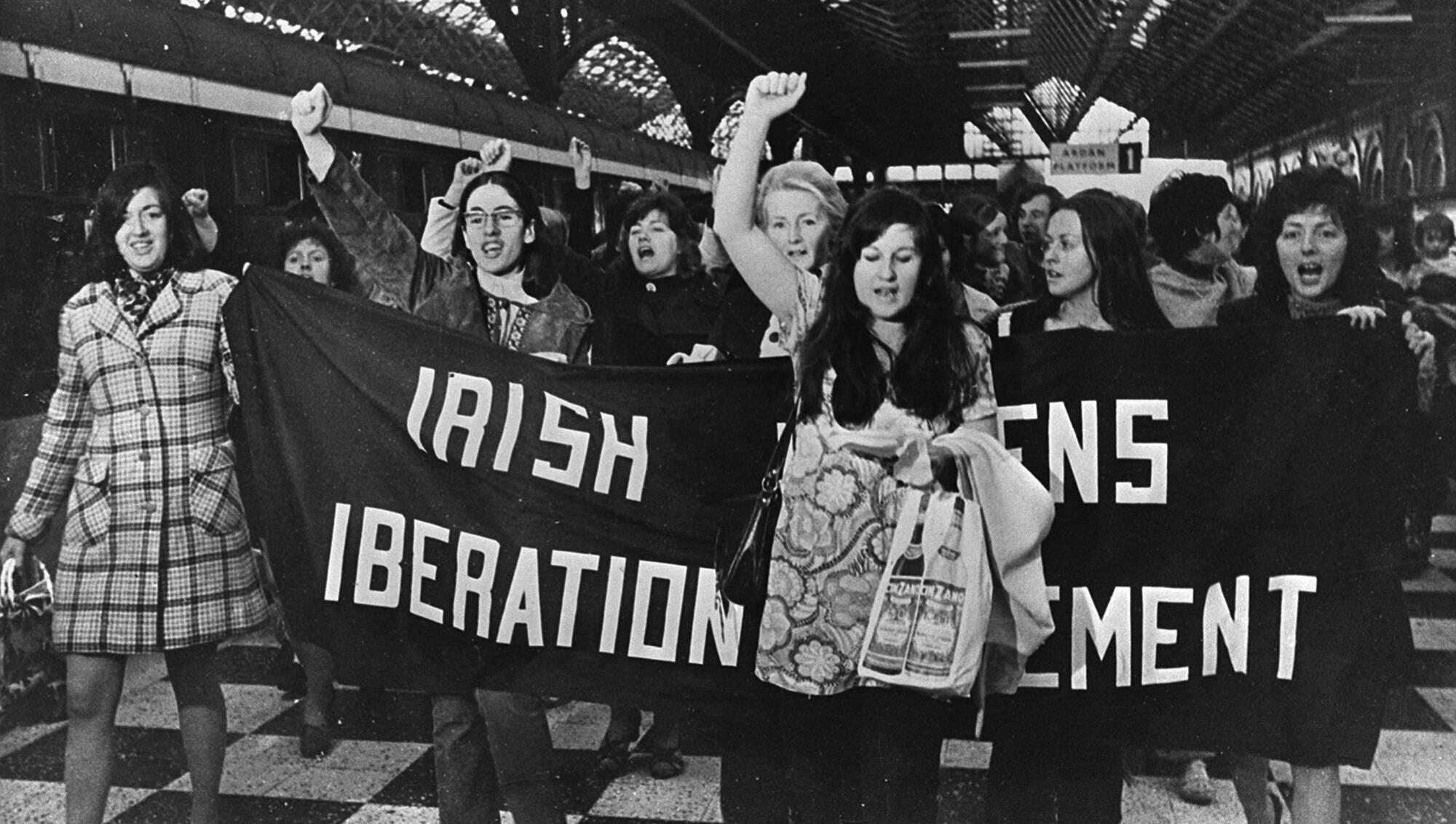
Women on the platform of Connolly Station, Dublin in 1971 prior to boarding the Belfast train to buy contraceptives, which were illegal in the Republic.
You need help immediately, an agony aunt wrote in 1968 to a woman planning on sleeping in a separate bedroom to her husband, to avoid having more children.
Letters and interviews in Irish women’s magazines reveal the frustrations and dark humour behind the battle for access to legal contraceptives — generally banned in Ireland between 1935 and 1979.
In the mid-70s another magazine shared a personal story from a young mother of 11 who recently saw her friend and neighbour die in her 40s after having 18 children.
Just 50 years ago, in 1973 one popular magazine launched a long-running investigation called ‘Undercover on the Pill’, talking to women about their illegal contraceptive habits.
Letters also flew in from women with large families who were looking forward to having more, because that was the purpose of marriage as one correspondent put it.
Today, in 2023, our debates on the merits of extending free contraception to different ages linger under the long shadow cast by discussions which lit up those magazines over 50 years ago, and one leading academic argues these ordinary voices should not be forgotten.
When Sheelagh wrote to the marriage guidance pages of in 1968, she was in pain after a complicated birth and celibacy seemed the most practical option. She wanted advice on her plan to sleep in separate bedrooms for two years until she was strong enough for another child.
Instead, the anonymous marriage counsellor advised her to consult a “married woman doctor” in her city. “You need help immediately,” the advice went.
“I agree that the ‘safe period is too much of a strain and not very efficient anyhow’ but two years celibacy is going to be less efficient because at the end of those two years there will probably be no husband.”
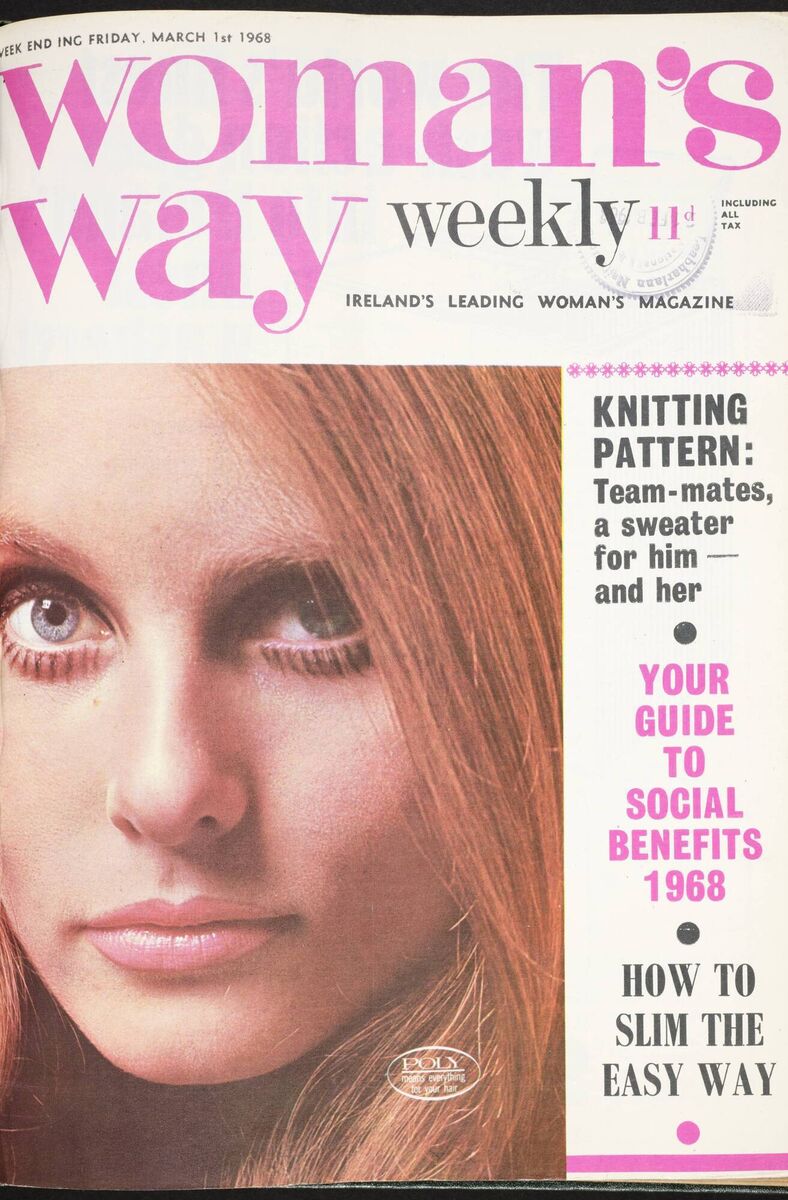
In the same issue, the counsellor replied to Esther who had written to say her doctor stopped her prescription for the pill because her husband had dropped by to object.
“Your husband objects on the grounds that you have to take what is before you in life,” the counsellor mused before giving her advice.
“Ideally both husband and wife might decide on such a matter, but it is no use pretending that the level of communication in marriage is always high enough for this.”
She advised the mother of four children to change doctors, saying: “you cannot change your husband so be very kind to him. He may not appreciate the situation fully.”
Contraception was made illegal in Ireland in 1935 following the introduction of the Criminal Law Amendment Act, and remained so until 1979 except under very limited circumstances.
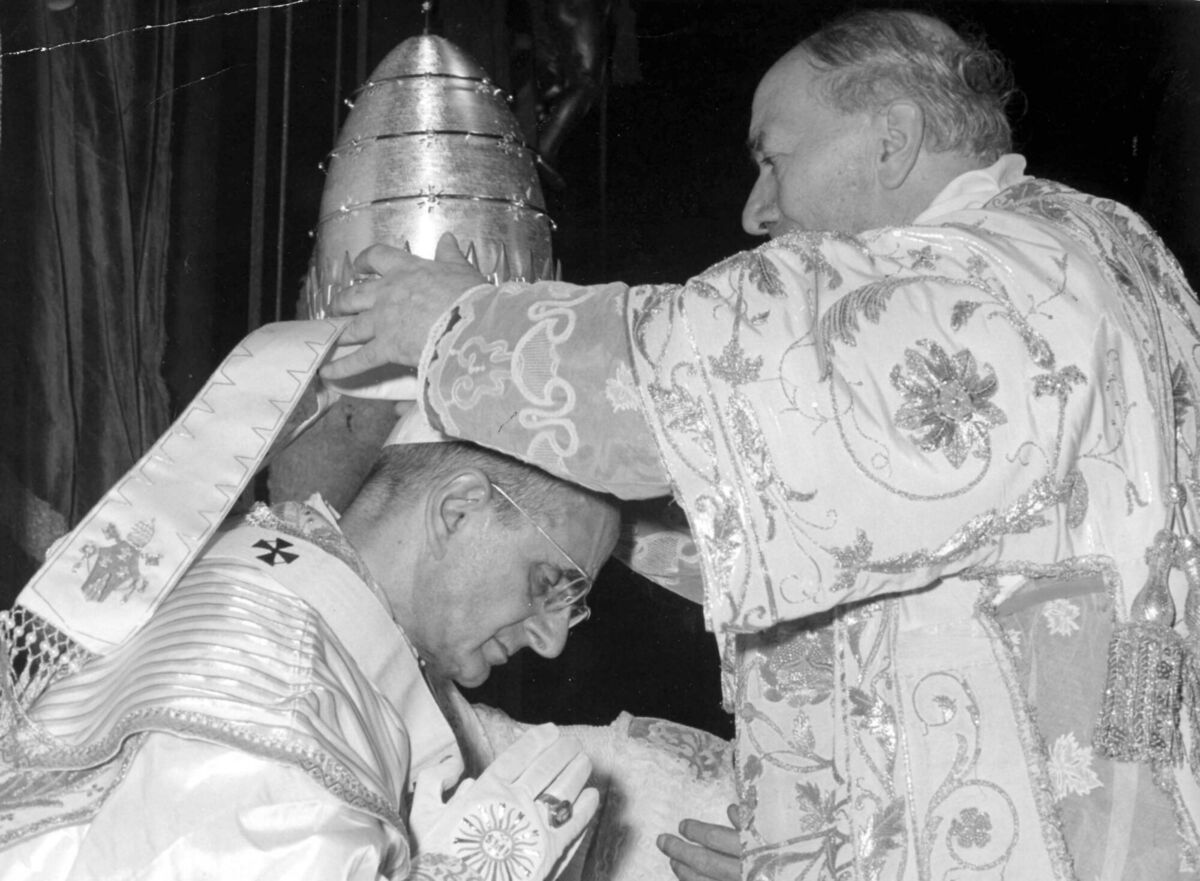
In 1968, just as many moderate Catholics thought some reprieve might be given, Pope Paul VI issued a detailed edict banning artificial contraception and focusing on the rhythm method instead.
He did allow for some exceptions, which inspired intricate planning among women as these letters and interviews show.
magazines ran responses to letters on marriage guidance and avoiding pregnancy alongside investigations on family planning, the pill, or mother-and-baby homes, mixed in with recipes and child-rearing advice.
Their 1973 ‘Undercover on the Pill’ series opens with the example of Claire, 28, married with four children who is secretly and guiltily on the pill, unbeknown to her husband.
She told journalist Heather Parsons: “I did try the safe period and found it to be utterly useless. In fact, our last two children were born while we were using this method.” She said trying to work out the days when she was not ovulating and only have sex on those days led to “tension and frustration” in their marriage.
She confessed to the parish priest but said: “I found my priest’s attitude unfair and hard to accept.” As a result she had not returned to confession although she continued going to Mass.
“I object to the fact that in law I am probably some sort of criminal and I think that it is about time that the Government and clergy came to their senses and took the woman’s point of view into consideration,” she said.
In the same article Maura, 32, with six children, told of going on the pill for financial reasons as her husband Pat only earned £17 (about €220) a week.
“Pat’s a good Catholic when it comes to talking about contraception but he’s not so good at sticking to the Church’s method of playing it safe,” she said.
In this case her parish priest was sympathetic and said it was a matter for her own conscience even though it is against the teachings of the Church.
“The priest told me to talk it over with Pat but I didn’t,” she told the journalist.
Some women interviewed were not at all in favour of contraception.
Breda, 36, had seven children, and despite her husband having a low wage was “cheerful” about the prospect of more children.
“No, this doesn’t worry me. I had an easy time with them all except the first, and anyway isn’t that what marriage is all about, having kids?,” she said.
In January 1968 a woman known only as Mrs M.E.D. from Laois wrote to to complain about women on a maternity ward openly discussing family planning.
“All they want is one or two children, preferring expensive make-up and hair-dos,” she wrote. “I have five children and wouldn’t mind having another five.”
These latter women followed the approach set out in the Humanae Vitae — Encyclical issued in 1968 by Pope Paul VI.
This condemned artificial contraceptive methods of all kinds in a detailed letter to the faithful.
“… any action which either before, at the moment of, or after sexual intercourse, is specifically intended to prevent procreation—whether as an end or as a means,” the Pope stated.
He went on to say married couples could choose to have sex during the woman’s “infertile periods” but only if there were extenuating circumstances for spacing out births.
He further called on scientists to study the natural rhythms of the body to help couples plan their families naturally.
This was the conundrum facing many of the letter-writers who were left feeling like sinners or criminals for choosing to pursue the Pill.
Women did, however, find a loophole in his comments accepting some contraceptive methods have a medical use.
The contraceptive pill was one such medication, which can be prescribed for regulating heavy bleeding during mensuration.
Dr Laura Kelly explored these issues in “The Contraceptive Pill in Ireland c. 1964-79: Activism, Women and Patient-Doctor Relationships”, published in the journal (2020).
She told the informal women’s networks were a really important part of how information about contraception spread.
Dr Kelly, a senior lecturer in history of health and medicine at the University of Strathclyde, said: “Given that contraception was effectively illegal until 1979, although the pill could be obtained as a cycle regulator, and as a result of strict censorship, it was really difficult to get even basic information about ways to control fertility, so conversations between women would have been really crucial here.”
She said anyone who wanted to access the pill for medical reasons to regulate their menstrual cycle still had to know which doctor to go to, and what to say in order to get it as not all doctors approved.
In her research, she quotes a member of Irish Women United (IWU) Betty Purcell describing how those conversations between women and GPs usually went.
“Ms Purcell said: “The cycle regulator was the thing [justification/excuse] that was used, that you would say, ‘My periods are, you know, all over the place and, you know, I just need to regularise them because they come very heavily’ or whatever. The doctor would say, ‘Oh yeah. Cycle regulator. The pill.’
“That was the commonest way in which it was given out, definitely, by ordinary doctors.”
In 1978 the Contraception Action Programme set up a shop called ‘Contraceptives Unlimited’ with condoms and information about preventing pregnancy.
Dr Kelly said: “These activities were crucial challenges to the law and helped to generate wider discussion around the issue.” At the root of that discussion, she said, is what control of pregnancy meant for women writing those letters, as well as the well-known public advocates.
“It is also important to think about the bravery and resistance of ‘ordinary’ women who chose to do what was best for them and their families in the period, even if it effectively meant going against their religion and wider societal mores,” she said.
Many of the letters and interviews reflect the lack of control women had over pregnancy and sex, leaving them open to being coerced or worse in many situations.
In a January 1968 issue, agony aunt Angela Macnamara replies to this desperate anonymous query: “Could a girl become pregnant as result of intercourse with a member of her own family. Please answer, it’s serious.” She advises her that yes it is possible, and said: “incest is a most grave matter, morally and socially.”
In 1968 a woman from Waterford wrote to ask: “My mother never told me anything about the facts of life or babies. Is there a booklet I could read?” In Dorine Rohan’s fascinating book, published in 1969, she interviews women about sex and contraception, linking the silence and shame caused by contraceptives being illegal to a silence around sex for many young people.
“In many cases the ignorance has led to young girls ending up on the boat to England, four or five months pregnant,” she wrote.
“Many of the girls in this unhappy position are genuinely amazed and horrified having thought that (as most five and six-year-olds think), you have to be married before God will give you a baby.” Married women also told her of the complications they faced in seeking to limit the size of their families.
The book opens with a mother of four quoted as saying: “We have had four children in five years, and we don’t want any more for the moment but my husband is very decent, he uses the withdrawal method.”
Referring to interviews she did with healthcare workers about contraception, Ms Rohan wrote: “Coitus interruptus is a fairly widely used form of ‘contraception’ in Ireland although doctors are worried about this, and say that it is detrimental psychologically and physically to both partners.
“It is also a mortal sin.” She writes that the rhythm method was not “wholly approved of” by the Church with many women telling her their priests had advised simply abstaining from sex if they didn’t want to have more children.
Women also wrote to more political magazines who flew the flag for the Pill.
, published between 1975 and 1977 by the IWU, focused on contraception as a key issue in the struggle for women’s liberation, publishing detailed guides to different types of product.
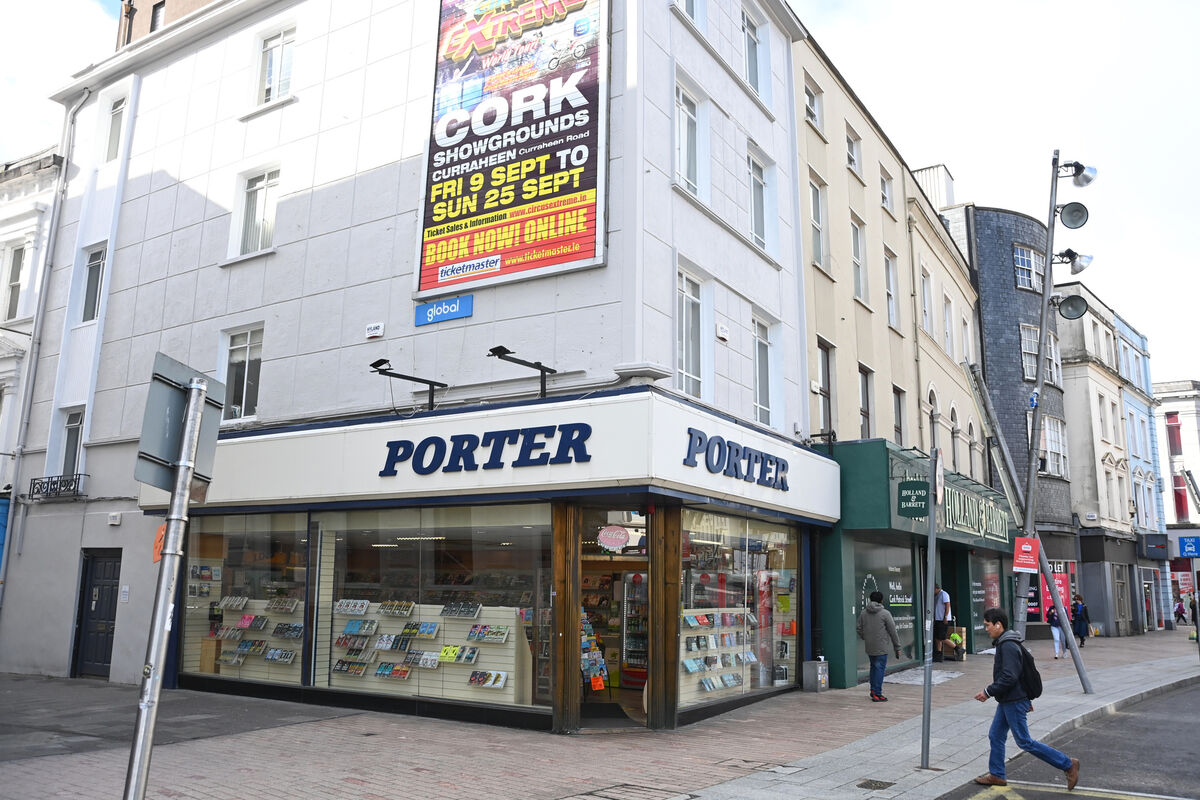
Contributors included Nell McCafferty and it was sold in 26 outlets only — including Porters on Patrick’s Street in Cork.
In a personal article titled ‘I’ve started another pregnancy”, a mother, living in “a large suburban corporation estate”, bemoans her situation.
“The doctor who told me I was pregnant again at this time, aged 32 and about to give birth to my 11th child said to me ‘are you going to keep this up? Thirty-two years of age and have a look at you, you’re in bits,’” she wrote.
n.
“Three years later, Mrs Smith was dead. She had 18 children, and the Church nor State never cared,” she wrote.
In 1971 the Contraceptive Train made headlines when the ‘Women’s Liberation Movement’ travelled to buy condoms and contraceptive pills in the North and brought them back across the border.
The at the time reported: “In Belfast some of the women had difficulty in choosing a device to test customs reaction. For a few it was their first time ever seeing a contraceptive."
Its members were also involved in smaller actions, the letters pages show.

In Volume 7, some of its members wrote in about an encounter with Fr Michael Cleary while out campaigning for access to the pill.
Fr Cleary was a strong conservative voice at the time, but it later emerged he fathered two children with his young housekeeper, Phyllis Hamilton.
In the letter, the women wrote: “He related some of his experiences as a Catholic marriage counsellor, and claimed that perversion rather than contraception was the main problem in marriage.”
It sounds like an emotional encounter, with the women writing he told them: “you fucking women libbers are a breed apart, you’re talking a load of arseholes, you should be collecting for the poor. You’re a Red plot.”
Dr Kelly, whose book is published this month, explained contraception was legalised in 1979 under the Family Planning Act.
“(This) allowed contraception on prescription for bona fide family planning purposes only, with this stipulation widely interpreted as meaning that contraceptives were only available to married couples,” her recent study found.
“This legislation was referred to by the minister for health, Charles Haughey, as an ‘Irish solution to an Irish problem’.” A short letter written to in 1973 by Maureen O’ Dea, founder of CHERISH, reflects the challenges facing unmarried mothers, who were seen to have failed the moral codes.
She wrote: “We are a group of unmarried mothers who have kept our babies” and sought to contact other women in this situation.
“We meet regularly and our aim is to make representation to the Government on behalf of all women in our position, to obtain recognition of this very serious social problem,” she wrote.
He wrote: “they are fleeing from Ireland’s most dangerous weapons, the whispered insinuation and the glance through curtained windows.” These stories quote a London-based social worker who helped Irish women return home, only to see them return to England with “alarming stories of conditions in the mother-and-baby home they were sent to in Ireland.”
A number of magazines ran advertisements for a pregnancy test service located in Bell Jenkins Laboratories in Portsmouth, England showing the barriers women faced in even confirming they were pregnant.
The advert urged: “Telephone or write today for free literature, with specimen container sent under plain sealed wrapper.”
Today, many things have changed since those women put pen to paper or spoke to reporters about their intimate decisions, but Dr Kelly argues those times are not as far away as we would like to think.
Referring to a 2019 report on access to contraception, she said: “Embarrassment and stigma around contraception are still present, with research highlighting ‘how young women have reported being afraid to reveal they are sexually active; embarrassed to be seen at a family planning clinic; or worried about confidentiality breaches.”
Free prescription and emergency contraception is available from this week for 17 to 26-year-old women and people with a uterus, under Government plans.
“While this is a positive step, arguably this law reflects the state’s continuing anxieties over young women’s sexuality and augments contraception as a woman’s responsibility,” Dr Kelly said.
Perhaps a plea from that young mother of 11 made in could still be made today.
“I would ask any one of those members of Dáil or Church to come into any of these homes, and take over for one day the woman’s role in the home,” she wrote. “I wonder would things be changed then.”
With thanks to the staff at the National Library of Ireland


CONNECT WITH US TODAY



Be the first to know the latest news and updates