Countdown to murder: How the final days of Michael Collins played out
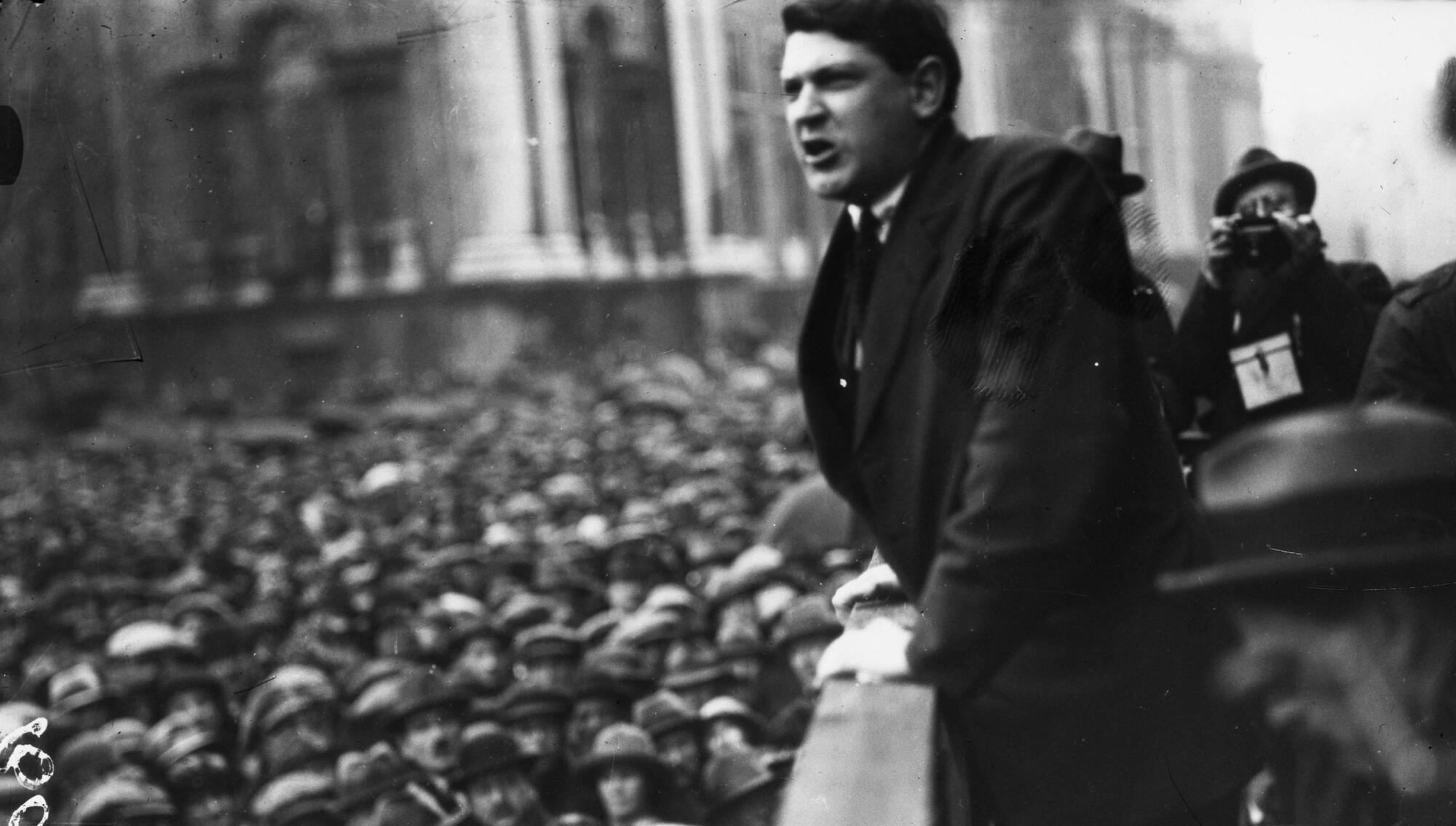
Michael Collins addresses an election meeting in 1921. Picture: Getty Images
With the Civil War in its fourth week, Michael Collins travels to Maryborough (Portlaoise) to discuss strategy in the Third Southern Division area.
In Offaly, he wants Tullamore to be occupied within a day with at least 50 men. From there some ‘clearing up’ is to be undertaken in the area around Philipstown (Daingean).
In Laois, Mountmellick is to be occupied whilst posts in Abbeyleix and Durrow are to be reduced to 30 men each. Meanwhile, the capture of Nenagh, Collins tells officers, ‘will clear the country … to Birdhill and Limerick’.
HISTORY HUB
If you are interested in this article then no doubt you will enjoy exploring the various history collections and content in our history hub. Check it out HERE and happy reading
Throughout the opening weeks of the Civil War, notwithstanding the overwhelming amount of pressure upon his time, Collins still maintains regular correspondence with his fiancé, Kitty Kiernan.
A relaxed letter from Portobello Barracks gives the impression of its author in high spirits;
"Am writing this early on Sunday morning – not much stir in the Barrack Yard yet. I have had breakfast and am feeling in very good form, and seem to be able to do with less and less sleep, but it is not the length of the sleep that really matters – it’s whether it restores and refreshes, and I am really thankful to say I am doing well from that point of view."
With his plans for Northern Ireland facing grave challenges, some of Collins’ colleagues begin to discuss alternatives with him. Richard Mulcahy writes to him stating:
"The people were for a peace policy and for a recognition of the Northern Government … Our officers seem to realise that there is no other policy for the North but a peace policy of some kind…"
Collins writes to Winston Churchill and refers to the situation with partition:
"I have scarcely a moment for any business other than the urgent business of restoring peace and settled conditions to the country. … Believe me, [the question of partition] is never far removed from my thoughts and were it not for my new obligations and commitments I would be devoting all available time and energy towards its solution."
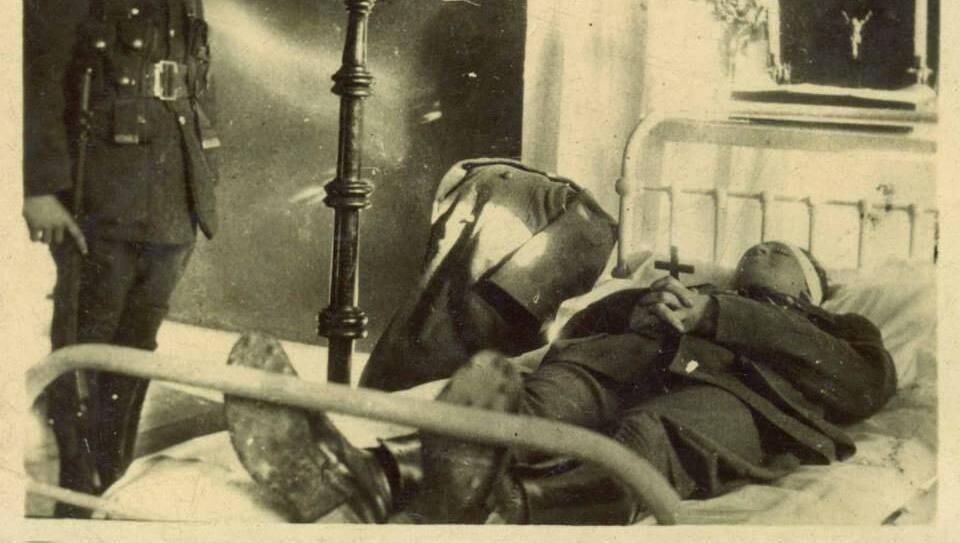
Collins gives an optimistic outlook to the cabinet of the Provisional Government on the course of the Civil War. He tells them that they ought to congratulate themselves that ‘everything has turned out so well’.
W.T Cosgrave, who had taken over the leadership of the provisional government whilst Collins assumed role of Commander-in-Chief of the National Army, suggests that a proclamation be issued to the effect that Free State troops "have orders to shoot persons found sniping, ambushing or in possession of bombs, or interfering with railway or road communications, in areas in which military operations have ceased".
Whilst acknowledging that it would ultimately be a decision for the provisional government, Collins was opposed to the proposal.
Collins writes a letter to Harry Boland, pleading with his old friend to reconsider the path he had taken:
"Harry – it has come to this! Of all things, it has come to this. It is in my power to arrest you and destroy you. This I cannot do. If you will think over the influence which has dominated you it should change your ideal.
"You are walking under false colours. If no word of mine will change your attitude then you are beyond all hope – my hope."
Collins makes a visit to Drogheda and inspects troops at Millmount. According to subsequent press reports, Collins then went to Dundalk where, just two days previously, more than 100 anti-Treaty IRA prisoners, led by Frank Aiken, had escaped the jail when one of the walls was bombed.
Once again, Collins leaves Dublin and travels to an aerodrome for inspection. In a letter to Kitty Kiernan he hints at a Munster trip in the near future: "[I] am going south, but not very far south yet."
Collins is informed that during a raid on the Grand Hotel in Skerries, Harry Boland was shot as he tried to escape and is in St Vincent’s Hospital where he is in a critical condition. Collins immediately seeks an update on his condition.
Harry Boland dies at 9pm. The common thread between the varying accounts that emerged of Boland’s final words was his forgiveness for those who had killed him. An emotional Collins tells the cabinet that ‘we are a government now and we cannot have any more of this business of shooting a man running away.’
Collins pens an emotional letter to Kitty Kiernan:
"Last night I passed Vincent’s Hospital and saw a small crowd outside. My mind went to [Harry Boland] lying dead there and I thought of the times together, and whatever good there is in any wish of mine, he certainly had it.
"Although the gap of eight or nine months was not forgotten – of course no one can ever forget it – I thought only of him with the friendship of the days of 1918 and 1919 … I’d send a wreath but I suppose they’d return it torn up."
Meanwhile, the IRA’s Northern Offensive ends. Collins tells a group of Northern IRA men that "with this civil war on my hands, I cannot give you men the help I wish to give and mean to give. I now propose to call off hostilities in the North and to use the political arm against Craig so long as it is of use. If that fails, the Treaty can go to hell and we will start again."
Writing to W.T Cosgrave, Collins says: "I am forced to the conclusion that we have yet to fight the British in the North-East. … We must, by forceful action, make them understand that we will not tolerate this carelessness with the lives of our people."
At 1.30pm, Collins dines with Kitty Kiernan in Room 152 of the Shelbourne Hotel.
At the exact same time, the funeral cortege of Harry Boland was nearing Glasnevin Cemetery from Whitefriar Street Church.
Whatever they discussed, Collins feels compelled to write to Kiernan that night in between interrupted phone calls between them: “You will not misunderstand anything you have heard me say about poor H[arry]. You’ll also appreciate my feelings about the splendid men we have lost on our side, and the losses they are and the bitterness they cause, and the anguish. There is no one who feels it all more than I do.
"My condemnation is all for those who would put themselves up as paragons of Irish Nationality, and all the others as being not worthy of concern.”
The remains of nine troops who were killed during the fierce fighting that followed the National Army’s landing in Fenit, Kerry, arrive back in Dublin aboard the troopship, Lady Wicklow. The boat sailed up the Liffey and was met by two large tenders to bring the nine coffins to Portobello Barracks. Collins is there, with Richard Mulcahy and Gearóid O’Sullivan, when the bodies are removed to the barrack mortuary.
Collins writes to Cosgrave on the urgent need to put in place a police force for areas that had been taken by the Free State:
"The nucleus must be the civic guard organisation. It is not necessary for me to illustrate this by pointing to the wretched Irish Republican Police system, and to the awful personnel that was attracted to its ranks. The lack of construction and the lack of control in this force have been responsible for many of the outrageous things that have occurred throughout Ireland."
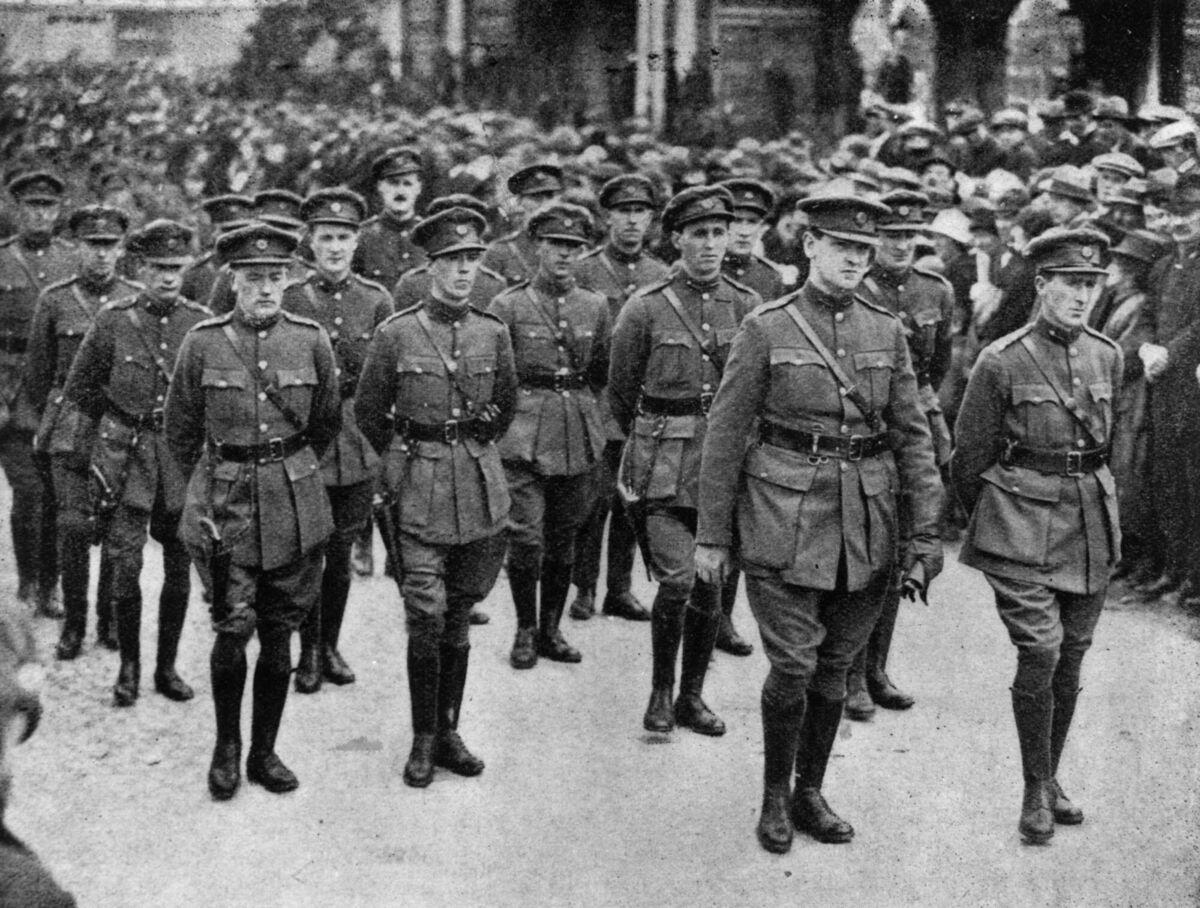
The most famous image of Michael Collins – that of him in full uniform purposefully striding with his arms swinging, in front of the Army’s mascot, 14-year-old Alphonsus Culliton - is taken in Portobello Barracks.
That morning, in the barrack library, Requiem Mass for the nine dead soldiers takes place.
The impact that yesterday’s Mass had upon Collins is conveyed in a letter to Kitty Kiernan: "The scenes at Mass yesterday were really heartbreaking. The poor women weeping and almost shrieking … for their dead sons. Sisters and one wife were there too, and a few small children. It makes one feel, I tell you."
Collins writes to Joe McGrath in relation to a series of robberies that were taking place in Wexford.
In contrast with the position he had asserted to Cosgrave less than a fortnight ago, he said ‘any man caught looting or destroying should be shot on sight’.
The IRA men who had assassinated Henry Wilson, Reginald Dunne and Joseph O’Sullivan, are executed in Wandsworth Prison. The questions of whether they were acting alone, or on the orders of Collins, or of the anti-Treaty IRA is brought to the gallows with them.
Plans had been investigated by both pro and anti-Treaty sides to rescue both men before their execution. Albeit, plans appear to have been more developed by the former, rather than the latter.
In his witness statement to the Bureau of Military History, Joe Dolan speaks about how, mere days after the assassination, he was ordered by Collins to travel to London to meet with Sam Maguire to discuss a rescue. The plans did not go far, however, as by the time Dolan returned, the Battle of Dublin had begun.
In what may have been one of his final letters to his fiancé, Collins tells Kitty Kiernan that he will be busy for a few days and may not get the chance to write to her any time soon.
He concludes the note with: "Harry [Boland’s] sister wants to get married in jail to Seán Donovan. Great advertising – what?"
Collins departs Portobello at 4am for a tour of the south. The journey would become illustrative of the equipment that the National Army were operating during the Civil War.
The Lancia car he was travelling in went on fire in Naas. Running repairs are made and it chucked along until ‘one of the back wheels went completely’ on the approach to Roscrea.
When they finally managed to limp into the town of Roscrea, one of their Crossley Tenders ran out of petrol, and none of the other vehicles had any to spare. When finally nearing their destination in Kerry, they have a puncture, but have no valves to facilitate the pumping of the spare tyre.
It was in Kerry that Collins was informed that Arthur Griffith was dead. Griffith had been in hospital for over a week, initially for fever and tonsilitis and was under the care of his friend, Dr. Oliver St. John Gogarty. After cheerfully bidding a nurse ‘good morning’, he stooped to tie a shoelace and fell forward. He died of a bleed on the brain, likely brought on by the stress of the past year.
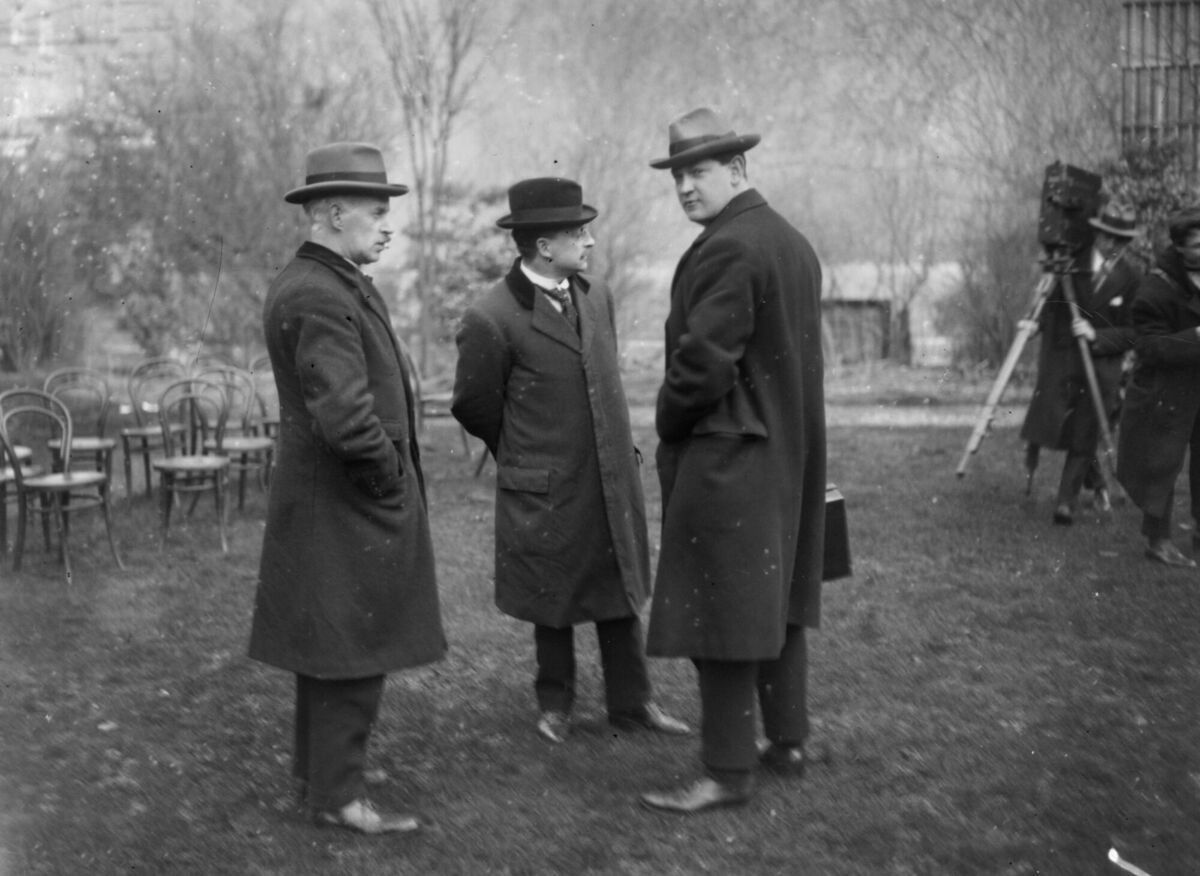
Among the messages of condolences received by Collins in the wake of Arthur Griffith’s death is one from British Prime Minister, David Lloyd George: “My admiration for his single-minded patriotism, his ability, his sincerity, and his courage has grown steadily since I met him first, less than a year ago.
"His character made a deep impression upon the British ministers who shared with him those unremitting labours in which he was called to play so testing and difficult a task. His loss is heavy for Ireland, But I trust that his work will go on to complete success."
Collins’ first public comments since Griffith’s death are published: “There seems to be a malignant fate dogging the fortunes of Ireland, for at every critical period in her story the man whom the country trusts and follows is taken from her.
"It was so with Thomas Ashe and Parnell and now with Arthur Griffith. Only those who have worked with him know what Arthur Griffith has done for Ireland; only they can realise how he has spent himself in his country’s cause.”
Still upset with the farcical transport arrangements of a few days ago, Collins asks an Army Captain in Limerick to compile a list of transport under his control in 10 minutes.
The Captain made the fatal error of assuming this was a joke. Collins promptly rips him to shreds. He would later write: "I told him I regarded his attitude as being insubordinate in the extreme and ordered him to parade with his list."
The Captain took 45 minutes to compile some details that Collins regarded as ‘quite useless’. Such was the dressing down he received, the Captain was unable to complete more comprehensive details as he took ill.
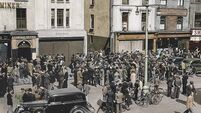
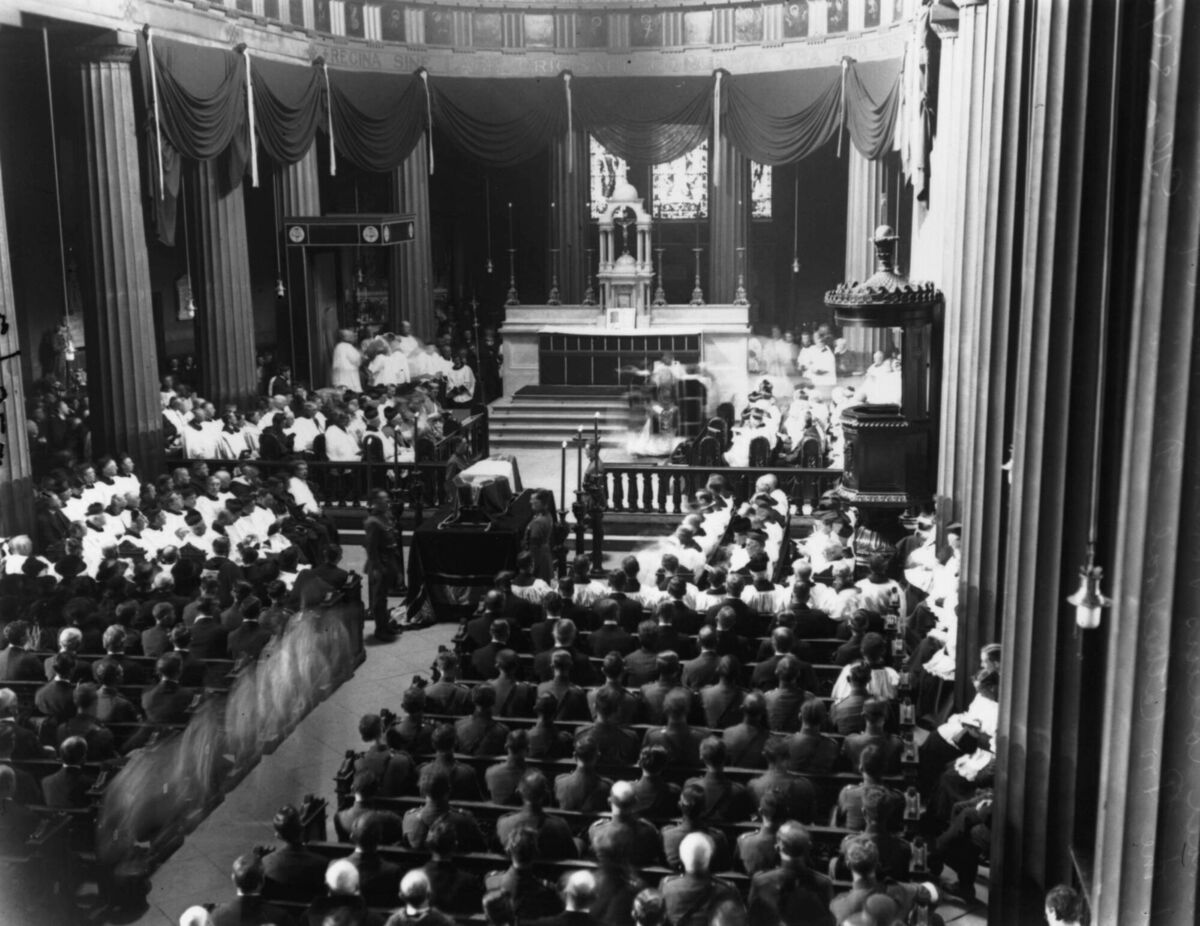
Collins, in full military uniform, walks alongside Richard Mulcahy in the funeral procession of Arthur Griffith which makes its way from the Pro-Cathedral to Glasnevin. After the coffin was interred, final prayers are recited and W.T Cosgrave gives a graveside oration.
Collins lingers by the graveside after the crowd begins to leave. The Bishop of Killaloe, Michael Fogarty said to him "Michael, you should be prepared – you might be next." Collins solemnly replied "I know".
Whilst there are conflicting accounts as to the exact date, it was around this Thursday evening that Collins would spend an evening in Furry Park, Killester – the home of Crompton and Moya Llewelyn Davies.
The couple had met Collins for the first time in January 1919. Moya soon developed an apparent infatuation with Collins who was a frequent visitor to Furry Park during the War of Independence. Another woman prominent in rumours surrounding Collins’ love life was also in attendance that evening – Lady Hazel Lavery, who was there with her husband, John.
As the party was ongoing, a young messenger boy, Bill McKenna, turned up saying that there was a sniper nearby who was going to shoot Collins. Collins was asked to stay away from the windows of the room, but refused. Hazel Lavery and Joe O’Reilly duly placed themselves between Collins and the window to protect him.

After dropping Collins off on some social visits, his car is ambushed on its way back to Dublin. Near Stillorgan, the vehicle is shot at around 30 times, and a bomb is thrown at it. One of the passengers was wounded in the hip and removed to Baggott Street Hospital.
Nevil Macready would tell the British cabinet of the incident, noting that although Collins was not in the car at the time, the attack "was probably intended to avenge the death of Harry Boland".
At 6pm, Collins is travelling in a Crossley Tender on York Street in Dún Laoghaire when it crashes into another vehicle containing National Army troops. Collins’ vehicle is badly damaged in the crash and he is lucky to be, reportedly, uninjured.
The commotion caused by the crash naturally attracted onlookers who began to cheer when they recognized the famous passenger. Collins is escorted to the Harbour Barracks where he gets another vehicle. Later that evening, he goes to another social event with some notable people. This time, he goes to Kilteragh, Foxrock – the home of Horace Plunkett.
According to Plunkett, Collins was brought to dinner as a guest of Hazel Lavery. Plunkett would note of his first conversation with Collins in his diary: “He is an interesting personality. Too fat, but virile. 32 years old. Amiable, direct, simple, and yet cunning. A bit crude (perhaps due to shyness) in the expression of his views … Collins said one thing which was significant.
“After we get over the present trouble we shall have to fight Bolshevism. He took a risk in coming here without an escort. I fear he is too careless of his life. His car was bombed only yesterday when, luckily, he was not in it.”
Another guest in Kilteragh that night was George Bernard Shaw, who was there with his wife, Charlotte. He would recall years later of his encounter with Collins. “His nerves were in rags: his hand kept slapping his revolver all the time, he was talking pleasantly enough.”
When they eventually return to Barracks, Collins is clearly unwell. Joe O’Reilly makes Collins a hot drink with some oranges. "God, that’s grand", said Collins when he sipped the tincture. Perhaps taken by this rare moment of tenderness, O’Reilly moved to tuck him in to bed.
Collins exclaims: "Go to hell and leave me alone!"
Before Collins sets off on his journey to West Cork, he has a farewell drink with Joe Sweeney who, like several others before him, asks him to reconsider his plans. Collins tells him: "Ah, whatever happens to me, my own fellow county-men won’t kill me."
In an ominous portent of what was to come, as he descends a staircase on his way to his convoy, Collins trips and accidently discharges his revolver, avoiding a nasty self-inflicted injury by a matter of inches. On this occasion, however, literally shooting himself in the foot would have been a better fate than what awaited him.
After stops in the Curragh and Maryborough, Collins’ convoy moved on to Roscrea – this time without any wheels falling off – where they had breakfast. From there, they proceed to Limerick where he was met by Eoin O’Duffy.
By some accounts, he attends an Army dance in Cruise’s Hotel. At the bar, a young priest calls Collins a traitor. An officer from Dublin took exception to the comment and promptly levelled the clergyman who fell to the floor and rolled under some stools. A bemused Collins simply observed the melee and left the dance.
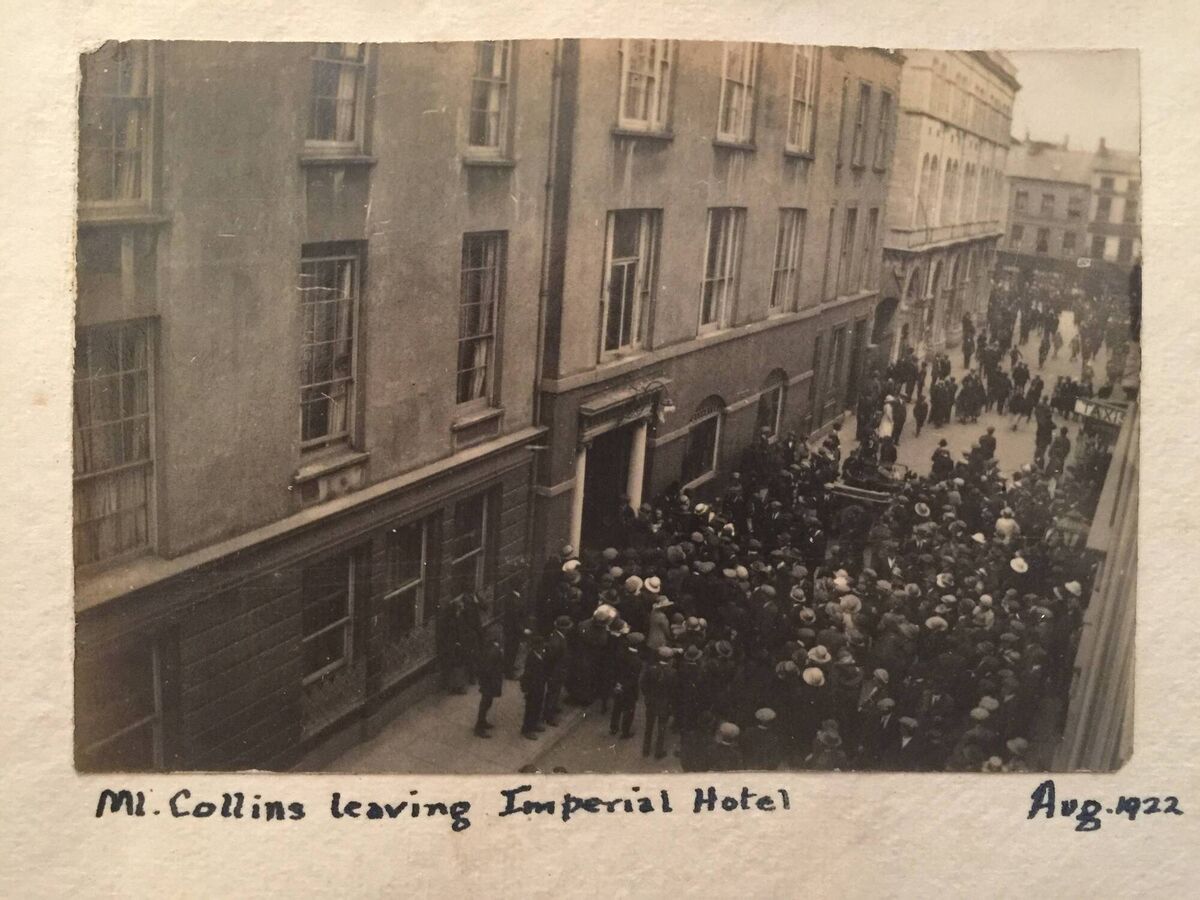
From Limerick, they moved to Mallow and then to Cork. When they arrived at their base in the Imperial Hotel, Collins found the almost biblical scene of two sentries asleep. Unlike the gentle admonishment in the Garden of Gethsemane, however, Collins picked the sentries up and banged their unfortunate heads against each other before checking in to Room 115.
One of the reasons why Collins was so determined to travel to Cork was to retrieve about £100,000 in tax money that the anti-Treaty IRA had appropriated – much of it at gunpoint from a tax official who was ‘drying out’ in Mount Mellaray.
Collins met with the manager of the Hibernian Bank in Cork to discuss the matter. He also sent his nephew, Sean Collins Powell, on a dangerous errand as part of this attempt to trace the money.
After a trip to Macroom, Collins retired to bed with vigour. He was sharing a room with Joe Dolan, who recalled how the Commander-in-Chief had threw his boots off and made a flying leap into his bed.
Shortly after 6am, Collins’ convoy leaves the Imperial Hotel.
Despite having been there only the night before, Collins’ first stop is Macroom. There, he meets with Florrie O’Donoghue who was under guard in the Castle. O’Donoghue would later remark upon Collins’ foolhardy attitude - he told him that he was surprised that ‘no one could stop him’.
As the main route to their next stop, Bandon, was blocked by blown-up bridges, the convoy asks a local hackney driver, Tim Kelleher, to guide them via back-roads. When the convoy reaches the small village of Béal na Bláth they were unsure of the best road to take.
The lead motorcyclist of the convoy spots Denny ‘The Dane’ Long standing at the door of his pub and asks the way. With the aid of Long’s directions, the convoy passes on the way to Bandon. Long spots Collins, seated beside Emmet Dalton, in a Leyland Thomas touring car with an armoured Rolls Royce, the Slievenamon, bringing up the rear.
Little did they know that their good Samaritan was an IRA sentry, and that a meeting of the leaders of the Cork IRA was ongoing nearby.
When Long shares the details of what he had seen, it was decided to lay an ambush on the assumption that the convoy may return on the same road later that day. They commandeer a cart, remove a wheel and place it on the road to act as an unassuming roadblock.
Éamon de Valera, who was in the area at the time, observed the IRA setting up the ambush. He said of Collins, who had just passed by, "what a pity I didn’t meet him … It would be bad if anything happens to Collins, his place will be taken by weaker men".
He tried to convince Tom Hales and other IRA leaders not to proceed with the ambush. However, he was overruled, and told that they only took orders from Liam Lynch. A frustrated de Valera left Béal na Bláth for Fethard via Kilworth and Fermoy.
Meanwhile, Collins’ convoy was slowly making its way around West Cork, making a number of stops. At times these stops were due to felled trees. At other times, the notoriously unreliable vehicles they were travelling in would not co-operate.
The Slievenamon struggled to keep pace with the remainder of the convoy – at one point the convoy had to turn around and look for it, only to find it parked outside a pub in need of water with its occupants enjoying a drink. The high-spirited Collins said: "Sure the car needs a drink, why not the men?"
From Clonakilty, where they had lunch, they moved on to Skibbereen. They turned back for Cork and stopped at Sam’s Cross where further refreshments were imbibed.
As he got progressively closer to Béal na Bláth for the second time that day, the volume of warnings shared with Collins grew. However, he continued to shrug them off with his usual humour. He seemed genuinely convinced that he would not be harmed in Cork.
As the day went on, with no sign of the convoy returning, the numbers of those waiting at the ambush site in Béal na Bláth diminished as the hours passed.
By the evening, a much-reduced group of IRA men remained. Just as they were beginning to leave and try again tomorrow, the convoy arrived and shooting commenced.
Emmet Dalton was keen to make their escape, but Collins orders them to "jump out and … fight them". Although leader of the National Army, Collins was not experienced in situations such as these and he left the safety of cover for a better vantage point to shoot at the IRA men.
He was hit at the base of his skull behind his right ear. Commandant Sean O’Connell said the Act of Contrition in his ear – O’Connell claims that Collins gave him a gentle squeeze of his hand before dying.


CONNECT WITH US TODAY



Be the first to know the latest news and updates