Where we get our energy: A solution that cuts food waste while creating energy
Rather than paying subsidies to farmers who cannot earn a proper living rearing cattle, green entrepreneur Billy Costello suggests decarbonising all transport in Ireland 'tomorrow'
Where we get our energy: A solution that cuts food waste while creating energy

General operatives separating packaging from food in sorting unit at the Green Generation plant in Nurney, Co Kildare. Picture: Neil Michael

If Billy Costello had his way, at least 2% or 3% of Ireland’s 10m acres of land would be dedicated to creating biomethane.

And as well as beef and dairy farmers, he thinks we should have energy farmers who are paid to grow and cut grass that could be used in the production of electricity and biomethane for vehicles at plants like his.

Mind you, if the pig farmer and green entrepreneur also had his way, Ireland wouldn't be the laggard it is in meeting its carbon reduction and renewable energy targets.

This is the second of five parts in a week-long series of photo essays by Neil Michael on the issue of energy. Day 1 is online here, or click the Where we get our energy tag to see all the articles as they go online this week.

His voice bristles with frustration when he talks about the hundreds of millions of euro the country has to pay out in fines and in buying carbon credits from countries like Denmark and Estonia.

He also believes that instead of paying subsidies to farmers who cannot earn a proper living as cattle farmers, funding should instead be diverted to pay them for their grass specifically for green energy production.

“We have fabulous resources," he said. 

"We have grass that grows. We can't stop it growing, and we have 10m acres of land in the country.

And if we wanted tomorrow morning, and took 2%-3% of the country's 10m acres of land, and used it for biomethane, we could probably decarbonise all of the transport in Ireland.

“We have the best grass-growing climate in probably the world after New Zealand, and we could produce enough grass to put up 100 biogas plants tomorrow morning.” 

He says that would mean that instead of people driving lorries on diesel, they could drive them on biomethane.

The Green Generation plant, Nurney, Co Kildare. Picture: Neil Michael

“All the lorries on my farm are on biomethane, and you wouldn't even know, and they've a zero carbon footprint.” 

His Kildare-based Green Generation Ltd company uses three huge anaerobic digesters to convert agricultural and food waste into renewable energy.

The food waste comes from a variety of quarters, including Tesco.

Picture: Neil Michael

The plant gets about two or three trucks a day and brings about 20 to 30 tonnes of food waste.

A lot is out-of-date food, but there is also food that might have been affected by a minor food production issue.

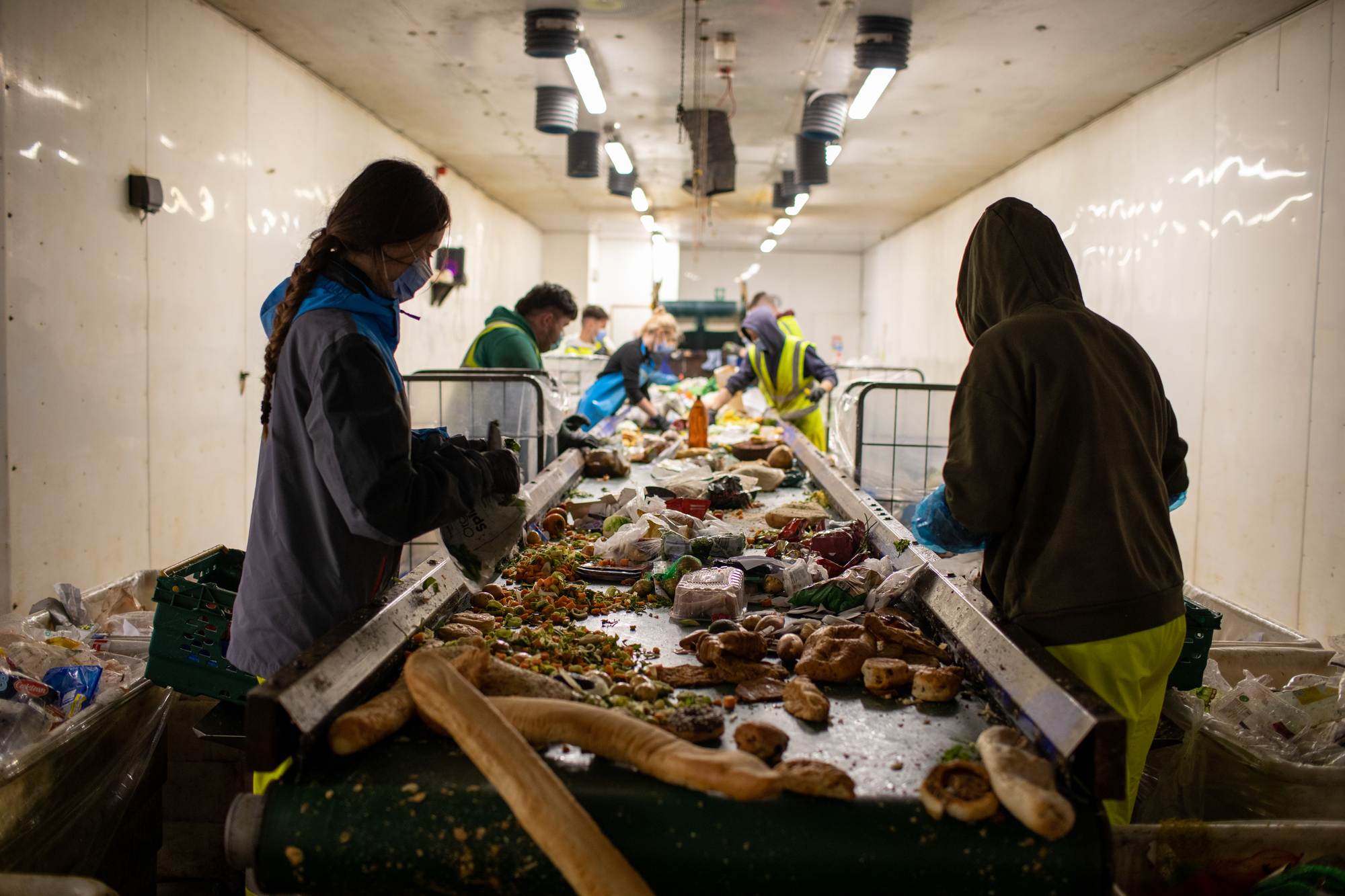
Crates of packaged food are loaded up onto a long conveyor belt where around 10 workers working from 8am to 5pm will each sort up to three tonnes of food.

General operatives separating packaging from food in sorting unit at the Green Generation plant in Nurney, Co Kildare. Picture: Neil Michael

They have to remove the plastic, cardboard, or tin packaging and let the food drop into large plastic food bins at the end of the conveyor belt for mulching.

Picture: Neil Michael

Then some 2,000 tonnes of mulched food “soup” gets fed into the tall green cylindrical primary anaerobic digester.

The food and other waste is converted into energy in the anaerobic digester by using naturally occurring bacteria to break down organic waste into biogas and an organic fertiliser byproduct.

It also leads to the creation of what is known as digestate, which is a nutrient-rich organic fertiliser that farmers can use on their land and is better for both the land and the environment than raw slurry.

The digestate also helps reduce farmers’ dependence on costly fossil fuel-based chemical fertilisers.

The Green Generation plant in Nurney, Co Kildare. Picture: Neil Michael

From the primary digester, the product flows through to the secondary digester alongside it, before it flows into the third digester, which is a flatter, dome-shaped construction with a balloon over it, where the resulting biomethane gas collects.

The gas then passes in pipes from the third digester through to a number of so-called “scrubbers” which take out the hydrogen sulphide before being fed into a combined heat and power unit to produce electricity.

A similar “scrubbing” process is also used to turn a proportion of the gas into biomethane.

The resulting biogas is about 60-65% biomethane and the rest is CO2, with around half of the biogas used to produce renewable electricity which is connected to the national grid.

Picture: Neil Michael

The rest is upgraded to “biomethane” — which is grid-grade gas that can be injected into the national grid as renewable gas and can also be used as a clean transport fuel.

As well as agriculture and food waste, Green Generation has developed technology that allows the company to repurpose and transform waste plastics into high-value products, while diverting these plastics from landfill and incineration.

Picture: Neil Michael

CLIMATE & SUSTAINABILITY HUB

More in this section

Lunchtime News

Newsletter

Keep up with stories of the day with our lunchtime news wrap and important breaking news alerts.

Cookie Policy Privacy Policy Brand Safety FAQ Help Contact Us Terms and Conditions

© Examiner Echo Group Limited