Limerick on the Rise: Regeneration promises have been made — and broken
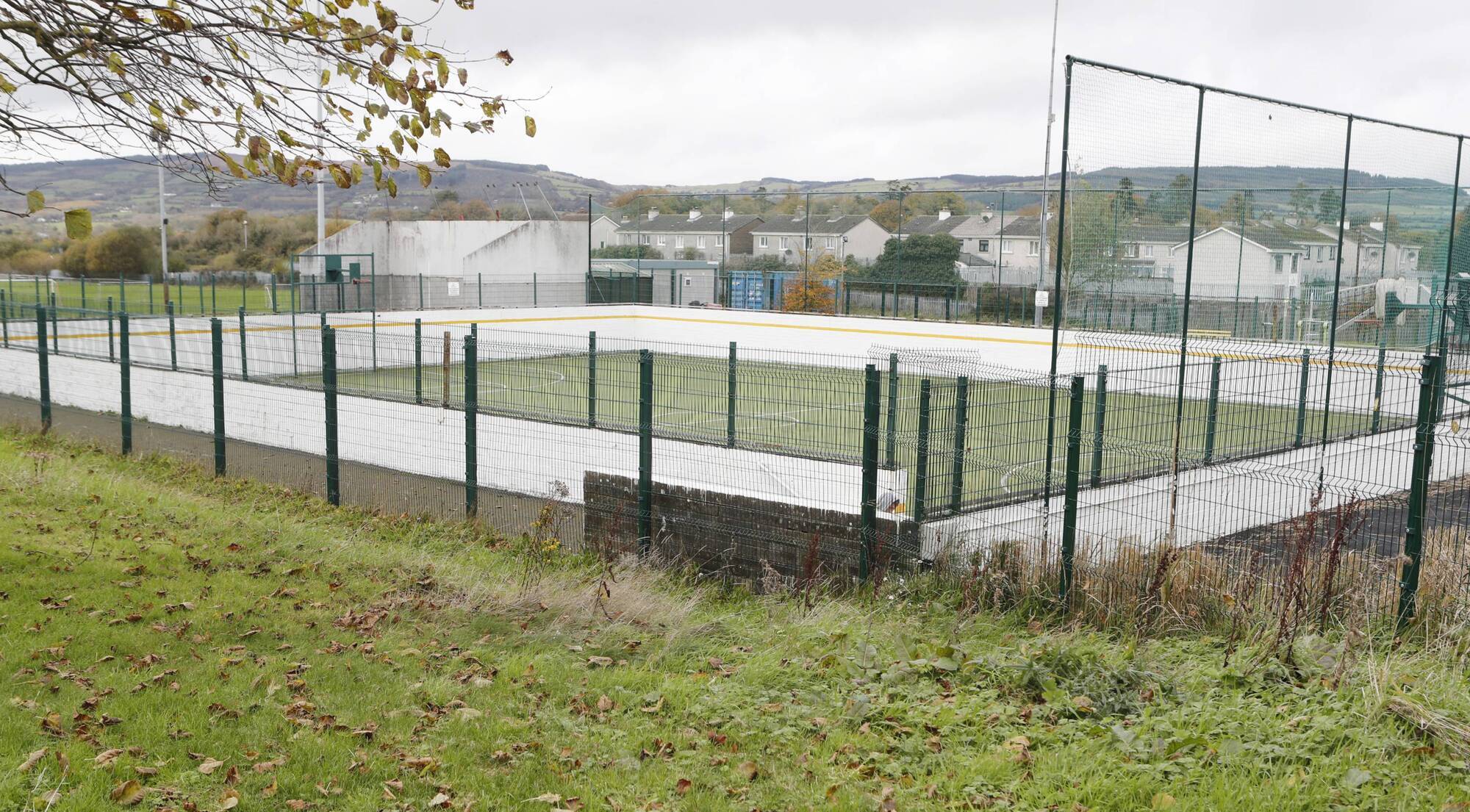
The all weather pitch in Moyross. Picture: Liam Burke/Press 22
The residents of Limerick’s four Regeneration areas — Moyross, Weston, Southill, and St Mary’s Park — are 13 years into a story where the ending has yet to be written.
Promises have been made, while some have been broken and the mood of many on the street is sceptical.

Yet despite its stutters, hope remains that the project that promised a lifeline to Limerick’s most forgotten communities can still deliver.
The “green shoots of hope” are emerging through the bedrock of societal ills, on which criminal empires were built and lives were lost.
But with two years left on the clock, time is ticking and the responsibility lies on everyone who has a hand to play in Limerick’s regeneration to ensure this story has a positive ending.
The first of the regeneration plans were unveiled in 2008. Limerick was a battleground between rival drug gangs who had exploited the social and economic woes of the city’s poorest estates to build empires.
Up to 20 murders have been attributed to the feud and many more attacks were carried out, with most of the violence falling on the doorsteps of those who live in the four “regen areas”.
The Government’s answer to this was a €3.1bn plan — a large enough sum to make a difference.
But the plan quickly died the same death as the Celtic Tiger, and in 2013, a smaller, more feasible plan of just over €300m was promised — the Limerick Regeneration Framework Implementation Plan.
It promised to spend €293m in a three-pillar approach, with €253m earmarked for physical projects and €40m set aside for social and economic supports.
This plan aimed to tackle, among other issues, poverty, social exclusion, low education levels, unemployment, and crime.
There have been many undoubted success stories. The murder rate dropped 77.8% in the period from 2007 to 2019, while theft (-29.6%), burglary (-33.85%), and damage to property (-63.11%) have all fallen.
However, many in the areas still feel the projects have failed to deliver anywhere close to what they promised.

Sinn Féin TD, Maurice Quinlivan, said the general feeling of those set to benefit most — local residents — was despondency.
"And the sense, from them, over the last year and a half, is just a total sense of despondency, total frustration and an absolute consensus across the board in the areas that it's been an unmitigated failure.
“There were commitments that were made in 2008, where the then president Mary McAleese made a fantastic speech and launched the programme, which gave hope to a huge number of people. That was never anywhere near implemented,” he said.
He cited one example, where Moyross had been promised a state-of-the-art sports facility but are now instead are using goats to cut their grass area.
According to a report released to Limerick City and County Council, €177,217,209 has been spent on physical projects, with €30,614,647 spent on social and economic supports.
The report also states that there is €52m is “committed” on approved housing and infrastructural projects.
There are 513 new homes planned under the programme. So far, 271 have been built, with a further 186 units are currently in various stages of progress.

However, Fine Gael councillor Sarah Kiely disputes this figure, arguing that only 151 houses have been built “inside the famous red-line” of the regeneration areas.
The other 120 are built in areas such as Lord Edward Street, Vizes Court and Wallers Well, she says.
A spokesperson for Limerick City and County Council said these three areas were approved as regeneration projects and contained within the agency and the LFRIP 2014.
“These three projects delivered 120 units and helped to accommodate people from regeneration areas / demolition zones,” the spokesperson said.
The report states 605 units were scheduled for demolition under the plan. Some 381 units have been demolished to date, with nearly €7m spent knocking houses so far.
“To spend €7m on demolition, and be this late to the game, with only 151 houses built inside these areas, that is concerning to me,” Ms Kiely said.

This level of demolition, and the slow pace of delivery of new houses, has a direct impact on the levels of homelessness in Limerick, according to Sarah Beasley, an Aontú representative and homeless activist.
She says a large portion of the people she deals with, who are homeless, are originally from these regeneration areas.
The latest Homeless Report from the Department of Housing, Local Government and Heritage, for August 2021, shows there are currently 219 people registered as homeless in Limerick.
But the true figure is hidden, according to Ms Beasley.
“I'm dealing with one family in Moyross and there are 16 adults and seven grandchildren in that three-bedroom house. It’s like something out of ,” she said.
Addiction is still rife among many areas of the regeneration zone, with St Mary’s Park, in particular, being labelled as the epicentre of Limerick’s drug problem.
In September, an operation involving more than 300 gardaí, Irish Defence Forces and Revenue and Customs officers targeted criminals living in a number of the regeneration areas.
These seized jewellery, high-value cars and froze six financial accounts with a total value in excess of €295,000.
Statistics from a Limerick Joint Policing Committee in September show that drugs with a street value of over €2,2m were seized between January 1 and August 31 this year.
Tony Duffin, CEO of Ana Liffey Drug Project, said Limerick has some of the most deprived areas in the country.
“Many of the people we work with in Limerick live in, or come from, deprived areas; and they have complex and multiple needs including addiction, mental health issues, homelessness, self-harm, and trauma.
“Since 2012, our mid-west team has worked with an average of 250 people per year. However, in the last 12 months, our team has worked with over 490 people."
Mr Duffin said demand for their services in Limerick has never been higher.
Mattie Collins, chairman of Treaty Suicide Prevention, has been fighting for the people of his community — Ballinacurra Weston — since the days of the feuds.
For his bravery for speaking out, his home has been targeted repeatedly.
He says the people of the regeneration areas feel forgotten and angry, labelling the project a "failure".
He gave a stark warning as the deadline nears:
"And they will come along, and say, 'well this is awful', 'we spent all this money'. But then to question where that money was spent, and who spent it, because it was not spent on where they live,” Mr Collins said.
He says it is difficult for people who do not live in these areas to understand life where large drug gangs operate. Simply going to the gardaí is not an option, and people are often afraid to speak to the council or the media.
“How do you survive? There is a code in these areas that people have to live under. If you don’t, you won’t have a house," he said.
Mr Collins believes isolation and an ongoing mental health crisis are impacting the youth of these areas heavily.
“Down by the river, I am meeting people, from these areas every single week, trying to kill themselves.
Tiernan O’Neill, social regeneration co-ordinator, has spent over 20 years working in the community and spent time as principal of Corpus Christi School in Moyorss.

He said, despite the setbacks, there are green shoots of hope.
“What has blown me away across the four communities is the calibre of young people that are now stepping forward as community champions.
"It’s now about bringing them to the table and making sure they are part of the narrative going forward,” said Mr O’Neill.
"I have seen the green shoots of hope."
However, Mr O’Neill admits the project still has a long way to go.
“But we must remember how far we have come,” he said.
“These communities deserve the best, and it is my firm intention that is achieved. I think it will go far beyond the parameters of the two years. It’s a work in progress.
"We need to ensure that post-2023, that this work doesn’t just fall off the edge of the cliff,” he said.