'If you make it to Junior Cert, your risk of being homeless begins to drop'
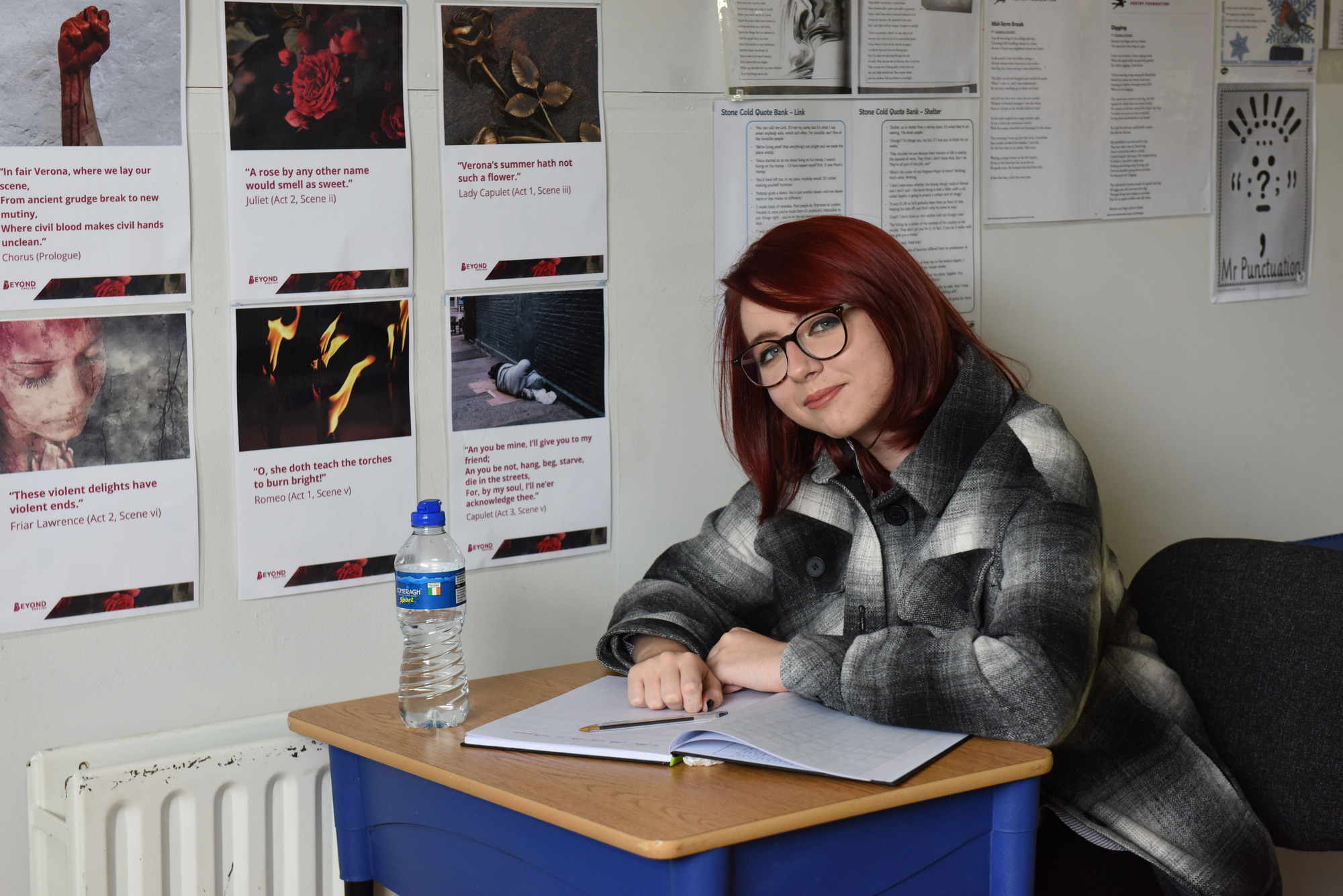
Holly Gilmore in the Peter McVerry Trust Learning Centre in Lucan, Co Dublin.Having completed her Junior Cert with the centre, she is now studying a QQI in IT. Picture: Moya Nolan
Holly Gilmore, 16, Lucan, Dublin, didn’t like a lot about school.
“I wasn’t in very much and I used to get very anxious over how crowded the corridors were,” she told the “It was kind of a struggle to get me up.”
She always seemed to get landed with the middle locker to store her books or one second from the bottom.
“I hated the lockers,” she said with a shudder. “I would always have books dropped on me, so I always just hated them.”
When she left her old school and started at the Carline Learning Centre operated by the Peter McVerry Trust (PMT) in January 2020, there were early signs that this experience of school would be different for her.
“I came in here and I was very anxious because it was a new school, new people, new teachers. But, immediately, it was just kind of relaxed.
"There were no crowds. The class was just a small, little room with not many people."
Having completed her Junior Cert with the centre, she is now studying a QQI in IT.
“It was the best two-ish years,” she laughed.
When Holly started at Carline, she could “barely” talk to the school’s manager. As she left, she sang in front of her classmates at an outdoor ceremony to mark their achievements.
“There was such a relaxed atmosphere in class here. You could have your joke, have a laugh and then move on with the learning. It made coming here, and staying in here, much easier than going home early.”
In 2019, the PMT took over the running of the Carline Centre in Lucan, which worked with young students excluded from school.
Today, Carline is one of two schools it operates in Dublin that specifically work with young people who cannot access mainstream education.
This could be due to a number of reasons — they might need more individual support than mainstream can give them, due to educational, emotional, social, or behavioural challenges.
The PMT sees education as a crucial preventative step in its work.
“We do a lot to firefight,” explained Pat Doyle, PMT chief executive. “But I wanted us to begin to build our practice around prevention.”
He is now 32 years working in the homeless sector.
“The longer I’m in it, the more I’ve realised the common denominators that affect homelessness,” he told the
The link between education disadvantage and homelessness is huge: "Early school leaving weaves its way right through our client group.”
In 2019, PMT along with Dublin City University (DCU) published research detailing how young homeless men experienced school.
More than half of those taking part had been excluded from school, either through suspension, rolling suspension or expulsion.
In many ways, the research confirmed what PMT already knew: “That 80% of our clients left school without a Junior Cert,” Mr Doyle said.
“If you make it to your Junior Cert, your risk of being homeless begins to drop. If you make it to your Leaving Cert, it drops even further. If you make it to third level, you are almost likely to never be homeless.”
One of the main goals at Carline is to get kids to their Junior Cert. Since September 2020, the centre has almost 40 students.
Anthony Delappe, 15, from Clondalkin, Dublin, is one.
“What isn’t there to like about here,” he said. “It’s not like normal school; You can come in and get your work done.
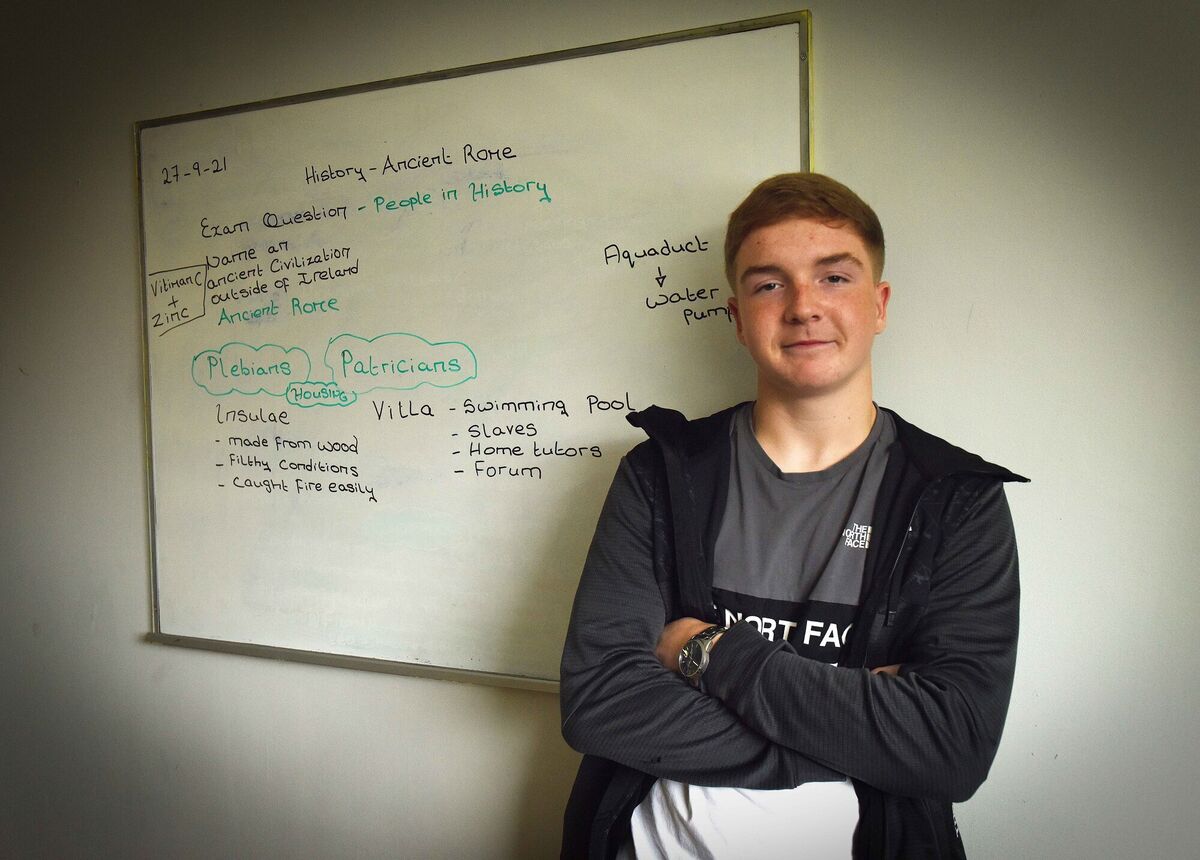
"You don’t have 20 different students in the class, you just have your own little group. You can actually concentrate.
"You don’t have to move to different classrooms, your teachers come to you.
"It’s a good school. They’ve helped me get through it, get my work done.”
Woodwork is his favourite subject.
"I was hoping to be a carpenter, but I don’t know what I want to do yet; Whether I want to be a carpenter or I don’t know, I just want to put my mind to something first and stick to that.” Anthony may be slightly modest about his skills.
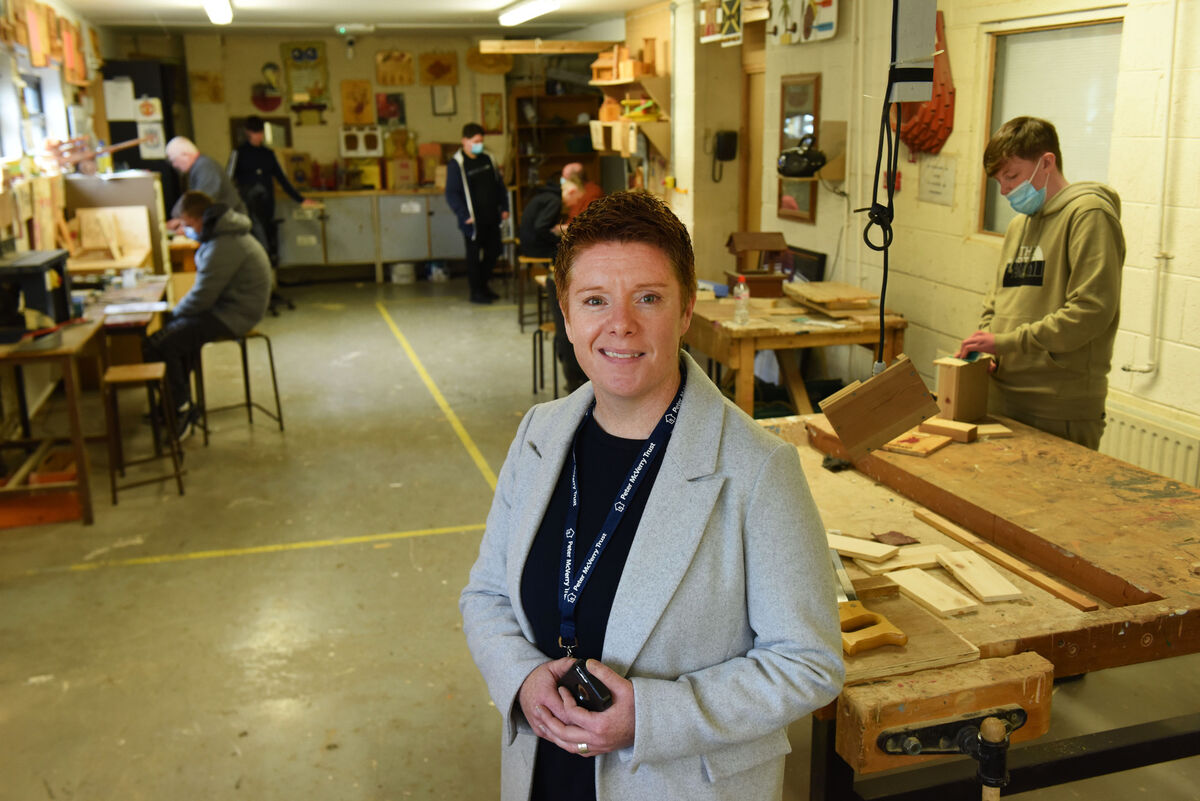
“He’s amazing at woodwork,” said Sarah Morrisey, manager of the Learning Centre. “He’s really gifted with it.”
The door to Sarah’s office is usually wedged wide open; as students stream past on their way to class, she shouts out her encouragement after them.
In ways, the Carline Learning Centre is just like a mainstream school; teachers work off the formal Junior Cycle curriculum, and every class is planned to meet its specifications.
Alongside its classrooms, Carline has shining gym facilities, a woodwork shop brimming with pieces crafted by students, and quiet, comfy rooms for students to take a break, or play some pool. But there are several key differences.
“This is not a criticism of mainstream schools,” Sarah explained. “There is a lot of pressure on mainstream schools at the moment.
"We want to create an environment for students where they can drop their shoulders when they come in, where they don’t have the anxieties of the large crowds, the pressures of academic ability, or achieving a certain result.
"We want to create an environment where every student, regardless of circumstance, can engage in education at a pace that meets their needs, and that also challenges them to a certain extent.”
“Sometimes we never really know the ability of that student because they don’t engage, or they have huge absenteeism because they can’t do the work."
During the first six weeks of term, the school’s teachers get to know students, assessing things like their literacy and handwriting informally, while also getting a feel for their different likes and abilities.
“The week before the schools opened, the teachers were in to put together specifically bound workbooks for each student. They’ll adapt that workbook to meet their needs.”
Classes are much smaller, and the school’s timetable and lessons are shorter. The school has no uniform, and students aren’t asked to bring in books, school bags, or lunches.
“They can just walk through the gate and everything can be provided here. We’ve found over the years that school bags and school books can be preventive when it comes to education. They are back-breaking at times.
"A lot of students walk up here, and carrying a bag up here would be another prevention from school, another reason to exclude themselves.”
Each individual student is also appointed a key worker, who acts as their point of contact throughout that whole year.
“At the beginning of the year, they just get to know the young person, explore their interests. That key worker will maintain communication with the family.”
This key worker also helps the student to plan their progression route, if they’d like to go back to the mainstream, on to their Leaving Cert, or on to further education.
“We find that young people really invest in their key worker, and that they really trust their key worker," Ms Morrisey said.
"We also have a counsellor here so we might engage the young person in counselling."
The overall objective of the Learning Centre is to prepare young people to return to mainstream education, or to progress to further education.
“Each student feels success. That’s so important that they don’t go into an environment where they are failing. They have to feel and achieve success so that they engage, and they are doing that here.”
Currently, the Learning Centre operates to Junior Cert.
If the school had the option of running an additional year, it would run a ‘transition year' style programme, focusing on life and employment skills.
“When they found education tough, it's easy to walk away,” Sarah said. “Now that they are getting older, they are going to have more responsibilities.
"We want to provide an additional year in education, an additional year in a safe space, where they can be given these tools to prepare them for the rest of their lives.
"I would love to see us go to Leaving Cert. I’d also love to see one of these centres in every county in the country. I think there’s a huge need for it.”

CONNECT WITH US TODAY



Be the first to know the latest news and updates