How the Amazon boss beat the tabloids
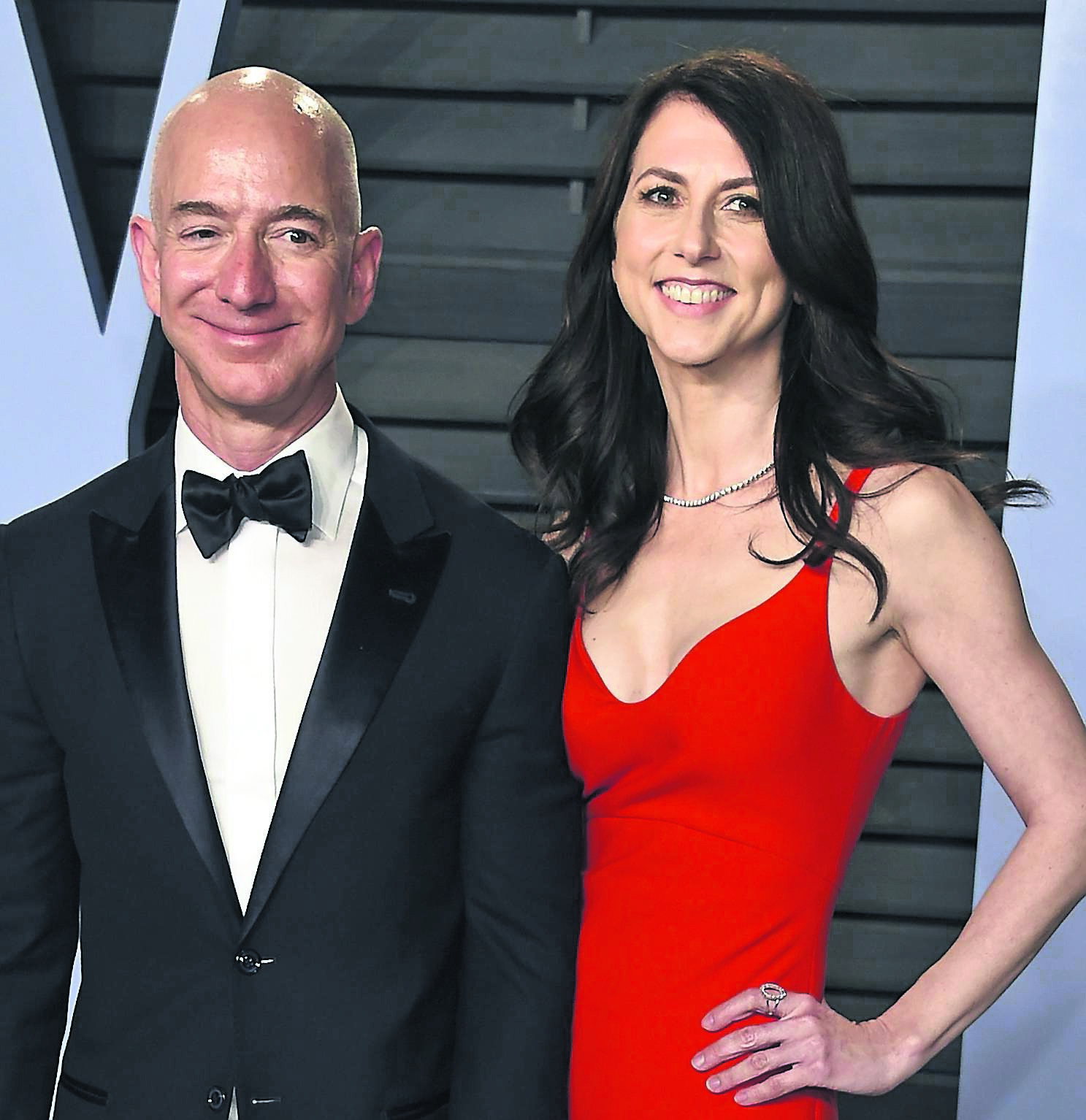
“Raise your hand if you think you’ve had a harder week than I’ve had.”
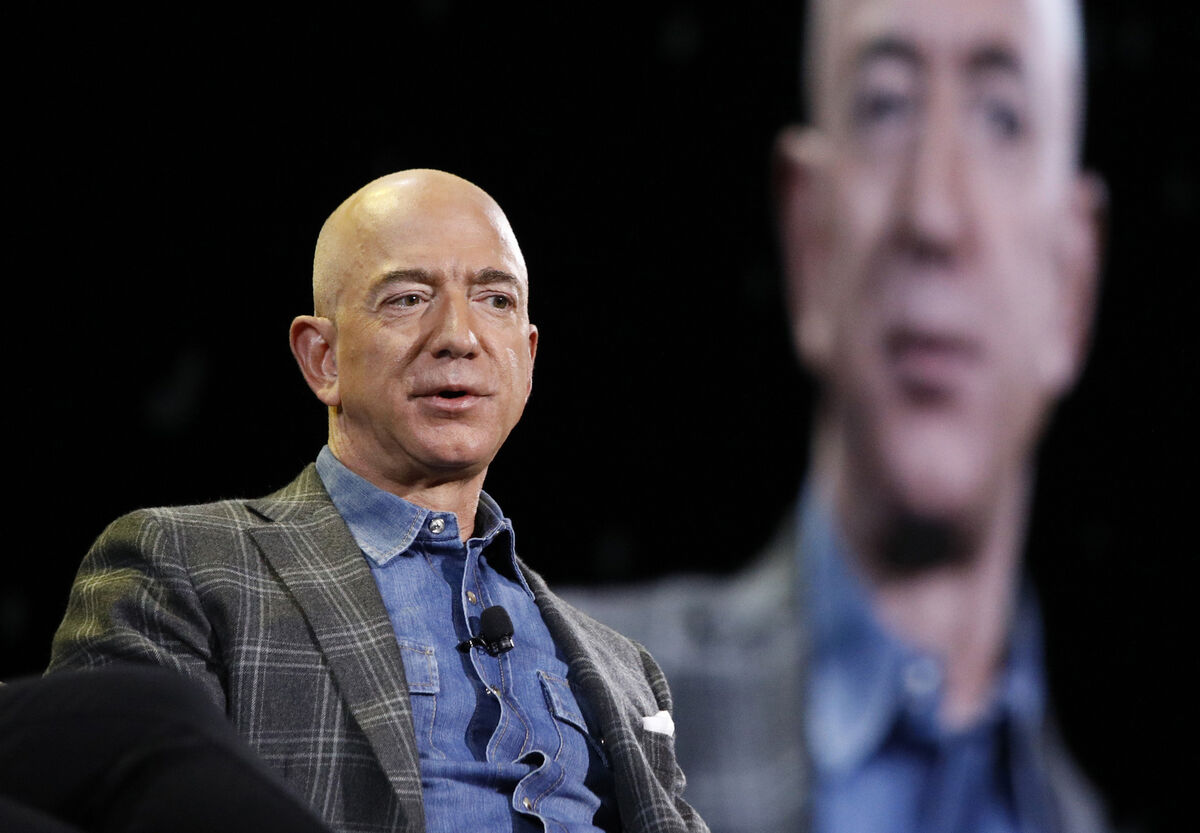
It was February 14, 2019, in the early afternoon, and for perhaps the first time in the 25-year history of Amazon, Jeff Bezos was prepared to explain himself to his employees.
Bezos was a master compartmentaliser; his ability to keep the intricate threads of his personal and professional lives separate was unrivaled.
This talent had allowed him to build Amazon while also running a space company, Blue Origin, and reviving the Washington Post - all while keeping his family life private.
But those threads had gotten tangled. Bezos, a father of four, was the subject of tabloid stories in the National Enquirer about his relationship with a married former television host.
Rather than doing what most billionaires do under such scrutiny - keep quiet and wait for the storm to pass - Bezos had gone public.
He’d written a salacious blog post that included descriptions of photos the Enquirer claimed it had acquired - among them: a “below the belt selfie.” He’d suggested that the paper was doing this as political retribution for the Post’s reporting on the Enquirer’s connections to the Trump administration.
Now, facing Amazon’s leadership group, the S-team, Bezos addressed the elephant in the room. “The story is completely wrong and out of order,” he said.
“MacKenzie and I have had good, healthy, adult conversations about it. She is fine. The kids are fine. The media is having a field day.”
Then he tried to refocus the conversation on the matter at hand: personnel projections for the current year. “All of this is very distracting, so thank you for being focused on the business,” he said.
The affair came as a shock to most senior executives, though recently some had noticed changes in their boss’s behaviour.
Meetings for Op1, Amazon’s term for its annual late-summer planning cycle, had been delayed or postponed; longtime deputies were finding it difficult to get time on his calendar.
There were also those helipads that Amazon had requested for its planned outposts in New York City and Arlington. These had enraged local officials, already skeptical about giving billions of dollars in tax breaks to a company with a trillion-dollar market value, and had contributed to the scrapping of a planned second headquarters in Queens.
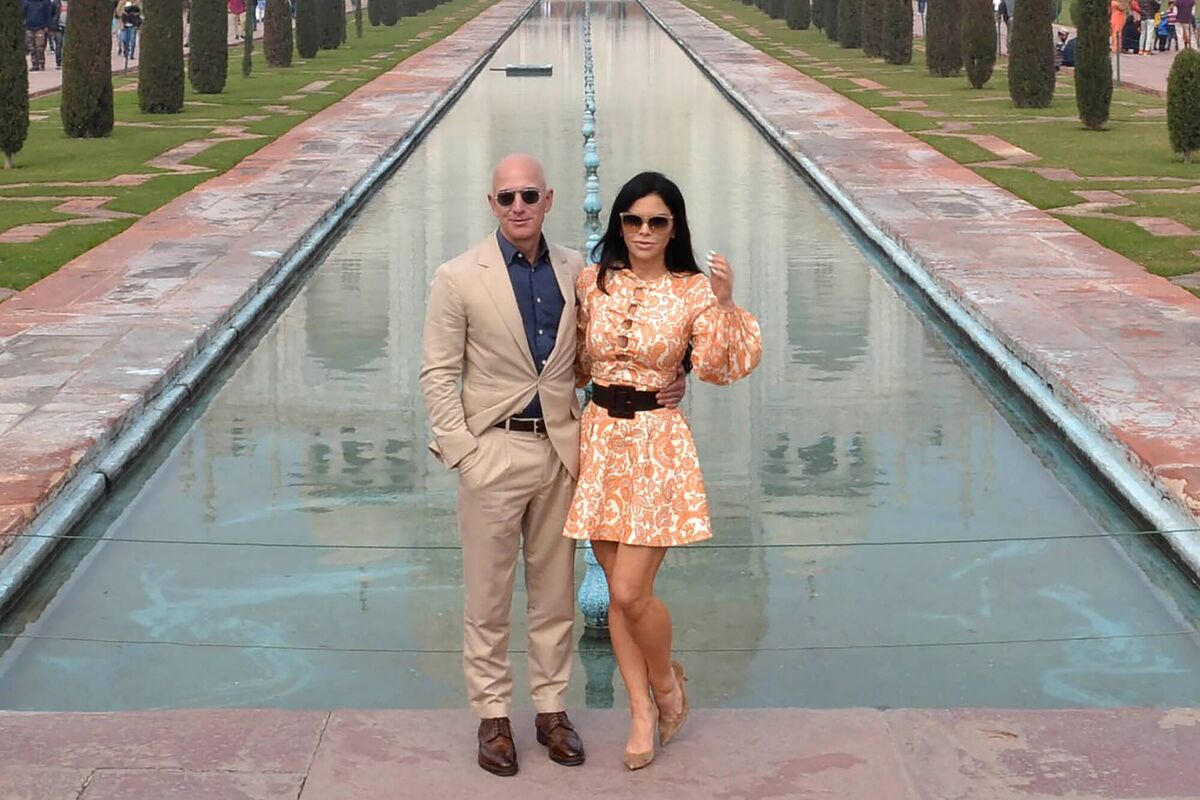
As some in the meeting were now well aware, the boss’s new girlfriend, Lauren Sanchez, was a helicopter pilot. Bezos had taken flying lessons himself.
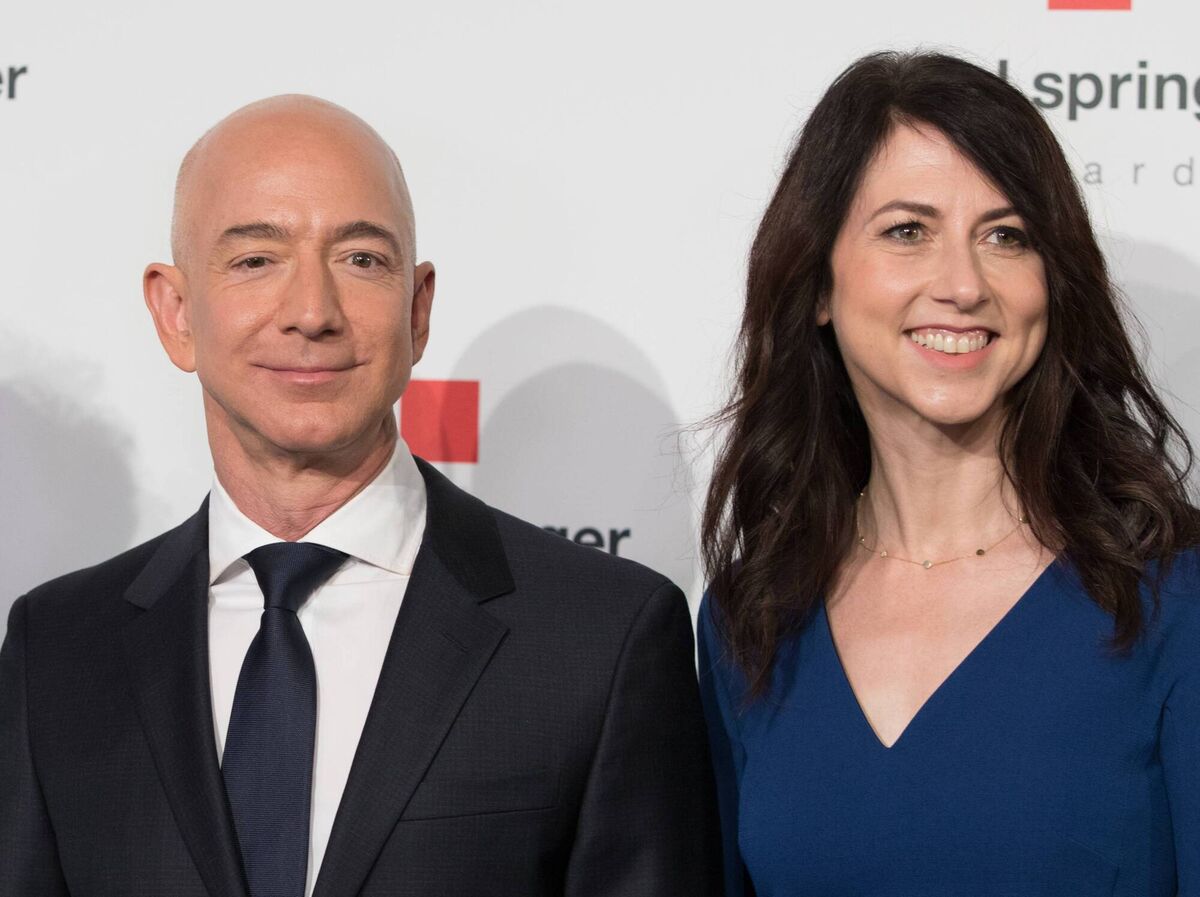
On January 9, Jeff and MacKenzie Bezos had announced their divorce via Twitter.
It was the first time some senior executives could remember seeing Bezos cornered by adversaries, who now included, improbably, a Hollywood manager looking to peddle explicit selfies.
— Jeff Bezos (@JeffBezos) January 9, 2019
On the other hand, the episode was the culmination of Bezos’ decade-long transformation from a single-minded tech geek to the master of a trillion-dollar empire.
His enemies now included Donald Trump, who despised the Post, and Mohammed bin Salman, the crown prince of Saudi Arabia, who was embittered by the paper’s coverage of the murder of dissident reporter Jamal Khashoggi and would later be implicated in a supposed plot to put spyware onto Bezos’ smartphone.
Bezos was navigating all of this as he always had: by thinking unconventionally and manipulating the levers of media. Somehow, his way usually worked.
For years, Bezos wove the story of his courtship and marriage to MacKenzie Bezos (now MacKenzie Scott) into his public persona. In speeches, he joked about his bachelorhood quest to find a woman resourceful enough to “get me out of a Third World prison,” as if the bookish MacKenzie, a novelist with an English degree from Princeton, might one day rappel down from the roof of some godforsaken jail with a lock pick in her teeth.
But while Bezos and his handlers crafted the image of a doting husband and family man, he and his wife developed diverging appetites for public attention.
After Amazon opened a Hollywood outpost and began producing movies, Bezos attended the Golden Globes and Academy Awards, showed up at premieres, and hosted an annual gathering at a palatial property in Beverly Hills, high above the Sunset Strip.
At one such party in December 2016, for Manchester by the Sea, Amazon Studios’ first Oscar winner, he was photographed with Sanchez and her then-husband, Patrick Whitesell, the powerful chairman of the Endeavor talent agency.
MacKenzie accompanied her husband to some Hollywood events but, by her own admission, wasn’t a social person. “Cocktail parties for me can be nerve-racking,” she told Vogue.
“The brevity of conversations, the number of them - it’s not my sweet spot.”
Friends said both parents were committed to their four children and to keeping them as far away as possible from the corrosive impact of celebrity and garish wealth.
By 2018, Bezos was seeing Sanchez, legal documents later showed, while keeping up the appearance of an intact marriage. His new girlfriend, then 48, was ebullient and sociable and, in many ways, the opposite of his wife.
Like Bezos, Sanchez had been born in Albuquerque, and though their families didn’t know one another, the couple would later chart all the coincidental overlap among their relatives at places such as the Bank of New Mexico, where Bezos’ parents, Jackie and Mike, first met, and where Sanchez’s cousin had once worked.
Sanchez’s father, Ray, ran a local flight school, Golden Airways, and her mother, Eleanor, had a pilot’s license and had survived a plane crash when Lauren was nine-years-old.
In the late ’90s, after starting a broadcast news career at a local TV station in Phoenix, Sanchez became a correspondent for the syndicated gossip program Extra and then a morning anchor on Fox’s Good Day LA.
She hosted the first season of the reality show So You Think You Can Dance and had some small movie roles - that’s her playing a news reporter 91 minutes into Fight Club. She had a son with NFL Hall of Famer and broadcaster Tony Gonzalez before marrying Whitesell and having another son and a daughter.
By the beginning of 2018, her helicopter company, Black Ops Aviation, was filming documentary videos for Blue Origin and posting them on YouTube.
A few weeks later, Sanchez told her older brother, Michael, that she wanted to introduce him to her new beau. In April they had dinner at the Hearth & Hound, a hip West Hollywood restaurant, accompanied by Michael’s husband and two other friends. Michael sat across from Jeff, and the two hit it off.
Later, Michael expressed alarm about how his sister and the Amazon chief executive officer openly expressed their affections, potentially within sight of the local paparazzi, while both were still married.
If anyone cautioned Bezos that an affair with a married minor celebrity might prompt an unpleasant public reaction, he ignored those warnings.
He brought Sanchez to Seattle with her mother and brother, where they got a VIP tour of the Spheres, the three interlinked glass conservatories at Amazon headquarters, and to Washington where he showed her the Post’s printing presses.
Like many modern couples, Bezos and Sanchez’s relationship played out digitally as well. The richest man in the world was, to put it bluntly, sexting.
Sanchez shared many of these texts and photographs with her brother, a talent manager who represented a variety of cable news pundits and reality-TV contestants. But all of that was happening well outside Bezos’ line of sight.
He was enthralled by the adventurous Sanchez, and by nature he wasn’t predisposed to be paranoid or immediately skeptical of anyone - especially not the brother of his new paramour.
Over the summer of 2018, as the romance between Bezos and Sanchez intensified, the Enquirer was coming off a catastrophic few years.
Newsstand sales were slipping, and the paper’s publisher, David Pecker, had been accused of buying the rights to stories about his friend Donald Trump’s marital infidelities and then declining to publish them, a practice known as “catch and kill.”
Pecker’s top editor, Chief Content Officer Dylan Howard, was a short and stout 36-year-old Australian and an acid-penned chronicler of the hypocrisies and indiscretions of American celebrities. The journalistic force behind such tabloid supernovas as Mel Gibson’s antisemitic rants and Arnold Schwarzenegger’s love child, Howard was protective of his work and combative toward rivals.
When the Post aggressively covered AMI’s catch-and-kill problems, Howard told reporters to look into its wealthy owner’s personal life.
One possible line of inquiry, according to an email that went out to AMI staff in late summer, was to examine Bezos’ relationship with the family of his biological father, Ted Jorgensen, and why the CEO hadn’t contacted them when Jorgensen was dying in 2015.
The next day, Monday, September 10, Michael Sanchez wrote an email to Andrea Simpson, an LA-based reporter for AMI. Sanchez and Simpson were close friends.
He regularly sent her news about his clients, and they had once gotten tattoos together on a whim. (His, on his forearm, read Je suis la tempête: “I am the storm.”)
In the email, Sanchez said he had a hot tip for Simpson. A friend, he wrote, worked for a “Bill Gates type” who was married and having an affair with “a B-list married actress.” The friend, Sanchez wrote, had compromising photos of the couple but wanted a six-figure payout for the scoop. Sanchez claimed to be working as the middleman.
Simpson and her editors in New York could only guess at the identities of the mystery lovers, speculating in emails about such figures as Evan Spiegel and Mark Zuckerberg.
For weeks, Sanchez kept them guessing and tried to bump up his asking price by hinting that the story could end up with a British tabloid. In early October, he met with Simpson and showed her text messages and photos with the faces obscured. “Just doing a look around and by the body, I think it may be Jeff Bezos,” Simpson wrote to her bosses.
Finally, on October 18, Sanchez called up Howard and revealed that the “Bill Gates type” was in fact Amazon’s CEO. Sanchez and AMI then signed a contract, entitling him to a payout of about $200,000 - among the most the Enquirer had ever spent on a story. The contract stipulated that the paper would make every effort to safeguard Sanchez’s anonymity and withhold his identity as the source of the scoop.
Sanchez hadn’t yet revealed the name of the “B-list married actress,” but it didn’t take long for Enquirer editors, who dispatched photographers to track Bezos’ jet, to figure it out.
Howard was at an entertainment industry trade show in Cannes, France, when he received photos of Amazon’s CEO and Lauren disembarking from his Gulfstream G650ER.
On October 23, Michael Sanchez flew to New York, dined with Howard and James Robertson, another Enquirer editor, and corroborated what they now knew.
He also showed them a flash drive containing a collection of texts to his sister from Bezos, as well as a handful of personal photographs that the couple had exchanged, and he intimated that at a later date he could show them a more explicit photo that Bezos had sent of his manhood to Lauren.
There would later be an abundance of speculation about how the Enquirer got the Bezos-Sanchez story - including unproven allegations that Sanchez’s ex-husband, Patrick Whitesell, was involved, as well as international intrigue involving Saudi Arabia.
Inside AMI’s drab offices at the southern tip of Manhattan, the Bezos story was met with both excitement and anxiety. The company had filed for bankruptcy protection in 2010 and was loaded with debt from acquiring magazines such as In Touch and Life & Style.
An effort to secure an investment from Saudi Arabia to finance a bid to buy Time wasn’t panning out, and Anthony Melchiorre, the seldom-photographed managing partner of the company’s majority owner, New Jersey hedge fund Chatham Asset Management, was anxious about anything that might land AMI in fresh legal peril.
For the rest of that Autumn, the Enquirer worked on the story with Michael Sanchez’s help. He emailed the paper more photographs and text messages and tipped off editors to the couple’s travel plans.
When he had dinner with Bezos and his sister at the Felix Trattoria restaurant in Venice, California, on November 30, two reporters were stationed at tables nearby as photographers clicked away surreptitiously.
On the promised explicit selfie, though, Sanchez seemed to equivocate. He arranged to share it with Howard in LA in early November, then canceled the meeting. A few weeks later, on November 21, after Enquirer editors kept hounding him, he finally agreed to show it to Simpson while Howard and Robertson watched via FaceTime from New York.
None of this, Sanchez claims, was a betrayal of his sister. She and Bezos were conducting their relationship out in the open, and it was only a matter of time before their families and the larger world discovered it.
“Everything I did protected Jeff, Lauren, and my family,” Sanchez later said in an email. “I would never sell out anyone.”
On January 7, 2019, Enquirer editors sent texts to Bezos and Lauren that started with a single, incendiary sentence: “I write to request an interview with you about your love affair.”
The couple moved swiftly in response. Lauren turned to the person closest to her who best knew the brazen byways of the tabloid industry: her brother.
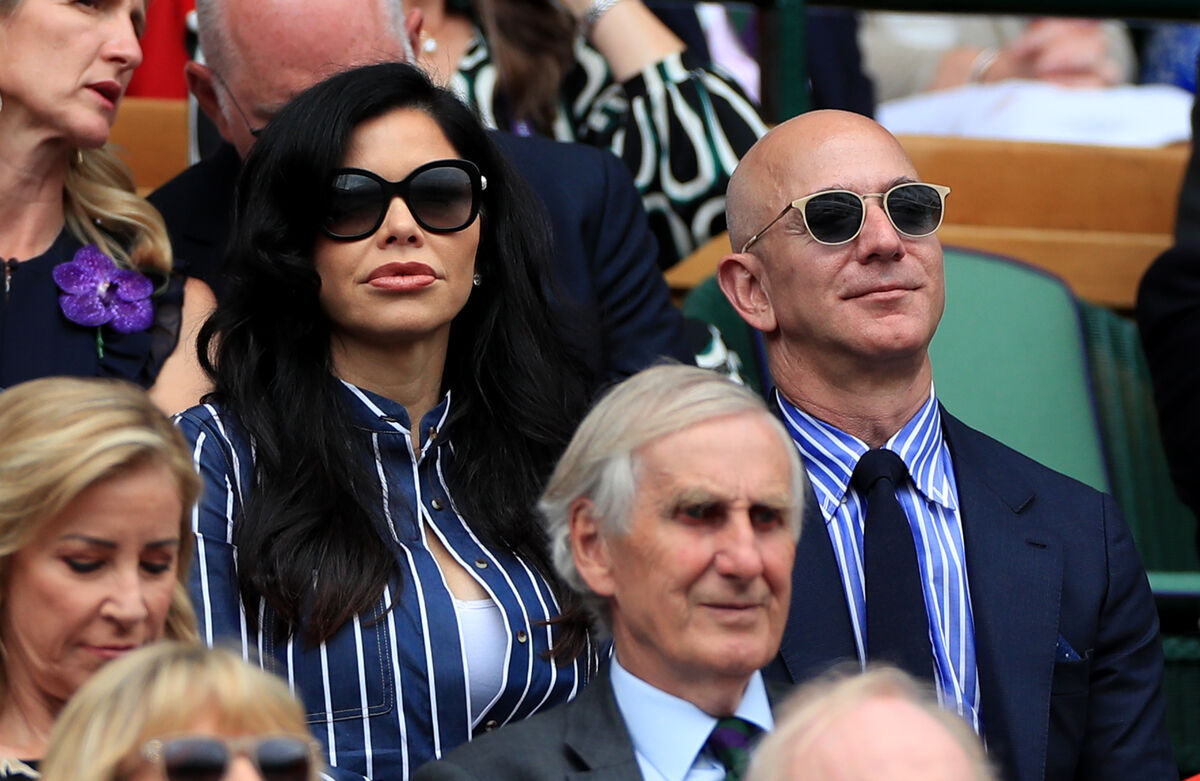
Michael innocently offered to exploit his relationships with Enquirer editors to find out what they had. After signing a $25,000-a-month contract with his sister, he called Howard to announce that he was acting as her representative and suggested that he come to New York to review the paper’s reporting (which, of course, he had provided).
Confident in the promise of confidentiality from AMI, Michael was now playing both sides.
Bezos, meanwhile, involved his longtime security consultant, Gavin de Becker, as well as de Becker’s LA-based entertainment attorney, Marty Singer. And, early on January 9, he instructed Amazon’s PR department to release the news of his marital breakup from his official Twitter account.
“We want to make people aware of a development in our lives,” the statement began.
“After a long period of loving exploration and trial separation, we have decided to divorce and continue our shared lives as friends.”
The Enquirer published on Mondays, but Howard, reacting quickly, persuaded Pecker to authorise a special 11-page print run and posted the paper’s first story online that evening, a Wednesday.
“Married Amazon Boss Jeff Bezos Getting Divorced Over Fling With Movie Mogul’s Wife,” screamed the headline. During the next five days, the Enquirer published additional stories with more details about Bezos and Sanchez and their private text exchanges.
A few days later, Michael brokered a temporary cease-fire: AMI would stop publishing articles in exchange for exclusive paparazzi access to Lauren while she walked with two friends at the Santa Monica airport.
After the story ran, Michael texted Howard to thank him. “The level of cooperation that you and I have built in 14 days will be written about in textbooks,” he wrote.
The next week, Howard emailed Michael and reassured him that his anonymity as the original leaker was secure. “The untold story - if you will - has not been told,” he wrote.
“I’m saving it for my tombstone.”
But Bezos wasn’t satisfied. He wondered if the Enquirer’s story had been political retribution for articles published by the Washington Post and gave de Becker “whatever budget he needed to pursue the facts” of how the paper obtained his private messages.
After a series of phone calls and text messages with Michael, de Becker sensed something was amiss. To publicise his suspicions, de Becker turned to Daily Beast, the media company run by Barry Diller, a friend of Bezos’.
In an article on January 31, the Daily Beast revealed that de Becker had identified Michael as a possible culprit. But he also floated an alternative scenario - one that cast Bezos as a patron of truth-telling journalism and the adversary to the fact-challenged US president.
He claimed the Enquirer’s investigation was tied to Trump’s campaign against the Post, opining in the article that “strong leads point to political motives.”
There was no evidence behind this insinuation, but it shifted the advantage to Bezos. AMI’s boss, Pecker, fretted that even a rumour about the paper’s involvement in a political plot against a renowned billionaire might undermine its nonprosecution agreement.
He implored Howard to settle the feud with Bezos’ camp and to secure an acknowledgment that the investigation wasn’t politically motivated and that the Enquirer hadn’t used illegal means in scoring the story.
Over the first week in February, Howard asked Singer, de Becker’s attorney, to get Bezos and de Becker to accept that the Enquirer articles weren’t a political hit job and promised that he would cease publication of damaging stories.
Singer wanted to know exactly what unpublished text messages and photos the paper possessed. Howard was uncertain; he suspected the lawyer was hunting for confirmation of the identity of his anonymous source. And he was nervous about an upcoming story in the Post that threatened to again assign political motives to the Enquirer’s investigation.
But Bezos’ team instead pressed their advantage. In a Washington Post article published that night, de Becker once again identified Michael as a possible culprit and charged that the leak was “politically motivated.”
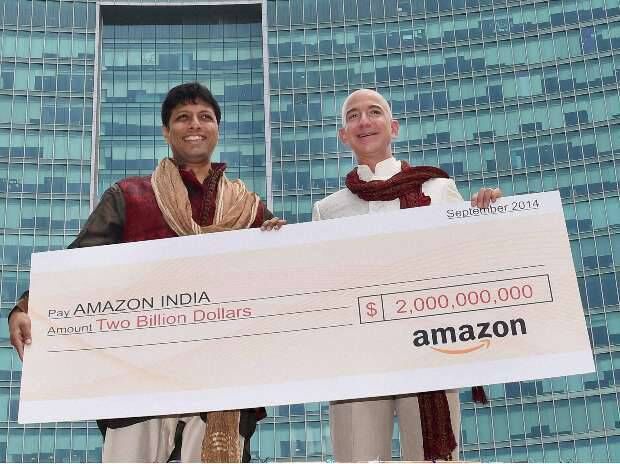
After the article was published, Pecker called Howard to say that Melchiorre, the hedge fund manager, was “ballistic” and again pressured Howard to stop the madness.
Howard then started negotiating directly over the phone with de Becker. Suspicious and wary, both recorded the phone calls.
Howard and de Becker appeared to make progress. On February 6, AMI’s deputy general counsel sent the proposed terms of an agreement via email to Bezos’ team.
AMI would agree not to publish or share any of the unpublished photos or texts if Bezos and his reps joined the company in publicly rejecting the notion that the Enquirer’s reporting was politically motivated.
Bezos viewed the email as blatantly extortive. On February 7 he told his advisers that he knew exactly what he was going to do. He wrote a 1,000-word-plus essay titled “No Thank You, Mr. Pecker” and handed it off to Amazon’s senior vice president of global corporate affairs, Jay Carney, whose brow furrowed in surprise as he read it for the first time while on a videoconference with colleagues. Then Bezos had it uploaded to the publishing site Medium.
The post was stunning. In it, Bezos included the emails from AMI’s attorney and top editor in their humiliating entirety. But, however embarrassing it was to have his sexts described in detail, Bezos knew they were also damning for AMI.
“Something unusual happened to me yesterday,” he wrote in the swaggering tone of someone supremely confident in his position. “I was made an offer I couldn’t refuse. Or at least that’s what the top people at the National Enquirer thought. I’m glad they thought that, because it emboldened them to put it all in writing.”
He neglected to mention that they had only done so after being pressed by a lawyer working on his behalf. Bezos, it seemed, had manipulated his adversaries into creating an incriminating paper trail.
Bezos then made explicit what de Becker had only implied: He suggested AMI was attacking him on behalf of the Trump administration and the government of Saudi Arabia.
His ownership of the Washington Post, Bezos wrote, “is a complexifier for me. It’s unavoidable that certain powerful people who experience Washington Post news coverage will wrongly conclude I am their enemy.”
He also added that he didn’t regret owning the paper. It was, he wrote, “something I will be most proud of when I’m 90 and reviewing my life, if I’m lucky enough to live that long.”
This noble sentiment, of course, had little to do with his extramarital relationship, or the scheming of his girlfriend’s brother, or the desperate attempts of AMI to escape a cloud of political suspicion. It was, in other words, a public-relations masterstroke.
Bezos cast himself as a sympathetic defender of the press and an opponent of “AMI’s long-earned reputation for weaponizing journalistic privileges, hiding behind important protections, and ignoring the tenets and purpose of true journalism.”
To interested readers, Bezos was taking a brave stand against the devious tactics of Trump’s allies while vulnerably offering his own embarrassing photographs as collateral. “Bezos Exposes Pecker,” declared the New York Post memorably, as public sympathies shifted to his side.
De Becker followed up those assertions in March by writing an article for the Daily Beast. He pointed to AMI’s frantic attempts to defend itself from the charge of engaging in a political conspiracy and suggested that there must be another layer of hidden truth in the whole ordeal.
“Our investigators and several experts concluded with high confidence that the Saudis had access to Bezos’ phone and gained private information,” he wrote.
“As of today, it is unclear to what degree, if any, AMI was aware of the details.”
AMI denied the allegation, disclosing that Michael Sanchez, not any kind of international or cyber espionage, had been its source.
But none of that helped AMI. An unfavorable media narrative crystallized almost immediately in which Mohammed bin Salman’s regime had learned of Bezos’ relationship with Lauren and alerted the Enquirer or even supplemented the information it received from her brother.
Considering Pecker’s unsuccessful courtship of the Saudi kingdom for financing, that possibility might make certain logical sense if you squinted hard enough. But there was no hard evidence to support the hypothesis - only a fog of overlapping events, weak ties among disparate figures, and more strange coincidences.
Once again, Bezos had come out on top. His navigation of the crisis had been typical of his idiosyncratic approach to building Amazon.
He’d bypassed a largely skeptical media to appeal directly to regular people, only slightly bruising the facts in the process. Just as he’d outmaneuvered countless rivals, he intuitively sensed what AMI’s vulnerabilities were - and surgically attacked them.
The entrepreneur who’d already commandeered the business of selling books, then much of retail, plus cloud computing, Hollywood, home speakers, and so on now asserted dominance over that unlikeliest of sectors - the celebrity media game.
Amazon employees now had even more reasons to wonder. What did the future hold for their founder? At least part of the answer to that could be found in the shipyards of the Dutch custom yacht builder Oceanco.
There, outside Rotterdam, a new creation was secretly taking shape: a 127-metre-long, three-mast schooner about which practically nothing was known, even in the whispering confines of luxury boat builders - except that upon completion, it will be one of the finest sailing yachts in existence.
Oceanco was also building Bezos an accompanying support yacht, which had been expressly commissioned and designed to include - you guessed it - a helipad.


CONNECT WITH US TODAY



Be the first to know the latest news and updates