Remarkable life journey of Cork's May Barrett

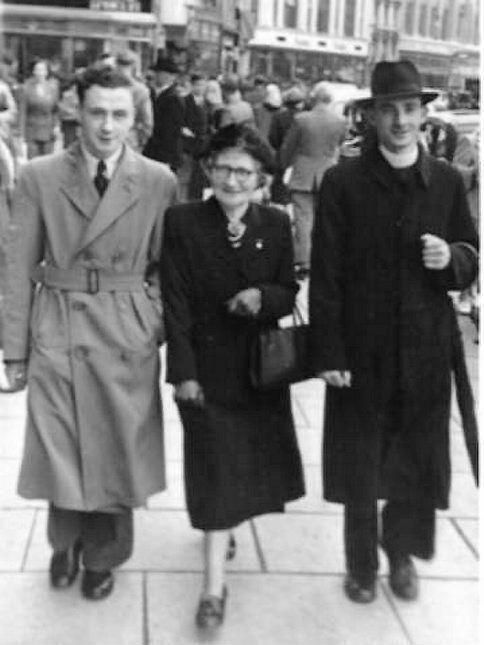
May ‘Nana’ Keegan, a tiny demure woman, was — my mother, Chriss, said — a very quiet, reserved, timid, private person. Although gaining local fame at the time of the sinking of the Lusitania, she would ever only talk about it in private with her trusted family and friends and she spurned all opportunities to share her story publicly. From various accounts, past and present, this is her story.
Mary Josephine ‘May’ Barrett was born on Tuesday, March 11, 1890, one of 10 children born to David and Mary (née Connell) Barrett. Her father was a labourer and the family lived in 10 Coleman’s Lane, Cork City.
May emigrated to the USA as she wanted to get away and be her own person. She spent one year there working as a dental assistant.
Find more content related to the sinking of RMS Lusitania in our special report
Her pal Kitty Kathleen ‘Kitty’ McDonnell emigrated to the USA with May in 1911. Along with May, she decided to return to Ireland in 1915 aboard the Lusitania.
May was probably returning upon hearing the news of the death of her goddaughter, Annie. It is also alleged she had all her worldly possessions with her.
They booked passage on the Lusitania, sailing on Saturday, May 1, 1915. There is no evidence to suggest that they knew anything about the Imperial German Embassy’s warning posted on the daily newspapers that morning.
May and Kitty arrived at the Cunard berth at Pier 54 in New York harbour on May 1 in good time for the liner’s 10am sailing. She was booked into cabin E2, which she shared with Mary Rooney and Marzie McGovern. After a delay, the Lusitania finally left port at 12.20pm.
May remembers the trip as being largely uneventful. Her recollection that the only thing that was different, because of the war, was the effort made to blacken the lights of the ship. “The liner wasn’t lit up in its usual manner and necessary lights were covered by canvas to reduce the possibility of them being seen.”
On the afternoon of May 7, May and Kitty were having lunch in the second saloon. One of their table companions, Joe by name, said: “You can almost see the smoke from your chimneys from here.”
In May’s words: “A terrible explosion shook the ship”. She remembered an immediate rush from the dining room, resulting in a stampede. She recalled people being trampled upon. There was confusion everywhere. Joe got them both on deck (in one version of the story, he had come from the cable office). He told them not to move from where they were. He ran off and got them two life-belts. He told them that the ship was sinking and asked if they would jump overboard.
In their haste, Joe made an error in putting May’s life jacket on her back to front. Kitty said that she would jump but May, who was unable to swim and had a terrible fear of the water, said, “I will stay on the ship”. Kitty jumped. Joe turned to May. She still refused to jump. He said: “Say goodbye to me.” May offered him her hand. “Ah,” he said. “Give me your two hands and say goodbye properly.” She did; in the embrace, he lifted her and threw her overboard.
Amidst the terror and confusion, she heard a group of people singing Nearer My God to Thee, just as the victims on board the Titanic did. When she hit the water, her watch stopped at 2.20pm. She was only half conscious. She was floating around in the water for between three and five hours — the lifebelt which was unwittingly positioned back to front kept her mouth above the water — until she was picked up, it is believed by a lifeboat.
Some recordings state that Kitty and Joe were already on the boat although in another instance.
May’s son, Fr Pat Keegan, recalls: “She can remember hearing one of the men in the boat saying to his companions: ‘Leave the bodies. Just take the living’. A man was thrown on top of her. She thinks it was Joe.”
They were eventually brought to Queenstown on a fishing trawler, which had taken them from the lifeboat.
Fr Pat relates: “She did not remember much except that she was safe. She remembers arriving in Queenstown and being put to bed in a hotel or hospital — she cannot remember which.”
In another version, she recalled people on the quayside clambering for souvenirs and that her lifebelt was snatched from her. May’s original version of the events, as recorded on the New York Times on May 10, 1915, differs in some ways to what she handed down to family and friends. The New York Times described her as a carrying “a bold spirit in a slight frame” and said that she “was able to give a perfectly connected and vivid account of what happened”.
“We had gone into the second saloon and were just finishing lunch. I heard a sound something like the smashing of big dishes, and then there came a second and a louder crash. Miss Macdonald (sic) and I started to go upstairs, but we were thrown back by the crowd. Then the ship stopped, and we managed to get up to the second deck, where we found sailors trying to lower the boats.
“There was no panic, and the ship’s officers and crew went about their work quietly and steadily. I went to get two life belts, but a gentleman standing by told us to remain where we were and he would fetch them for us. He brought us two life belts and we put them on.
“By this time the ship was leaning right over to starboard, and we were both thrown down. We managed to scramble to the side of the liner. Near us I saw a rope attached to one of the lifeboats and I thought I could catch it. So we murmured a few words of prayer and then jumped into the water. I missed the rope, but floated about in the water some time.
“I did not lose consciousness at first, but the water got into my eyes and mouth and I began to lose hope of ever seeing my friends again. I could not see anybody near me, and then I must have lost consciousness, for I remember nothing more until one of the Lusitania’s lifeboats came along. The crew were pulling on board a woman who was unconscious, and they shouted to me, ‘You hold on a little longer.’ After a time they lifted me out of the water, and then I remember nothing more for a time that seemed to be an age.
“In the meantime our boat had picked up 20 others, and when I became conscious it was getting late in the evening. We were transferred to the trawler and taken to Queenstown.
“Miss Macdonald told me how she floated about nearly four hours in a dazed state. She had little remembrance of what passed until a boat saved her. She remembered somebody saying, ‘Oh, the poor girl is dead.’ She had just strength to raise her hand and they returned and pulled her on board.”
May’s family had no idea that she was on board the Lusitania until they received a telegram stating that she was safe in Queenstown. When they got the news, her brother-in-law, Jack, went to Queenstown and began his search for her and for Kitty. He found them both, safe and unharmed physically.
May and Kitty did all they could to trace Joe. They put notices in the newspapers but there was never a reply.
On May 23, 1915, May wrote a letter to the Cunard Company enquiring about compensation for the loss of her possessions. She was claiming a total of £220, which included clothing, jewellery and $900 (£180) in cash which she claimed was in her pocket book which was lost. Cunard replied to her on the May 26, 1915, in which they first congratulated her on surviving, and then suggested she contact government officials in London to seek compensation from Germany after the War, and also to contact the Liverpool Relief Fund, who they suggested would give her application for financial assistance ‘prompt and courteous’ attention. There is evidence that she contacted the Liverpool Relief Fund, but it is not known what award, if any, were made to her.
Fr Pat recalls his mother telling him that, in the weeks after the sinking, May suffered from post traumatic stress. “She would not leave the house. She found it hard to face people. One of the priests of the Holy Trinity church, Fr. Malachy OFM, Cap, came to visit her. She had been staying in bed. He helped her to face the people who thronged the street. He persuaded her to get on to a side-car and took her for a drive. She never looked back after that.”
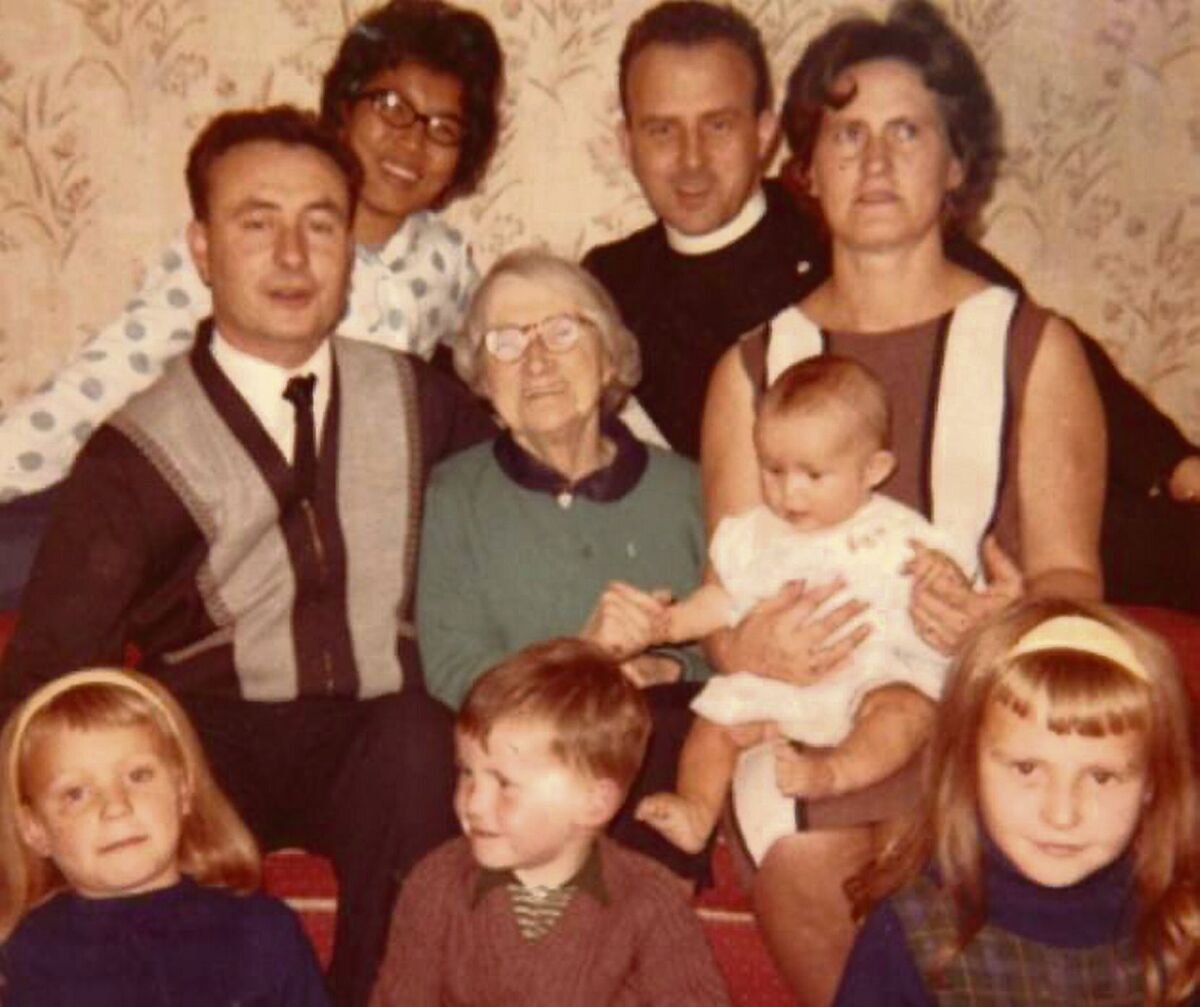
On June 3, 1925, May married her widowed brother-in-law, Jack Keegan, and they resided over her family’s grocery shop at 120 Barrack St, Cork. They had three sons, Patrick Joseph ‘Pat’ (b. March 16, 1926), David John ‘Doc’ (b. August 10, 1928) and John Finbarr ‘Jack’ [later ‘Seán’] (b. May 21, 1933).
Between the time of Pat’s birth in 1926 and 1934, she was awarded compensation of about £400.
With this, she bought the Barrack St property for between £300 and £340.
In 1953, May went to a viewing of the film, Titanic, in the Savoy with her friend Esther Coughlan.
During the viewing, she became distressed. She fainted and had to be taken outside to be revived.
May donated the sole item that she possessed after the sinking, her watch, to the Franciscan Order in the early 1970s as they sought gold offerings to build the tabernacle in St Francis Church, Liberty St, Cork.
All her life, May refused to give interviews or make public appearances in connection with anything concerning the Lusitania, but discussed the matter at length with family and friends.
My mother, Chriss, recalls that May was asked to unveil the Lusitania memorial in Cobh (formerly Queenstown) when it was presented in 1967 but she steadfastly refused.
Ironically, she had relented to speak to the Cork Examiner in 1976 but she died on the day she was to be interviewed. Maybe her full story was never to be told.
Find more content related to the sinking of RMS Lusitania in our special report
CONNECT WITH US TODAY



Be the first to know the latest news and updates