'We don't inherit the Earth, we borrow it from our children': Leaders fighting the green fight
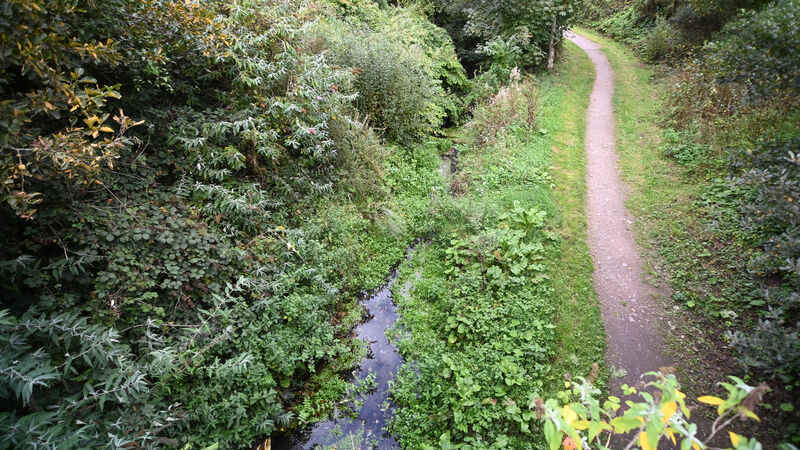
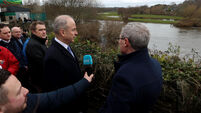
Tramore River flowing beside the N40 Cork South Ring Rd, at Togher Cork. Picture: Larry Cummins
In 2018, the world received the drastic wake-up call — by way of the UN Intergovernmental Panel on Climate Change (IPCC) report — that we had only 12 years to keep an increase in global warming to a maximum of 1.5C.
After that, even half a degree would significantly worsen the risks of floods, extreme heat, droughts, and poverty for hundreds of millions of people.
Six years on and an unprecedented global pandemic later, it seems many of our minds have moved on from reusable coffee cups and compostable Christmas crackers.
There are, however, many people right across Ireland who have done the complete opposite and have turned their business green, restored greenways, and have even set about saving rivers in the intervening six years.
Last weekend, a new, first of its kind national engagement campaign, Climate Actions Work, by the Department of the Environment, Climate and Communications took place in Greystones, Co Wicklow.
An outdoor public forum showcased climate actions by sports clubs, community groups, and local businesses in the area.
Events have already taken place in Inchicore, Baldoyle, Waterford, Galway, and Monaghan with others planned for various locations around the country before the end of 2024.
These events will focus on local people who are designing and developing climate actions themselves, along with a range of supports — including funding and education — are on offer.
"It supports these local climate leaders to promote the work they are doing, encourages them to work more closely with their peers, and develop new and bigger projects and local climate action hubs," said the spokesperson.
The spoke with three of these "climate leaders", who have among them eradicated all single use plastics from their business in a EU first, cut their waste by 75%, and are in the process of saving a river in Co Cork.
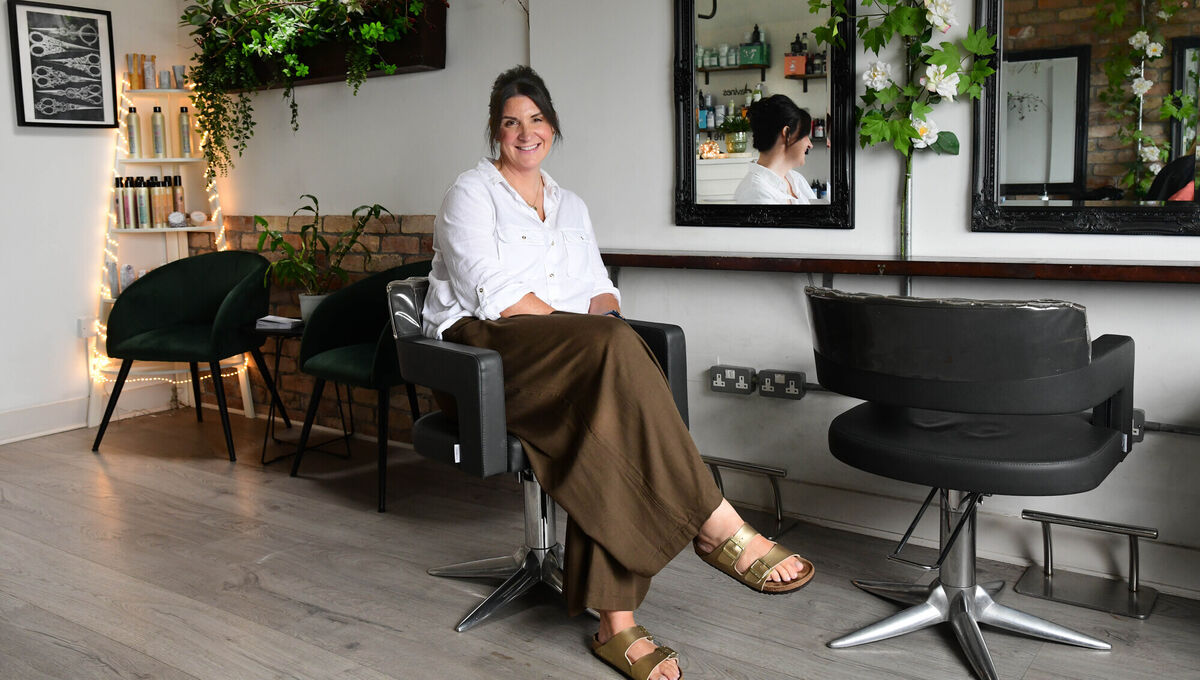
What does an Irish hair salon have in common with big global brands such as Patagonia and The Body Shop?
Susan Collins's Home of Hair is the first independent hair salon in Ireland, and the European Union, to receive the prestigious B Corp certificate. Only businesses that reach the highest social and environmental standards receive this certification.
But has going green been kind to her bottom line?
"Our sales have gone up by 20% since going B Corp," says Ms Collins, adding that the business is after making major operational changes in the day-to-day running of her Greystones-based business and increasing employee benefits.
Hairdressing is an industry that relies heavily on hundreds of plastic or foil strips to colour people's hair daily. Water usage is another component of hairdressing, especially with the laundering of towels every single day. Her salon has also eradicated the laundering of towels by sourcing compostable towels from another Irish business, Easydry.
"We only work with B Corp suppliers, meaning our supply chain is totally traceable. Even our toilet paper is B Corp," explains Ms Collins, who also only uses colour and shampoo from the fellow B Corp business and global beauty business, Davines.
Ms Collins initially started on the path to sustainability by signing up to the Green Salon Collective, which specialises in collecting hair salon waste and composting hair.
"I just wanted to do better environmentally and we are so toxic to the planet, and I want to protect it for my children.
Family is also at the cornerstone of how her business works, paying a full maternity leave for six months is one example.
"Staff get full pay for six months if they have a baby. All you have to do is top up the statutory pay. We are all in it together, so if someone is having a baby we know we have to make €x in the salon every week.
"Knowing you're working to support someone spending time with their baby is very motivating," she explains.
Sick pay is another benefit, where she pays staff 10 days of full pay annually — with three days full pay with no medical note and seven fully paid with a doctor's cert.
"I find as an employer people take one or two days a year, maybe three if a child is sick. Nobody has ever used it to the max.
"We promote family first, so if your kid has a play, go and see the play; if your kid needs you, you can just say 'I need to slow ball for an hour' as opposed to calling in sick or not going to a play and resenting it," she adds.
This salon has also boosted its B Corp credentials by offering bike- and walk-to-work schemes, with a daily rate of €1. Even if staff do walk or cycle to work, none of them have claimed it.
The salon also supports local charities such as Tiglin, a rehabilitation centre, as well as paying for the jerseys for the local U14 rugby team and sponsoring two female rugby players and two female boxers.
"Business can be a force for good," says Ms Collins.
"If you have a salon in the community and you are asking people to spend money in your business, I feel you should be giving back to the community," she adds.
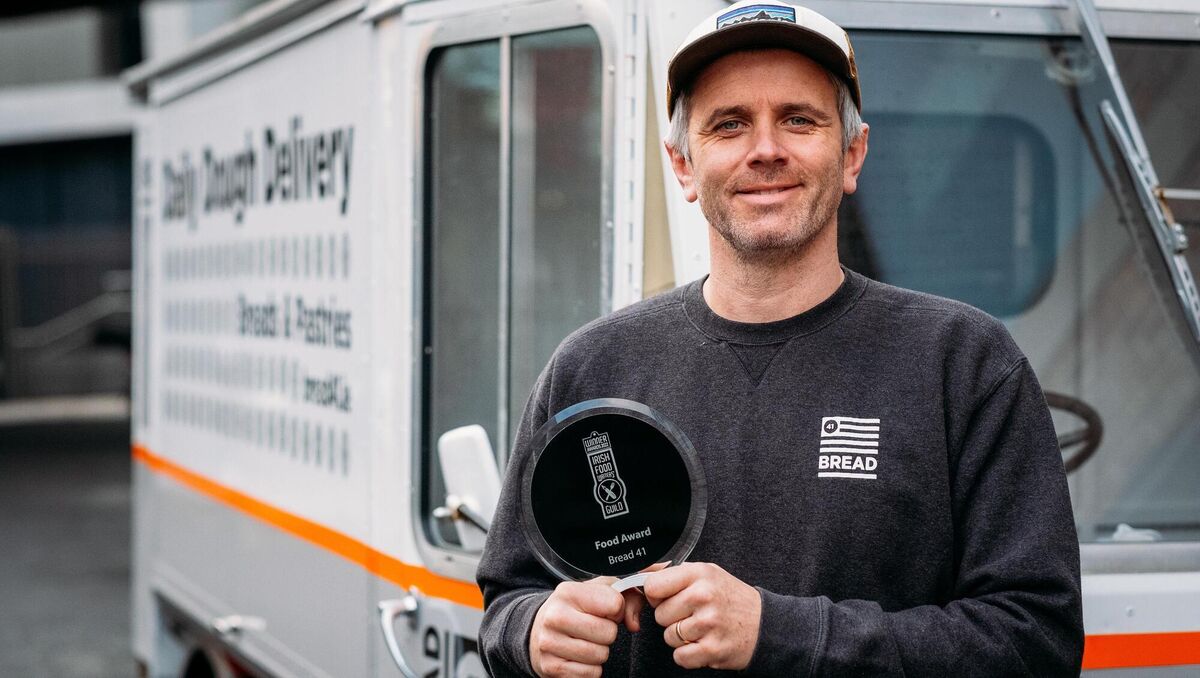
After graduating from Ballymaloe Cookery School, trained carpenter Eoin Cluskey turned his hand to baking.
He opened Bread 41 in Dublin City in 2018, where he has cut his waste costs by 75% and eliminated single-use coffee cups.
Bread 41 opened a new bakery in Greystones, Co Wicklow, this year. There is one about to open in Stillorgan, Co Dublin, and there are plans in place to expand nationwide.
Like Susan Collins's Home of Hair, his bakery has a B Corp certification.
"The moral of the story is doing good is good for business," says Mr Cluskey, who moved to eliminate single-use cups from the Dublin City bakery four years ago.
"It was a bold thing to do. We weren't churning it in and we were turning people away."
Sales dropped initially, but then they "bounced" and the cost to business of getting rid of single-use cups was a rise in sales of 8%.
Now customers can either sit in, bring their own cups from home, or use one of their in-house reusable cups that is made in Ireland and has a €5 deposit.
When it comes to the bakery end of things, all ingredients are organic and sourced as locally as possible.
"We have an app that measures our waste. We don't buy bin bags, we use empty flour sacks, and every Tuesday we look at waste numbers," he says.
At the height of the covid pandemic, he worked out that they were paying €1,600 a month to get bins collected. And the cost now?
"Probably a quarter that," Mr Cluskey says.
Bread 41's sustainability is also about staff.
"We pay pensions for staff that are here over a year. We also do the cycle-to-work scheme where we buy the bike and whatever they can pay back they pay back," says Eoin.
Other staff investments include education and training, and 2% of their turnover is given to support local children or community-based organisations.
They also donated €10,000 to the Red Cross recently and created and printed a book, . Money from all sales goes to UNHCR, the United Nations' refugee agency.
Bread 41's origins and ethos can all be traced back to one person — Eoin's grandmother who worked as a baker and whose surname was Baker.
The renowned Cork cookery school Ballymaloe played a key role too.
"I spent over a year down in Ballymaloe, it's a real homestead for me, and it ingrained in me an appreciation of what the land provides. It's simple cooking done really well, like I was out pulling vegetables for that day's food," says Mr Cluskey.
"I always knew I wanted to do something for myself, and I asked myself where I was happiest. I was happiest with my nana baking. My memories of my nanny was her covered head to toe in flour," he adds.
While Bread 41 eyes expansion, their main goal isn't actually business focused.
"It's to look at the impact we have on people and the environment," he adds.
When it comes to the climate, he says: "What more do we need to know before we act? Look at the stats coming through".
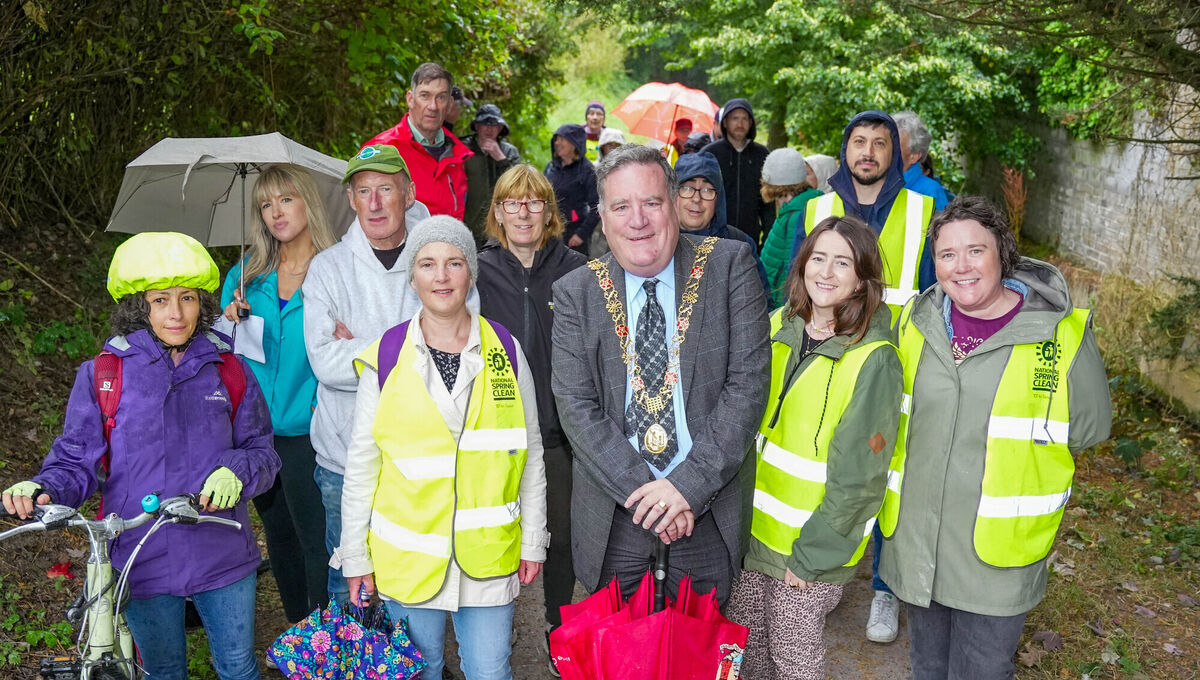
In 2022, local people in Turner's Cross/Ballyphehane were invited along to a six-week training being run by Cork City Community Climate Action Programme.
Friends were made, plans put in place, and a river is now in the process of being saved.
"We were hearing all this depressing stuff, so we thought what can we do in a small way in our area? There's not a lot of green space in Turner's Cross, so one area we focused on is the Tramore River Greenway — an old walkway and the main greenspace in the area," says Jillian Delaney, a founding member of Turner's Cross Climate Action Group.
"It looked a bit neglected, and the river itself didn't look that great," she said.
In fact, the 7km stretch of water that rises in the south-west of Togher and comes out in the Douglas estuary was once home to lots of trout and people fished and swam in it. The group of locals soon discovered that this was no longer the case.
"We connected with the local community water officer, Catherine Seale, and she helped us with kick sampling, where you literally kick the soil and look at the creatures you find," says Ms Delaney.
The local group unfortunately discovered the latter, due to misconnections — where appliances such as washing machines, dishwashers, sinks, baths, showers and toilets, are plumbed to the rainwater drain. However, action is now being taken.
"Catherine linked us with other groups such as the Local Authority Waters Programme (Lawpro) and UCC and we came together as Tramore River Community Groups.
"We organised funding for a water biodiversity action plan and have an ecologist who is reviewing the whole river catchment, identifying misconnections. So bringing all these people together, the plan is to restore the river to the way it was," says Ms Delaney.
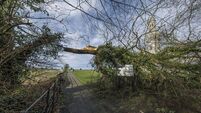
While there is no quick fix for the river, the Turner's Cross group did get straight to work on the greenway, walking it daily and observing wildlife there.
And they have just erected four signs with all of the creatures they identified, with the help of Togher Tidy Towns, the local credit union, and Barry's Tea.
"We did that for over a year. In winter we saw teal ducks — for winter they come to Ireland and then go back to Iceland. In summer it's swallows, dragonflies, and various butterflies. At night-time, it's bats.
"Even though it looked neglected, there was a lot of wildlife," she adds.
As a result of their efforts, more people have started to walk the greenway and take note of the plants, trees, and wildlife that exist in the area — even the night-time wildlife.
The group is hosting a "bat walk" on Thursday, October 3, at 7pm starting from the Togher side of the greenway.
"We've someone from Bat Conservation Ireland coming along with bat detectors, as it's the last chance to get the bats before they go to sleep for the winter, and it's a nice one for children as they can often hear the higher frequency of the bat calls," she says.
The group also worked with Cork City biodiversity officer Rosemarie McDonald, and will now turn its attention to what was an old botanic garden at St Joseph's Cemetery.


CLIMATE & SUSTAINABILITY HUB
CONNECT WITH US TODAY



Be the first to know the latest news and updates