'Donald Trump approach to policy': Government criticised as living wage timeline 'annulled'
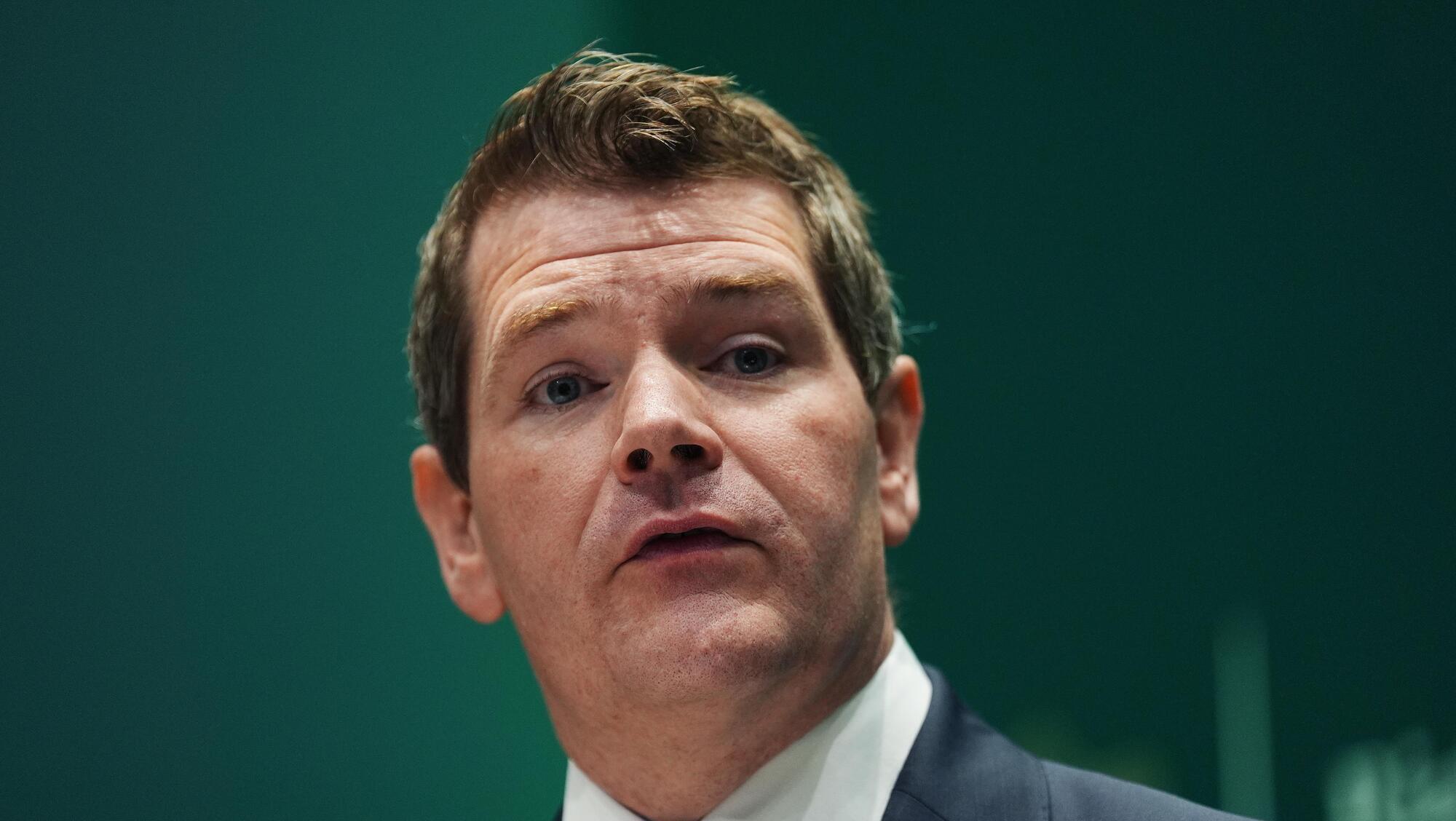
Enterprise minister Peter Burke said the 2029 living age timeline had been 'annulled' and said that he would be 'grateful' if the Low Pay Commission would take “due cognisance” of this. Picture: Brian Lawless
A move by the Government to abandon a timeline to introduce a living wage by 2029 has been likened to Donald Trump.
Concerns have been raised that a commitment to a living wage will be left to “wither on the vine” after the Government dropped the deadline as part of Budget 27.
The Irish Congress of Trade Unions (Ictu) compared correspondence from enterprise minister Peter Burke to the Low Pay Commission, the body which recommended the 79c increase to the hourly minimum wage as part of Budget 2027, as a “Donald Trump approach to policy”.
The reported that Mr Burke said the 2029 timeline had been “annulled” and said that he would be “grateful” if the commission would take “due cognisance” of this.
The living wage is a figure defined as the minimum income required for a single adult working full-time to achieve a socially acceptable minimum standard of living.
In 2022, then enterprise minister Leo Varadkar announced the introduction of a living wage, defined as 60% of hourly median wages, on a phased basis over a four-year period.
The timeline was then changed to 2029.
In a statement on Budget Day, the Department of Enterprise said the removal of the 2029 living wage timeline would help provide “certainty for employers”.
The change was criticised by unions and welcomed by business groups, who said they are under pressure from increased costs, including minimum wage rises.
ICTU general secretary Owen Reidy said the Government is “undermining” the Low Pay Commission and “caving” to lobbying from business interest groups over low-paid workers.
He said that large- and small-scale employers sit on the Low Pay Commission, as well as trade unions and independent experts, and go through “a lengthy process to reach an evidence-based recommendation”.
“The Government doesn't like what the evidence says, so it has decided to shoot the messenger,” he told the .
"Undermining an independent body because you don't like what the evidence says is the Donald Trump approach to policy.”
John McGeady, chief executive of Social Justice Ireland, said there was a fear that the commitment to the living wage would be left to “wither on the vine” and “fade” away.
“The budget was framed as a workers’ budget,” he said.
“We have serious questions as to — which workers are you talking about, if you’re not willing to provide the lowest-paid workers with the minimum that they need for a living wage?”
Nat O’Connor, a lecturer in social policy at UCD and a member of the Living Wage Technical Group, said it was “wrong” to abandon a timeline for a living wage and said that a third of workers in Ireland are classified as being on low pay.
He said that if businesses feel the minimum wage is too high, they could offer better training and demand more of those workers, which would be “a win-win” for both workers and employers.
Mr Burke has been contacted for comment.


CONNECT WITH US TODAY



Be the first to know the latest news and updates