Tariffs on goods from occupied West Bank would only 'legitimise trade' with them, minister says
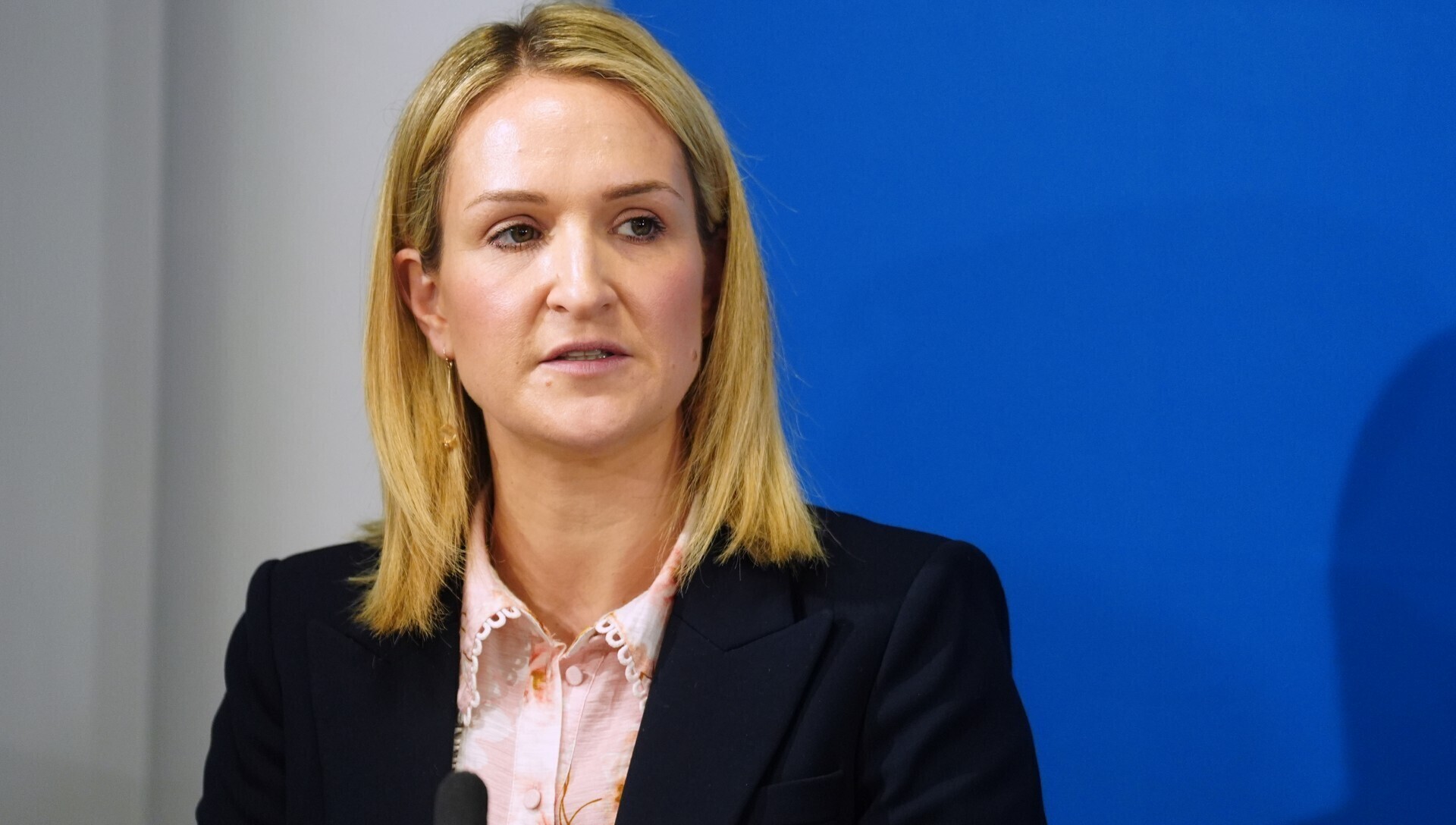
Helen McEntee has urged EU foreign ministers to back a total ban on imports from illegal settlements, saying she wanted to see 'concrete proposals' come from the European Commission. File photo: Brian Lawless/PA
Implementing tariffs on goods from illegal settlements in the occupied Palestinian West Bank would only “legitimise trade” with them, the foreign affairs minister has said.
Helen McEntee has urged EU foreign ministers to back a total ban on imports from illegal settlements, saying she wanted to see “concrete proposals” come from the European Commission.
A paper drawn up by the commission provides three options to EU foreign ministers on trade with illegal settlements, including the introduction of an import licencing system, prohibitive tariffs, and finally a “partial or total prohibition” of goods.
However, the EU paper states that unless there is an effective way to identify goods from illegal settlements, the measure would likely be circumvented and be “counterproductive”.
“I think the first two are not ones that we should be discussing, quite simply because the ECJ [European Court of Justice] ruling is very clear that we should not have any trade with the occupied territories,” Ms McEntee said.
“The first two options would obviously legitimise trade by including tariffs.”
Ms McEntee said she wanted to hear from other EU member states about their positions following on from the commission’s paper. “What’s not in the paper, I think, importantly needs to be discussed as well,” Ms McEntee said.
“We are a community, within the EU, of laws. We uphold laws, we respect international laws, so I think it’s absolutely essential that the EU responds in a way that upholds international law and responds to the ECJ ruling of 2024.”
Asked about the timeline of any vote by EU foreign affairs ministers on the topic, given the next full foreign affairs council is not until October, Ms McEntee said it must be “as ambitious as possible”.
“We need to respond to what are continuing efforts by Israel to completely eradicate the option or the possibility of a two-State solution,” Ms McEntee said. Ms McEntee said a two-state solution is an “overall objective” of the EU.
“The longer we do not respond to these illegal settlements, the less and less that becomes a future possibility.”
The minister said she believes any proposal put forward would not require unanimity among member states and could be done by qualified majority voting. This would require at least 15 member states to back the proposal, with those states representing 65% of the EU’s population.
She added that Ireland would complete the passage of its own legislation to prohibit the trade of goods from Israeli settlements by the end of next week.
Ms McEntee was speaking as she attended a Foreign Affairs Council meeting in Brussels on Monday, where she said the Irish government wanted to see a move on a further package of sanctions on Russia.
“I think what’s very clear from the room is there is a determination from all member states that we would agree the strongest possible package moving forward,” Ms McEntee said, adding that it needed to be done before Wednesday.
Further sanctions come amid pressure from the European Parliament on Ireland over the Aughinish Alumina plant’s exports to Russia.

CONNECT WITH US TODAY



Be the first to know the latest news and updates