ieExplains: What is the European Commission and why is it in Cork this week?
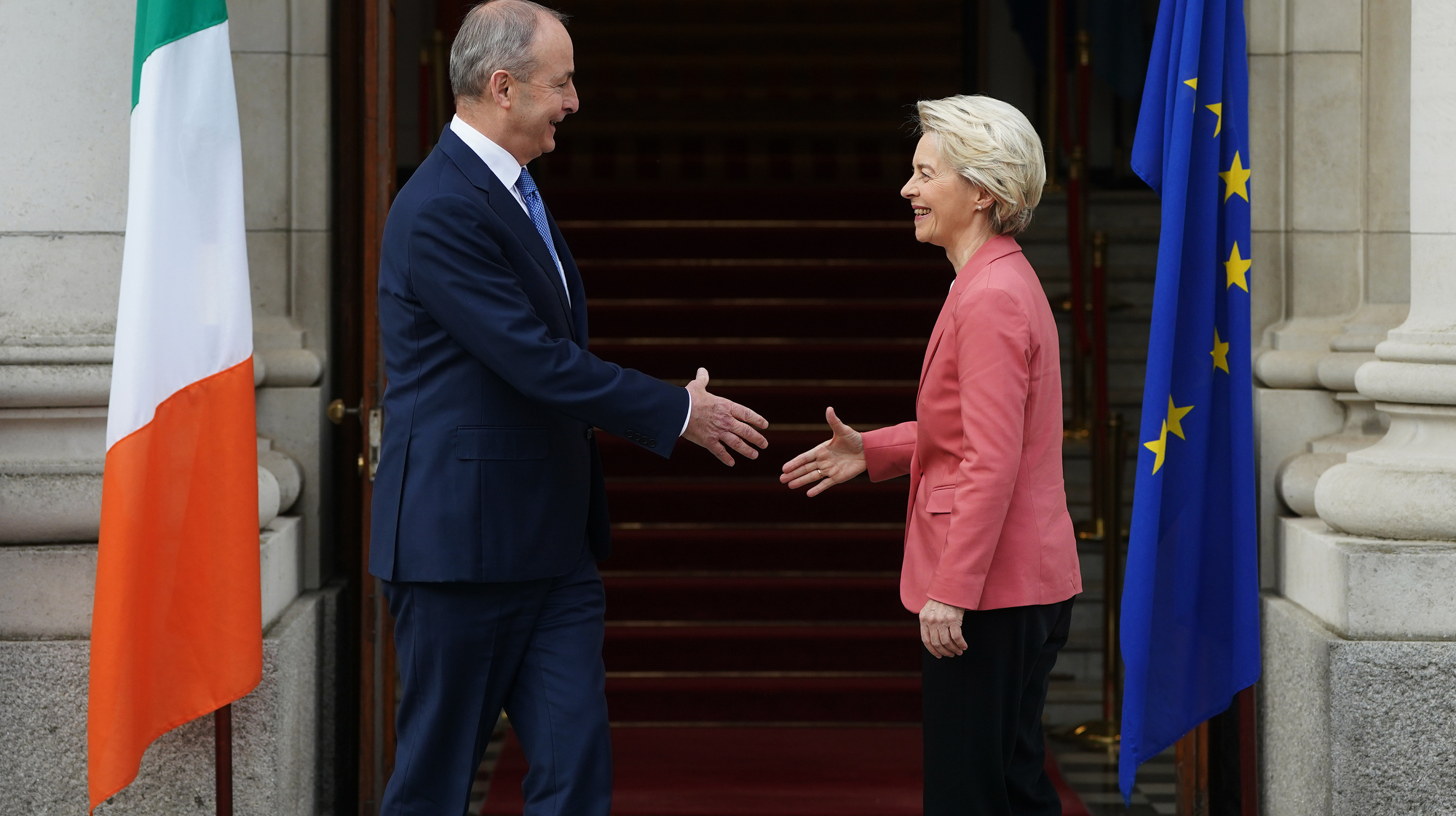
Taoiseach Micheal Martin (left) and European Commission president Ursula von der Leyen (right) in 2022. They will both be in Cork to discuss the European Commission's priorities over the next six months.
The work of Ireland’s EU presidency is now formally underway, with the first set of meetings in Cork taking place across Thursday and Friday.
It has seen the visit of the EU’s College of Commissioners, who make up the European Commission, with engagement between senior Government leaders and the top of the EU’s executive.
The commission is essentially the Cabinet of the European Union, where each member state can nominate a single member.
It is led by the president of the European Commission, a role currently held by Ursula von der Leyen.
While all 27 member states are currently given a position within the commission, this was not always the case. When the body was first established, the membership fluctuated from 14 in 1967, down to nine in 1970, before rising to 13 when Ireland joined in 1973.
The commission grew as the EU increased in membership, with larger countries being given two commissioners while smaller states only received one.
This system was eventually scrapped for one member, one commissioner in 2004.
They are not. Back when Ireland’s commissioner, Michael McGrath, was being put forward for nomination, there was significant pressure put on by the Government for the former Cork South Central TD to get an economic portfolio.
There are some very high-demand portfolios, like trade, industrial strategy and economy.
Conversely, there are some portfolios which aren’t perceived as highly, like the health and animal welfare job currently held by Hungarian Olivér Várhelyi.
While Ireland did not secure a top-flight economic portfolio, it did still get a substantial one in the democracy, justice, rule of law, and consumer protection position.
It’s traditional that at the start of a new EU presidency term, the college of commissioners will visit to discuss priorities over the next six months.
Taoiseach Micheál Martin told reporters at UCC that there would be engagement between commissioners and their Irish ministerial counterparts.
Mr Martin said he wanted to see progress made on issues like competitiveness, alongside reaching agreement on major files like the EU multiannual financial framework out to 2034, and the proposed Savings and Investments Union.
- Tadgh McNally is a political reporter for the
CONNECT WITH US TODAY



Be the first to know the latest news and updates