European Commission takes Ireland to court over turf-cutting enforcement failures
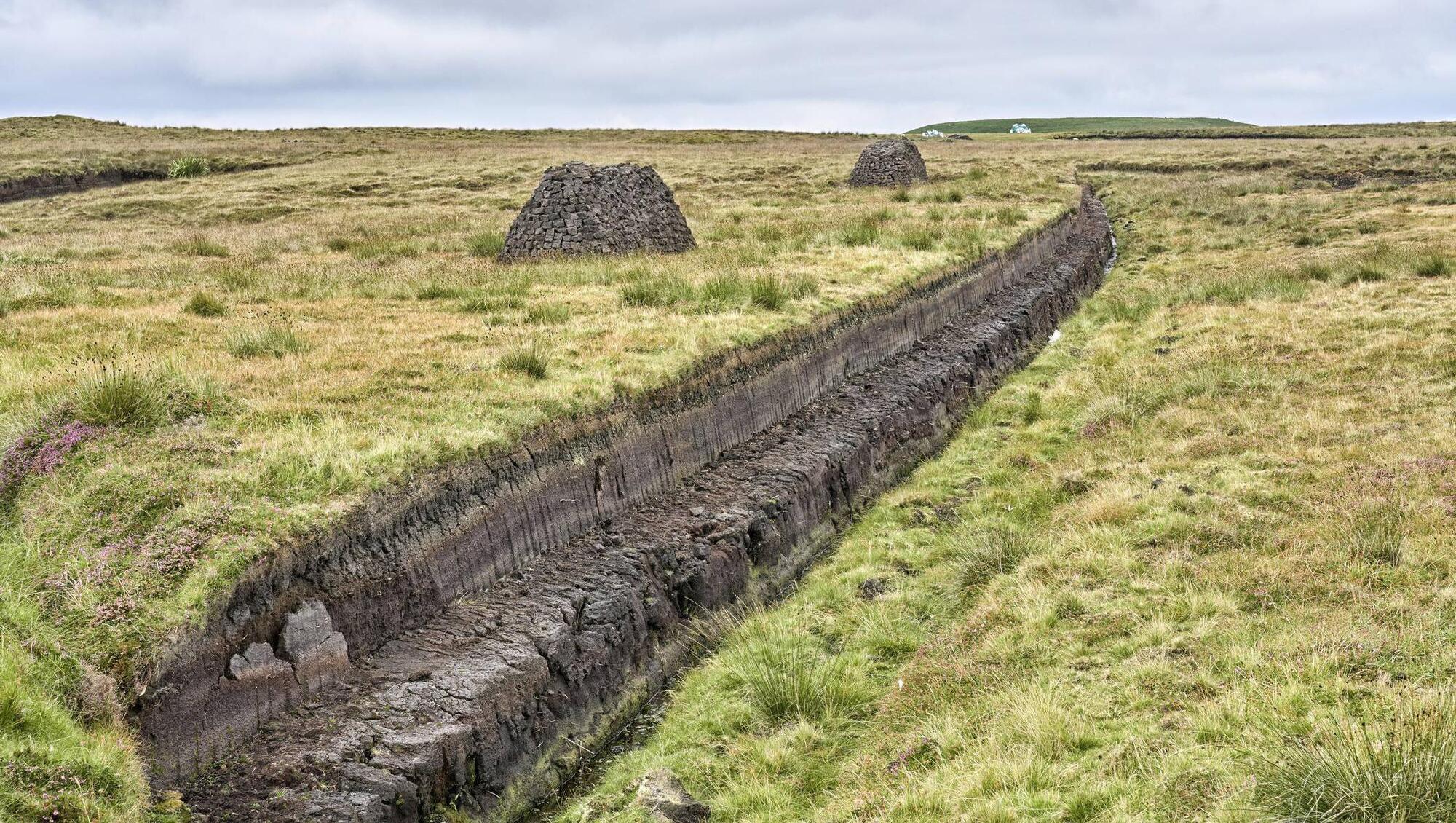
Peat cutting is included within the scope of the directive. File picture: iStock
The European Commission is taking Ireland to court over what it describes as a significant failure to enforce turf-cutting rules.
The commission claims that Ireland has failed to comply with an Environmental Impact Assessment (EIA) Directive, which requires assessments to be carried out on projects that are "likely to have a significant negative impact on the environment".
Peat cutting is included within the scope of the directive.
While the commission acknowledged that some steps have been taken to halt peat cutting by state-owned operator Bord na Móna and other large-scale private operators, it said it remains concerned that insufficient action is being taken to halt turf extraction at a local level.
Read More
It is therefore referring Ireland to the Court of Justice of the European Union for allegedly failing to comply with the directive.
"Despite evidence of these ongoing illegal activities, enforcement action at the local level is not being taken. The commission considers that efforts by the Irish authorities have been insufficient and is therefore referring Ireland to the Court of Justice of the European Union," the commission said in a statement.
Outlining the reasons for taking the case, the commission stated that it has had concerns about Ireland's enforcement of environmental rules for several years.
The commission sent Ireland a letter of formal notice in July 2019 and a reasoned opinion in July 2020, claiming that at that time there was significant peat-cutting activity that had not been subject to planning permission or environmental impact assessment.
"Since July 2020, Ireland has taken significant action to halt peat cutting by the state-owned operator Bord Na Móna. Rehabilitation action on the sites owned by Bord Na Móna, where industrial cutting had taken place earlier without an environmental impact assessment, is now underway, largely funded by the EU through its Recovery and Resilience Facility.
"Moreover, since July 2020, the Irish Environmental Protection Agency has been undertaking enforcement action against operators on privately owned commercial sites of over 50 hectares. This resulted in some commercial peat operators halting their activities.
"However, the commission is aware that there is still significant peat cutting activity, which is not subject to planning permission or environmental impact assessment, especially in relation to sites below 50 hectares," the Commission said in its statement.
Different rules apply depending on the size of land where turf is being cut. Planning permission and environmental impact assessment is required on sites that are between 30 and 50 hectares.
For peat extraction on areas of less than 30 hectares, planning permission from the relevant local authority — and in some cases an environmental impact assessment — may be required, particularly where turf cutting is likely to have a significant effect on the environment.
An appropriate assessment is also required where extraction could impact a protected area.
A spokesperson for the Department of Climate, Energy, and the Environment noted the announcement. "Commercial peat extraction is a regulated activity. Enforcement against activity at smaller sites, at a local level as refenced by the commission, is a matter for planning authorities and the Department of Housing, Local Government, and Heritage," said a spokesperson.

CLIMATE & SUSTAINABILITY HUB
CONNECT WITH US TODAY



Be the first to know the latest news and updates