Jack Anderson: The GAA's McGuinness mess: Five ways to avoid a repeat
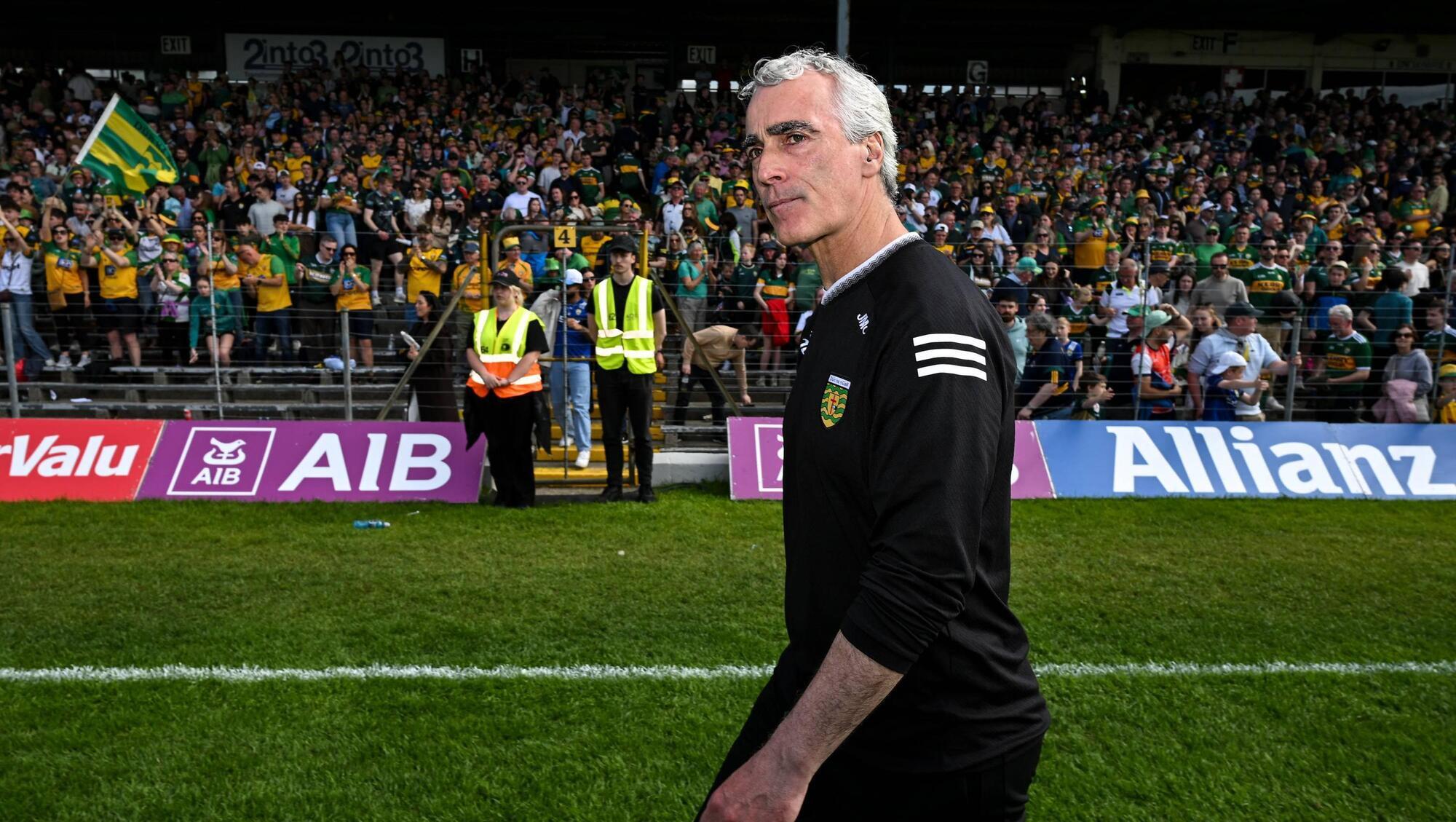
JIM JAM: Donegal manager Jim McGuinness after their All-Ireland SFC clash with champions Kerry in Killarney. Pic: Stephen McCarthy/Sportsfile
Writer Malcom Gladwell takes an alternative view of things we presume to know. Being an athletics fan, he frequently mentions sport.
Recently, he criticised the hyper-competitive world of youth sport which he says only leads to a steep decline in adult participation. His mantra on this (shared with every 40+ year old junior B hurler in the country) is, “passion lasts longer than pressure”.
Gladwell also loves the cascade theory: how a seemingly inconsequential event can, by way of a chain reaction of incompetence and indifference, escalate into something catastrophic. To make the point, Gladwell uses Benjamin Franklin’s version of the proverb, “For want of a nail”:

The cascade theory can, in part, explain the GAA’s disciplinary system.
If Dublin’s Ger Brennan hadn’t seen the red mist at half time against Galway in that league relegation game; if the Galway S&C coach’s earpiece had not dangled so temptingly; if referee Fergal Kelly had been satisfied with the handshake between the pair and just given them a naughty step talking to; if Donegal’s Michael Murphy had been red carded for his strike on Kerry’s Dylan Casey during the league final; would there have been as much fuss about the Jim McGuinness incident during the recent game between the counties in Killarney? Would it have happened at all?
Read More
Ironically, the GAA’s disciplinary system actually works quite well at inter-county level. In 2024, the CCCC issued over 100 penalties of which only six were subsequently cleared on appeal.
Yes, the system is convoluted with an alphabet soup of entities thicker than professional boxing’s broth of sanctioning bodies – the CCCC as prosecutor, a hearing at the CHC, the CAC on appeal, and the DRA as the final arbitrator.
I’d get rid of the CAC – get your recommended penalty from the CCCC, either accept it or contest it at the CHC and if you are still unhappy, then off you can go to (and pay for) the DRA. Occasionally and annoyingly a DRA panel gets distracted by the brush stroke of a minor procedural error rather than focusing on the bigger picture - e.g., because in clarifying the referee’s report the wrong person was asked the wrong question on the wrong form at the wrong time this means the ref’s report cannot be trusted, and the red card rescinded.
That approach has long been set aside by sports tribunals elsewhere. If it’s a minor error that makes no real difference as to whether the player deserved to have been sent off, then there is no unfairness in ignoring it. Just fill the loophole there and then. A scratch on the car door doesn’t mean you have to scrap the lot.
Of course, there is a wider debate about ill-discipline in GAA club-land but even there, rule changes on dissent, and greater clarity in the rule book itself, are helping. And there is less societal tolerance for the violence of old. People are more litigious now and the Guards more open, rightly, to prosecutions. Last month, the Dublin Circuit Court imposed a fully suspended three-month sentence on a man with €5,000 to be paid in compensation for attacking an umpire at a minor game.
Specific to the Ger Brennan/Jim McGuinness incidents, five issues stand out.
The first, and the CCCC has acted on this, is that there are simply too many people on the sideline. This is not a football problem. It’s ridiculous to see the number of hurley carriers that now have to be warned by referees who have enough to do.
In a recent championship game in Cork, there was a dispute over a sideline. An adjacent, bibbed, maor camán imploded. He made Diego Simone look like a Zen master. It was embarrassing. There is a village in Munster still looking for the idiot.
Sure, a maor uisce who can roam freely onto the pitch during stoppages and deliver messages (maor fánaí?) could be considered. The AFL have useful guidelines on runners and how to punish the team if they decide to run interference.
Second, you can see what the GAA was trying to do when it brought in the rule strictly prohibiting managers etc from entering the field and jostling the opposition. They can be the accelerant that fuels a spot fire into a blazing row.
The best advice for any coach on how to avoid a ban still lies in the words of the greatest coach of all, Mr Miyagi in Karate Kid – “best block; no be there”.
The way to avoid the rule from becoming a talking point in the future is to start at its end. The 12-week ban is seen as too much time for the crime. Or, as the Sunday Game panellist Donie Smith rightly and succinctly put it – if Ger Brennan could had received a 2-to-3-week ban, Jim McGuinness would likely have got the same.
Judges in the criminal courts dislike mandatory sentences because every case is different and there are always degrees of fault. Amending the rule so that 12 weeks becomes the “recommended” penalty for the offence but giving a disciplinary panel the discretion to go higher or lower, would be a simple fix.
The fourth point is that the distinction between Brennan being banned for three months and Jim McGuinness not, lies in how the referee dealt with the incident on the day. It’s one of those technical legal points that does not pass what Australians call the sniff test. It’s not irrational to query it. In the GAA we often focus on off-field technicalities – why we can't do something; rather than simply looking at what happened on the field and then apply like punishment for like misconduct. Justice is blindfolded not to stumble over procedure but to ensure everyone is treated the same, come what may.
No disciplinary system can leave things unreservedly to referees, who then have to be all-seeing on the day. One way around this is maybe to consider rugby’s citing system or the system they have in Australia where a referee can put a player or coach “on report”.
The problem for GAA referees with, say, a half time fracas is that they often don’t see it and are relying on second hand reports.
Sometimes, a random player is booked or sent off – the golden rule in GAA rows is to be never last in, your lack of enthusiasm will be spotted, even by the officials.
Would it not have been more effective in the Kerry-Donegal game if ref Sean Hurson could, cards aside, also have told the teams that they are going “on report” and that he will be asking the CCCC to review the video independently later?
Finally, these incidents again give us an insight into the weird psychology of GAA inter-county teams. Donegal will likely use the criticism of Michael Murphy (for not getting a red in the league final) and Jim McGuinness (for not getting a sideline ban) in a siege mentality way.
Only in Ireland can you define paranoid as being when you think that no one is out to get you.
Maybe the behaviour of Ger Brennan, McGuinness and others on GAA sidelines can be explained (but not excused) by the current all-consuming demands of inter-county management?
To paraphrase Gladwell, it is often, and unhealthily, the product of both passion and pressure.
CONNECT WITH US TODAY



Be the first to know the latest news and updates