Government support for construction sector ruled out for now
A €505m package of supports was announced earlier this month to deal with rising fuel prices and unrest
Government support for construction sector ruled out for now

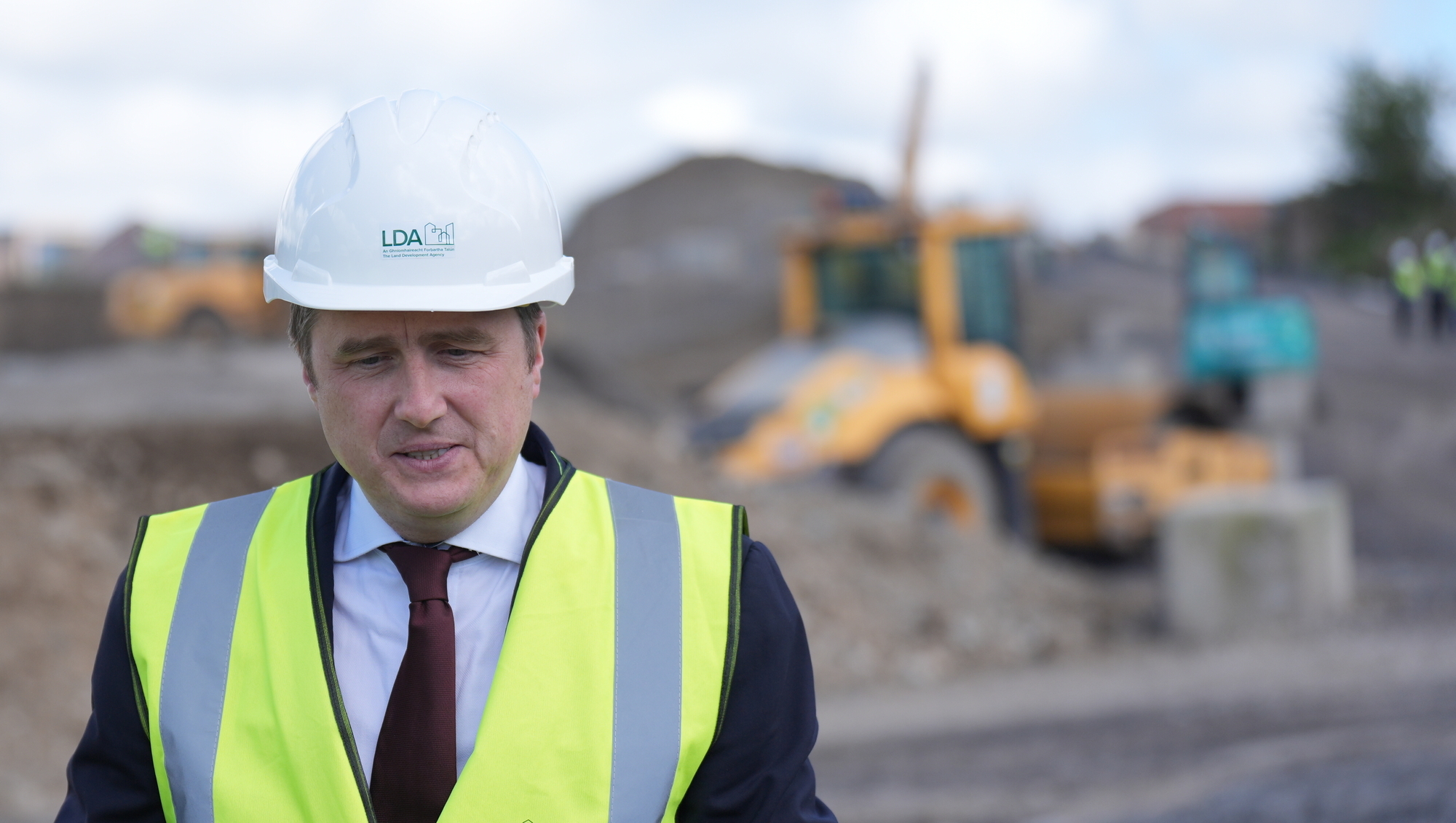
Housing Minister James Browne said his department has already provided significant funding through grants, subsidies, and tax breaks to the construction sector.

Housing minister James Browne has signalled fuel support measures would not be given to the construction industry, saying it has already received significant assistance from the Government.

The Government announced a €505m package of supports earlier this month to deal with rising fuel prices and quell protests taking place across the country.

The plan included a 10c cut to excise on petrol and diesel and a delay in any increase in carbon tax until October.

There are also plans in train to establish a €40m support scheme for the haulage and coach sector, alongside a €100m fuel subsidy scheme for the agricultural sector.

Conor O’Connell, director of housing at the Construction Industry Federation (CIF), said the group had been engaging with the Government to see if it’s possible to include the sector in the fuel support scheme, particularly for heavy machinery.

He cited a situation where fuel supports can be provided to transfer heavy machinery to sites, but then no supports are available once it arrives.

However, asked about the prospect of extending supports to the construction sector, Mr Browne signalled that it would not be coming in the immediate future.

The housing minister said the Government’s record “speaks for itself” over more than a year, saying that his department has provided significant funding through grants, subsidies, and tax breaks to the construction sector.

Mr Browne said the Government would keep the matter “under review”.

“We do also have to be cognisant of very significant measures that have already been put into the construction industry in the last 14 months,” Mr Browne said.

“Other sectors faced a very acute situation that might not have seen those same measures over the last 14 months.”

Rising costs of building materials stemming from the US war with Iran could increase the cost of building an apartment by up to €20,000, housing body Clúid has warned.

Eibhlin O’Connor, the chief commercial officer of Clúid Housing, raised concerns about the increased costs of materials like concrete, steel, and insulation.

Ms O’Connor said the price increases for those products vary between 5% and 20%, describing it as a “significant” rise.

“I think over a project, you’re looking at about 10% of an increase,” Ms O’Connor said.

“When we look at the average unit cost, and all of our schemes need to stand financially on their own merits, you’re looking at a €15,000 to €20,000 increase just on material increases.”

Ms O’Connor said it was hard to tell the impact on the viability of apartments at present.

“If this goes on, the war in the Middle East, then it is going to impact viability. That, coupled with inflation.”

Ms O’Connor was speaking at the Irish Home Builders’ Association annual summit, where further concerns were raised about the viability of apartments by the construction director of MKN Property Group, Brian McKeon.

Mr McKeon cited the rising cost of materials and labour as barriers to viability.

“We’re finding to get the right people to do the building, which ultimately you need, you need to pay them,” Mr McKeon said.

“They’re in demand, so when people are in demand, unfortunately, they call the shots.”

He said the longer-term pipeline for apartment development is not there, citing issues with planning.

Mr McKeon said it is “easier” for a developer to get planning for a scheme of houses compared to a “five or six or seven-storey apartment block”.

More in this section

Politics

Newsletter

From the corridors of power to your inbox ... sign up for your essential weekly political briefing.

Cookie Policy Privacy Policy Brand Safety FAQ Help Contact Us Terms and Conditions

© Examiner Echo Group Limited