Government rules out emergency mini budget as fuel and energy prices soar
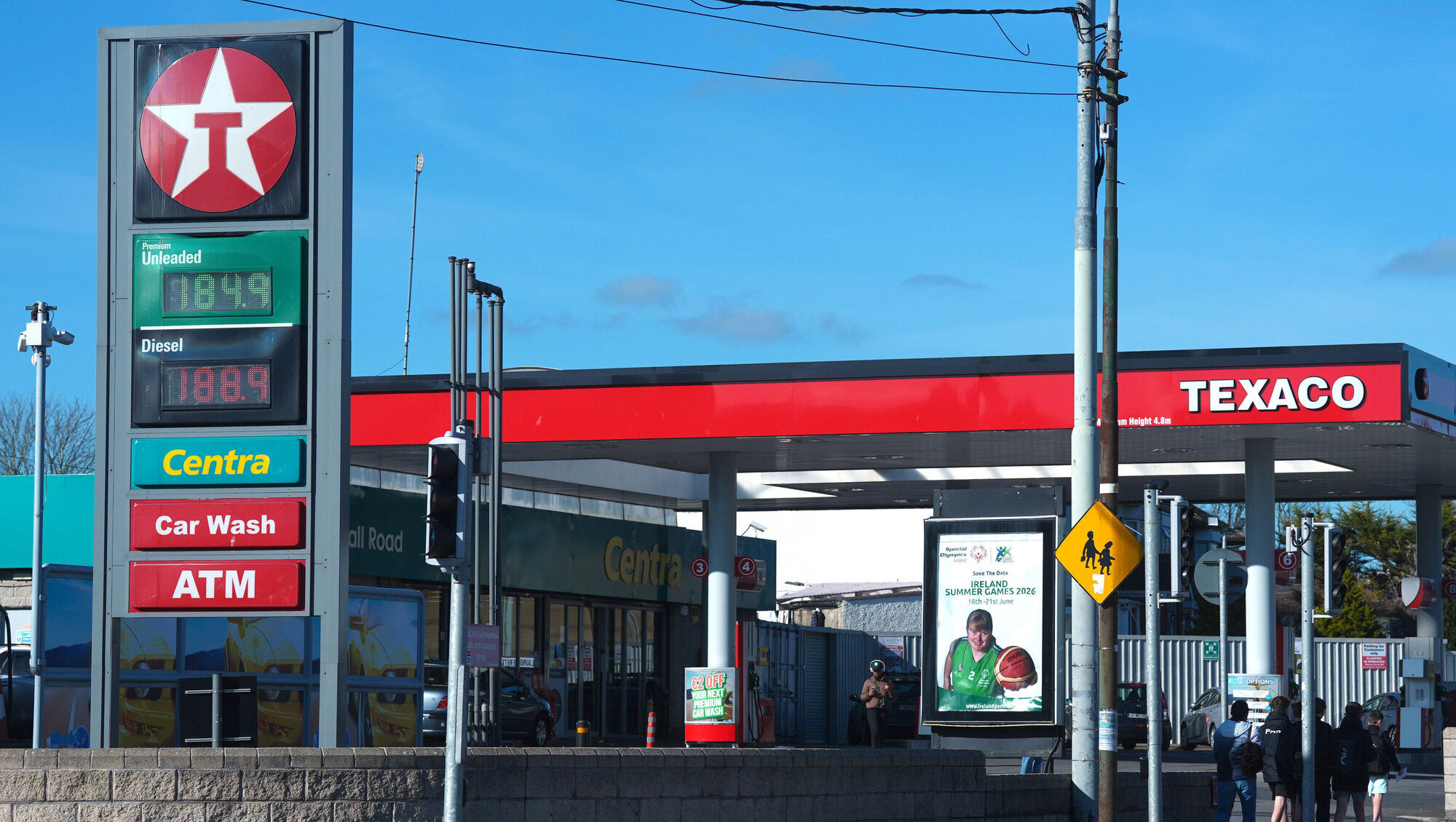
The price of petrol and diesel has neared or surpassed €2 per litre. Picture: Brian Lawless/PA Wire
An emergency mini budget has been ruled out, but the Government will know by the end of the month whether it needs to intervene with rising fuel and energy prices.
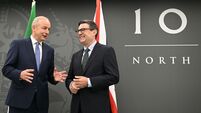
Speaking to the in London, Tánaiste and finance minister Simon Harris said he must continue to weigh up the “inflationary impact” that the war in the Middle East may have, as he warned that the Coalition must make decisions that “stand the test of time”.
In Boston, meanwhile, trade minister Helen McEntee said that the longer the conflict continues, the more it will impact consumers.
The US-Israeli strike on Iran two weeks ago has led to an outbreak of war in the Middle East, with Iranian forces targeting countries across the Gulf.
Read More
The price of petrol and diesel has neared or surpassed €2 per litre. The average cost of 500 litres of home heating oil has rocketed from €498 to €870.
Speaking in Philadelphia on Saturday, Taoiseach Micheál Martin hinted at excise cuts for fuel, as well as targeted supports for those struggling with rising energy prices.
In London, Mr Harris said the Government is examining a range of options that could be unveiled if the situation deteriorates.
“We are preparing a range of measures,” he said. "The Taoiseach spoke to some of them [in Philadelphia].
“We are looking at whether this situation continues, and how you can target measures. We look at a variety of other tools we've deployed in the past.
“But we need to consider all of them. Then we need to consider what is required, depending on where that scenario is at."
Inflation, as the conflict drags on, is a worry, he said.
"The broader concern I, truthfully, honestly have — and I have to have as finance minister — is if this goes on for a long period of time, the inflationary impact.”
However, Mr Harris said the Government was “certainly not in the space” of looking at an emergency mini budget.
He said that there will be a “lot more clarity as to what may be required” by the end of the month.
In Boston, Ms McEntee said that the “quickest way to respond to this is for the conflict to end”.
“Beyond that, though, we have to look and see what measures or supports may be needed if this continues for any longer,” she said.
“It's important that we don't respond immediately and provide a support that could, the following week, be completely wiped out, because of some other incident that happens, or some other change that happens on a global scale.”
Ms McEntee said that party leaders are working closely on what kind of supports could be delivered and when they might be implemented, and that the Government had not been “found wanting” during similar crises in the past.
“We've always supported those who need it most, and we've always made sure that those who are in most difficulty, that supports are targeted at them, but also recognising that if the type of increase hits one person, they hit everybody,” she said.
“There have been universal supports in the past. There have been more targeted supports. We're going to always focus on and support people who need our help the most.”
CONNECT WITH US TODAY



Be the first to know the latest news and updates