First councillors elected in Northern Ireland local government elections
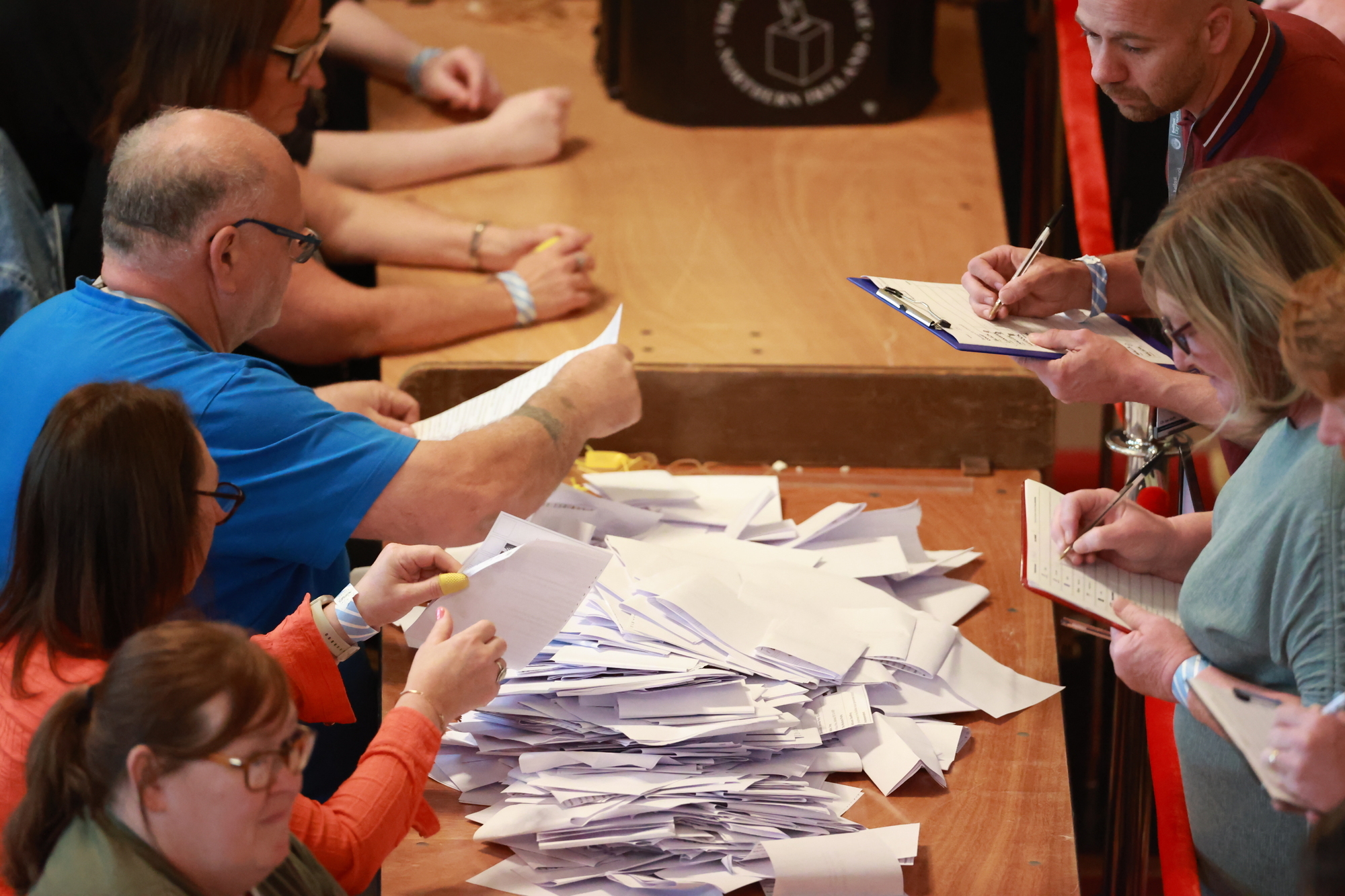
The first councillors have been elected in the Northern Ireland local government elections.
Counting began at count centres across Northern Ireland at 8am on Friday morning after voters cast their ballots across the 11 council areas on Thursday.
Sinn Féin's Gary McCleave was the first to be elected at Lisburn and Castlereagh Council, securing a seat in the Killultagh district electoral area (DEA).
His election was swiftly followed by the DUP’s Thomas Beckett and Claire Kemp of the Alliance in the same DEA.
Visiting the Lisburn and Castlereagh count centre, DUP leader Jeffrey Donaldson appeared upbeat at the early stage of counting.
He indicated his party was polling well in the area, and would hold its seats in four district electoral areas (DEA) that are being counted so far, and hoped to potentially gain a seat in two DEAs.

“The Alliance Party is polling well in some of areas too, Sinn Féin have done well where you might expect them, so I think the pattern so far in Lisburn and Castlereagh is DUP holding its ground, Alliance perhaps making some gains, perhaps at the expense of the Ulster Unionist Party, and Sinn Féin perhaps making one or two gains at the expense of the SDLP,” he told the .
“Our vote has gone up in some areas in Lisburn and Castlereagh but it’s too early to tell if we will make a gain. I think we were targeting a gain in a couple of areas but we haven’t seen the results yet for those two areas.”
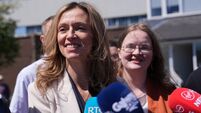
Alliance leader Naomi Long has visited the count at Belfast City Hall.
Counting is under way at all 11 count centres.
The elections use the single transferable vote system where voters rank candidates in order of preference.
Some 462 council seats are being contested at this year’s election.
Northern Ireland’s 11 councils are responsible for setting rates, planning and waste collection as well as leisure services and parks.
It is the first electoral test for the parties since last year’s Assembly elections and takes place against the backdrop of the Stormont stalemate, with the powersharing institutions not operating as part of a DUP protest against post-Brexit trading arrangements.
Sinn Féin leader Michelle O’Neill said the election was an opportunity for voters to re-affirm last year’s assembly election, while DUP leader Jeffrey Donaldson asked unionist voters to unite behind the party to “get back to winning ways”.
The Stormont assembly has not been operational for more than a year due to the DUP’s boycott of the powersharing institutions in protest against post-Brexit trading arrangements.

At last year’s assembly election, Sinn Féin overtook the DUP to become the largest party at Stormont for the first time.
The republican party will be hoping to replicate that result following the count on Friday and Saturday.
Sinn Féin currently has 105 councillors and put forward 162 candidates in this election.
The DUP is currently the largest party in local government with 122 councillors, and ran 152 candidates.
Donaldson has pledged that his party will stand firm over any return to Stormont until political and trading concerns around the Windsor Framework are addressed.

The Alliance party, who became the third biggest party at the last Assembly election, will hope to build on the 53 councillors they secured at the last local election in 2019.
The cross-community party fielded 110 candidates in 78 out of the 80 district electoral areas.
The Ulster Unionist Party ran 101 candidates, and will be hoping to secure numbers after losses in previous Assembly and local government elections.
The UUP currently has 75 councillors.
A party also hoping to maintain numbers is the SDLP, who have seen losses in previous elections. The party currently has 59 councillors and ran 86 candidates in this election.
Council elections present an opportunity for smaller parties who have little or no representation in the Assembly to secure a voice in local government.
The TUV ran 46 candidates, the Green Party 37, Aontu 19 and People Before Profit fielded 16.
Belfast City Council is the largest local government area in Northern Ireland with 60 councillors to be elected.
CONNECT WITH US TODAY



Be the first to know the latest news and updates