Congestion charges not ruled out in new 'blueprint for radical change'
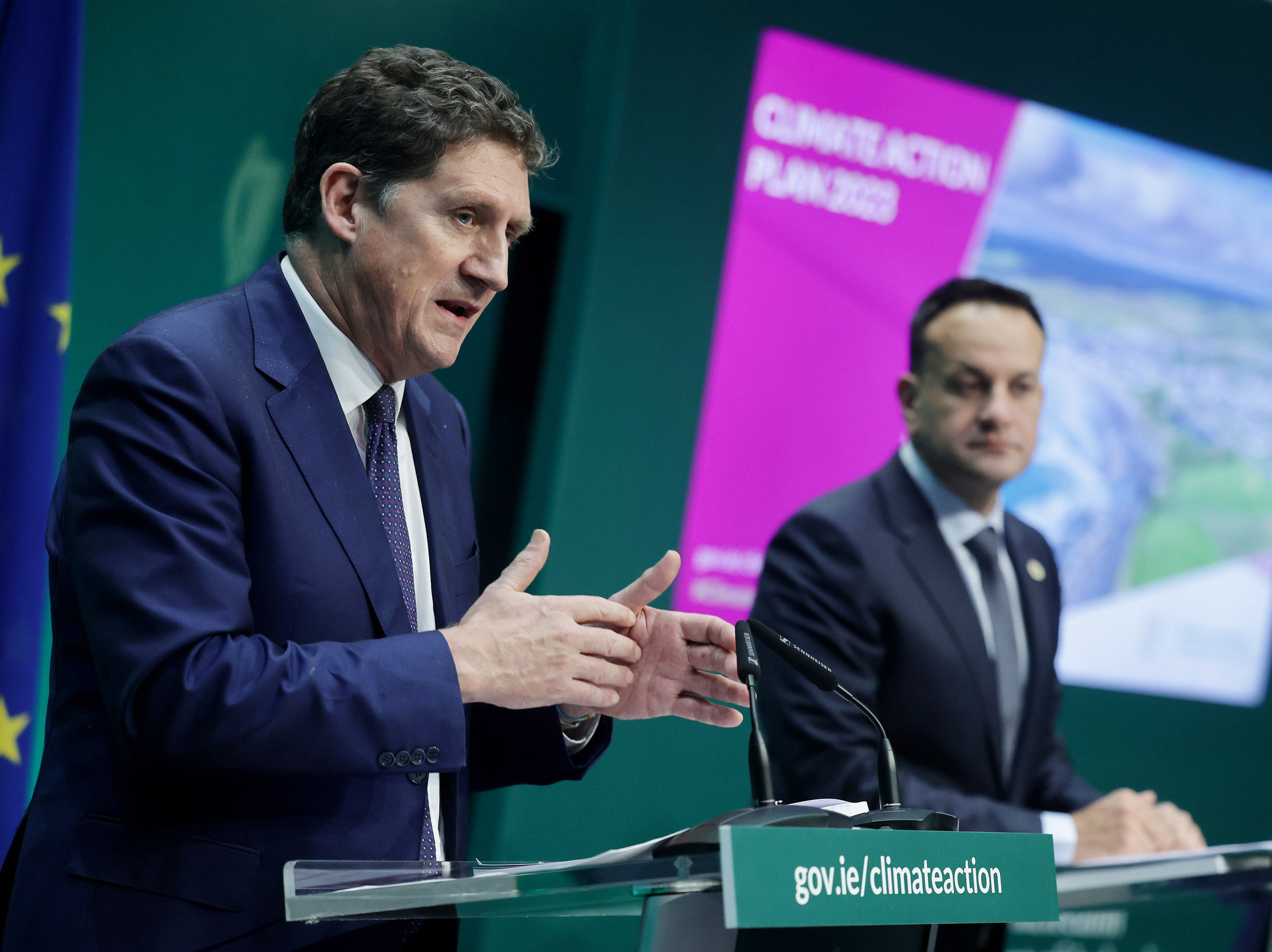
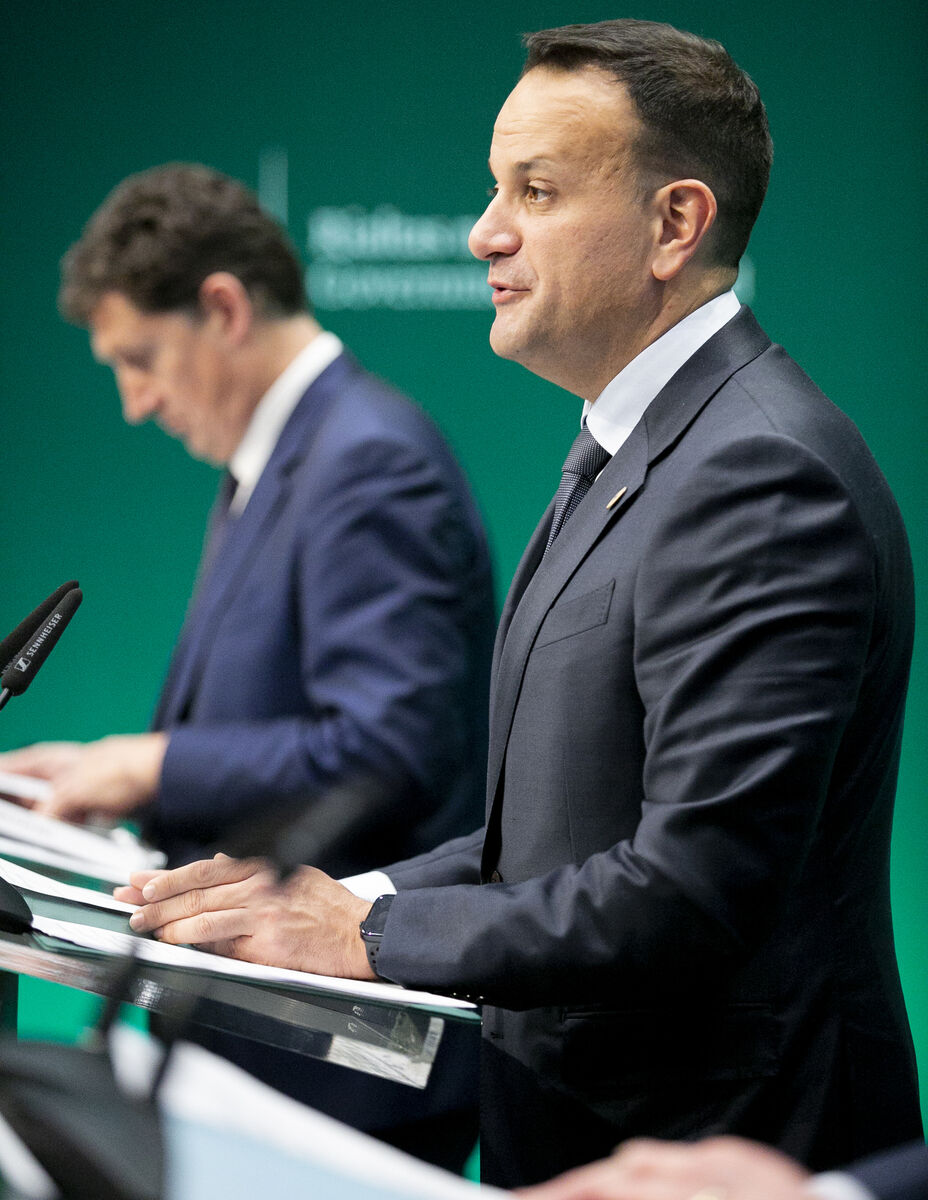
Environment Minister Eamon Ryan TD and Taoiseach Leo Varadkar TD during the launch of Climate Action plan 2023. As part of its aim to reduce carbon emissions by 51% by 2030, the updated plan includes a target of reducing car use from 70% to 50% of all daily trips. Picture: Maxwells
Congestion charges can not be ruled out, Green Party leader Eamon Ryan revealed while announcing the Government's updated climate action plan.
Mr Ryan, alongside Taoiseach Leo Varadkar and Tánaiste Micheál Martin, unveiled the State’s updated plan which is a blueprint for “radical change” and will seek to achieve the overall target of reducing carbon emissions by 51% by 2030 and to achieve a net-zero carbon position by 2050.
Mr Ryan, Minister for the Environment, Climate and Communications, said Ireland is facing three ecological crises — climate, biodiversity loss, and pollution — and that a dramatic shift was needed.
He described the area of transport as probably "the most challenging" and warned that Ireland must now pivot and go in a different direction towards sustainable mobile transport systems.
Speaking to reporters at Government Buildings, he said the shift to ensure 'active travel' (such as walking or cycling) and public transport account for half of all journeys will require a threefold increase in the provision of public transport services.
He said the Government “can not rule that out”, when asked about congestion charges but said it would not be the Government’s first response.
He said the reallocation of road space and other demand management measures is what the Government would work towards before ever turning to congestion charges.
Taoiseach Leo Varadkar said each minister will be responsible for reaching the targets in their sector and, given they are legally binding, it does mean “down the line” that legal action could be initiated against the Government.
He said in the case where a sector misses its target, the minister responsible could be required to come up with a number of solutions to address the situation.
The plan includes a number of targets including:
- Producing enough renewable energy to power every home and business in the country by 2030;
- One out of every three cars to be electric by 2030;
- A plan for 70% of people in rural Ireland to have access to buses that travel to the nearest town three times a day;
- Retrofitting 500,000 homes to make them easier to heat.
The Government wants walking, cycling, and public transport to account for 50% of all daily trips undertaken in Ireland.
The plan also aims for tillage farming to cover up to 400,000 hectares by 2030.
Mr Varadkar said Ireland can become energy independent within a generation or less and that this generation should be the one that turns the tide on climate change and biodiversity loss.
He said climate change is "the most pressing long term global challenge of our time" and Ireland is facing up to that challenge.
"We should not see climate action as an obligation or a burden. We should embrace it as an opportunity,” he added.
CLIMATE & SUSTAINABILITY HUB
CONNECT WITH US TODAY



Be the first to know the latest news and updates