People accompanying women for abortion could be breaking proposed safe access zones law
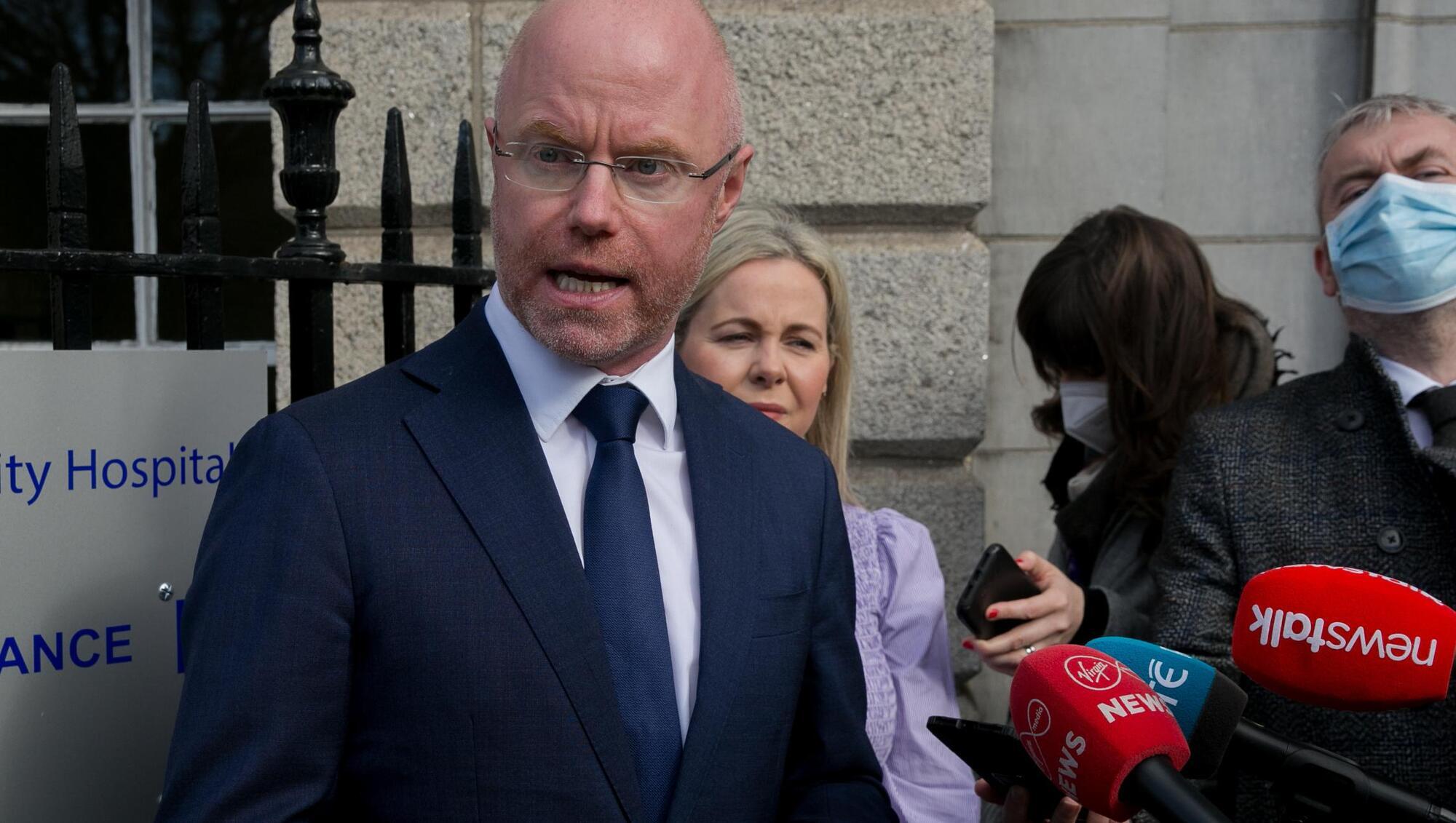
Department of Health officials offered their advice on the new 'safe zones' legislation to the Minister for Health, Stephen Donnelly. Picture: Gareth Chaney/Collins
Partners, relative, or friends accompanying a pregnant woman to have an abortion could be breaking the law if they offer advice or support inside a proposed safe access zone, a review has found.
Departmental advice sent to the Oireachtas health committee in relation to the Safe Access to Termination of Pregnancy Services Bill 2021, notes it could pose unforeseen difficulties for pregnant women and gardaí.
The bill, sponsored by Sinn Féin senator Paul Gavan, is at the fourth stage in the Seanad. It seeks to prevent anti-choice campaigners from protesting outside centres which provide abortion services.
Legislation to protect abortion service providers and users alike was due to be introduced in tandem with the introduction of abortion services in 2019. However, plans to establish 100m safe zones have yet to be implemented.
The departmental advice on the bill to Health Minister Stephen Donnelly raises a number of concerns.
“Although the bill sets out some exemptions within safe access zones, the bill does not include an exemption to cover a friend or family member accompanying a person through a safe access zone,” the advice states.
The advice states that the current definition of ‘designated premises’ in the bill, suggests that 100m safe access zones will apply to all premises that provide termination of pregnancy services as well as those providing or advising on contraceptive services. Officials believe this definition is too broad and would cover GPs, family planning clinics, primary health care centres, and hospitals — and will also apply to pharmacies, which commonly dispense contraception and also provide advice in relation to contraception.
“It might also extend to other premises which sell, supply or give advice about contraception, such as Student Union Welfare Offices, schools or indeed pubs which have condom machines in their toilets,” the document states.
“Thinking about the numbers of such premises in any given city or town in Ireland, the application of 100m zones would clearly have a serious impact on the ability of anyone to hold a protest either for or against termination of pregnancy in any location without the risk of inadvertently committing an offence.
“Furthermore, the creation of such a publicly available list may deter some practitioners from providing services or cause other practitioners to withdraw the provision of services.”
There are no enforcement measures included in the bill, which officials have also flagged as a concern.
“It does not provide any powers for An Garda Síochána to, for example, direct people to immediately leave the area, or to arrest any person failing to comply with such a direction. This will have serious implications for the implementation and enforcement of the legislation by An Garda Síochána.”
The committee is to meet Department of Health officials this week to discuss safe access zones after months of delay.
A statement said: “The Minister and the Department of Health are fully supportive of the spirit and intent of the Private Members Bill being debated.”

CONNECT WITH US TODAY



Be the first to know the latest news and updates