HSE fears extra-potent drugs entering growing Irish market ahead of Christmas
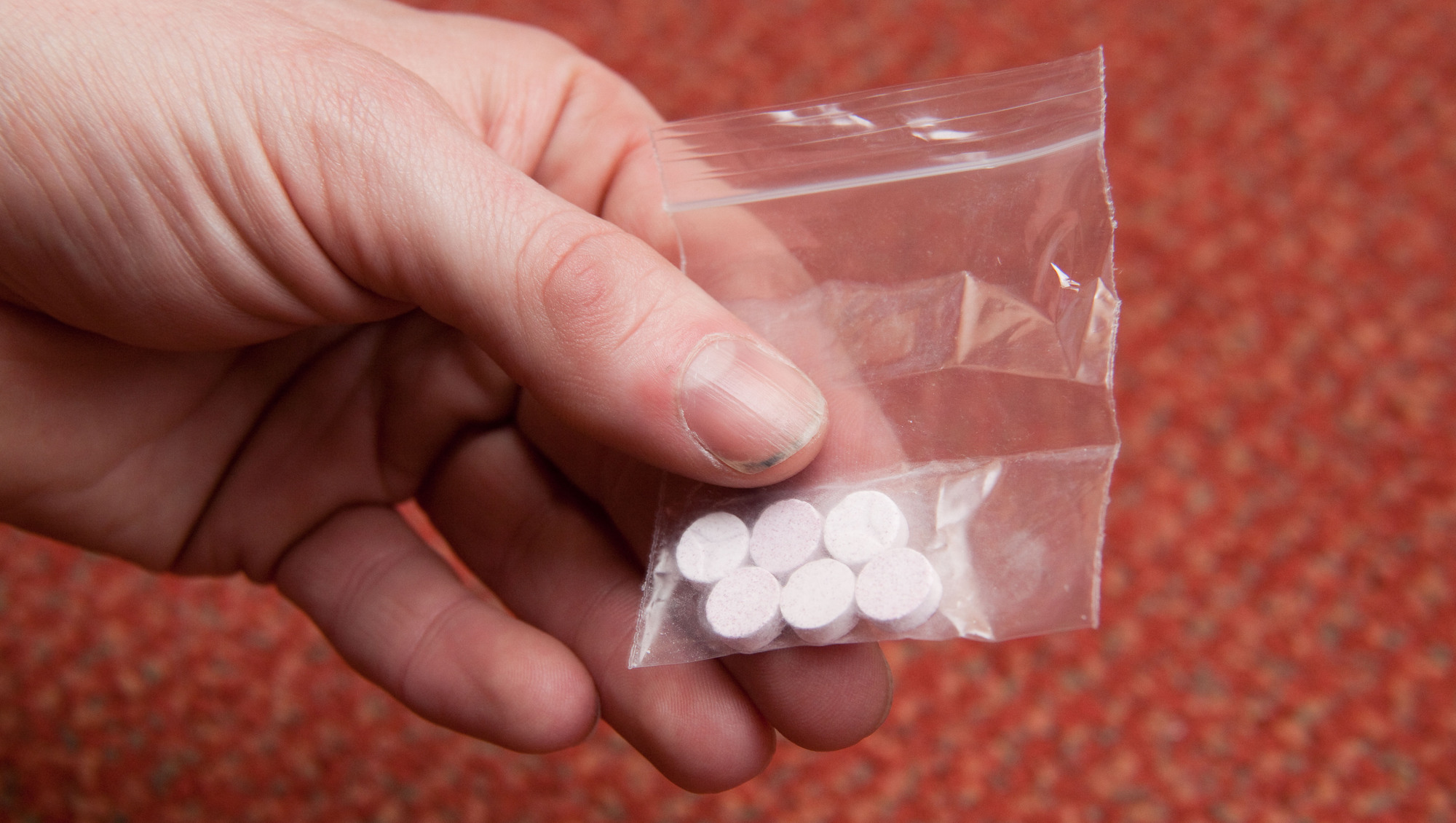
Synthetic drugs such as MDMA are also increasingly manufactured in Europe, particularly in eastern Europe, the HSE has warned. Picture: Joe Bird / Alamy Stock
Extra-potent illegal drugs are being produced in European labs to capture more of the growing drug market as use escalates in Ireland and across the continent.
The HSE is warning of extremely potent MDMA, of other synthetic substances being falsely sold as ketamine, and of synthetic cannabinoid vape liquid linked to anxiety and psychosis in circulation ahead of an expected spike in drug use over Christmas.
“The market has changed and these high-strength drugs are circulating,” Eamon Keenan, the HSE's National clinical lead for addiction services, told the
“Drugs are becoming more potent."
Synthetic drugs such as MDMA are also increasingly manufactured in Europe, particularly in eastern Europe.
The European Union Drugs Agency (EUDA) has warned that increased production in Europe may trigger more consumption locally.
"The European drug market is evolving rapidly as both suppliers and consumers are finding ways to adapt to geopolitical instability, globalisation, and technological advances," a report from the EUDA said.
“This appears to be resulting in the availability of a more diverse range of substances, often of high potency and purity, which are posing new risks to public health.
"And some of these manufacturers are making increasingly potent drugs to boost sales of their product.
“'Our tablets are better than our competitors' tablets’ that sort of thing,” Prof Keenan said.
While some tablets contain 0mg of MDMA, the average adult dose is 50–100mg. However, tablets have been found by the HSE which containing 312mg.
Any tablet with 125mg or more is deemed higher risk by the HSE. The higher the strength of the pill, powder, or crystal, the higher the risk of an emergency, the HSE warned.
"It's obviously safer not to use drugs. But if somebody does decide to use drugs, then it's useful to know that these drugs are circulating in the night-time economy and that they do pose high risk," Prof Keenan said.
Cocaine, MDMA, and ketamine will likely be the most consumed "party drugs" over the festive period, Prof Keenan said.
Another EUDA study published this year found that ketamine use was as high as MDMA use in Ireland, according to analysis of wastewater samples in Dublin.
Dublin had the 10th highest levels of ketamine — a psychoactive dissociative anesthetic drug — in municipal wastewater of all cities tested in Europe.
“We're seeing young people with bladder-related problems now more commonly. And that's been associated with ketamine use,” Prof Keenan said.
Anxiety, depression, and psychosis are also associated with ketamine use, he added.
“Ketamine is used much more widely than we had perhaps been aware of prior to the that [wastewater analysis]," Prof Keenan said.
The wastewater analysis study will be expanded next year in a three-year pilot project.
"We're in the process of finalising the awarding of the contract to a laboratory partner, and we'll be able to analyse the wastewater on a regular and an ongoing basis — not just in Dublin but outside Dublin as well,” he said.
Addiction counsellor Michael Guerin said that there has been an evolution in the drug ecosystem over the past five years, with a move towards synthetic rather than plant-based drugs.
“Cannabis was a plant, heroin came from the poppy, cocaine came from a plant in the mountains in South America," Mr Guerin said.
“And now they are synthesizing substances in laboratories, primarily in eastern Europe, that mimic the effects of these natural substances and bind to the same receptors in the brain.
"And these synthetics are so potent that you can get an awful lot of doses into a small package, so it makes sense logistically [for drug dealers]. You don’t have the same bulk to transport as with cannabis or cocaine."
And tinkering with chemical formulas or adulterating substances with other drugs — such as the potent synthetic opioids fentanyl or nitazenes — can have serious and even fatal consequences.
“Cocaine was contaminated with fentanyl in Ireland, and it was taken at a christening in Dublin. There were a number of people hospitalised," Mr Guerin said.
“The nightmare scenario is that a batch of [counterfeit] benzodiazepines, cocaine, or heroin will come into the country adulterated or contaminated with something synthetic, powerful, and potentially lethal."

CONNECT WITH US TODAY



Be the first to know the latest news and updates