Fixing South Kerry's depopulation problem
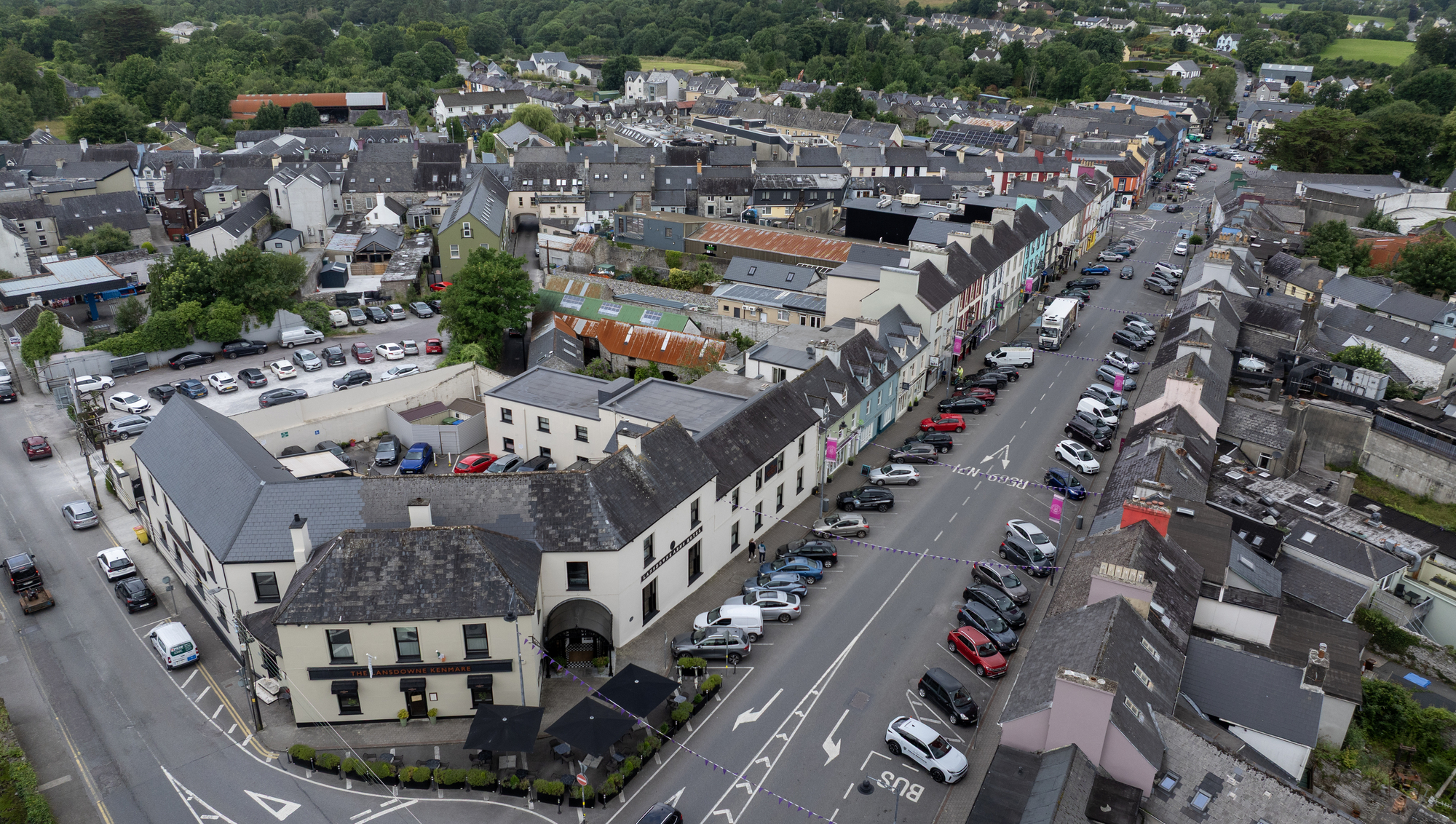
Only 528 new homes have built in the Kenmare local electoral area since 2020. File photo: Domnick Walsh © Eye Focus LTD
Last week, serious concerns were raised about depopulation in south Kerry, and the falling number of permanent residents in its communities.
In his RTÉ report, Marty Morrissey said there are fewer young people in GAA clubs and in schools where “last September, only 83 pupils started across the 12 primary schools”. The decline in the number of children is confirmed by the 2022 Census for the area, with more people in the over-75 age group than children under-10.
Yet, we are told that the population of Ireland is growing at an unprecedented rate, expected to pass 5.5 million people this year. So what is happening in the rural South-West, and similar parts of the country, and how might this trend be reversed?
The Kenmare local electoral area (LEA) stretches to Killorglin in the north, and Caherciveen and Waterville in the west. It has a population of over 27,000 people in about 10,000 households. Of these homes, about 7,500 are owner-occupied, and 2,000 are rented from private landlords or the local authority.
South Kerry is a beautiful part of the country, situated on the Wild Atlantic Way between the Dingle and Beara Peninsulas. It is remote and scenic, and this brings its own challenges.

Kerry is Ireland’s most tourism-dependent county, with one in five workers employed in the sector. But people in these jobs need places to live that are close to their work, and since 2020, only 528 new homes were built in the Kenmare LEA.
There is, unfortunately, no count of how many became permanent homes, and how many holiday homes. This is part of the problem. While Kerry County Council is making plans for new housing, it can’t rely on that ‘supply’ to meet local needs.
Nationally about 3% of houses and apartments are holiday homes, but in Kerry this is over 11% and around Kenmare it is more than 25%.
This is one of the highest percentages in the country, meaning that one in four homes is vacant for large parts of the year. They are not available to families who want to stay, or settle, locally.
On census night in April 2022, there were over 1,370 unoccupied holiday homes in just the five electoral districts of Kenmare, Caherdaniel, Killorglin, Caherciveen, and Sneem.

This week, a quick search of Airbnb — which is just one of the short-term holiday letting websites — shows over 1,000 entire homes available to rent in the coastal areas west of Tralee and Kenmare. Many of these properties bring in close to €1,000/week, even in the low season.
For owners, the attractions are obvious — tourists give more flexibility, cause less wear and tear, and don’t acquire tenancy rights. A holiday cottage could earn over €20,000/year between the summer season and weekends.
However, for a family looking to live locally, many in low-paid or seasonal jobs, the maximum Housing Assistance Payment (HAP) for a family in County Kerry is only €575/month (€6,900/year). It is significantly higher in neighbouring County Limerick at €750/month (€9,000/year) and County Cork at €950/month (€11,400/year).
The difference for an owner is considerable, even allowing for the cost of managing bookings, hosting guests, regular cleaning, etc. It seems that families who want to live in south Kerry are being priced out by transiting visitors.
Importantly, the impact goes beyond the GAA clubs and schools, as shops, pubs and restaurants may not have sufficient customers to remain open in winter.
Since 2016, Ireland has had rent controls in Rent Pressure Zones (RPZs). Initially in Dublin and Cork cities, it was later expanded, and has included Killarney LEA since 2020. Last June, RPZs were extended to all parts of Ireland.

This makes a significant difference, because holiday lets in RPZs require a ‘change of use’ planning permission where the property is to be rented for more than 90 days in a year. Up until 2025, owners did not require planning permission to let tourist houses and apartments.
Consequently, Kerry County Council now has a unique opportunity to rebalance the local housing crisis. Firstly, it can enforce the 90-day rule and bring up its rates of HAP payments to align more closely with its neighbouring counties.
This could incentivise some holiday let owners to switch to tenancies for local families. The benefits of repopulating clubs, schools, shops and pubs accrue to all in the community, and may even support the development of public transport.
Secondly, Census 2022 shows 724 vacant homes in Kenmare LEA, half of these vacant since 2011/12.
There are government grants of up to €50,000 to refurbish a vacant property, and up to €70,000 where it is derelict. So, there is another opportunity here to consolidate towns and to bring local construction employment.
Thirdly, the Government’s recent housing plan has a commitment for 72,000 social homes nationally, another opportunity to expand delivery for local need.

It was reported that last year Kerry County Council sold the most council houses of all local authorities, with 43 existing sold and only 33 new ones built. However, over time, the social housing stock in Kerry has been increasing modestly from 4,277 in early 2020 to 4,536 last year, so this capacity could be developed further.
Finally, one of the challenges for new housing is, of course, planning restrictions on ‘one-off’ housing in rural areas. When people are enabled to build their own homes, they do, and this should be encouraged and supported in sustainable locations.
The Kenmare Local Area Plan has a target of at least 30% of new housing to be delivered with the existing towns and villages. Between 2012 and 2022, however, almost four in every five new homes in Kerry were ‘outside a settlement’.
This type of housing is not sustainable, it puts pressure on local services and infrastructure, generates traffic, and ‘takes the life’ out of towns and villages.
Discussions about the housing crisis are too often focused on urban areas, when the challenges in rural Ireland can be just as acute. The cities too are struggling with the demands of tourism, and if a balance isn’t stuck we may find that not only are people being squeezed out, the very reasons that tourists come may be squeezed out too.
- Orla Hegarty is assistant professor at the School of Architecture, Planning and Environmental Policy in UCD