‘Don’t open a business on the ground floor’: Bantry traders reach breaking point over flooding
With flood relief works not due to start until 2032, traders are considering a rates strike as fears grow over the town’s ageing infrastructure
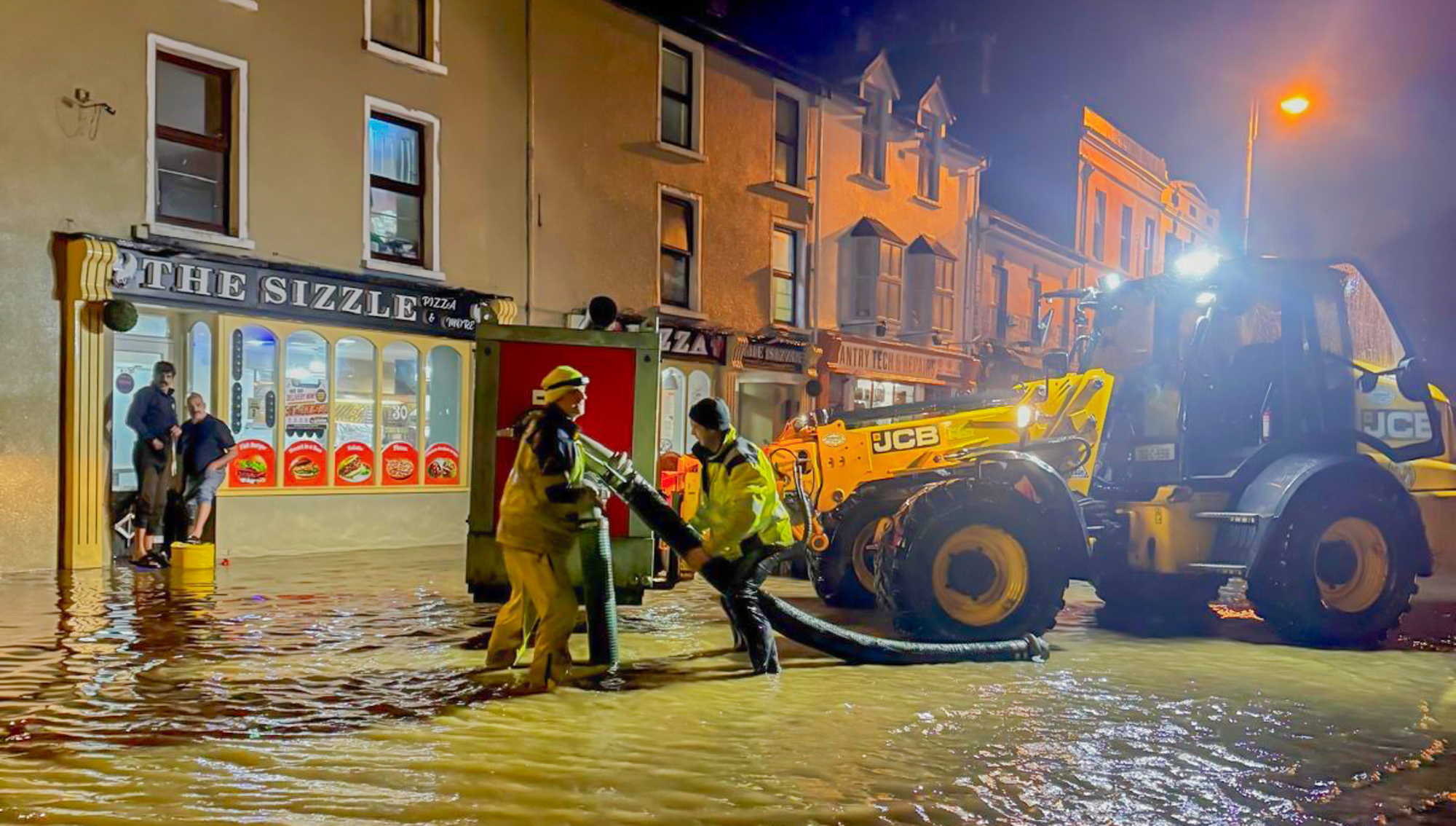
 Cork County Council workers and fire brigade members working outside The Sizzle Pizza on Bantry's Wolfe Tone Square in the early hours of last Sunday morning when the flood hit the town. Picture: Catherine Wharton/Wharton's Fish & Chip Restaurant
Cork County Council workers and fire brigade members working outside The Sizzle Pizza on Bantry's Wolfe Tone Square in the early hours of last Sunday morning when the flood hit the town. Picture: Catherine Wharton/Wharton's Fish & Chip Restaurant

When the Bantry businesswoman Danielle Delaney warned that half of the town’s businesses could close by 2032, Eddie Wiseman’s ears pricked up.

In March, the businessman closed the doors on a family clothing and footwear store that had been on Bantry’s Main Street since 1901.

“Flooding was a contributing factor,” Mr Wiseman said. “One of the lowest drains in Bantry is outside our door. It’s still the first to get hit when the water rises.

“Flooding started to get really bad in the last 12 to 14 years, and we were just sick of it — the constant fear of flooding.”

Danielle’s comment came the day after floods swept the town last Sunday.

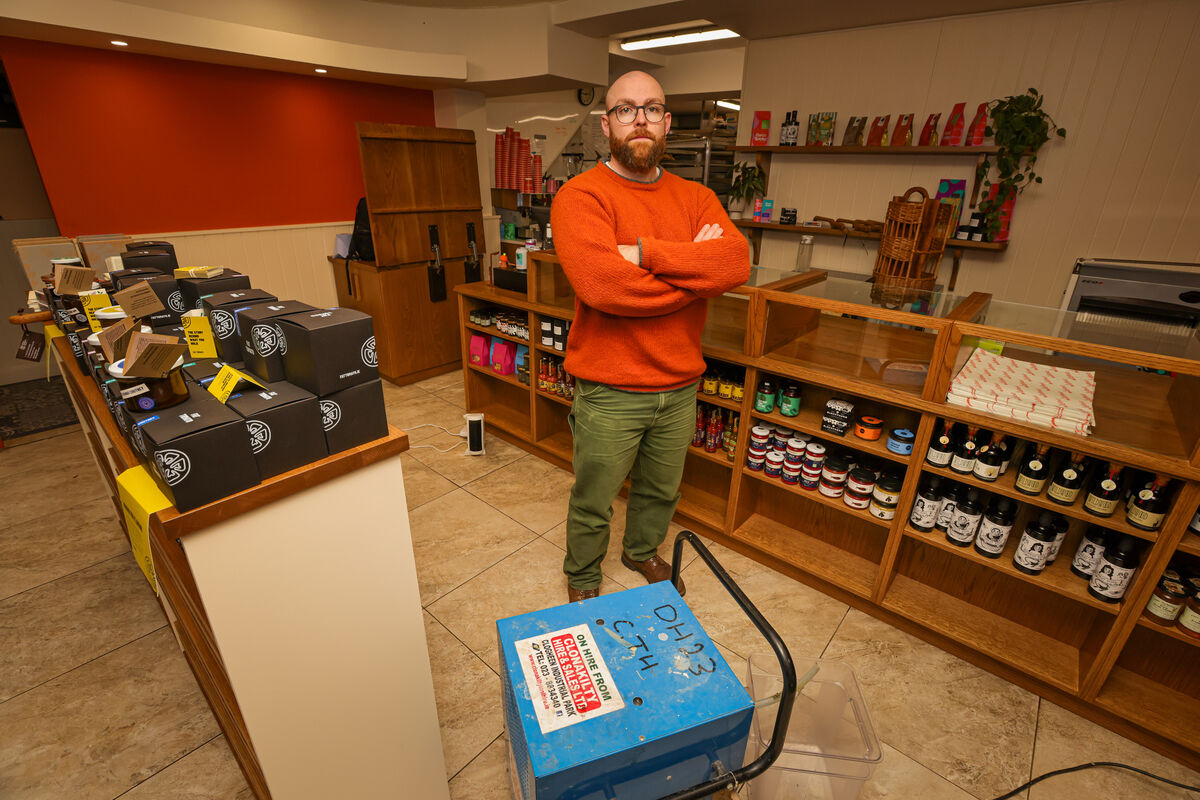
 Chris Fahy, founder and owner of Wildflour Bakery, on Bantry’s New Street. Chris saw his premises flooded last weekend only seven weeks after opening his business. Picture: Neil Michael
Chris Fahy, founder and owner of Wildflour Bakery, on Bantry’s New Street. Chris saw his premises flooded last weekend only seven weeks after opening his business. Picture: Neil Michael

More than 20 businesses, including the Wildflour bakery that Chris Fahy only opened seven weeks ago, and Paudie McSweeney’s Anchor Tavern on New Street, saw their premises flooded with up to eight inches of water.

As well as coming from the streets outside, the water poured in through walls and drains inside the premises.

The year Danielle was referring to, 2032, is when work is due to start on the town’s flood relief scheme. People like Eddie, members of his family, and others who own businesses in the town have decided not to wait any longer.

The constant delays to flood relief works in the town have angered people to the extent that there is now a discussion among businesses about withholding council rates, which the local authority recently voted to increase by 7.25% next year.

A decision has yet to be made, but the Irish Examiner has been told that if the commercial rates “strike” happens, the money will be put into a holding account and only paid when the council provides an acceptable plan to deal with flooding in the town.

 Drinagh Hardware on Wolfe Tone Square in Bantry at the height of the recent floods. Picture: Catherine Wharton/Wharton's Fish & Chip Restaurant
Drinagh Hardware on Wolfe Tone Square in Bantry at the height of the recent floods. Picture: Catherine Wharton/Wharton's Fish & Chip Restaurant

It’s not just a fear of flooding, or the inability of either the OPW or Cork County Council to solve long-standing flood-related issues, there is also concern that sections of the town, which date back to the 1600s, could be at risk of collapse.

Ms Delaney, who runs The Brick Oven restaurant on The Quay, has friends who won’t walk down New Street because of this fear of a collapse.

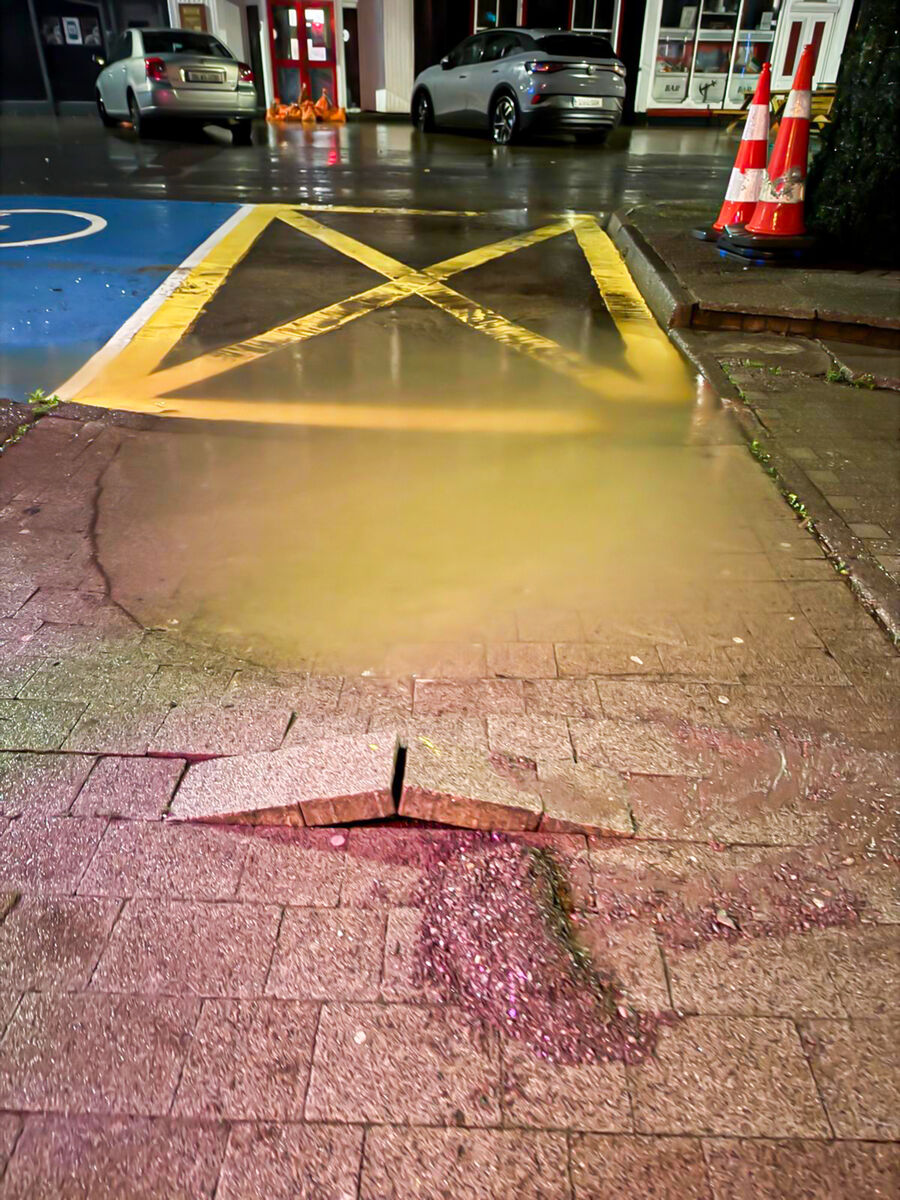
“I’ve anxious friends who, after storms, will not go up the street because they’ve seen pavements have been blown up by the water pressure and they’re afraid the whole street will fall,” she said.

 Damage caused by water bursting through pavements in the centre of Bantry in an early morning flood that swept through the seaside town. Picture: Catherine Wharton/Wharton's Fish & Chip Restaurant
Damage caused by water bursting through pavements in the centre of Bantry in an early morning flood that swept through the seaside town. Picture: Catherine Wharton/Wharton's Fish & Chip Restaurant

Mr Wiseman is also aware of a contractor who avoided carrying out work about two years ago because they were concerned about streets caving in.

The source of the concern is Bantry’s Mill River culvert — a decaying subterranean waterway dated to the 18th Century. It was built to carry water under the town and out into Bantry Harbour.

Starting at the mill wheel at Bantry Library, the culvert runs under Bridge Street, New Street, Wolfe Tone Square, and Chapel Street.

Ever since the town was hit by a major flood in 2020, successive government ministers have stood up in the Dáil and said the culvert has been “identified as a significant element contributing to flooding”.

 Paudie (Pádraig) McSweeney, publican and proprietor of the 19th Century Anchor Tavern (also known as The Anchor Bar), New Street, that dates back to the 1800s. Picture: Neil Michael
Paudie (Pádraig) McSweeney, publican and proprietor of the 19th Century Anchor Tavern (also known as The Anchor Bar), New Street, that dates back to the 1800s. Picture: Neil Michael

Despite this, work has not begun on repairing and reconstructing the culvert, and the much-delayed flood relief scheme is at least six years away from starting.

Added to that, nobody appears able to say how much the flood relief or the culvert works will cost, or if money has been set aside to carry them out.

Terrence Gibbs, who shut the popular Cosy Cabin Pub he ran for more than five years on Barrack Street after it flooded in 2020, said: 

"The problem with Bantry is we have the population of 2026 but the infrastructure of the 1800s.

“The culvert was built when people were pulling horses and carts.

“The population has increased massively since then, as has the number of buildings.

“Water has to go somewhere, and nature always has a way of saying we need to slow down.”

Mr Wiseman agrees. “Look, it’s very simple,” he said.

“When you put concrete over soakways, the water runs down faster, and that’s the problem.

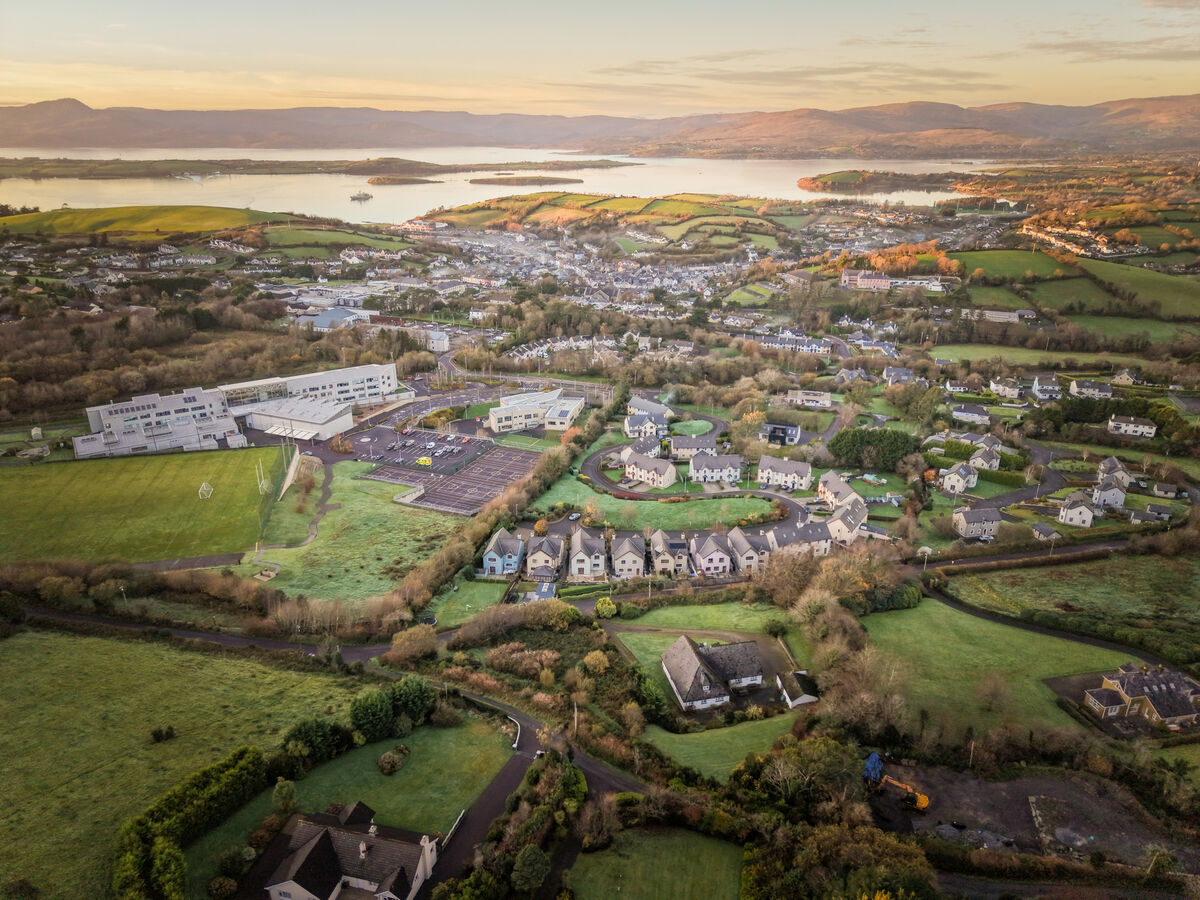
"The geography in Bantry is that it is in a hole surrounded on three sides by hills and water on the other side. So when water falls in the hills, it comes down fast.
“There are two rivers from separate hills and when they meet, there is a volume of water that is flowing very fast.

“Soakage has been taken away with the building of housing estates, and schools, and the medical centre.”

Colaiste Pobail Bheanntrai and an area of Bantry town where estates like Sheskin Park, the Sidlings and ard Na Greine have sprung up and where a new 53-home residential development is the subject of a planning application. 'Based on what locals say about development, there is a correlation between flooding and more development.' Picture: Neil Michael

Carlow Weather’s Alan O’Reilly studied OPW records via a river gauge located at the spot where the Mill River enters the top of the culvert by Bantry Library.

On the night of the flood, the gauge recorded the fact that at 10.45pm water levels had reached “high”.

But in just an hour, they were very rapidly reaching higher than normal levels.

By 12.30am, levels were just under an hour away from record levels that would lead to sections of roadway and pavements buckling with the pressure of the water bursting up through them.

“What was interesting about Sunday morning’s flood in Bantry was the time the heavy rain hit and finished coincided with a spike in water levels at a time of high tide,” Mr O'Reilly said.

“It was a bit of a perfect storm.

“Basically, you have a sink where the plug hole is almost closed, and you keep pouring water into it, so it overflows and floods.

"Based on what locals say about development, there is a correlation between flooding and more development.
“But it also comes with climate change and more extreme rainfall.”

A 1970 aerial view of Bantry Town shows Bantry General Hospital surrounded by either fields or forests.

Indeed, Ms Delaney remembers when she was a child that land now developed above the town “would be like a lake in wintertime”.

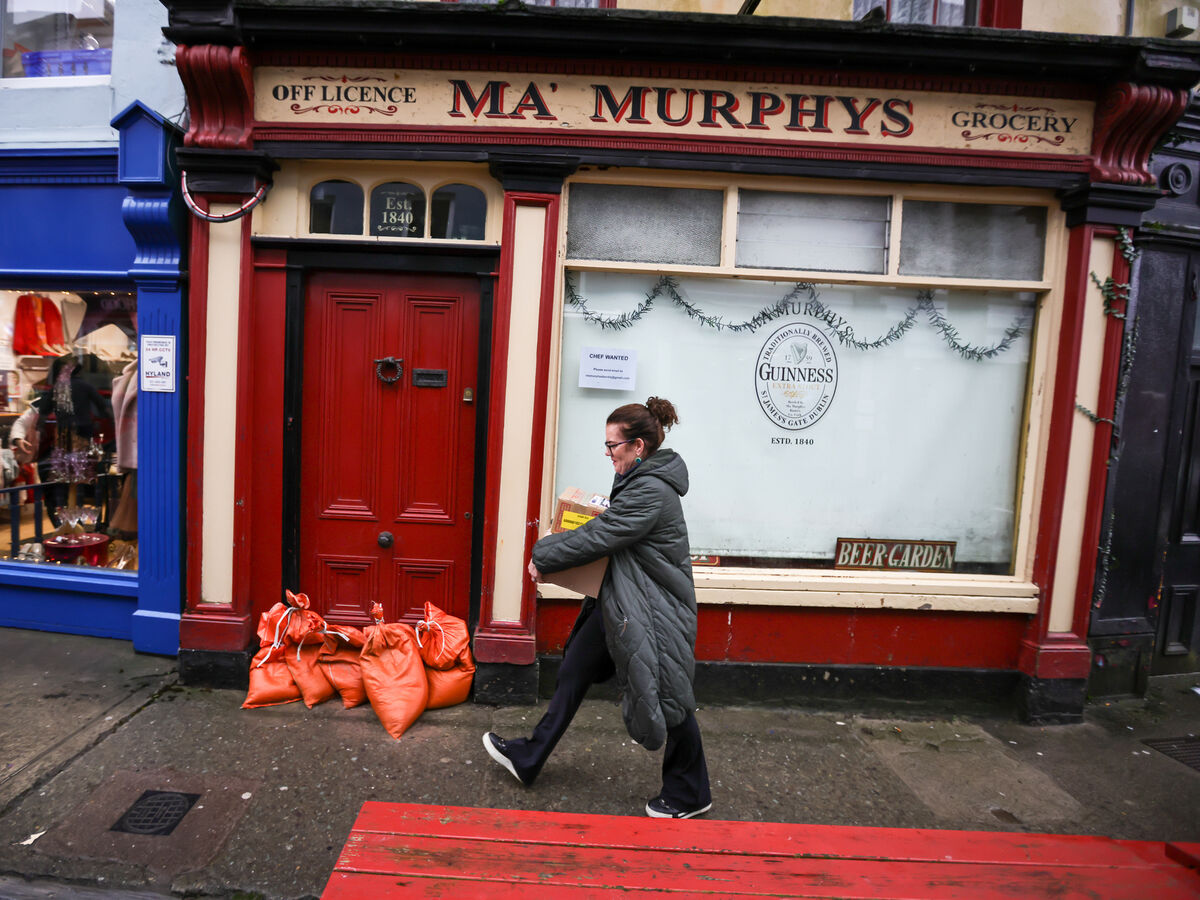
 The sandbagged doorway of Ma Murphy's Bar on New Street, Bantry. Picture: Neil Michael
The sandbagged doorway of Ma Murphy's Bar on New Street, Bantry. Picture: Neil Michael

She recalled: “The fields that are now housing estates would fill up with water come October and they wouldn’t be dry again until the following summer.

“These fields are now housing estates, or schools, or parking lots.”

This did not go unnoticed by planners at the time.

Before planning was granted for a 54-unit estate at Knocknamuck, Caherdaniel West, Seskin, in 2008, a planner acknowledged the proposed site was level at either side of a “flood plain”.

The same planner noted “this site presents a number of serious issues” including “the threat of flooding”.

There was a surge in construction from the early to mid-1970s, which coincided with industrial growth in the town from businesses like the Whiddy Island oil terminal and it has continued ever since.

As well as the much-needed Bantry Primary Care Centre, residential enclaves sprung up in Dromleigh South and along Dromleigh Heights, and nearby Sheskin.

Despite claims among some people in the town that little or nothing at the planning stages was done to contain water, council planners routinely imposed conditions that surface water not be permitted to flow onto public roads to prevent flooding on nearby roads.

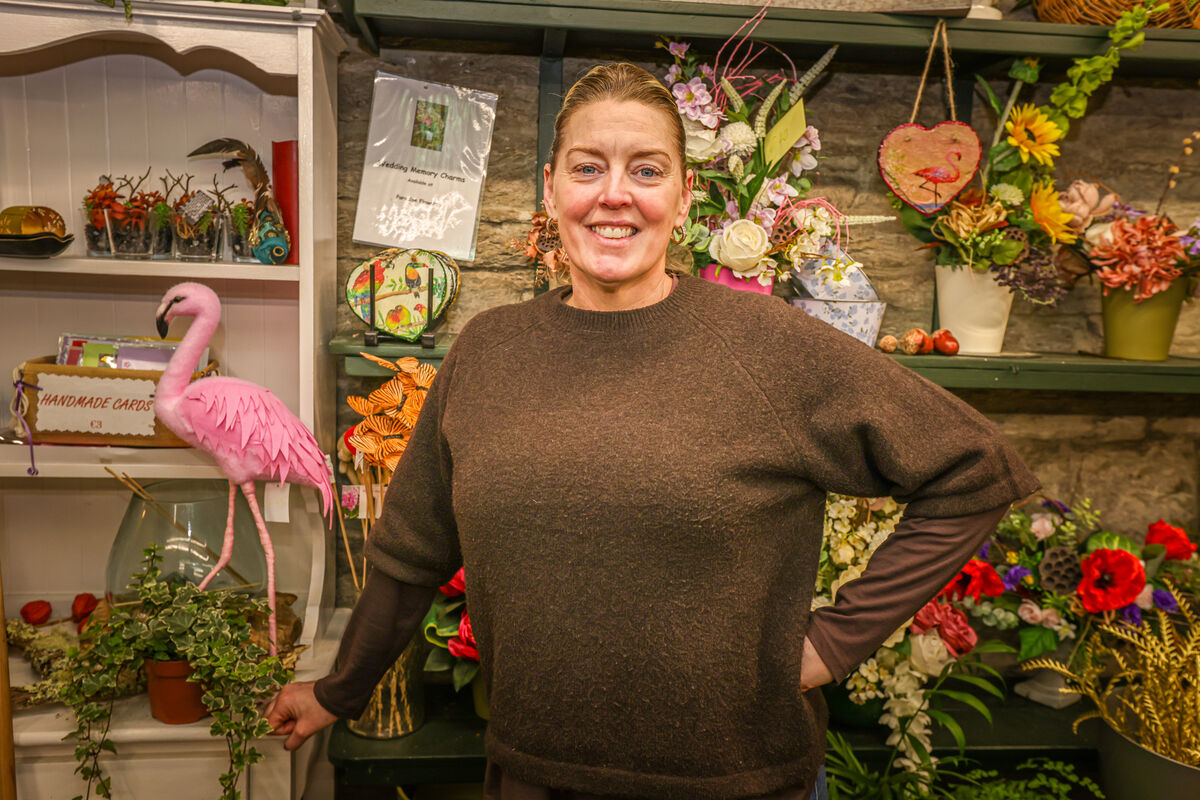
Florist Lyndsey O’Sullivan, whose Paradise Flowers on Marino Street flooded from the inside last Sunday, said: “Every time it rains, you just can’t sleep. You keep wondering if your business is going to be flooded.

 Florist Lyndsey O'Sullivan, owner manager of Paradise Flowers on Bantry’s Marino Street. 'Every time it rains, you just can’t sleep.' Picture: Neil Michael
Florist Lyndsey O'Sullivan, owner manager of Paradise Flowers on Bantry’s Marino Street. 'Every time it rains, you just can’t sleep.' Picture: Neil Michael

“There is a lot of anger because we feel we are not really being listened to. We get all sorts of assurances, but they don’t amount to very much.”

Of last Sunday, she said: “I opened the door, and I had water about four or five inches deep.

“My counter is wooden, and this is the third time in a short space of time that the shop has flooded.

“That counter is not going to last much longer.”

She added: “It’s heartbreaking, and people are very down about this. It has become very depressing.

“There is a lot of talk, a hell of a lot of talk from ministers, but nothing gets done.”

Asked what the former pub landlord would advise, in his new career as a financial and investment adviser, any person thinking of locating their business in Bantry, Cosy Cabin’s former proprietor’s response was immediate.

“Don’t open a business on the ground floor, and maybe consider a canoe buy or rental business,” he says.

As to a more long-term solution for the town as a whole, he suggests somebody should “put a roof over it”.

More in this section

Lunchtime News

Newsletter

Get a lunch briefing straight to your inbox at noon daily. Also be the first to know with our occasional Breaking News emails.

Cookie Policy Privacy Policy Brand Safety FAQ Help Contact Us Terms and Conditions

© Examiner Echo Group Limited