Alan Healy: We keep arguing about rural Ireland without agreeing on what it is
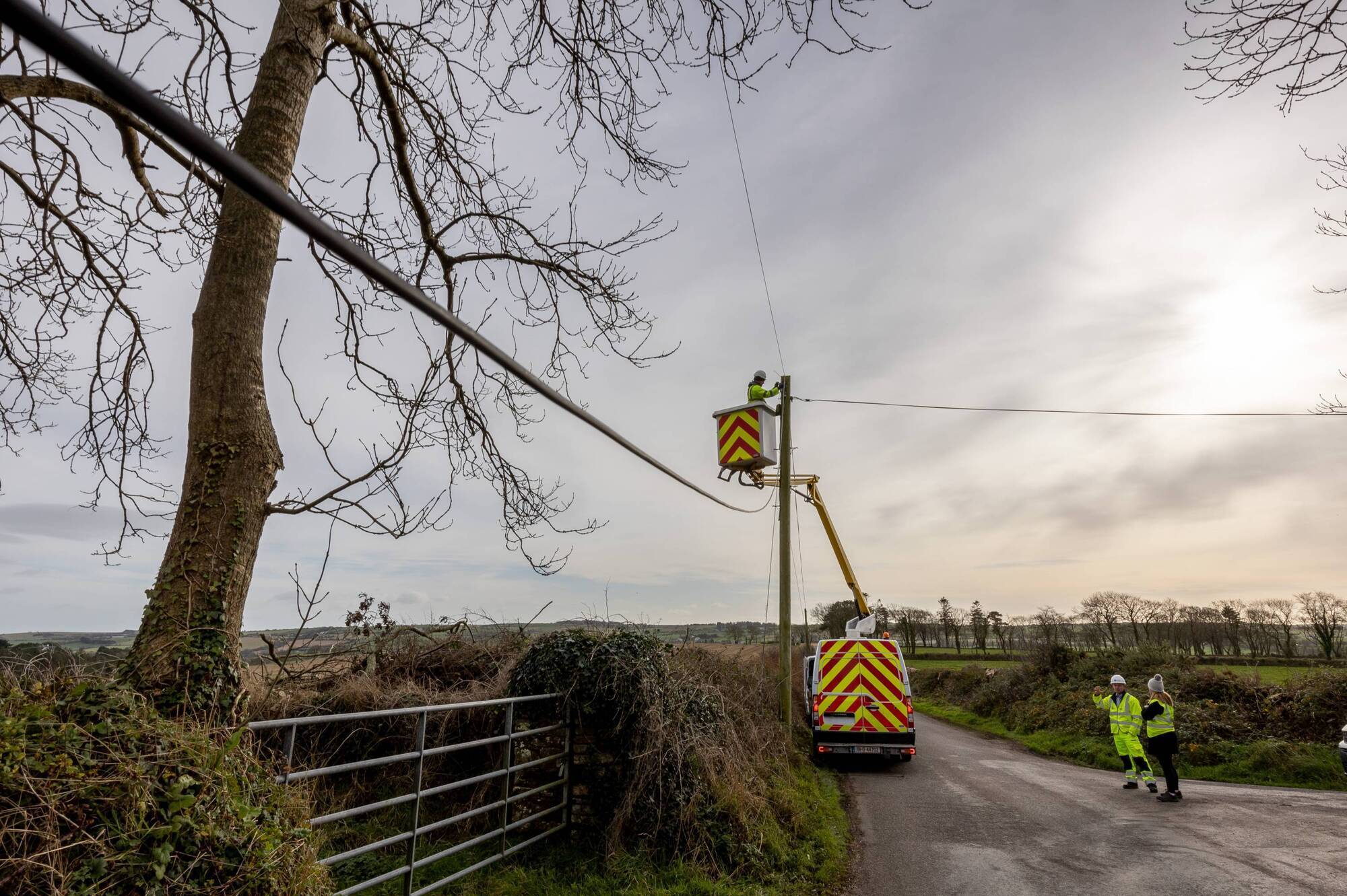
More than 500,000 rural premises can connect to high-speed broadband.
Rural Ireland is not one place and never has been, but the Government's new rural strategy risks obscuring that fact.
This week the Government set out its stall for rural Ireland with the publication of Our Rural Future 2026-2031. It has 34 commitments, 234 actions and five pillars, though much of what is in it is already on the table elsewhere.
However, it brings into focus a question that has been asked for decades: what defines rural Ireland, and how can it best be supported?
Launching the plan, the Taoiseach said: “Rural Ireland is central to our national identity and to the future of our country.” Versions of that line have been heard for half a century. What has changed is the country it describes.
When Ireland joined the EEC in 1973, approximately one in every four workers was on the land. Today, rural and remote parts of the country have been transformed. More than 500,000 rural premises can connect to high-speed broadband. There are more than 400 remote working hubs on the Connected Hubs network, and four regional technological universities. In half a century, rural Ireland has modernised as fast as anywhere in Europe.
The gaps have not closed, however. For half the households around Bantry, the nearest emergency department is almost 80km away. According to the CSO, that is the longest distance for any local electoral area in the country. Bantry has an injury unit, which helps with a broken arm but not with a heart attack. Across the most rural parts of Ireland, the typical trip to an emergency department is 40km, roughly ten times the distance city dwellers face.
Yet as the plan notes, rural Ireland is not emptying out. Highly rural and remote areas grew their population by 6.4% between 2016 and 2022, nearly twice the rate of rural areas with moderate urban influence. The OECD says rural population growth in Ireland is surpassed only by New Zealand among 14 comparable countries. It expects that growth to continue, with particularly strong growth in rural and remote regions.
Employment in highly rural and remote areas rose by 12.1%, or 25,700 people, in the year to early 2025. More than a fifth of workers there are self-employed. Just under three in ten rural workers now work from home for at least part of the week. In previous generations, young people in remote areas often had to leave, but growing numbers are staying, coming back, or arriving for the first time.
But the picture changes dramatically depending on where you draw the boundaries of rural Ireland.
The countryside around Ovens or Riverstick, within 20 minutes of Cork city, is officially rural Ireland too. According to the CSO, the people who live in areas like these are among the healthiest and best-off in the State, and among the most likely to be in work.
The CSO refers to this commuter-belt countryside as “rural areas with high urban influence”. In these areas, median household disposable income is €62,446, a step above the national figure of €58,922. In highly rural and remote areas, there is a significant drop-off, to €40,839. The at-risk-of-poverty rate in those remote areas is 15.3%, against 11.7% for the State as a whole.
It is the same story on virtually every measure. The commuter belt has the lowest unemployment rate in the country, at 2.2%, and the highest share of people describing their health as very good. Remote areas have the oldest population, the lowest share of people with a degree and the cheapest homes, with a median price of €210,000 against €357,499 nationally.
The new policy refers to the CSO definition of rural areas as places with fewer than 1,500 people. It also quotes an older definition, still reflected in programmes like LEADER, which counts anywhere outside the five cities as rural. On that measure, a town of 19,000 people like Carrigaline is in the same category as the Beara peninsula.
In the end, the policy declines to choose. It applies what it calls a “broad and flexible understanding of rural Ireland” and “does not rely on a single or rigid definition of rural.”
The problem for policymakers in any country when it comes to rural policy is the tendency to use geography as the defining description of what is urban or rural, when the real dividing line is often proximity to economic opportunity and public services.
There is a case for a broad definition of rural Ireland. The needs of a village on the edge of Limerick city are not entirely separate from those of a community on the Beara peninsula. Both need housing, transport, broadband and access to public services.
But a flexible definition should not become an excuse for a one-size-fits-all policy. The Government's challenge is not simply to support rural Ireland. It is to recognise that different rural Irelands need different policies.

CONNECT WITH US TODAY



Be the first to know the latest news and updates