Staffing, accountability or frontline reform: What would it take to fix Ireland’s health service?

'Hospital corridors, or any nook or cranny where you can fit a bed, were never designed for patient care.' File picture
Is the health service too ill to mend?
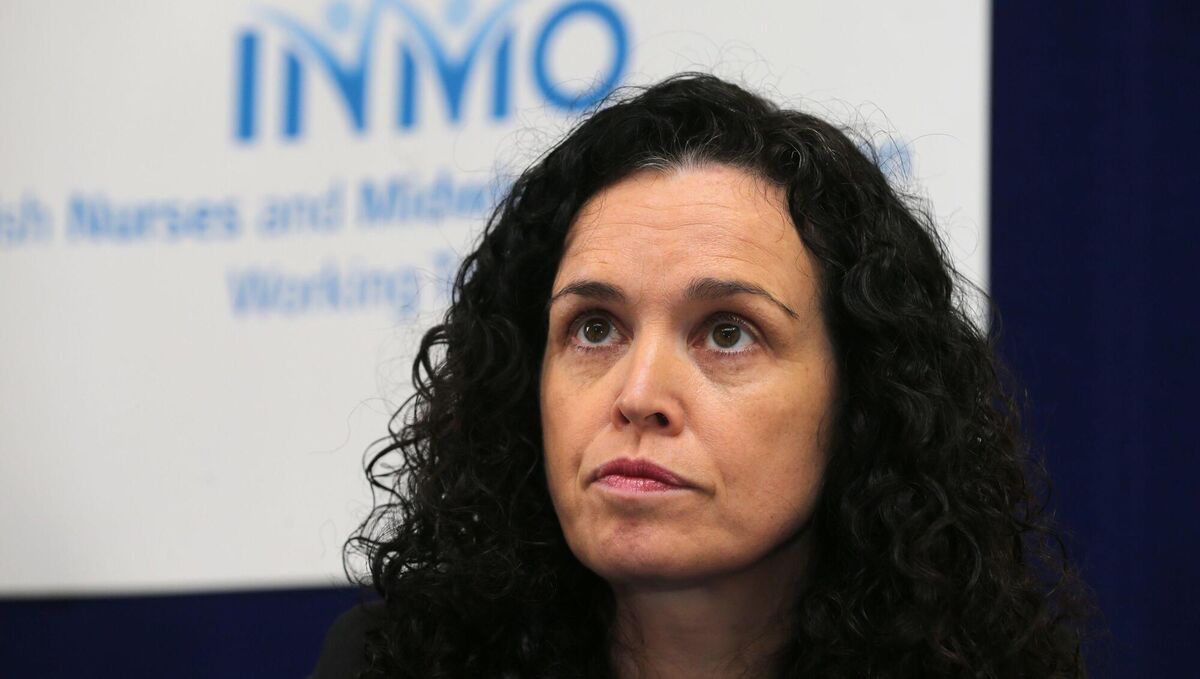
From the perspective of the Irish Nurses and Midwives Organisation (INMO), no, but if we want to fix it, the answer is staffing, staffing, staffing.
This week, amidst all the chaos, the annual hospital trolley record was broken.
More than 123,000 patients have now been treated on a trolley, chair, or inappropriate space in our hospitals.
We see what it means for patients, their families, and our colleagues every single day.
We try to provide safe care and preserve some level of dignity for people being treated on noisy, bright, and often overstimulating corridors.
Hospital corridors, or any nook or cranny where you can fit a bed, were never designed for patient care.
Yet despite the pressure, the Department of Health and the HSE are restricting recruitment.
The State’s chief nursing officer recently told an Oireachtas health committee hearing that 644.5 whole-time equivalent nursing and midwifery posts had been sanctioned this year. That figure needs context.
Much of this is replacing agency staff or overtime with directly employed staff.
It changes how the workforce is funded; it does not increase the number of people caring for patients.
We estimate there are now around 2,900 vacant nursing and midwifery posts.
We have been here before.
After the financial crash, nurse numbers fell by more than 5,000. Staffing did not return to 2007 levels until 2020.
The health service of 2026 is not the health service of 2007.
Our population has grown, is getting older, with increasingly complex care needs.
Demand is increasing year-on-year, and the number of frontline staff in hospital and community settings must increase with it.
We already know what safe staffing looks like. We have the Framework for Safe Staffing and Skill Mix.
We know the answer.
Staffing must be based on patient need, acuity, and the workforce required to provide safe care.
What we need now is the political will to implement what we already know.
Give directors of nursing and midwifery the authority to recruit.
Do not expand beds or services without the staff to safely operate them.
And where safe staffing cannot be achieved, services must be appropriately curtailed rather than asking nurses and midwives to carry the risk.
The health service is not too ill to mend, but we cannot keep trying to repair it while simultaneously taking away the people who make it work.
- Phil Ní Sheaghdha, INMO general secretary
There is no single overnight cure.
We need transparent, fair, measurable, and enforceable accountability.
We laugh when AI hallucinates. Yet we have been funding human hallucinations in health for decades. Bold visions, ribbons cut, sods turned, fragmented implementation, poor delivery, and weak cost control. And it is no laughing matter. Time to get real.
Ireland has set another annual record, with more than 123,000 patients waiting on trolleys and in unsuitable spaces.
More than 1m patients are on hospital waiting lists, with 151,130 waiting more than 12 months, including 65,100 waiting more than 18 months.
Recent events present an opportunity to reset the culture of accountability across our health service and the wider public service.
We rightly celebrate increased life expectancy and medical advances. Yet preventable failures in clinical care, management, access and medicines can cost lives or cause permanent injury.
The European Charter of Patients’ Rights, which I helped develop in 2002 alongside other European patient advocates, recognises rights to timely care, quality, safety and avoidance of unnecessary suffering and pain.
Had successive governments and health service leaders exercised consistent accountability, we might now have transparent benchmarks against which the public could assess leadership performance at all levels.
How much avoidable harm might have been prevented if warnings from Hiqa, independent reviews, frontline staff, and patient advocates had been acted upon more effectively?
Following the HSE board’s statement of November 24, I asked its chair, Ciarán Devane, through the HSE communications department, how the board defines meaningful stakeholder engagement, who it includes, and how it measures effectiveness.
My vision of meaningful engagement involves genuine dialogue, timely and substantive responses, explanations of decisions, and feedback on action taken. I asked whether the board shares that understanding.
At the time of writing, no clarification had been received.
My one fundamental reform would be transparent, fair, measurable, and enforceable accountability, underpinned by meaningful stakeholder engagement, from the hospital ward to the Cabinet table.
Accountability should be embedded in the everyday culture of our health service.
Our health service is not too ill to mend. The real test of reform is whether it improves patient care and experience and prevents avoidable harm.
Patients are not data points. They are the point.
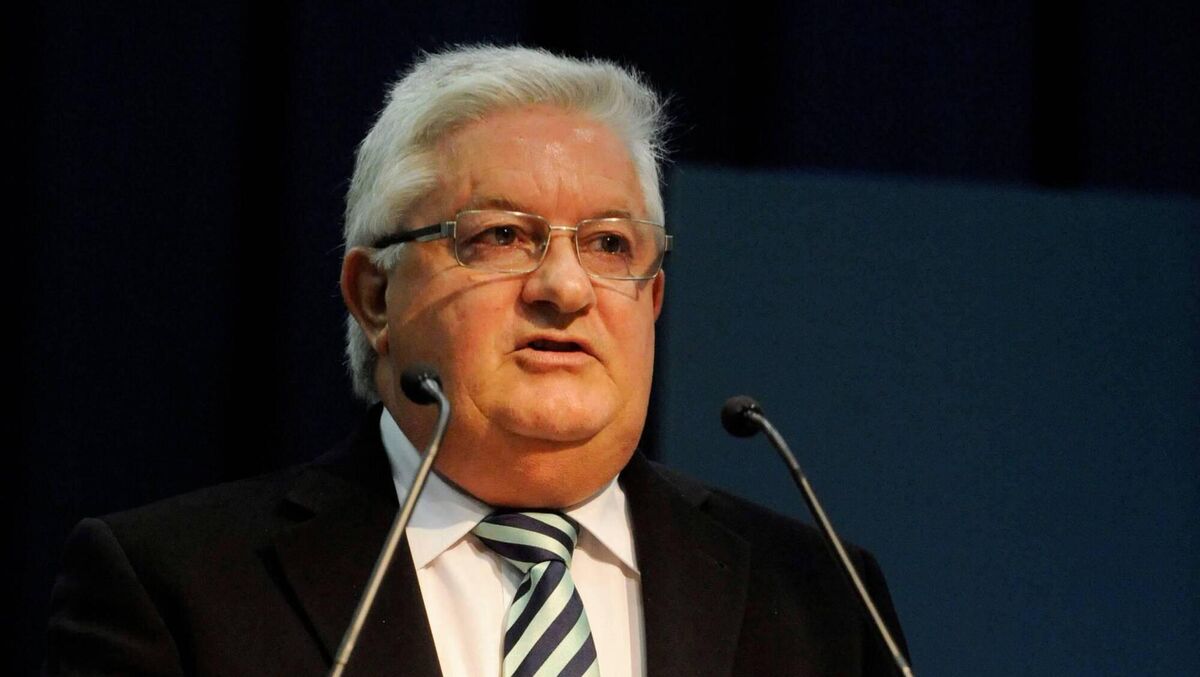
- Stephen McMahon, founder, Irish Patients Association
The health service is not too ill to fix.
Quality care is being delivered every day, with good outcomes for patients.
The people providing that care know both what works and what gets in the way.
We need to listen to them.
If there is one immediate step I would identify, it is to bring staff into the process as committed, expert stakeholders in addressing the undeniable capacity challenges.
They are not simply a cost to be managed.
They have practical knowledge of where services are stretched, why vacancies remain unfilled, and what would help them deliver better care.
Fórsa members are telling us they do not have enough colleagues to deliver the services expected of them.
A growing and ageing population needs more care, while the cost of providing that care is rising.
Those pressures cannot be wished away by switching out senior personnel, or the application of arbitrary recruitment restrictions.
That does not mean management and accountability do not matter.
They do.
But responsibility must come with the authority and resources to act.
Giving regions responsibility for services, then taking recruitment decisions back to the centre, generates uncertainty, chaos even, when health service teams need a stable basis for planning.
The ultimate test is what changes for the person waiting for an appointment, treatment, or support.
Involving staff means using their expertise to identify staffing needs, shape workable solutions, and sustain what is already delivering results.
There is no single overnight cure.
There is, however, an immediate choice, and that is to work with the people delivering our health service, rather than impose another reshuffle and expect more care from overstretched teams.
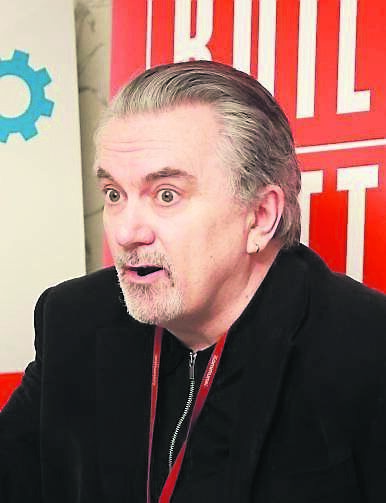
- Niall Shanahan, media relations director, Forsa trade union

Medicine is a constantly changing and dynamic environment, so you can never ‘fix’ it because it has to change and adapt tomorrow to a new reality.
My problem with the health service is the fixation on the idea of creating a new structure, a new health service, and one that will work forever.
And I will say, no, that cannot work because there will always be new technology, AI, or new healthcare realities.
There is a short gap in healthcare between technology and implementation; three years ago, AI did not exist in a real way, and now hospitals around the world are already adapting it.
The best way to run a health service is to have one that is dynamic and able to react to those changes.
However, one of my biggest frustrations working in the Irish health services is the constant obsession with high-level reforms.
They reorganised health boards into the HSE, then reorganised the HSE into regions, and then different regional areas.
We had hospital groups with community healthcare organisations, and now we have regional healthcare areas. It is bizarre how many different structures I have worked under in my 27 years with the HSE.
I would argue that what healthcare needs is change at the ground level.
We are too obsessed in this country with changing the top-level structures.
If I had one suggestion, it would be that we stop doing that.
Structural change at that level is not going to solve patients’ problems or challenges for members of the Irish Medical Organisation.
What is going to solve the problem is if they stop trying to reform the overall structure and they try to stay with one structure and make that one structure work.
The clear focus should be on increasing capacity to meet the demand, and we need immediate investment in acute beds and workforce capacity.
For patients and those of us on the frontline, reform means reform at the frontline — not reform in the boardroom.
- Prof Matthew Sadlier, president of the Irish Medical Organisation
CONNECT WITH US TODAY



Be the first to know the latest news and updates