‘I thought they were dolls’: Pat says he saw babies’ bodies in Bessborough grave in the 1940s
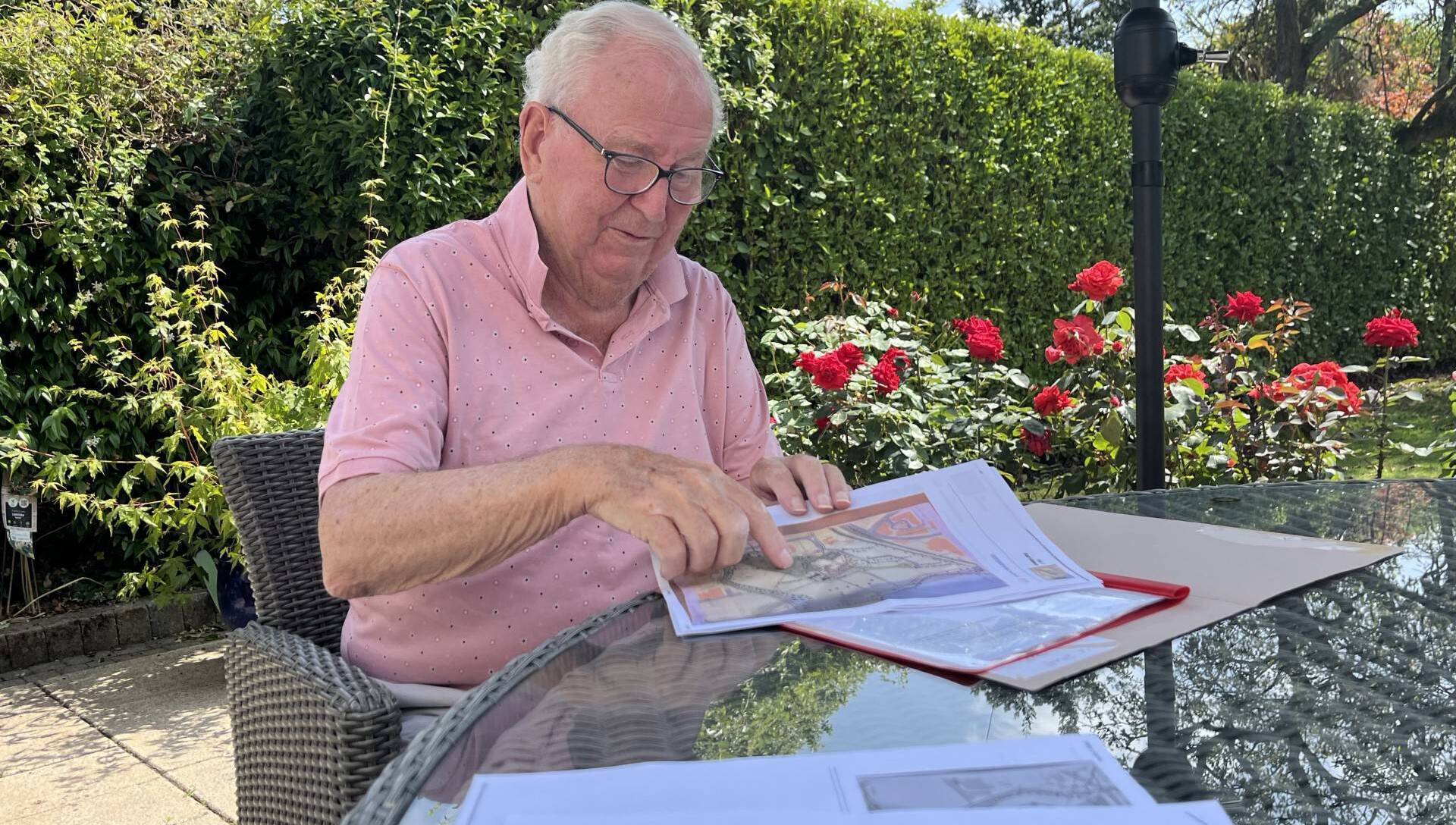
Pat Mulcahy examining maps of Bessborough this week. He says he and a friend saw the open grave in the late 1940s when he was aged 9 or 10: 'We were too young at the time to know what the hell it was, but now I know exactly what it was, it was a grave.'
An elderly Cork man has described seeing children buried in a mass grave on the grounds of the Bessborough mother and baby institution, saying: “I thought they were dolls”.
Pat Mulcahy, an 89-year-old Blackrock native, said he and a childhood friend had been playing on the lands in the mid- to late-1940s when they came upon an open grave.
Speaking publicly for the first time, Mr Mulcahy said he and his friend saw “three or possibly more” small corpses, in a state of decay, in a disturbed grave.
His public statement comes two weeks after a woman born in Bessborough said she had witnessed a burial of a child on the institution’s grounds in the late 1950s.
In 2019, Mr Mulcahy signed an affidavit telling the Mother and Baby Homes Commission of Investigation his memories of that incident; sworn testimony that is now sealed until 2051, but which has been seen by the .
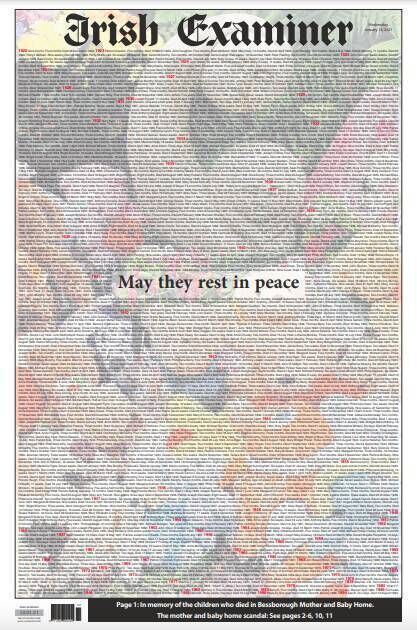
In 2021, the Mother and Baby Homes Commission of Investigation found that of 923 infant deaths relating to the Cork institution, the burial places of 829 children were unknown, and it was “highly likely” some were buried on Bessborough’s grounds.
In his evidence to the commission, Mr Mulcahy, who was born in 1937, said when he was “around nine or 10 years old”, during the summertime, he and his friends would play cowboys and Indians in the southern end of the estate, away from the convent and other buildings.
“We would walk along the railway line adjacent to the property and then across to an artificial lake which had been created by the Pike family when they originally owned the house,” he said.
One day, he and his late friend, Ken Jolly, decided to cut diagonally through the grounds, past the buildings.
“As we walked up behind the house and the church, we saw a hole in the ground. It was rectangular in shape, approximately six feet by four feet, and roughly four feet deep," Mr Mulcahy said.
“When I looked down into the hole, I could see what to me appeared to be three or possibly more dolls.
“The heads were visible and the rest of them loosely covered with earth,”
“I thought that they were dolls because they looked like and were about the same size as the dolls my sisters played with at that time.”
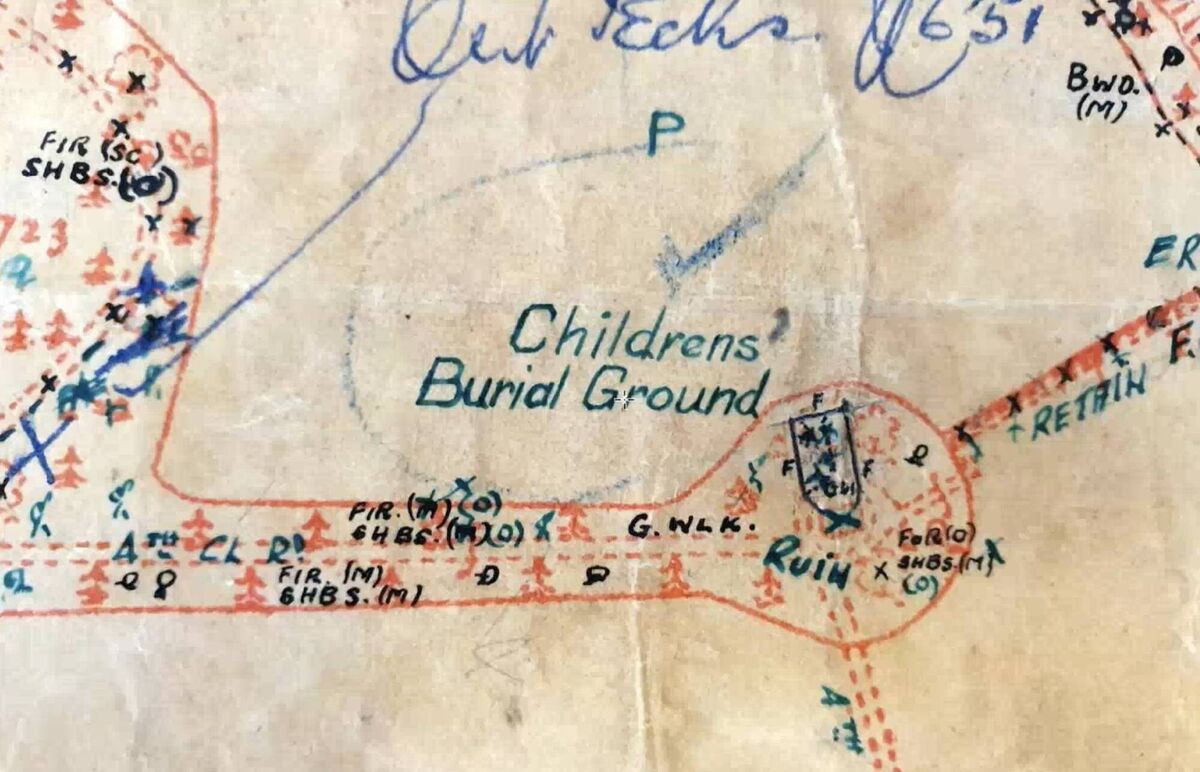
He and his friend were then chased from the scene by “a man and several women”.
Returning to Bessborough decades later, he found the landscape “changed totally”, but he could remember the bell tower of the church directly behind him as he ran, “about the length of two football pitches away”.
Mr Mulcahy estimated the location of the grave was somewhere close to the driveway and north-west of the hospital and chapel buildings.
Speaking at his home this week, Mr Mulcahy said he could remember that the ‘dolls’ he saw had been green, and he believed the grave had been reopened to accommodate a fresh burial.
“We were too young at the time to know what the hell it was, but now I know exactly what it was, it was a grave, and we knew we shouldn’t have seen it, and being chased, we ran,” he said.
Of the 923 infant deaths associated with Bessborough, 659, or 71%, occurred between 1922 and 1945.
By 1940, when Ireland’s national infant mortality rate was 6.5%, Bessborough’s was 82%.
Mr Mulcahy would have been 10 in November 1947.
Between 1940 and 1947, 387 infants born in the institution were reported as having died.
Earlier this month, Terry Meyer, who was born in Bessborough in the 1950s, said that when she was four years old, she witnessed the burial of a child on grounds to the east of the convent building.
She remembered asking what the body was and being told, “Oh, it’s just a doll”, but because she had seen so few toys, she had no idea what a doll was.
Bessborough operated as a mother and baby institution from 1922 to 1998.
Mr Mulcahy’s testimony would appear to add weight to the contention of survivors who believe that, over the decades, burials occurred at multiple locations across what was then a 200-acre estate.

CONNECT WITH US TODAY



Be the first to know the latest news and updates