Canada targets EU ‘associate member’ status as summit draws to a close
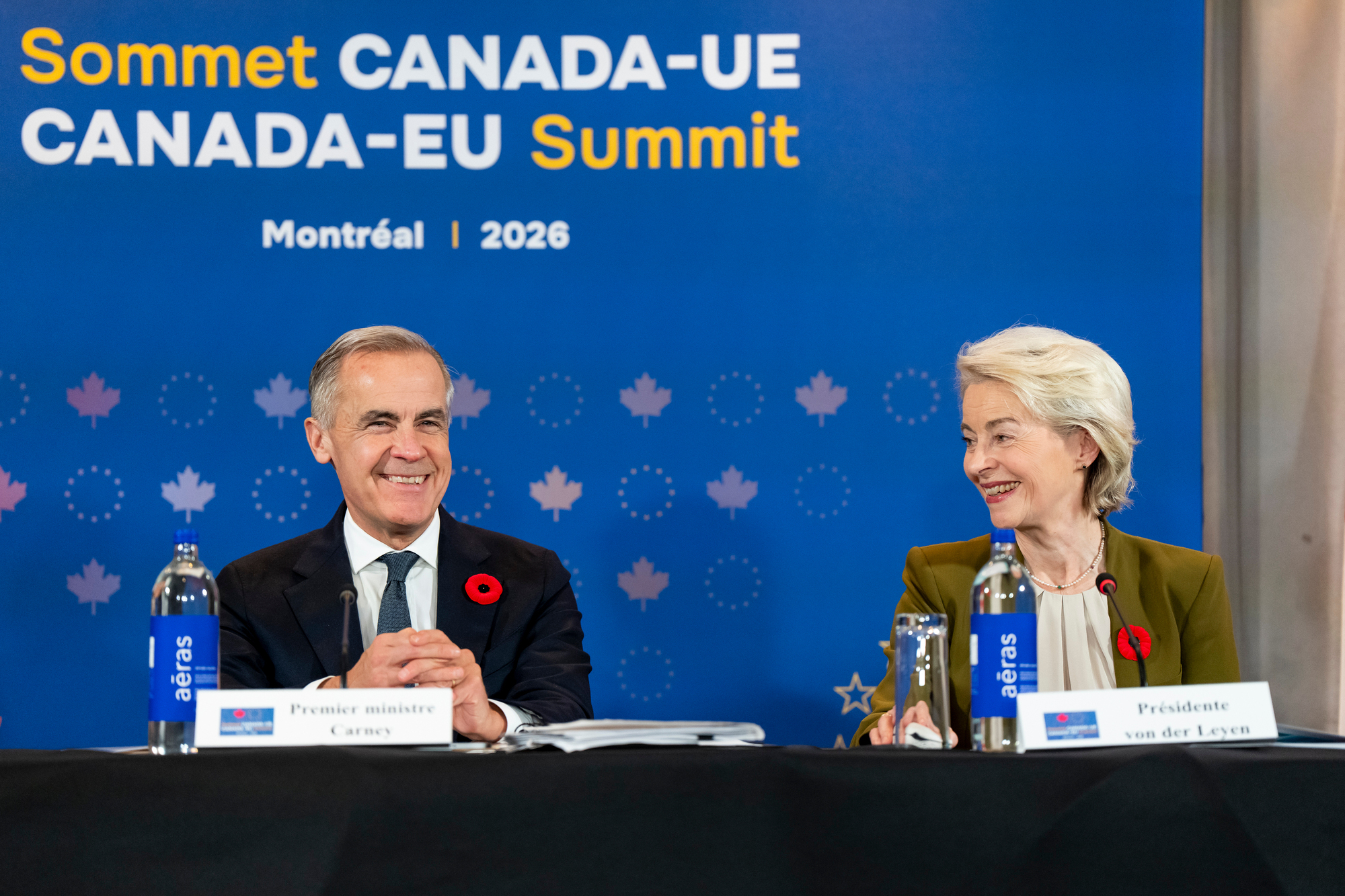
Canadian Prime Minister Mark Carney and European Union leaders are set to conclude a two-day summit on Friday as the EU’s top official presses to make Canada the bloc’s first “associate member”.
European Commission president Ursula von der Leyen and European Council president António Costa joined Mr Carney in Montreal to pursue an unprecedented alliance that could bring Canada closer to the EU than any previous arrangement with a country outside the bloc.
Some European governments have resisted the proposed associate membership designation.
Mr Costa said the two sides expect to announce a digital trade agreement on Friday along with initiatives to expand scientific research partnerships and university exchanges.
Mr Carney had said on Thursday that the proposed alliance would help Canada withstand economic shocks and prevent foreign governments and technology companies from dictating its choices.
He later explicitly used the term “associate member” while sitting beside Ms von der Leyen at a business roundtable.
“We’re in the process of forging a new alliance for the future, with Canada as an associate member,” Mr Carney said.
Ms Von der Leyen also championed associate membership but said the proposed “alliance for the future” would be a broader partnership open to other countries, with Canada and the EU at its core.
“This is a wider concept,” Ms von der Leyen said. “Other like-minded trusted partners are welcome.”
She said the broader alliance would focus on critical minerals, resilient supply chains, defence and security.
US President Donald Trump has suggested Canada’s proposed EU arrangement could be a “hostile act” and threatened tariffs on Europe if he considered it unfriendly.
The United States accounted for 71.7% of Canada’s merchandise exports in 2025.
Mr Carney wants to double exports to other countries over the next decade as Canada seeks to reduce its dependence on its southern neighbour.

CONNECT WITH US TODAY



Be the first to know the latest news and updates