Limerick maternity staff protest over unsafe staffing and patient safety concerns
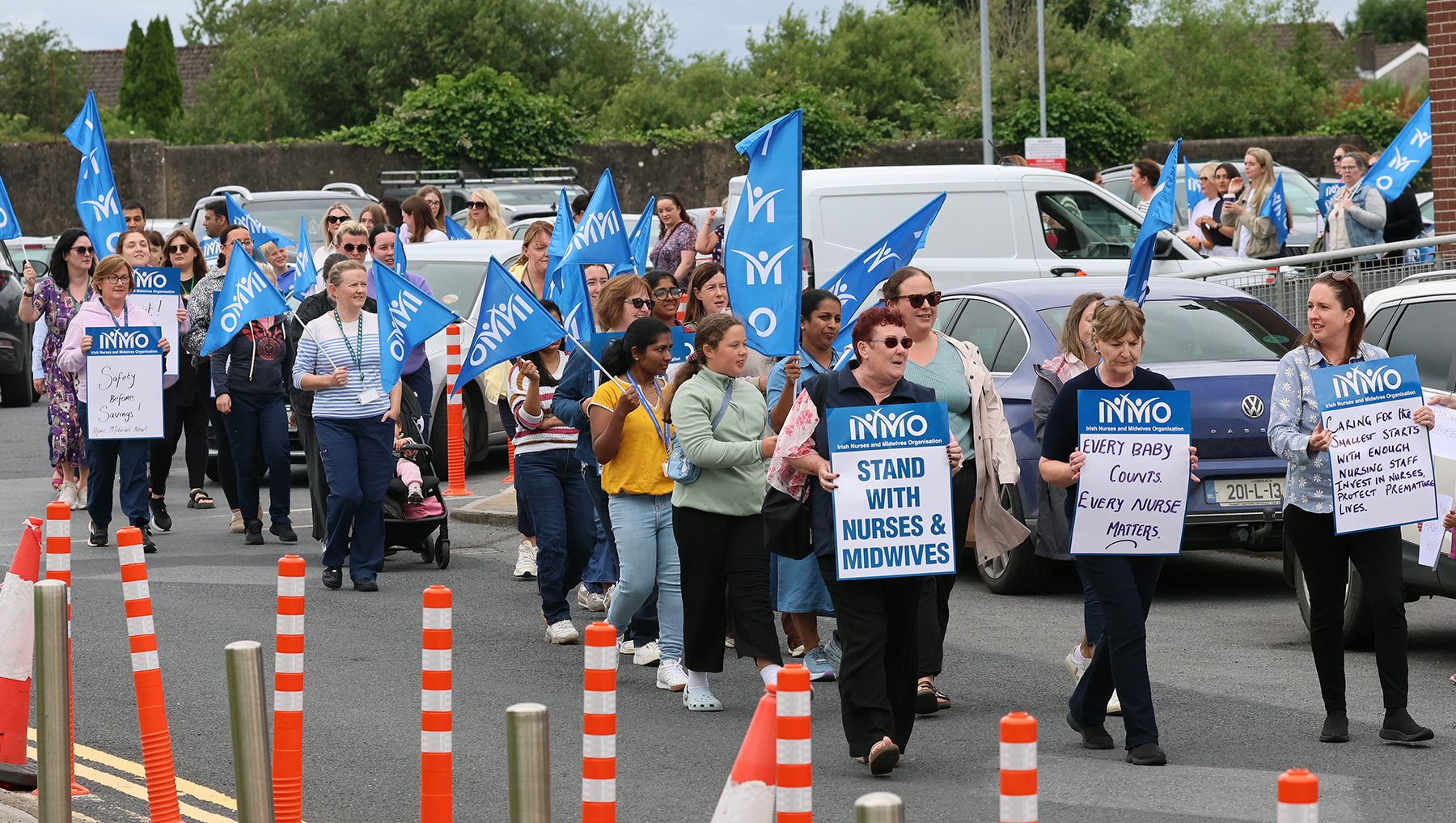
Organised by the Irish Nurses and Midwives Organisation (INMO), the protest took place on Tuesday to highlight staff shortages at a hospital already under significant pressure. Picture: Brendan Gleeson
Nurses and midwives at University Maternity Hospital Limerick (UMHL) staged a protest over what they described as unsafe staffing levels, saying they are concerned about patient safety.
Organised by the Irish Nurses and Midwives Organisation (INMO), the protest took place on Tuesday to highlight staff shortages at a hospital already under significant pressure.
According to the union, some ward rosters are operating up to 50% below safe staffing levels, a situation it attributes to the impact of the HSE’s national Pay and Numbers Strategy.
Since the strategy was introduced in late 2023, health unions have repeatedly raised concerns, with between 30 and 35 frontline nursing and midwifery posts vacant at UMHL, according to the INMO.
Áine Quinn, a staff midwife working on the postnatal ward at UMHL, said the protest had been "a long time coming". She said senior colleagues on her ward wrote to management in August 2025 to raise concerns about staffing levels.
“We love our jobs, we love being midwives. We love caring for mothers and babies in their most exciting times of their lives, but we have had enough. Our staffing issues are beyond the WRC recommendations,” she told the .
Read More
“Sometimes we could have 23 women and 23 babies on a ward with two or three staff midwives to look after them. So enough is enough, and we just want our voices heard.”
Clinical midwife manager Tanya Byrnes said that currently only two midwives are on the postnatal ward, despite the WRC recommending five, including the ward manager.
“When there’s only two staff on the ward, and a student, and you've the potential for a full ward, care is delayed. We have mothers who are deemed high risk because they've had caesarean birth, so they need their vital signs monitored. There could be a delay in their postoperative analgesia,” she said.
“We’re supposed to be on high alert looking out for the abnormal, and when you're already stretched and burnt out, it's really, really hard.”
According to Ms Byrnes, despite their commitment to the job, midwives and nurses are suffering from burnout.
“I can see it on the ground. The staff are coming to you saying, 'You know, I'm burnt out.' They're cancelling shifts, extra hours and overtime because they can't keep sustaining it,” she told the .
“Some days you're like, "What am I doing? What am I going to face?" But again, we're doing it for each other, and we're doing it for the women and babies in our care.”
The INMO said staff concerns had been repeatedly raised with management over the past year, and that a subsequent HIQA inspection, published in April 2026, independently verified that the situation was not sustainable.
INMO Assistant Director of Industrial Relations for the Midwest Mary Fogarty said: “ There are new graduates coming out here in October. We would hope that they would like to be retained at the hospital to work. But if these working conditions prevail, they will seek to work in other places.”
In response, HSE Mid West said it acknowledged the INMO’s call for additional resources within maternity services and recognised the important role of representative bodies in advocating on behalf of their members.
"It is essential, however, that public discussion on maternity care is grounded in evidence and reflects the established governance processes that ensure the safety of women and babies. We encourage members of the public to review our Monthly Maternity Safety Statement and the most recent HIQA inspection report, both of which provide transparent information on the quality, oversight and safety of our maternity services.
"The hospital has staffing resources in place, including built-in leave tolerance, in line with the WRC agreement. It is important to clarify that the INMO does not recognise the closure of beds that has occurred since the WRC agreement was established, and continues to reference an agreement from 2015 that no longer reflects the current operational structure of the service," they said.
The HSE added that 30 posts are currently being progressed through recruitment, interview and clearance processes across maternity and neonatal services.
"Workforce requirements are kept under continuous review to ensure services meet the needs of women, babies and families who rely on our care," it said.

CONNECT WITH US TODAY



Be the first to know the latest news and updates